10 Modern Cat Room Ideas You’ll Love (2026)
By Demosthenes Staudinger | Updated August 25, 2026
Affiliate disclosure: This article contains affiliate links. As an Amazon Associate I earn from qualifying purchases. If you buy through one of these links, we may earn a commission at no additional cost to you. This does not affect our editorial recommendations.
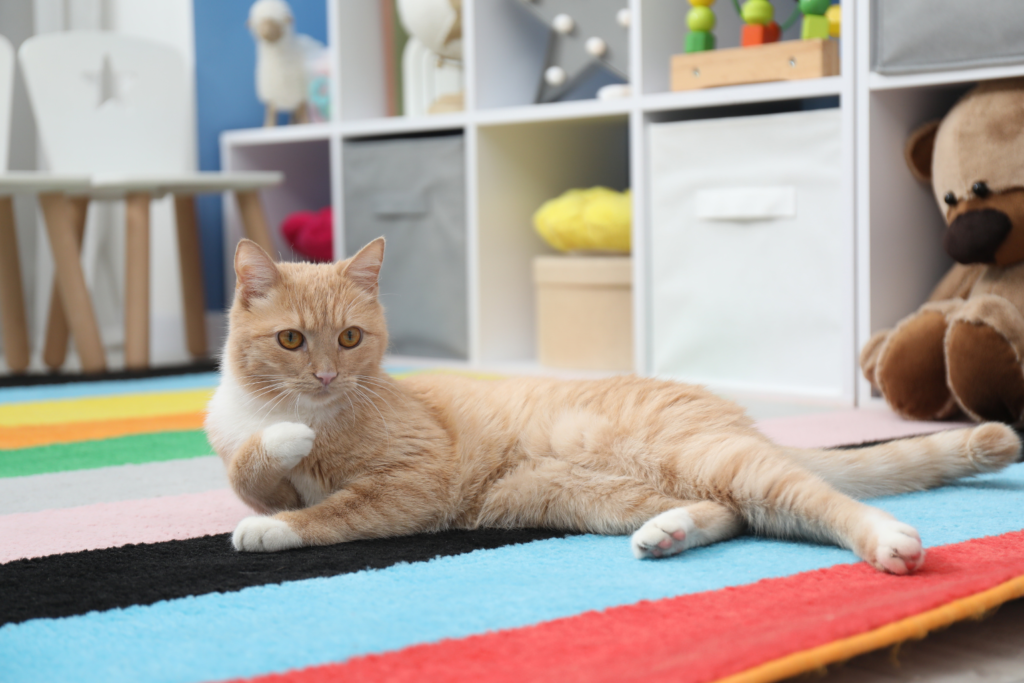
A cat room should not look like a pet store moved into the spare bedroom. It should feel like part of your home: calm, intentional, easy to clean, and visually consistent with the rooms around it.
It also has to work from a cat’s point of view. A beautiful cabinet is a poor litter solution if the opening is too small. Floating shelves become decoration rather than enrichment if the route has no safe way down. A stylish feeding station can create stress if it places food, water, and the litter box together simply because the arrangement photographs well.
The best modern cat room ideas begin with behavior, not a shopping list. Cats need separated resources, elevated observation, secure resting places, scratching choices, opportunities to stalk and forage, and enough control to move away from people or other pets. Current Feline Veterinary Medical Association guidance treats those resources as essential components of a healthy indoor environment.[1][2]
That does not mean every cat needs a dedicated room—or every product in this guide. A compact apartment corner can work when it offers the right functions. A large room can fail when it is crowded, noisy, or designed around human convenience alone.
This guide presents ten design ideas, the Amazon products that fit each concept, and the limitations to check before buying. The goal is a feline sanctuary that supports normal behavior while still looking like it belongs in a considered, modern home.
How We Researched This Guide
This is a research-based editorial buying guide, not a hands-on product test. Modern Cat Society reviewed current feline environmental guidance, veterinary and university resources, manufacturer pages, and the Amazon listings supplied for this article. We have not purchased, installed, or field-tested these products. Product names, dimensions, colors, bundles, sellers, and availability can change; confirm the exact listing and manufacturer instructions before purchase.
Quick Verdict
Editorial verdict: The strongest cat room is a collection of separated functional zones, not a showroom filled with gadgets. Prioritize one suitable litter setup, a stable vertical route, a scratcher your cat will actually use, a quiet refuge, and daily interactive play before adding smart technology or decorative accessories.
Best for: Indoor cats, design-conscious households, small homes that need to use vertical space, and multi-cat families willing to duplicate and separate key resources.
Skip the full-room makeover if: Your cat has mobility limitations, house-soiling, conflict with another pet, or sudden behavior changes that have not been assessed. Begin with accessible essentials and veterinary guidance; redesign gradually around what the cat uses comfortably.
The 10 Ideas at a Glance
| Zone | What it gives your cat | Featured shopping category | Most important check |
|---|---|---|---|
| 1. Concealed litter zone | Privacy and predictable toileting | Litter cabinet or self-cleaning box | Interior size, ventilation, exit access, and cat acceptance |
| 2. Cat wall route | Height, movement, and observation | Wall shelves and perches | Wall structure, hardware, landing depth, and a safe route down |
| 3. Architectural cat tree | Vertical territory without permanent installation | Modern wood cat tree | Base stability, platform size, and verified weight limit |
| 4. Dining and hydration zone | Predictable meals and fresh water | Automatic feeder and ceramic fountain | Separation from litter, cleaning burden, and exact model features |
| 5. Window lounge | Passive visual enrichment and sun | Sill-mounted window perch | Window compatibility, secure screen, and attachment inspection |
| 6. Quiet retreat | Choice, warmth, and decompression | Wool felt cat cave | Correct size, washable care, and low-traffic placement |
| 7. Scratch studio | Claw care, stretching, and scent marking | Vertical and horizontal scratchers | Orientation, texture, stability, and placement |
| 8. Play and foraging zone | Hunting sequence and exercise | Automated toy plus manual play | Supervision, detachable parts, noise, and toy rotation |
| 9. Cleaner-air corner | Supplemental particle filtration | Room-sized air purifier | Smoke CADR, filter cost, airflow, and no intentional ozone generation |
| 10. Cat-safe garden | Novel scent, texture, and chewing option | Verified plants and cat grass | Scientific plant name, fertilizers, mold, and chewing habits |
Plan the Room Before You Buy Anything
Start by observing where your cat already sleeps, scratches, watches the outdoors, and retreats when the home becomes busy. Those choices reveal more than an aspirational mood board. A room that receives harsh afternoon heat may be unsuitable for all-day lounging. A basement beside a washing machine may be too unpredictable for a litter station. A beautiful upstairs room may be inaccessible to a senior cat.
Sketch the room as separate zones. Keep food and water away from toileting. Give a litter box an unobstructed approach and exit. Place a scratcher near a sleeping area or doorway, where cats commonly stretch and leave scent marks. Put climbing equipment where a fall would not land on glass, hard decor, or another pet.
In a multi-cat home, avoid concentrating every valuable resource in one room. Competition over food, water, litter boxes, perches, sunny areas, and safe places can be obvious or nearly silent.[6] A cat room can be a useful shared space, but each cat still needs access to essential resources elsewhere. Feline environmental guidance recommends multiple, separated resources so one cat cannot easily block another.[1]
1. Create a Concealed Litter Zone That Still Works for the Cat
Hiding the litter box can improve a room, but concealment should never come at the expense of access. Cats generally prefer a quiet location where they cannot be cornered. A box should be large enough for the cat to enter, turn, scratch, and eliminate; Cat Friendly Homes recommends approximately 1.5 times the cat’s length from nose to the base of the tail. The familiar planning rule is one box per cat plus one extra, placed in separate locations rather than lined up together.[3]
A furniture-style enclosure works best when the usable interior accommodates the pan, leaves headroom, permits airflow, and provides an easy route out. Confirm that hinges, magnets, and storage compartments cannot create hazards.
An automatic litter box may reduce routine scooping, but it introduces motors, sensors, consumables, size restrictions, and a shape some cats reject. Choose a documented model, follow all restrictions, and retain a conventional box during transition. An app never replaces checking waste, litter level, and the machine itself.
Featured Amazon options
The Amunrbrek fluted litter-box enclosure is the design-led choice in the supplied listing. Its value is visual concealment and storage, not odor elimination. Verify the current cabinet’s internal dimensions against your litter pan and your cat before ordering.
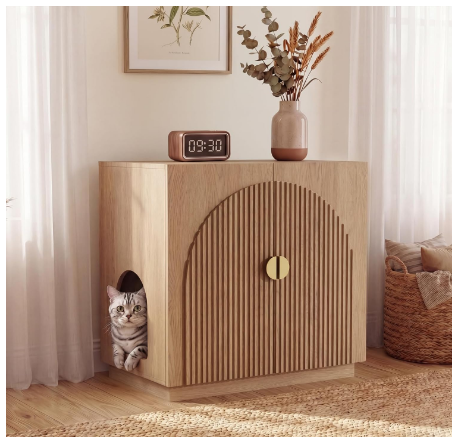
The featured self-cleaning litter-box listing suits an owner who values automated waste separation and is prepared for a longer introduction, regular deep cleaning, and possible proprietary bags or accessories. Confirm the exact brand, model, sensor system, cat-size limits, warranty, and return terms on the live listing; do not buy a visually similar generic unit without identifying who supports it.
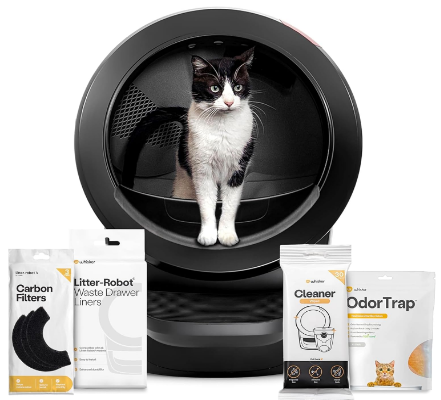
Best design decision: Use the cabinet when your cat already accepts an open pan placed inside a spacious enclosure. Consider automation when daily scooping is the primary problem and you can keep a backup box. If either design causes hesitation, blocking, or elimination elsewhere, return to the familiar open setup and reassess.
2. Build a Cat Wall Superhighway, Not a Row of Random Shelves
Vertical space increases usable territory without consuming the floor. It can offer exercise, observation, and distance from dogs, children, visitors, or another cat. Current feline guidance specifically includes raised perches and secure hiding options, while noting that preferences and access change with life stage.[1]
A successful wall route has a clear beginning, connected steps, a resting destination, and more than one way away from a valuable perch. Kittens, seniors, and cats with arthritis need shorter vertical changes, deeper landings, ramps, or closely spaced steps.
Installation is non-negotiable. Advertised capacity is meaningful only with the correct wall and hardware; studs, masonry, and metal framing require different fasteners. Use a qualified installer when uncertain and test regularly for movement.
Featured Amazon option
The supplied Canormpet solid-wood wall furniture set combines enclosed cubbies, shelves, ladders, and sisal-covered scratching elements in one coordinated look. A large kit can create a coherent route, but it also requires substantial unobstructed wall area and careful installation. Verify the contents of the selected variant because marketplace listings may group configurations under one page.
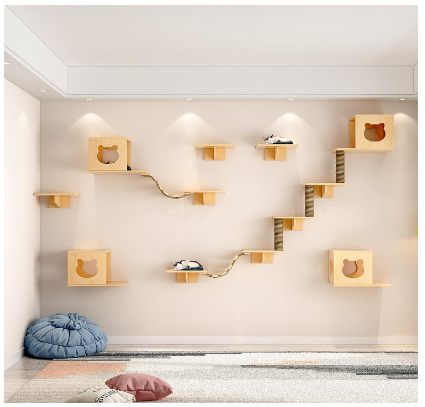
Best design decision: Tape paper templates to the wall first. Observe the route at cat height, check door swing and human head clearance, and confirm that every jump has a generous landing. A smaller, correctly installed route is better than an impressive wall your cat cannot navigate confidently.
3. Choose an Architectural Cat Tree for Flexible Vertical Territory
A freestanding tree is the renter-friendly alternative to wall installation. It can move toward a window or adapt as the cat ages. Appearance should rank behind stability and usable platform size.
Press on the upper platform before allowing use. A tall tree that sways during a jump may be avoided—or become a tipping hazard. Compare the base footprint, total height, manufacturer-listed load, and dimensions of each perch with your cat’s body. “For large cats” in a product title is marketing language, not a substitute for measurements.
Place it near a useful destination but away from cords, fragile decor, and toxic plants. Install any supplied anti-tip strap. A senior may benefit more from low steps than maximum height.
Featured Amazon option
The linked COZIWOW modern cat tree uses natural wood elements and pale, sculptural forms rather than carpet on every surface. The current marketplace title describes a solid natural-wood scratching post, condo, and perches; confirm the exact size and variant on the live listing because finishes and configurations can change.
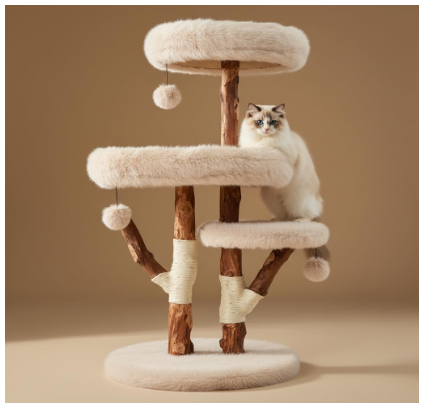
Best design decision: Choose the lowest tree that still delivers a desirable view and fits your cat fully on its resting platforms. Stability, washable contact surfaces, and replacement scratch material will matter longer than a dramatic silhouette.
4. Design a Separated Dining and Hydration Station
Cats should be able to eat and drink without feeling watched or blocked, and neither resource belongs beside litter. Cat Friendly Homes recommends fresh water in quiet locations, with multiple stations where appropriate; wide, shallow bowls may suit some cats.[4][5]
An automatic feeder can support measured, scheduled dry-food meals, including an early breakfast that does not depend on waking the owner. It cannot determine the correct calorie target, prove that the intended cat ate the food, or replace daily cleaning. In multi-cat homes, an open dispensing bowl can still be stolen from; use physical separation or an identity-controlled feeder when diets differ.
A fountain may attract a cat that prefers moving water, but it is not self-sanitizing. Wash every water-contact surface, follow the filter schedule, inspect the pump, and keep a plain bowl available during introduction.
Featured Amazon options
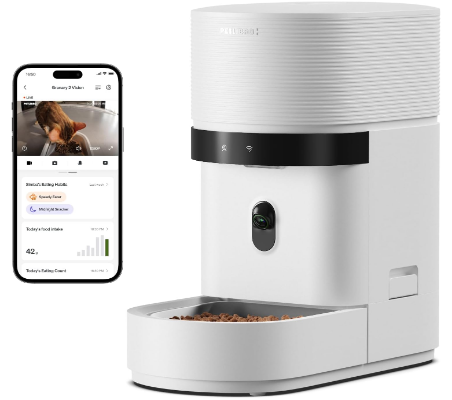
For feeding, the current PETLIBRO automatic feeder listing is the more up-to-date option selected for Modern Cat Society. PETLIBRO’s 2026 Granary 2 line includes models with scheduled dispensing, bowl-weight tracking, camera functions, and, on some variants, paid services or multi-pet recognition. Those features are model-dependent manufacturer claims, so match the live Amazon model to PETLIBRO’s current comparison information before buying.[9]
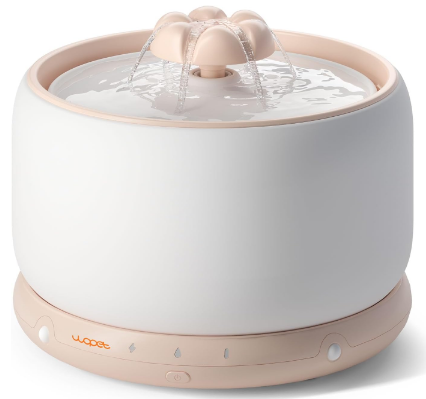
For water, the WOPET ceramic fountain offers a heavier, decor-friendly alternative to a lightweight plastic unit. Pay close attention to the model: WOPET currently distinguishes the battery-powered W03 from the corded W03L, while some accessory wording also references “W03 Lite.” Confirm whether the selected Amazon variant is cordless or corded and which replacement filters fit it.[10]
Best design decision: Put the feeder and fountain in separate, quiet positions rather than building one crowded “pet bar.” Use cord covers where needed, leave airflow around electronics, and measure actual food portions on a kitchen scale before relying on an app setting.
5. Turn a Secure Window Into an Observation Lounge
A window offers changing light and outdoor movement without adding clutter. A perch should expand the cat’s choices, not become the only desirable resting place in a multi-cat room.
Some perches use suction cups; others hook into a sill or brace against trim. Measure the sill, frame, glass clearance, and available width. Inspect the attachment frequently.
The window itself must be secure. A standard insect screen may not withstand a cat leaning, climbing, or lunging at outdoor movement. Keep blind cords, shade loops, and dangling curtain ties inaccessible. If intense outdoor-cat sightings trigger stalking, urine marking, or redirected aggression, use privacy film on the lower portion or move the lounge to a calmer view.
Featured Amazon option
The linked Zakkart windowsill perch with bolster uses a wood-and-metal frame and, according to the retailer listing, hooks into a compatible window slot rather than relying on suction cups. The listing specifies that the window needs a suitable slot, so this is not a universal fit. Verify the current width, hook requirements, and listed capacity against your window and cat.
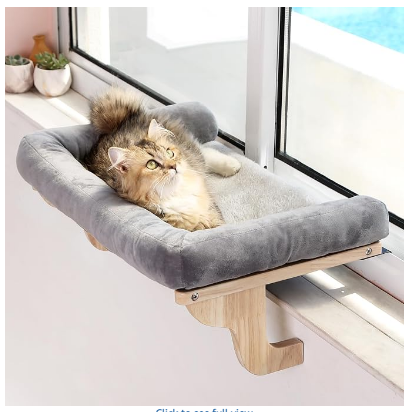
Best design decision: Select the perch for your exact window construction, not the product photograph. Add a nearby lower landing for an older cat and keep a second resting place available so another cat cannot control the view.
6. Add a Quiet Wool Retreat—but Let the Cat Choose
Cats need a place where they can withdraw without being handled. FelineVMA guidance describes a safe place as a protected resting area and recommends at least one cat-sized safe space per cat, distributed so individuals can choose separation. In homes where conflict is possible, a refuge with more than one way to leave can prevent a cat from feeling trapped.[1]
A felt cave makes that refuge visually discreet. It is not automatically “heated” or orthopedic: unless a listing includes a documented heating component, it is simply an enclosed felt bed.
Measure the opening and interior. Place the cave away from speakers, doors, children’s play, and litter. Do not pull out a hiding cat unless safety or care requires it.
Featured Amazon option
The linked handmade merino-wool cat cave is the aesthetic choice for cats that already seek boxes, covered beds, or blanket tunnels. Dark gray is easy to integrate with modern furniture, but wool care may be more involved than machine-washable synthetic bedding. Review current cleaning instructions and choose the size by the cat’s measurements rather than the “medium” label alone.
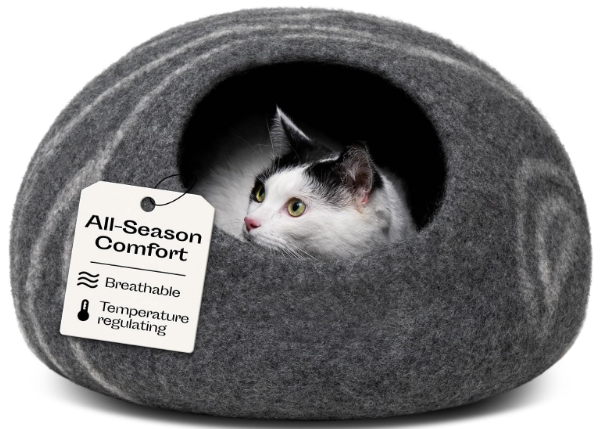
Best design decision: Offer the cave alongside an open bed and an elevated perch. The cat—not the room’s aesthetic—should decide which style feels secure.
7. Treat Scratchers as Functional Sculpture
Scratching is normal scent marking, stretching, and claw-maintenance behavior. The right response is not to hide one undersized post in a distant corner. Provide stable scratchers where the behavior naturally occurs: near sleeping places, entrances, social areas, and furniture the cat has already selected.[4]
Preference matters. Some cats stretch upward on sisal; others pull horizontally across cardboard or carpet. A vertical post should permit a full stretch without rocking; a horizontal one should not slide.
To introduce a new piece, place it beside the current target, reward investigation, and use catnip or silvervine only if the cat responds positively. Do not punish scratching or carry the cat’s paws across the surface. Once the preferred scratcher is used reliably, furniture protection can be adjusted gradually.
Featured Amazon option
The supplied two-in-one reversible cardboard scratcher and lounger offers a low, geometric profile that is easier to integrate than a bright carpeted post. Its strength is horizontal scratching and lounging; it will not satisfy a cat whose established preference is a tall vertical stretch. Corrugated cardboard also sheds and wears, so factor replacement into the decision.
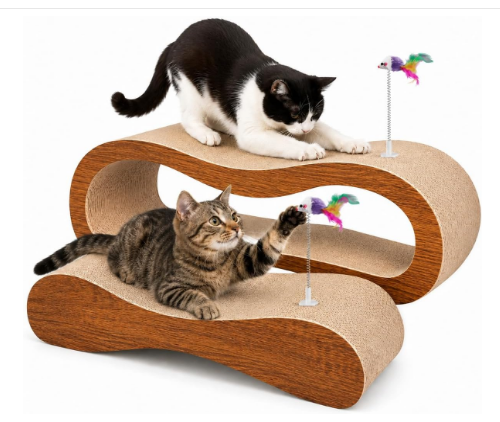
Best design decision: Pair a horizontal sculptural scratcher with one tall, rigid sisal surface. Matching the cat’s preferred angle and texture will protect furniture more effectively than choosing on appearance alone.
8. Create a Play Zone That Does Not Become Permanent Clutter
Indoor cats need opportunities to stalk, chase, pounce, capture, and forage. FelineVMA guidance for indoor living includes simulated hunting and foraging, play, and vertical territory among the essential resources owners should provide.[2] A smart toy can add short periods of unpredictable movement, but it should supplement—not replace—interactive play with a person.
Build the zone around rotation. Present a small selection for several days, alternating wand play, prey toys, tunnels, balls, and easy food puzzles. Store string, ribbon, elastic, and detachable parts when unsupervised.
Use automated lasers carefully. Follow safety instructions, never aim toward eyes, and finish with a tangible toy or small food reward. Stop any motorized toy that causes hiding, panting, collision, or obsessive behavior.
Featured Amazon option
The linked automated smart cat-toy listing can provide brief motion-based sessions when the owner is occupied. Because the original listing is described generically, verify the exact mechanism, timer, charging method, replacement attachments, noise level, and supervision requirements on the live page. Do not leave an unfamiliar electronic toy operating around a cat without first observing several complete cycles.
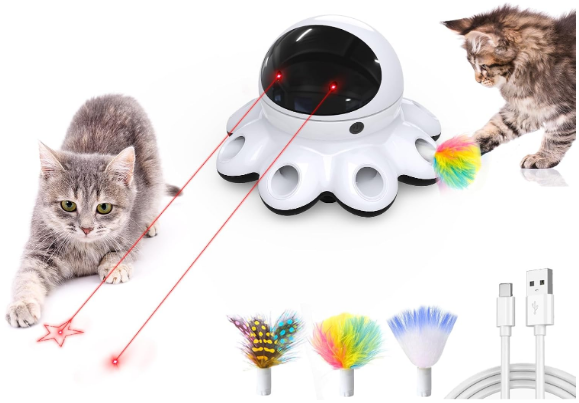
Best design decision: Store toys in one attractive closed basket or cabinet, schedule two short owner-led play sessions, and use automation only for variety. A room full of always-available toys quickly becomes visual clutter and behavioral background noise.
9. Add a Properly Sized Air Purifier—With Realistic Expectations
A cat room collects airborne particles, tracked litter dust, and loose hair. A portable air cleaner can supplement vacuuming, washable textiles, litter maintenance, and ventilation, particularly when matched correctly to the room.
The EPA recommends a Clean Air Delivery Rate, or CADR, suitable for the room. HEPA filters address particles; gases and odors require appropriate media such as activated carbon. No purifier removes every pollutant, and the EPA advises avoiding intentional ozone generators.[8]
Keep intake and exhaust unobstructed. Compare smoke CADR, noise, replacement-filter cost, availability, and energy use. A quiet low setting helps only if it moves enough air.
Featured Amazon option
The linked Blueair Blue Pure listing suits the minimalist look because current Blue Pure models use compact cylindrical or rectangular forms with washable fabric prefilters. Blueair markets the 511i Max for a defined room size and particle removal, but coverage depends on the test basis and fan speed. Match the exact Amazon model—not merely the brand—to the room and compare its CADR with EPA guidance.[11][8]

Best design decision: Buy for verified airflow and long-term filter cost. A purifier can reduce airborne particles; it cannot compensate for a dirty litter box, damp surfaces, inadequate cleaning, or a medical allergy plan.
10. Curate a Cat-Safe Botanical and Sensory Corner
Plants soften a technology-heavy room, but “pet-friendly” is too vague. Verify every scientific name. The ASPCA lists Boston fern (Nephrolepis exaltata ‘Bostoniensis’) and spider plant (Chlorophytum comosum) as non-toxic to cats, but unlimited chewing is still undesirable.[7]
Avoid true lilies in a cat household. Also control fertilizer, insecticide, decorative moss, swallowable pebbles, moldy soil, and unstable pots.
Cat grass can provide an intentionally chewable sensory option. It is not a treatment for repeated vomiting, constipation, pica, or hairballs. VCA advises moderation because consuming too much grass can cause vomiting and, in unusual circumstances, contribute to gastrointestinal problems.[12] Discard moldy growth and contact a veterinarian about persistent digestive signs.
Featured Amazon option
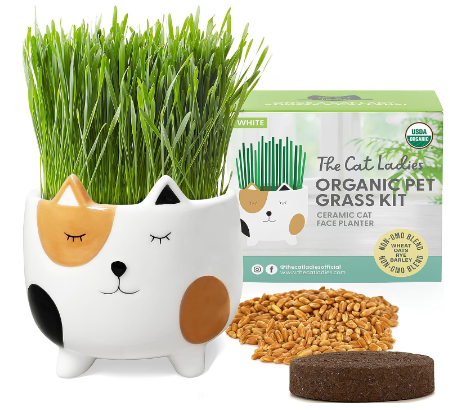
The supplied The Cat Ladies ceramic cat-grass kit combines a planter, growing medium, and seed mix in a coordinated package. Its decorative container fits the room concept, but the plant still needs routine inspection, clean water, drainage management, and replacement when growth becomes slimy or moldy.
Best design decision: Begin with one verified non-toxic plant and one small grass planter at floor level. Observe chewing, digging, and tipping before expanding the collection.
Which Upgrades Should You Buy First?
The order should follow unmet needs, not price or visual impact.
| Priority | Buy or improve first when… | A simpler alternative |
| Litter setup | The current box is too small, dirty, blocked, or beside food | A large open storage tote or mixing tray in a quiet location |
| Stable scratching | Furniture is the only satisfying scratch surface | A tall sisal post plus an inexpensive cardboard pad |
| Vertical access | The cat climbs cabinets or has no protected observation point | A stable tree or cleared furniture route rather than wall construction |
| Secure refuge | The cat hides in unsafe or inaccessible places | A cardboard box with two openings and washable bedding |
| Interactive play | The cat lacks daily hunting-style activity | A quality wand toy and scheduled sessions before electronics |
| Hydration | Water is ignored, contaminated, or limited to one station | Several wide bowls refreshed daily before purchasing a fountain |
| Automation | A consistent routine is difficult to maintain manually | Timers, measured containers, and a written care schedule |
| Air filtration | Room-sized particle filtration would supplement source control | Frequent cleaning, washable textiles, and low-dust litter |
On a small budget, begin with an adequate open litter box, stable scratcher, cardboard refuge, window-accessible rest, and rotating toys. Add a secure tree, perch, or fountain next. Professional shelves, automation, and filtration make sense only after the fundamentals work.
A Safety and Installation Checklist
Before allowing unrestricted access to the finished room:
- Anchor tall furniture and install wall products into appropriate structure.
- Confirm all platforms remain stable under a dynamic jump, not just static hand pressure.
- Remove looped blind cords, exposed electrical cables, string toys, and small detachable parts.
- Protect outlets and keep water equipment away from vulnerable plugs and power strips.
- Verify windows and screens cannot open or give way under pressure.
- Keep litter, food, and water in separated locations with clear approach routes.
- Provide low-entry resources and intermediate steps for cats with reduced mobility.
- Confirm every plant by scientific name and remove fertilizers or pesticides accessible to the cat.
- Introduce motors, fountains, and automated doors while switched off before activating them.
- Recheck fasteners, cords, fabric wear, filters, and detachable toy parts during weekly cleaning.
- Preserve one familiar bed, box, or scratcher so the redesign does not erase every known scent at once.
Make changes in stages. Replacing the entire room in one day may look satisfying to a person but can remove the familiar scent landmarks a cat uses to understand territory. Add one major item, reward voluntary exploration, and watch eating, drinking, elimination, resting, and social behavior before proceeding.
Common Cat Room Design Mistakes
Putting every resource together: A single “cat corner” beside the litter box may be efficient for cleaning but conflicts with the principle of separated resources. Spread water, food, sleep, play, and toileting across the room—and elsewhere in the home.[1]
Buying for color before fit: Product photographs hide scale. Measure the cat, the usable interior, jump distances, window profile, and floor clearance. Save those measurements in your phone before shopping.
Creating a vertical dead end: A coveted top shelf with one narrow access path can become a guardable resource. Add alternative steps or keep separate high-value perches for different cats.
Assuming enclosed means odor-free: Cabinets and covered boxes can retain odor. Odor control begins with suitable litter, adequate box numbers, regular waste removal, washing, and ventilation—not fragrance or concealment.[3]
Treating “smart” as self-maintaining: Feeders need bowl and hopper cleaning. Fountains need pump cleaning. Automatic litter boxes need inspection and deep cleaning. Air purifiers need filters. Automation changes the task schedule; it does not eliminate care.
Ignoring the cat’s response: A product is not successful because it matches the sofa. Track whether the cat uses it with relaxed posture, approaches voluntarily, and continues normal eating, drinking, toileting, grooming, and sleep. Return or repurpose items that create avoidance.
Frequently Asked Questions
1. Does my cat need an entire dedicated room?
No. A well-designed corner, hallway wall, office, or section of a living room can provide vertical space, scratching, rest, and play. Essential resources should also remain distributed across the home, especially in multi-cat households. A dedicated room is helpful only when the cat can access it freely and it does not concentrate every resource in one guardable location.
2. What should every modern cat room include?
At minimum, provide a safe resting place, appropriate scratching surface, elevated observation option, and play or foraging opportunities. Add a litter box, food, or water only when the room is a suitable location and those resources can be adequately separated. Design around the individual cat’s age, mobility, preferences, and relationship with other pets.[1][2]
3. Where should the litter box go in a cat room?
Choose a quiet, accessible position away from food and water, noisy appliances, and places where another animal can block the exit. The box should be large enough for normal turning and digging. In a multi-level or multi-cat home, do not make the cat room the only toileting location.[3]
4. Are hidden litter-box cabinets good for cats?
They can be, provided the interior is spacious, ventilated, easy to clean, and simple to exit. Some cats dislike enclosed toileting. Introduce the cabinet with the familiar pan and litter, keep the door open initially if the design permits, and maintain another accessible box during the transition.
5. Are self-cleaning litter boxes safe?
Safety depends on the exact design, sensors, operating sequence, maintenance, and whether the cat meets the manufacturer’s restrictions. Buy from an identifiable manufacturer with a manual, support channel, warranty, and clear safety instructions. Observe initial cycles, keep the unit level and clean, and provide a conventional backup box.
6. How high should cat wall shelves be?
There is no universal height. The route should match the cat’s jumping ability and include wide, stable landings. Healthy agile adults may enjoy larger vertical changes; kittens, seniors, and cats with arthritis need closer steps, ramps, or lower destinations. Prioritize a safe descent and structural mounting over maximum height.
7. Can I put food and water beside each other?
Some cats use adjacent bowls without difficulty, while others drink more readily when water is placed separately. Offer choices in quiet areas and monitor actual use. Keep both away from the litter box, refresh water daily, and wash bowls or fountain parts on a consistent schedule.[5]
8. Is an automatic feeder necessary in a cat room?
No. It is useful for scheduled dry-food portions and predictable early meals, but a measured manual routine can work equally well. An automatic feeder is not a nutrition plan and may not prevent food stealing. Select it only when its real function solves a routine problem.
9. Are ceramic fountains more hygienic than plastic bowls?
Ceramic can provide a smooth, heavy, easy-to-clean drinking surface when the glaze remains intact. It is not inherently germ-free, and cracks or damaged glaze are reasons to replace the bowl. The pump, filter housing, and hidden channels still require cleaning regardless of the visible material.
10. What are the best cat-safe plants for the room?
The ASPCA lists spider plants and Boston ferns as non-toxic to cats, but always confirm the scientific name of the exact plant.[7] Avoid pesticides, unstable pots, and decorative materials that can be swallowed. Even a non-toxic plant can cause gastrointestinal upset when heavily chewed.
11. Will a HEPA air purifier remove cat odor and allergens?
A properly sized particle filter can reduce airborne particles, but it will not remove every allergen or solve the source of litter odor. Gas and odor removal requires suitable sorbent media, and results vary with airflow, room size, source control, and filter condition. Use EPA CADR guidance and avoid ozone-generating devices.[8]
12. How do I know whether my cat likes the finished room?
Look for voluntary, repeated use and relaxed behavior: normal posture, resting in the open, confident climbing, appropriate scratching, play, and uninterrupted access to resources. Hiding, crouching, blocked routes, reduced appetite, toileting changes, or avoidance indicate that the layout needs adjustment—and sudden behavioral changes warrant veterinary evaluation.
Final Verdict: Which Modern Cat Room Ideas Are Worth It?
The most worthwhile modern cat room ideas are the ones your cat can use safely every day. Begin with generous litter access, stable scratching and climbing surfaces, a quiet refuge, separated food and water, and consistent interactive play. Those choices deliver more value than filling the room with the newest connected devices.
The recommended Amazon products can make that plan more attractive or convenient, but each comes with a fit question: cabinet dimensions, wall structure, platform size, window compatibility, cleaning, consumables, noise, or the risk that the cat simply prefers something simpler. Measure first, introduce gradually, and keep return terms in mind.
When feline needs determine the floor plan and a coherent material palette shapes the appearance, the result feels neither like a showroom nor a pet-storage room. It becomes what a cat room should be: useful territory for the cat and a calm, credible part of the home you already love.
Read more:
Beyond the Ugly Carpet: 5 Modern Cat Trees That Actually Look Like Sculptures
The Ultimate Indoor Cat Room Checklist (2026): Everything Your Cat Needs
Sources and References
- Feline Veterinary Medical Association — Your Cat’s Environmental Needs. Safe places, multiple and separated resources, vertical space, play, and cat-friendly environmental planning. View source
- Feline Veterinary Medical Association — 2024 Indoor/Outdoor Lifestyle Position Statement. Essential resources, simulated hunting and foraging, play, vertical territory, and clean toileting for indoor cats. View source
- Cat Friendly Homes — Everything You Should Know About Litter Boxes. Box number, dimensions, placement, privacy, accessibility, and separation from food and water. View source
- Cat Friendly Homes — Must-Have Supplies and Essentials for Your Cat. Guidance on bowl shape, drinking preferences, scratching orientations, litter, and basic supplies. View source
- Cat Friendly Homes — How to Increase Your Cat’s Water Intake. Multiple water locations, bowl materials and shapes, and placement away from litter and busy walkways. View source
- The Ohio State University Indoor Pet Initiative — Conflict Between Cats. Competition for food, water, litter boxes, perches, safe places, and other household resources. View source
- ASPCA Animal Poison Control — Toxic and Non-Toxic Plant List: Cats. Species-level plant safety information, including Boston fern and spider plant entries. View source
- U.S. Environmental Protection Agency — Guide to Air Cleaners in the Home. HEPA filtration, CADR sizing, gas and odor limitations, filter maintenance, and ozone cautions. View source
- PETLIBRO — Granary 2 Series. Current manufacturer-listed feeder variants, dispensing, bowl weighing, camera features, pet recognition, power, and subscription-dependent functions. View source
- WOPET — Ceramic Water Fountain W03 and W03L Product Pages. Manufacturer-listed battery and corded model distinctions, cleaning, filters, and replacement guidance. View W03 and view W03L
- Blueair — Blue Pure 511i Max. Manufacturer-listed room coverage, filtration system, control features, and replacement-filter requirements for a representative Blue Pure model. View source
- VCA Animal Hospitals — Grass Treats for Cats. Veterinary guidance on cat-grass consumption, moderation, vomiting, and potential gastrointestinal concerns. View source
Sources, specifications, product listings, and guidance reviewed August 25, 2026. Product features, sellers, colors, dimensions, warranty terms, return policies, prices, and availability may change. Verify critical details with the manufacturer or retailer before purchasing.