Siamese Cat: Complete Guide to Personality, Care, Health, Lifespan, and Ownership
By Demosthenes Staudinger | Updated August 29, 2026
Affiliate disclosure: This article contains affiliate links. As an Amazon Associate I earn from qualifying purchases. If you buy through one of these links, we may earn a commission at no additional cost to you. This does not affect our editorial recommendations.
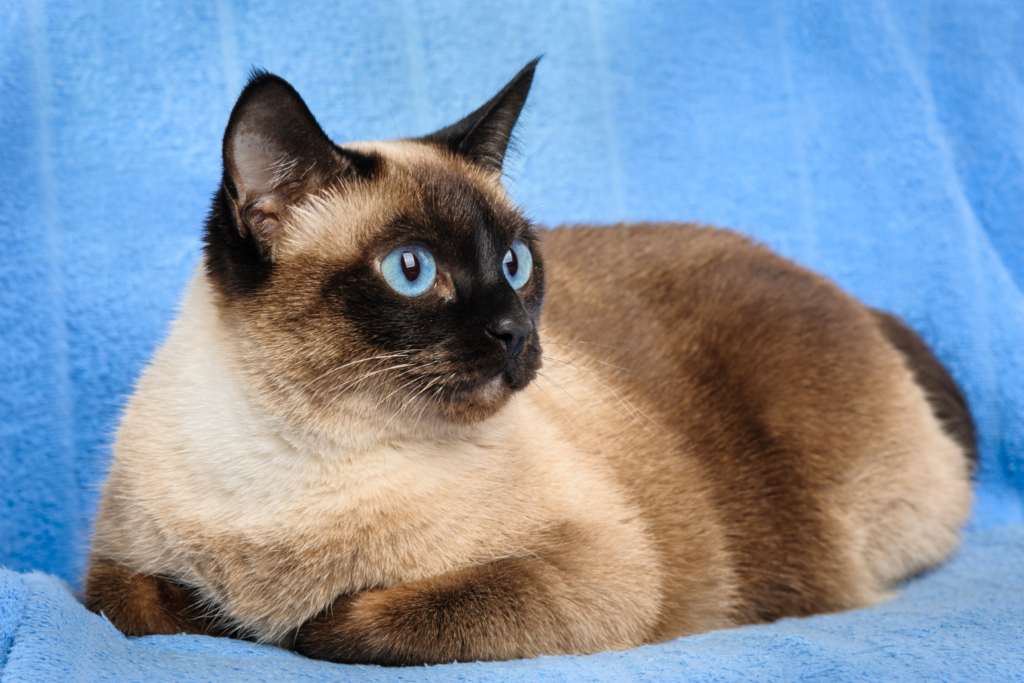
The Siamese cat is easy to recognize and difficult to ignore. Brilliant blue eyes, a pale body with darker points, a long angular silhouette, and strikingly large ears create one of the best-known appearances in the cat world. Yet the breed’s voice and social intensity often have a greater effect on daily ownership than its looks.
Many Siamese cats follow their people, answer when spoken to, investigate closed doors, climb to high observation points, and object loudly when a routine changes. That involvement can feel like living with an unusually intelligent companion. It can also be a poor fit for someone who expects a quiet, emotionally distant cat that entertains itself indefinitely.
This guide explains Siamese personality, size, appearance, colors, grooming, feeding, enrichment, health, lifespan, breeder questions, household compatibility, and two optional products that may support—not replace—good daily care.
How we researched this Siamese guide: This is a research-based editorial guide, not a hands-on product test, veterinary diagnosis, or guarantee about an individual cat. We reviewed current TICA and CFA breed information, the CFA Siamese standard revised in 2026, UC Davis veterinary-genetics resources, feline environmental and nutrition guidance, peer-reviewed research, TICA’s buyer guidance, and current manufacturer documentation for the featured products. Modern Cat Society has not purchased or field-tested those products. Manufacturer claims and listing limitations are identified as such.
Quick Verdict
Editorial verdict: The Siamese is an outstanding choice for someone who wants an athletic, communicative, people-oriented cat and is prepared to provide daily interaction. It is a weak match for a household that values silence, prolonged emotional independence, or a pet that stays out of everyday activity.
Best for: Interactive adults, families with respectful children, experienced first-time owners, people interested in training and play, and households that genuinely enjoy a cat with a strong voice and visible social needs.
Skip it if: Frequent vocalization would frustrate you, the cat would routinely spend long days and evenings without companionship, you want a guaranteed low-energy pet, or you will not verify pedigree and health records before buying from a breeder.
Siamese Cat at a Glance
Characteristic
Typical Siamese
Origin
Thailand, historically known as Siam
Adult size
Medium, long, refined, and muscular rather than bulky
Typical female weight
Approximately 5–8 lb
Typical male weight
Approximately 8–12 lb
Life expectancy
TICA lists 10+ years; some individuals live considerably longer
Coat
Very short, fine, glossy, and close-lying
Eyes
Blue and almond-shaped under the pedigree standard
CFA point colors
Seal, chocolate, blue, and lilac
Personality
Vocal, affectionate, curious, active, and people-oriented
Activity
High; enjoys climbing, play, exploration, and learning
Grooming
Low-complexity coat care, plus routine nails, teeth, and veterinary care
Important health topics
CEP290/rdAc progressive retinal atrophy and familial amyloidosis
Best environment
Predictable indoor home with interaction, vertical choice, play, rest, and foraging
Main ownership challenge
Meeting social and mental needs without assuming every behavior is “just the breed”
TICA currently describes the Siamese as medium-sized, with adult females around 5–8 pounds and males around 8–12 pounds. It lists a life expectancy of 10+ years and notes that some individuals have lived past 20. Those figures describe a broad population; they are not a promised weight or lifespan for a kitten.[1]
Siamese History and Thai Origins
The Siamese has a genuine historical connection to Thailand. CFA traces pointed cats to manuscripts from the Ayutthaya period and records the breed’s arrival in Western cat exhibitions during the late nineteenth century. A cat named Siam was sent by the American consul in Bangkok to President Rutherford B. Hayes in 1878, becoming an early documented Siamese arrival in the United States.[2]
That history is more reliable than the most dramatic legends. Siamese cats are often described online as sacred temple guardians available only to royalty. Stories involving palaces, monks, and aristocratic households are part of the breed’s cultural lore, but they should not be presented as a single, fully documented origin story.
Early British fanciers helped establish the Siamese in organized cat shows, and CFA recognized it among its foundational breeds. Selective breeding eventually emphasized the long, refined body and wedge-shaped head seen in the current show standard.[2][3]
A pointed shelter cat can be a wonderful companion, but color alone does not prove Siamese ancestry. If breed certainty matters, registration and pedigree documentation matter more than a blue-eyed photograph.
What Does a Modern Siamese Cat Look Like?
The 2026 CFA standard describes a medium-sized, svelte, refined cat with long tapering lines, fine bone, and firm muscle. The body should be tubular, the neck long, the legs slim, and the tail thin and tapered. Despite the elegant appearance, the cat should feel strong and lithe—not fragile, bony, or weak.[3]
The head forms a long wedge. Straight lines run from the nose toward the tips of the large, broad-based ears, creating a triangle without a break at the whiskers. In profile, the forehead and nose form a long straight line. The blue eyes are medium-sized, almond-shaped, and angled in harmony with the wedge.[3]
A responsible breeder should prioritize health, function, temperament, and proportion—not maximize one dramatic feature at the expense of balance.
Siamese vs. Thai: why online photos look so different
“Traditional Siamese,” “applehead Siamese,” “old-style Siamese,” and “Thai” are often treated as interchangeable terms online. Modern registries make a clearer distinction.
TICA recognizes the Thai as a separate breed intended to preserve the more moderate pointed-cat type associated with early twentieth-century Siamese cats. The Thai has fewer extremes, a more moderate body, and a laterally rounded upper head projecting into a wedge-shaped muzzle. The modern Siamese is longer, narrower, and more angular.[4]
If an advertisement calls a kitten an “applehead Siamese” but supplies no pedigree, treat the description as a visual label rather than proof of breed. Colorpoint genes occur beyond registered Siamese lines.
Why Siamese Cats Have Dark Points
Siamese coloring is produced by temperature-sensitive pigment restriction. UC Davis explains that cats with the Siamese colorpoint genotype produce less pigment in warmer areas of the body and more in cooler extremities. The face, ears, lower legs, paws, and tail therefore become darker than the torso.[5]
Kittens are born very pale because the prenatal environment is warm and relatively uniform. Their points emerge after birth as body regions experience different temperatures. The exact contrast continues to change with age, genetics, climate, and individual physiology. CFA’s current standard explicitly allows darker body shading in older cats while still requiring visible contrast between the body and points.[3][5]
Siamese colors depend on the registry
CFA recognizes four traditional point colors within the Siamese breed:
Seal point: deep seal-brown points with a warm pale body
Chocolate point: warm milk-chocolate points with an ivory body
Blue point: slate-blue points with a cool bluish-white body
Lilac point: pale frosty gray points with a pinkish tone and a glacial-white body
Cats with the same general body type but additional point colors or patterns may be classified by CFA as Colorpoint Shorthairs. TICA uses a broader Siamese Breed Group framework and accepts more color and pattern expressions within that group.[1][2][3]
When discussing a kitten, ask for its registered breed and color rather than relying on a seller’s casual terminology.
Are all Siamese cats blue-eyed?
Blue eyes are required by the modern Siamese breed standard.[3] A cat can have pointed coloring and blue eyes without being a registered Siamese, however. Himalayan, Ragdoll, Birman, Thai, Colorpoint Shorthair, mixed-breed, and other colorpoint cats may share parts of the visual pattern.
Appearance can suggest ancestry. Pedigree documentation establishes it.
Siamese Cat Personality
TICA and CFA consistently describe the Siamese as social, active, affectionate, intelligent, vocal, and deeply involved with people. Many follow family members through the home, supervise chores, seek warm laps, sleep close to their humans, and respond with different sounds when spoken to.[1][2]
These are matching clues, not a script for every individual. Early socialization, health, environment, age, and individual temperament all matter.
Yes, Siamese cats are usually vocal
The famous voice is not just an internet joke. TICA says the Siamese is known for expressing opinions throughout the day, while CFA emphasizes communication through vocalization and body language.[1][2]
A Siamese may vocalize to greet, request food, initiate play, locate a person, object to a closed door, or react to a routine. Some use a deep, carrying call; others communicate through softer chirps and conversational sounds.
“Vocal breed” should never be used to dismiss sudden change. New nighttime crying, persistent yowling, distress around the litter box, increased hunger, disorientation, or unusual silence can accompany pain, endocrine disease, urinary problems, sensory decline, cognitive change, stress, or other medical concerns. Learn your cat’s normal pattern and contact a veterinarian when it changes meaningfully.
Are Siamese cats affectionate?
Many are intensely affectionate, but affection does not always mean uninterrupted lap time. One Siamese may sleep under the covers. Another may sit against your leg, bring toys, follow you, or hold long “conversations” without enjoying restraint.[1][2]
Invite contact and observe consent. A cat that turns away, flicks its tail, flattens its ears, shifts its skin, or leaves is communicating a limit. Respecting those early signals protects trust and reduces the chance of a bite caused by overstimulation.
Can a Siamese cat be left alone?
TICA says Siamese cats generally dislike being left alone for long periods.[1] That does not mean every healthy adult develops separation anxiety when an owner works outside the home, nor does it mean buying a second cat automatically solves distress.
Assess the whole day. A Siamese that spends a normal work period resting but receives play, predictable meals, observation opportunities, safe climbing, and meaningful companionship before and after work has a different life from a cat that is alone through most days and evenings.
Persistent vocalization, escape behavior, house-soiling, appetite change, overgrooming, agitation, or withdrawal can have behavioral or medical causes. Record patterns and seek professional evaluation rather than diagnosing by breed.
A compatible cat or cat-friendly dog can provide company, but relationships cannot be forced. Introductions should be gradual, and each animal needs separate access to food, water, litter, resting places, hiding options, and elevated territory.[6]
Children, cats, and dogs
TICA describes the breed as generally social with children, other cats, and cat-friendly dogs.[1] Compatibility still depends on the individuals and the introduction process.
Teach children to use toys instead of hands, avoid chasing or carrying the cat, and stop interaction when the cat withdraws. Give the Siamese elevated escape routes and quiet resting areas that no child or dog may invade. A sociable breed is not endlessly tolerant.
Apartment living
A Siamese can live very well in an apartment. Usable territory matters more than raw floor area. Vertical shelves, a stable tree, window observation, scratching surfaces, hiding options, and interactive play can turn a modest home into a complex environment.[6]
The practical limitation is sound. If the building has thin walls and the cat is highly vocal, neighbor tolerance may matter. No responsible guide can promise that an individual Siamese will be quiet enough for a particular lease or building.
Intelligence, Training, and Enrichment
TICA highlights fetching, leash walking, jumping, cabinet opening, exploration, and other problem-solving behavior in the breed.[1] Intelligence can be delightful, but it does not mean a Siamese needs constant electronic entertainment. It means the cat benefits from opportunities to make safe choices, work for outcomes, and complete hunting-like sequences.
The Feline Veterinary Medical Association’s environmental guidance emphasizes safe places, separated resources, play and predatory behavior, positive human interaction, and an environment that respects the cat’s sense of smell.[6] For a Siamese, translate those principles into a daily rhythm rather than a room full of unused products.
A practical enrichment plan
Use wand toys in short sessions that allow stalking, chasing, catching, and a clear finish.
Rotate a few toys instead of leaving every item available indefinitely.
Hide part of a measured dry-food ration in easy locations and increase difficulty gradually.
Teach a target touch, sit on a mat, enter a carrier, or come when called using small rewards.
Provide a tall, stable scratching post and at least one horizontal option.
Offer elevated resting places and a safe window view.
Keep cardboard boxes, paper bags without handles, and tunnels in rotation.
End before frustration or exhaustion, especially with kittens, seniors, and cats with medical limitations.
Training should be cooperative. Reward the behavior you want, keep sessions short, and avoid punishment, startling devices, or forced handling. A Siamese may learn quickly, but speed varies and food motivation is not universal.
Vertical territory is especially valuable
TICA specifically notes that Siamese cats are strong jumpers that enjoy heights.[1] A useful setup might combine a stable cat tree beside a window, a tall scratcher, and a safe route to an elevated bed.
Check base stability, platform size, anchors, traction, and the route down. Kittens, seniors, and cats with painful joints may need closer landing points.
Neither product is essential. A phone-free play session, cardboard box, food hunt, and stable perch may provide more value than expensive technology. Buy only when the product solves a specific problem and its maintenance, subscription, materials, and safety requirements fit your home.
Product
Best use
Main limitation
Furbo 360° Cat Camera
Checking activity and interacting remotely through compatible camera features
The linked offer requires a paid plan; a camera does not treat anxiety or prove how much a cat ate
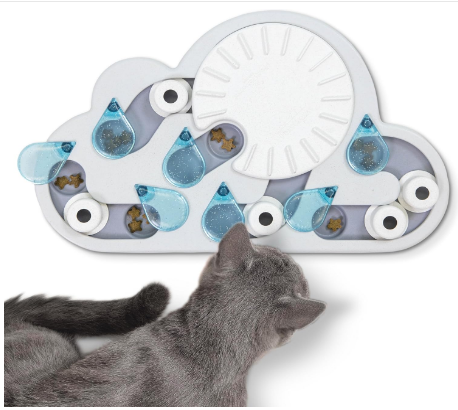
Nina Ottosson Rainy Day Puzzle & Play
Supervised foraging with part of a measured ration
Official documentation says 14 compartments, and the puzzle should not be left unsupervised
Furbo 360° Cat Camera
A rotating pet camera can answer a useful question: what does your Siamese actually do when nobody is home? It may show relaxed sleeping, normal eating, active window watching, repeated pacing, or vocal episodes that would otherwise remain invisible.
Furbo’s current support documentation distinguishes its purchasing models. The standalone Furbo 360° retains core functions such as live view, two-way audio, treat tossing, and basic barking or meowing alerts without a Furbo Nanny subscription. Subscription packages add advanced alerts, recordings, daily summaries, and related services. The Amazon listing linked in this article is explicitly presented as paid plan required to activate, so its ongoing cost should be treated as part of the purchase—not as an optional surprise.[11]
The camera is not a diagnostic device. Video can help you document patterns for a veterinarian or behavior professional, but it cannot confirm separation anxiety, measure food intake, or replace in-person care. Two-way audio may comfort one cat and confuse another; test reactions calmly. Treat tossing also adds calories and should be included in the daily total.
Best for: An owner who wants remote observation and understands the linked plan requirement.
Skip it if: You want a subscription-free purchase, expect the device to cure distress, cannot place it securely, or would use remote treats instead of daily play and companionship.
Outward Hound’s current product page says the Rainy Day Puzzle & Play has 14 hidden food compartments, adjustable difficulty, no removable pieces, and capacity for up to one-quarter cup of food. The manufacturer suggests batting pegs and rotating raindrop-shaped covers to reveal rewards.[12]
That corrects the old draft, whose Amazon title claimed 19 hidden cups. Retailer titles can combine inaccurate or outdated text, so rely on the exact model received and its instructions.
Introduce the puzzle at its easiest setting with visible food. Let the cat discover one movement at a time, then make access more difficult only after success. Use part of a measured meal rather than adding uncounted treats, and confirm that the cat can still obtain its full daily nutrition.
The manufacturer instructs owners to supervise, prevent chewing, inspect for damage, and store the puzzle when empty.[12] That is particularly important for a persistent Siamese that tries to solve plastic with its teeth.
Best for: A food-motivated cat that enjoys manipulation and needs structured indoor foraging.
Skip it if: The cat chews hard plastic, becomes distressed by inaccessible food, guards resources, or needs a simpler feeding surface because of age, disability, or medical advice.
A Siamese does not need an exotic breed-specific diet simply because it is lean and athletic. Choose food labeled complete and balanced for the appropriate life stage and any diagnosed medical need. AAFCO explains that “complete” means the required nutrients are present and “balanced” means they are supplied in appropriate ratios; kitten growth and adult maintenance are distinct nutritional stages.[7]
The show standard asks for a slender cat in excellent physical condition—not an underweight cat. Fine bone, a tubular torso, and a tight abdomen can make healthy Siamese proportions look different from a cobby British Shorthair, but ribs, spine, and hips should not be sharply prominent.
Use a veterinary body-condition assessment rather than comparing your cat with edited online images. Weigh periodically, measure portions, include treats and puzzle food in the total, and adjust for age, neuter status, activity, calorie density, and health.
Fast eating can sometimes improve when food is divided into smaller meals or introduced through an appropriate puzzle. Repeated vomiting, weight loss, extreme hunger, appetite decline, diarrhea, or difficulty swallowing requires veterinary evaluation. “Scarf and barf” is not a diagnosis, and an automatic feeder cannot rule out disease.
Grooming and Routine Care
The Siamese coat is short, fine, and close to the body. CFA says specialized equipment is unnecessary and suggests hand grooming or a rubber brush to remove loose hair. Most cats need only a brief weekly session, with frequency adjusted for actual shedding and tolerance.[2][3]
Low-maintenance coat care does not mean maintenance-free ownership. Routine care includes:
Nail trimming at an individual interval
Dental home care when tolerated
Ear and skin observation without unnecessary cleaning
Parasite prevention based on veterinary advice and exposure
Vaccination and preventive examinations
Microchip registration and current contact information
Clean bowls, litter boxes, bedding, toys, and feeding equipment
Brush teeth gradually with cat-appropriate toothpaste; never use human toothpaste. Dental additives and treats are supplemental tools, not automatic substitutes for brushing and veterinary dental assessment. For a step-by-step approach, read How to Brush Your Cat’s Teeth: A Stress-Free Guide.
Use grooming to notice changes. New dandruff, greasy coat, hair loss, skin redness, bad breath, difficulty chewing, reduced self-grooming, or pain when touched deserves attention. A social Siamese may hide physical illness behind continued interaction.
Siamese Cat Health
Siamese cats can develop any condition found in the wider cat population. Two inherited concerns receive repeated attention in current breed and genetics resources: CEP290/rdAc progressive retinal atrophy and familial amyloidosis. Screening and family-history review reduce defined risks but cannot guarantee lifelong health.
Progressive retinal atrophy
Progressive retinal atrophy, or PRA, describes retinal degeneration that can lead to vision loss. CFA identifies a recessive form relevant to Siamese breeding, and UC Davis lists Siamese among the breeds appropriate for the CEP290/rdAc test.[2][8]
UC Davis explains that affected cats have normal vision at birth, with degeneration detectable later and variable progression. Because inheritance is autosomal recessive, a carrier is not expected to develop this form but can pass the variant to offspring. Two carriers can produce affected kittens.[8]
Ask for the actual laboratory reports for both parents and learn how the breeder plans matings. “DNA tested” is incomplete unless the breeder states which variants were tested and provides interpretable results.
A negative result for one known PRA variant does not certify the eyes against every congenital, acquired, traumatic, infectious, or age-related condition. New night hesitation, dilated pupils, collisions, or difficulty navigating warrants a veterinary eye examination.
Familial amyloidosis
Amyloidosis involves abnormal protein deposits within tissues. CFA identifies amyloidosis affecting the liver as a concern under ongoing genetic investigation in Siamese lines.[2] Peer-reviewed research has documented familial AA amyloidosis in Siamese cats, with the liver as an important target organ.[9]
This is not currently as simple as ordering one universally established commercial DNA result and declaring a line “clear.” Family history therefore matters. Ask whether amyloidosis, unexplained liver disease, abdominal hemorrhage, or unusually early death has occurred in parents, siblings, grandparents, or other close relatives.
Do not assume that nonspecific signs prove amyloidosis. Reduced appetite, lethargy, weight loss, vomiting, pale gums, abdominal enlargement, collapse, or laboratory changes have many possible causes. They require veterinary assessment rather than breed-based diagnosis.
Lifespan and preventive care
TICA lists Siamese life expectancy as 10+ years and notes exceptional individuals living beyond 20.[1] It is safer to describe the breed as potentially long-lived with wide individual variation than to promise a 15-to-20-year lifespan.
Genetics, body condition, dental health, nutrition, indoor safety, infectious-disease prevention, veterinary access, and chance all influence longevity. Keep a consistent preventive-care schedule and investigate changes in appetite, thirst, urination, litter habits, breathing, vision, movement, vocalization, weight, or social behavior.
Emergency signs—including open-mouth breathing, severe breathing effort, collapse, seizures, uncontrolled bleeding, inability to urinate, or sudden paralysis—require urgent veterinary care regardless of breed.
Choosing a Responsible Siamese Breeder or Rescue
TICA’s buyer guidance recommends verifying breeder credibility, seeing how cats are raised when possible, requesting parental health and genetic records, reviewing registration documents, reading the written contract, and avoiding high-pressure or suspicious payment practices.[10]
For a Siamese kitten, ask for:
Pedigree and registration information from a recognized registry
CEP290/rdAc PRA results for both parents and an explanation of the mating
Family history of amyloidosis, liver disease, vision loss, and early death
Age-appropriate vaccination, veterinary, and parasite records
Information about kitten socialization, household exposure, and handling
The kitten’s current food, litter, routine, and temperament
A written health agreement and return-to-breeder policy
The age at which the kitten may leave and the support offered after placement
Observe adult relatives when possible. Look beyond eye color and ear size: watch movement, breathing, play, recovery after activity, social confidence, and body condition. A breeder should be able to discuss limitations without claiming that no cat in the line can ever become ill.
Registration alone is not proof of excellent practice. An unregistered pointed rescue cat does not need pedigree status to become an exceptional companion, and an adult’s vocal and social style may be easier to observe than a kitten’s.
A Realistic Siamese Care Routine
Every day
Measure complete and balanced food and count treats or puzzle portions in the total.
Refresh water, wash visibly dirty bowls, and scoop litter boxes.
Offer at least one focused interactive play session; many individuals enjoy several short sessions.
Provide conversation and contact without forcing physical affection.
Notice appetite, elimination, breathing, movement, vision, vocalization, and behavior.
Every week
Groom the short coat and feel body condition beneath it.
Inspect nails, mouth, ears, skin, and paw pads without escalating restraint.
Rotate selected toys while keeping essential resources predictable.
Wash puzzles and inspect camera, cords, shelves, scratchers, and toys for damage.
Periodically
Weigh the cat and discuss body-condition trends with the veterinary team.
Trim nails according to growth and tolerance.
Confirm microchip registration, preventive-care dates, and emergency contacts.
Reassess jumping routes, litter access, play intensity, and resting comfort as the cat ages.
Pros and Cons of Siamese Cat Ownership
Pros
Considerations
Highly social and people-oriented
May struggle in a chronically isolated household
Vocal and communicative
Voice can be frequent, loud, and demanding
Intelligent and trainable
Needs mental challenge and may create its own activities
Athletic and playful
Requires safe climbing and daily interactive play
Short, easy-care coat
Still sheds and needs nails, teeth, and preventive care
Often compatible with respectful children and pets
Introductions and individual temperament still determine success
Can thrive in apartments
Vertical setup, window safety, and neighbor tolerance matter
Potentially long-lived
PRA and familial amyloidosis deserve breeder scrutiny
Who Should Choose a Siamese Cat?
Choose a Siamese if you want a cat that participates. The right owner enjoys responding to vocal communication, setting aside time for play and training, creating vertical territory, and noticing subtle changes in a highly interactive companion.
Choose another cat if silence is essential, your schedule leaves little time for interaction, repeated climbing would be difficult to accommodate, or you want affection without the possibility of insistence. A quieter adult cat with a known temperament may fit better than choosing a Siamese and hoping its defining tendencies disappear.
The goal is not to find the most impressive pedigree photograph. It is to match a real cat’s needs with a household that will enjoy meeting them.
Frequently Asked Questions
1. Are Siamese cats really very vocal?
Usually, yes. TICA and CFA both describe vocal communication as a defining breed tendency.[1][2] Volume and frequency vary, and a sudden change from an individual’s normal vocal pattern should not be dismissed as “just Siamese.”
2. Are Siamese cats affectionate?
Many are strongly affectionate and people-oriented. They may follow family members, seek warmth, sleep nearby, sit on laps, or communicate throughout the day.[1][2] Individual preferences for cuddling and handling still vary.
3. How big do Siamese cats get?
TICA currently lists adult females at approximately 5–8 pounds and males at 8–12 pounds.[1] Healthy body condition matters more than forcing an individual toward either end of a breed range.
4. How long do Siamese cats live?
TICA lists 10+ years and notes that some Siamese have lived beyond 20.[1] That upper figure is exceptional, not a guarantee. Genetics, health, weight, safety, and veterinary care influence lifespan.
5. Why are Siamese cats darker on the face, ears, paws, and tail?
Their colorpoint pattern results from temperature-sensitive pigment restriction. Cooler extremities develop more pigment than the warmer torso.[5]
6. Are Siamese kittens born white?
They are generally born very pale because the prenatal environment is uniformly warm. The darker points develop after birth and can continue changing with age and temperature.[3][5]
7. Is a Thai cat the same as a Siamese cat?
Not under TICA’s current system. The Thai is a separate breed preserving a more moderate old-style pointed-cat form, while the modern Siamese is longer and more angular.[4]
8. Can a Siamese cat be left alone during the workday?
Many healthy adults can manage a reasonable work period when the total routine includes enrichment and meaningful companionship. TICA notes that the breed generally dislikes prolonged solitude.[1] Persistent distress signs deserve veterinary or behavioral evaluation.
9. Does a Siamese cat need another cat?
Not automatically. Some thrive with a compatible companion; others prefer being the only cat while receiving sufficient human interaction. A second pet is a relationship, not an enrichment product, and must be introduced gradually with separate resources.[6]
10. Can Siamese cats live in apartments?
Yes. Provide safe vertical territory, scratching, hiding, play, clean litter, food, water, and social contact.[6] Vocalization and building sound insulation are practical considerations.
11. Are Siamese cats easy to groom?
Their short, close coat is relatively simple and often needs only brief weekly grooming.[2][3] They still require nail care, dental attention, parasite prevention, clean resources, and routine veterinary care.
12. What health records should a Siamese breeder provide?
Ask for parental CEP290/rdAc PRA results, family history related to amyloidosis and early death, pedigree and registration records, veterinary documentation, and a written contract.[2][8][9][10] No test can guarantee lifelong health.
Final Verdict: Is a Siamese Cat Right for You?
The Siamese is not remarkable only because of blue eyes and dramatic points. Its defining quality is participation. This is a cat that may follow, answer, observe, climb, learn, demand, cuddle, and turn ordinary household routines into shared events.
That intensity is the breed’s appeal and its central tradeoff. A Siamese needs interaction, play, safe choices, predictable care, appropriate nutrition, preventive medicine, and an owner who listens when behavior changes. Technology may support that routine, but it cannot replace it.
If you want a quiet cat that blends into the background, this breed may feel exhausting. If you want a responsive companion that seems determined to share everyday life, the Siamese can be extraordinary.
The best description is also the simplest: a Siamese does not merely live in your home. It expects to be part of the conversation.
Sources and References
The International Cat Association — Siamese. Current size, lifespan, colors, personality, social behavior, activity, jumping, training, grooming, and general breed characteristics. View source
Cat Fanciers’ Association — Siamese. Current breed history, personality, traditional colors, grooming, physical attributes, progressive retinal atrophy, and amyloidosis guidance. View source
Cat Fanciers’ Association — Siamese Show Standard, revised 2026. Current conformation language covering head, ears, eyes, body, coat, condition, color development, and the four recognized point colors. View standard
The International Cat Association — Thai. Current distinction between the moderate Thai or old-style Siamese type and the modern Siamese breed standard. View source
UC Davis Veterinary Genetics Laboratory — Colorpoint Restriction. Temperature-sensitive pigment production and inheritance of Siamese colorpoint restriction. View source
Feline Veterinary Medical Association — AAFP/ISFM Environmental Needs Guidelines. Safe places, separated resources, play and predatory behavior, positive human interaction, and sensory-respecting feline environments. View source
Association of American Feed Control Officials — Selecting the Right Pet Food. Meaning of complete and balanced nutrition and life-stage distinctions for cats and dogs. View source
UC Davis Veterinary Genetics Laboratory — Progressive Retinal Atrophy (PRA rdAc). CEP290/rdAc progression, autosomal-recessive inheritance, result interpretation, and Siamese testing relevance. View source
Niewold et al. — Familial Amyloidosis in Cats. Peer-reviewed documentation of familial AA amyloidosis in Siamese cats and the liver as an important target organ. View research
The International Cat Association — Pet Buyer’s Guide. Breeder verification, parental health records, registration, contracts, payment safety, and scam avoidance. View source
Furbo Help Center — Camera Features and Subscription Models. Official distinction between standalone core features and plan-enhanced or subscription-required offers. View basic features and view purchase-model comparison
Outward Hound — Nina Ottosson Rainy Day Puzzle & Play. Current manufacturer description, 14 compartments, one-quarter-cup capacity, adjustable difficulty, and supervision instructions. View source
Sources, breed information, veterinary guidance, and product documentation reviewed August 29, 2026. Manufacturer features, retailer listings, subscription terms, and health-screening recommendations can change. Verify critical details before purchasing and consult your veterinarian about an individual cat.
10 Most Popular Cat Breeds in the U.S. in 2026 By Demosthenes Staudinger | Updated August 23, 2026 Affiliate disclosure: […]
Manage Consent
To provide the best experiences, we use technologies like cookies to store and/or access device information. Consenting to these technologies will allow us to process data such as browsing behavior or unique IDs on this site. Not consenting or withdrawing consent, may adversely affect certain features and functions.
Functional
Always active
The technical storage or access is strictly necessary for the legitimate purpose of enabling the use of a specific service explicitly requested by the subscriber or user, or for the sole purpose of carrying out the transmission of a communication over an electronic communications network.
Preferences
The technical storage or access is necessary for the legitimate purpose of storing preferences that are not requested by the subscriber or user.
Statistics
The technical storage or access that is used exclusively for statistical purposes.The technical storage or access that is used exclusively for anonymous statistical purposes. Without a subpoena, voluntary compliance on the part of your Internet Service Provider, or additional records from a third party, information stored or retrieved for this purpose alone cannot usually be used to identify you.
Marketing
The technical storage or access is required to create user profiles to send advertising, or to track the user on a website or across several websites for similar marketing purposes.

![Furbo 360° Cat Camera [No Monthly Fee] 360° Rotating Live View, Meowing Alerts, Treat Toss, 2-Way Audio, Night Vision, Smart Home Kitten Monitoring, No AI Alerts](https://moderncatsociety.com/wp-content/uploads/2026/07/Furbo-360°-Cat-Camera-Review.png "Furbo 360° Cat Camera Review")