Maine Coon Cat: Complete Guide to Personality, Size, Care, Health, Lifespan, and Cost
By Demosthenes Staudinger | Updated August 23, 2026
Affiliate disclosure: Modern Cat Society may earn a commission from qualifying purchases made through links in this article, at no additional cost to you. Our editorial conclusions are based on independent research, and affiliate relationships do not determine which products or breeds we recommend.
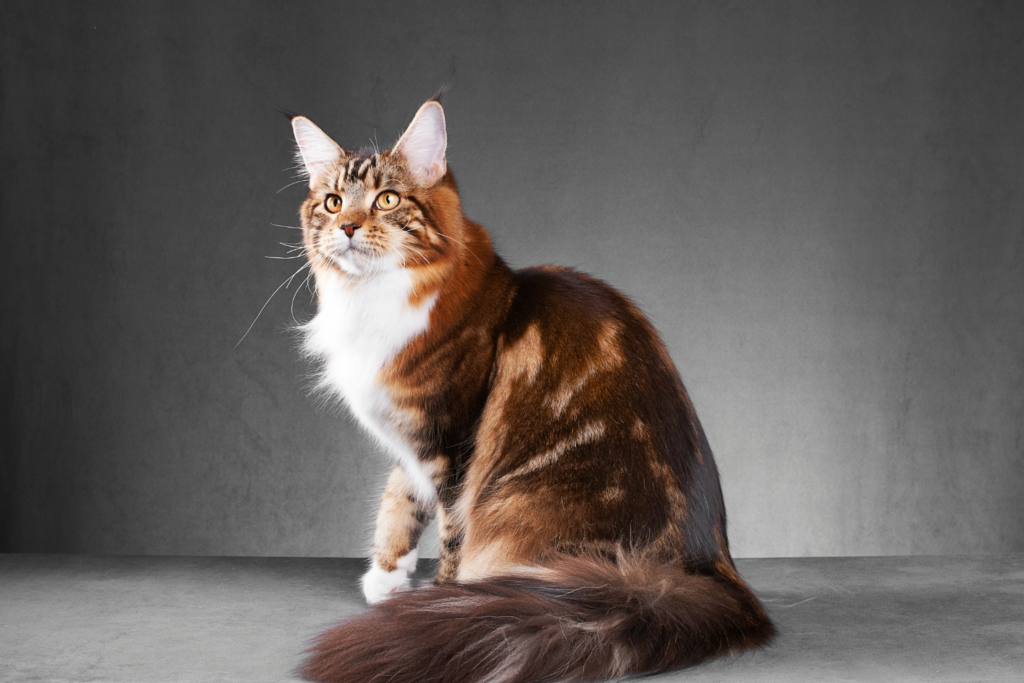
The Maine Coon cat combines a rugged, almost wild-looking silhouette with a famously sociable temperament. Its rectangular body, substantial paws, tufted ears, flowing tail, and uneven shaggy coat make it one of the most recognizable pedigreed cats.
Size, however, is only part of the appeal. Many Maine Coons are playful, observant, trainable, and deeply involved in household life without becoming constant lap cats. Their chirps and trills can seem surprisingly delicate for such substantial animals.
They are not effortless pets. A large, slow-maturing cat needs appropriately sized equipment, a stable climbing environment, consistent coat care, weight management, and veterinary planning for inherited conditions associated with the breed.
Prospective owners also need to look beyond dramatic social-media photos. Not every Maine Coon becomes enormous, a high purchase price does not prove responsible breeding, and a negative result on one DNA test does not make a kitten free of all inherited risk.
This guide examines the Maine Coon as a long-term household commitment rather than an aesthetic purchase. It covers verified breed traits, conflicting official size ranges, grooming, health screening, cost, breeder evaluation, home setup, and close alternatives.
The goal is not to declare the Maine Coon universally “best.” It is to help you decide whether this gentle, interactive, physically substantial cat fits your home, time, budget, and expectations.
How we researched this guide: This is a research-based editorial breed guide, not a hands-on test, veterinary examination, or substitute for advice from your veterinarian. We reviewed current breed information from TICA and CFA; feline genetic-test guidance from the UC Davis Veterinary Genetics Laboratory; cardiology information from Cornell University; OFA screening information; the TICA pet-buyer guide; and veterinarian-reviewed care material. Where official sources differ, we identify the disagreement instead of manufacturing a single precise answer.
Quick Verdict
Editorial verdict: The Maine Coon is an excellent choice for someone who wants a large, intelligent, socially engaged cat and is prepared for regular grooming, oversized equipment, preventive health screening, and potentially higher lifetime costs.
Best for: Households that want an interactive companion, can provide daily play and sturdy vertical space, and value temperament and responsible breeding more than extreme size.
Skip it if: You want a low-maintenance coat, have no room for large litter and climbing equipment, need highly predictable lap-cat behavior, or cannot absorb the veterinary and care costs that may accompany a large pedigreed cat.
Maine Coon at a Glance
| Decision factor | What prospective owners should know |
|---|---|
| Origin | A natural breed associated with Maine and the northeastern United States [1][2] |
| Adult size | Large, but published ranges vary; sex, frame, lineage, and body condition all matter [1][2] |
| Maturity | Slow; official breed sources describe roughly three to five years to full development [1][2] |
| Coat | Semi-long, shaggy, and uneven in length, with a substantial tail and seasonal variation [1][2] |
| Temperament | Commonly gentle, playful, people-oriented, and present without always being a lap cat [1][2] |
| Vocal style | Often communicates through soft chirps, trills, and conversational sounds [1] |
| Grooming | At least weekly assessment; some coats and seasons require two or three sessions per week [1][2] |
| Exercise | Daily interactive play, stable climbing options, scratching surfaces, and room to move comfortably |
| Health planning | Ask about HCM, SMA, pyruvate kinase deficiency, hip, patella, and cardiac screening [1][3][4][5][7] |
| Life expectancy | TICA lists 12.5 years or more as a general breed overview, not an individual guarantee [1] |
| Best fit | Owners seeking a sociable, intelligent cat and willing to budget for size, coat, and health needs |
The central caveat is variability: sex does not dictate personality, large parents do not guarantee an enormous kitten, and friendliness does not mean every cat enjoys being carried.
What Is a Maine Coon Cat?
The Maine Coon is a naturally developed North American breed strongly associated with the state of Maine. Popular folklore has produced colorful origin stories, but tales involving crosses with raccoons are biologically impossible. The more useful story is visible in the cat itself: a practical, weather-suited body and coat shaped around life in a cold region.
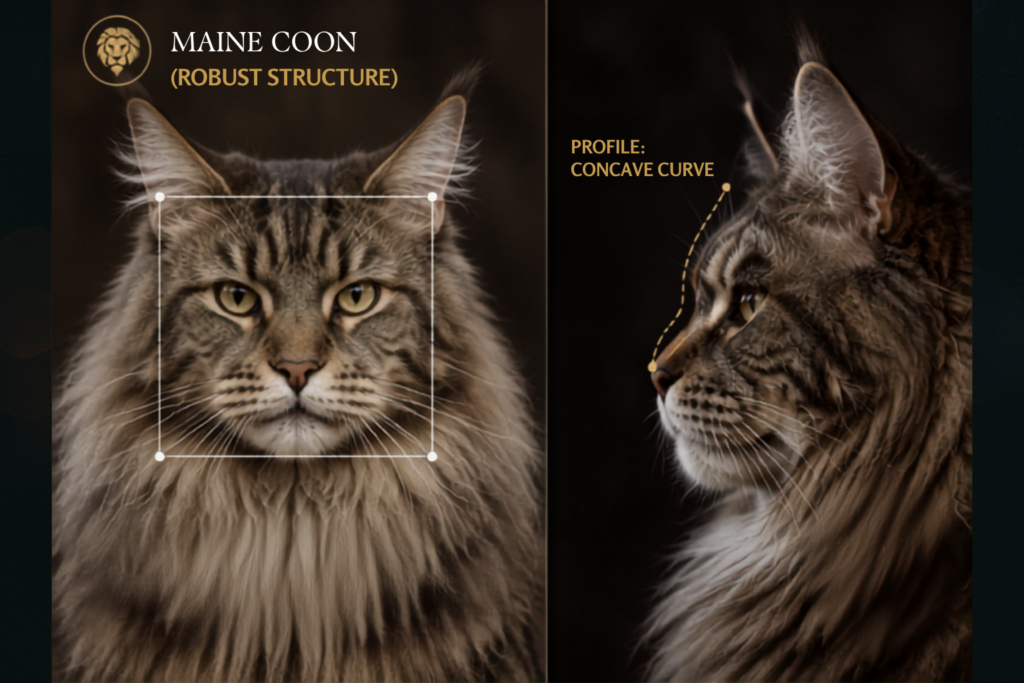
CFA describes the breed as large, rugged, and balanced, with a long rectangular body, broad chest, substantial bone, large ears, and a square muzzle. Its standard explicitly warns that quality and balance should not be sacrificed for size. That sentence matters because internet culture often rewards the heaviest-looking cat rather than the healthiest, most structurally balanced one [2].
Appearance and coat
A Maine Coon coat is not uniformly long like a curtain. It is typically shorter across the shoulders and longer around the stomach, britches, ruff, and tail. Texture and undercoat density vary among individuals, which partly explains why one official source says weekly combing may be sufficient while another advises more frequent work [1][2].
The breed appears in many traditional colors and patterns. Brown tabby is iconic, but many solids, smokes, tortoiseshells, and tabby-and-white combinations occur. CFA does not accept pointed patterns or colors arising from chocolate or lavender [2]. Color does not predict health or temperament.
A breed, not simply a body type
A large domestic longhair with ear furnishings is not automatically a Maine Coon. Pedigree documents connect a cat to an established breeding program; appearance alone cannot confirm ancestry. A shelter’s “Maine Coon mix” label may describe breed-like traits rather than documented lineage, so evaluate the individual cat’s health, behavior, grooming tolerance, and household compatibility.
Maine Coon Size and Growth: How Big Do They Really Get?
Maine Coons are among the largest established domestic cat breeds, but there is no single weight every adult should reach. Even the current TICA breed page illustrates the problem with false precision. Its “At a Glance” section lists females at 12–15 pounds and males at 18–22 pounds, while the detailed text on the same page gives approximately 9–13 pounds for females and 13–18 pounds for males. CFA takes a less rigid approach on its main breed page, saying adult males may reach or exceed 20 pounds and females are generally smaller [1][2].
These figures are descriptive ranges, not targets. They may reflect different samples, editorial updates, or ways of distinguishing typical from larger examples. They do not justify feeding a cat toward the top of a range.
Frame is not the same as fat
A 20-pound cat can be appropriately conditioned on one frame and overweight on another. The number on a scale needs context: rib coverage, waist, abdominal contour, muscle mass, age, and veterinary assessment. WSAVA body-condition tools are designed to evaluate shape and fat coverage rather than treating body weight alone as the diagnosis [10].
Overfeeding a growing Maine Coon does not create better bone or a more authentic breed representative. It creates excess energy intake and can make movement, grooming, and orthopedic comfort harder. Feed for healthy growth and body condition, not for a photo caption.
Slow maturity requires patience
Official sources agree that Maine Coons mature slowly even though their stated timelines differ. TICA describes full maturity at around four years in its overview and approximately three to five years in the detailed text. CFA says the breed can take up to about three years to mature [1][2].
A lanky adolescent may continue to broaden, develop coat, and gain muscle after other cats appear adult. Slow maturity does not mean unrestricted kitten food or perpetual weight gain; ask your veterinarian how growth is tracking.
What size changes in daily life
Large cats expose weak assumptions in ordinary pet furniture. Before buying, compare litter-box interior dimensions, entrance size, usable perch area, base width, and published weight limits with your cat’s actual body. Measurements are more useful than labels such as “XL” or photos taken with small models.
Maine Coon Personality and Everyday Behavior
The Maine Coon is frequently called dog-like. The comparison can be useful if it means many individuals follow people, learn routines, retrieve toys, or participate in household activity. It becomes misleading if it promises obedience, constant physical affection, or a cat with no need for autonomy.
TICA describes the breed as friendly and people-oriented but not necessarily dependent or inclined to sit on a lap. CFA similarly emphasizes a gentle, easygoing, playful nature [1][2]. A typical Maine Coon may prefer to lie beside you, supervise from the floor, or follow from room to room rather than remain in your arms.
Social without always being clingy
Many Maine Coons want access to the household rather than nonstop handling. Work, cooking, or unpacking may attract a large feline observer. This “assistant” quality is charming for people who want interaction but can frustrate someone expecting a distant pet.
Individual social needs still vary. Early handling, breeder or foster environment, genetics, age, health, and life experience all shape behavior. Breed tendencies can guide questions; they cannot guarantee a kitten’s adult personality.
Voice and communication
Maine Coons are known for chirps, trills, and soft conversational sounds. TICA specifically notes this vocal style [1]. Some are chatty and some quiet. Sudden increases in vocalization, especially when paired with appetite, litter-box, mobility, or sleep changes, should not be dismissed as a cute breed trait; they can justify veterinary attention.
Intelligence, play, and training
Puzzle feeders, wand-toy sessions, reward-based training, and toy rotation suit an observant cat. Some retrieve naturally, but fetch is not guaranteed by a pedigree.
Their slow maturity can extend playful adolescent behavior. Provide predictable outlets for chase, pounce, climbing, scratching, and foraging before a bored, powerful cat invents its own.
Children and other pets
The breed’s generally steady reputation can make it a good family candidate, but compatibility depends on both sides. Children should learn not to pull the tail, disturb sleep, corner the cat, or lift a heavy animal without safe support. The cat needs escape routes and resting areas that children cannot invade.
Introduce cats or dogs gradually using separate resources, scent exchange, barriers, and short positive sessions. Size does not make a Maine Coon immune to fear.
Grooming and Coat Care
The Maine Coon coat is often easier to manage than its volume suggests, but “easy” is relative. TICA says a weekly comb may be sufficient for many cats and notes that texture varies. CFA recommends combing two or three times per week. Those recommendations are not truly incompatible: a silky, low-undercoat cat in a stable season may need less work than a cottony-coated cat shedding heavily or developing friction mats [1][2].
The best schedule is therefore inspection-led. Run your fingers and a metal comb through high-friction areas at least weekly, then increase frequency whenever the comb catches, the undercoat releases heavily, or your cat cannot maintain the coat comfortably.
Where tangles hide
Check behind the ears, under the front legs, along the chest ruff, under the collar area, across the belly, and around the hindquarters. Small tangles are easier and less painful to address than tight mats. Never cut close to the skin with household scissors; feline skin is thin and can be pulled into the mat. Ask a veterinarian or qualified groomer for help with tight, widespread, or skin-adherent matting.
Build cooperation before you need it
Introduce grooming in brief sessions: touch one area, comb, reward, and stop before the cat becomes defensive. Use a stable nonslip surface. Cooperation is more sustainable than restraining a strong adult for an occasional marathon.
Also practice paw handling, carrier entry, and gentle body checks. A dramatic coat should not distract from teeth, ears, skin, weight, and mobility.
Grooming tools worth considering
A wide-tooth metal comb and a finer comb give more useful feedback than a brush that glides over the surface while leaving undercoat tangles. Vacuum-assisted systems may collect loose hair, but introduce motor noise and suction gradually and never force use.
For readers comparing that format:
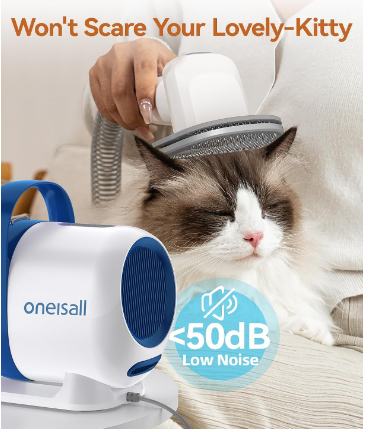
Verify current attachments, returns, and your cat’s tolerance; this guide has not hands-on tested it.
Creating a Maine Coon-Friendly Home
A Maine Coon does not necessarily require a large house. It does require usable space. Thoughtful vertical territory, clear travel routes, generous litter facilities, and stable equipment can make an apartment work better than a poorly arranged larger home.
Litter boxes: usable area matters
Choose a box long and wide enough for the cat to enter, turn, dig, and eliminate without pressing against the walls. A high entrance may contain scatter but exclude a kitten, senior, or cat with pain. Covered boxes can restrict turning room despite a large exterior.
For automatic boxes, assess entrance geometry, interior space, moving parts, litter compatibility, sensors, cleaning access, and the cat’s willingness to use the mechanism. Keep a familiar conventional box available during transition.
If an open-top automatic design is on your shortlist:
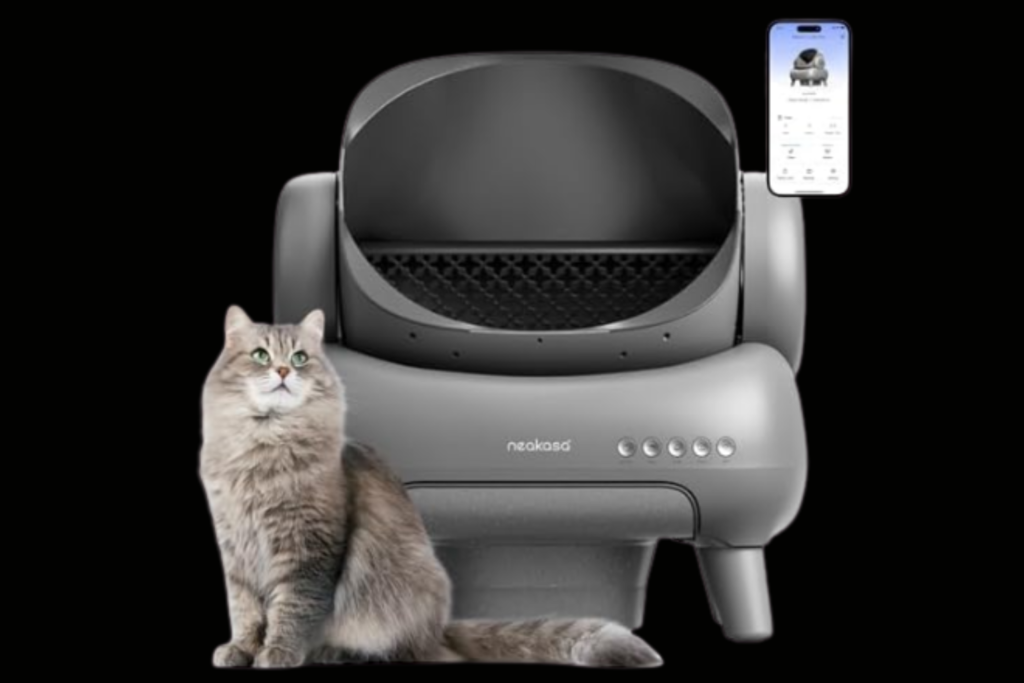
Verify its current usable dimensions and safety instructions; this is a contextual option, not a hands-on endorsement.
Cat trees: stability before height
A tall tower is useful only if the cat can launch, land, turn, and sleep safely. Look for a heavy base, thick posts, full-torso platforms, secure fasteners, and manufacturer-approved wall anchoring. Retighten hardware periodically.
For a furniture-style option:
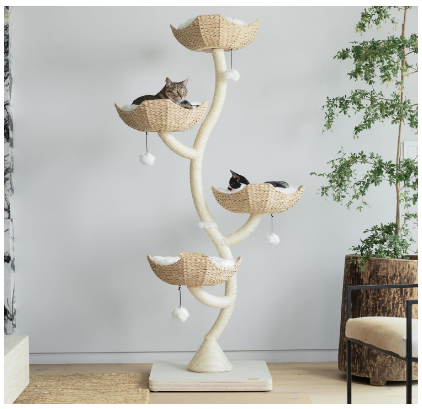
Verify current measurements, assembly, anchoring, and returns; attractive furniture is not automatically appropriate for every Maine Coon.
Provide vertical and horizontal scratching materials, including a stable post tall enough for a full-body stretch. Distribute water, food, resting places, and litter boxes so another pet cannot block access, and add low resting options as the cat ages.
Apartment living
Maine Coons can live successfully in apartments when daily routines compensate for limited floor area. Use vertical space without creating unstable bottlenecks, schedule active play, control heat, and consider neighbor-sensitive nighttime enrichment. The practical obstacle is often equipment footprint, not the cat’s breed label.
Food, Hydration, and Healthy Weight
There is no evidence-based requirement that every Maine Coon eat a breed-branded diet. The useful standard is a nutritionally complete food appropriate for life stage, fed in an amount that maintains healthy growth and body condition. Medical conditions can change that recommendation, so diet decisions should be individualized with a veterinarian.
Do not feed for maximum size
Large-breed marketing and dramatic weight claims can tempt owners to overfeed kittens. Growth should be steady, not accelerated. Portion guides are starting points because calorie density, activity, neuter status, treats, and individual metabolism differ. Weigh food when accuracy matters and reassess portions as growth or activity changes.
Use body-condition and muscle-condition assessment rather than admiring a higher number on the scale. WSAVA provides standardized cat body-condition resources, but a veterinarian can help owners learn what the diagrams mean on a heavily coated animal [10]. Hands-on assessment is especially valuable when fur hides the waist and ribs.
Hydration and feeding format
Fresh water should be reliably available. Some cats drink more readily from a fountain; others prefer a wide, still bowl. Wash the vessel often and place water where the cat feels safe. Wet food can contribute water, but format alone does not determine whether an entire diet is appropriate.
Puzzle feeders and measured treat training can combine enrichment with calorie control. Count rewards as part of daily intake, and seek veterinary guidance for unexpected changes in weight, thirst, appetite, digestion, or urination.
Maine Coon Health: Risks and Responsible Screening
Breed predisposition is not destiny, but responsible ownership means understanding known risks. Breeder screening reduces uncertainty; it cannot eliminate every possibility.
Hypertrophic cardiomyopathy
Hypertrophic cardiomyopathy, or HCM, is characterized by abnormal thickening of the heart’s ventricular walls and is the most commonly diagnosed cardiac disease in cats. Cornell notes a genetic component in Maine Coons [6]. Signs can be absent until disease is advanced, which is why a normal-looking cat is not proof of a normal heart.
UC Davis offers a DNA test for the Maine Coon-associated A31P variant in the MYBPC3 gene. The laboratory emphasizes incomplete penetrance: carrying the variant changes risk but does not predict with certainty whether or when disease will occur. Just as important, cats that test negative for this specific variant can still develop HCM because the test does not detect every genetic or non-genetic cause [3].
TICA therefore advises responsible breeders to combine relevant DNA testing with periodic echocardiograms performed by a board-certified veterinary cardiologist [1]. Ask to see reports, dates, identities of the cats tested, and whether screening continued into adulthood. “Parents DNA clear” is not equivalent to comprehensive cardiac evaluation.
Open-mouth breathing, collapse, marked breathing effort, sudden hind-limb pain or weakness, or acute distress can be emergencies requiring immediate veterinary help.
Spinal muscular atrophy
Spinal muscular atrophy, or SMA, is an autosomal recessive condition documented in Maine Coons. UC Davis describes early signs beginning around three to four months, including instability and a progressive abnormal gait. It is not typically fatal, but it can cause significant disability [4].
DNA testing can identify clear, carrier, and at-risk genotypes. A carrier is not the same as an affected cat, but breeding decisions must account for both parents. Request the laboratory result rather than accepting “vet checked” as genetic documentation.
Pyruvate kinase deficiency
Pyruvate kinase deficiency can cause inherited hemolytic anemia. UC Davis describes it as autosomal recessive and includes Maine Coons among breeds for which testing is appropriate. Carriers are generally clinically normal, while mating two carriers can produce affected kittens [5]. Again, the value is in informed pairing and transparent records, not in treating every carrier as sick.
Hip dysplasia, patellas, and mobility
Hip dysplasia is not limited to dogs. Maine Coon breeding programs may use radiographic hip evaluation, and TICA also discusses patellar assessment [1]. OFA accepts cats in its hip dysplasia, cardiac, and patellar luxation databases; its feline hip process uses a standard ventrodorsal radiograph [7].
Screening cannot guarantee perfect joints. Maintain healthy body condition, add traction on slippery floors, and notice hesitation, reduced climbing, altered grooming, or litter-box difficulty; cats often express pain through behavior.
Routine health still matters
Breed risks should not eclipse routine care. Establish a veterinarian after adoption and keep examinations, vaccinations, parasite prevention, dental care, and age-appropriate screening current.
Choosing a Responsible Breeder or Adoption Route
The right question is not “How do I find the biggest kitten?” It is “Can this seller document thoughtful breeding, appropriate health screening, good early care, and a safe placement process?”
TICA’s pet-buyer guidance recommends researching the breed and seller, asking for health and genetic records for the parents, seeing where cats are raised when possible, reviewing current vaccination and diet information, and obtaining written terms covering health and returns. It also warns against pressure tactics, wire transfers or gift cards, suspiciously low prices, and sellers who cannot provide veterinary records [8].
Documents to request
Ask for registration information when a pedigreed Maine Coon is being sold, a written contract, veterinary records, and copies of relevant test results. For HCM, determine whether “screened” means only one DNA variant or also echocardiography, and note the dates. For recessive conditions such as SMA and pyruvate kinase deficiency, ask how the pairing avoids producing affected kittens.
Hip and patella information should identify the cat evaluated and the method used. Health claims without names, dates, issuing laboratories, or reports are difficult to verify.
Ask where kittens are raised, what household experiences they encounter, how grooming and carrier training are introduced, and when they leave. Meet the mother when practical and observe sanitation, body condition, breathing, coat, movement, and social behavior. A responsible breeder should also ask about your home, animals, children, veterinary plans, and understanding of the breed.
Guarantees and return clauses
A health guarantee is only as useful as its wording. Read deadlines, required examinations, exclusions, remedies, and any return requirement. A lifelong return-to-breeder clause can be a positive safety net when its operation is clear.
Never assume “registered,” “champion lines,” “European,” rare color, or high price automatically means ethical. Verify the practices behind the marketing.
Adoption and rescue
Breed rescues, shelters, and rehoming networks may offer adult Maine Coons or similar cats. Adults make size, coat, energy, and temperament easier to assess. Request medical records and arrange a veterinary evaluation.
Maine Coon Cost and Lifetime Budget
PetMD’s veterinarian-reviewed breed guide gives a broad purchase estimate of approximately $400–$2,000, but real asking prices can fall outside that range based on region, age, pedigree, purpose, breeder expenses, and market conditions [9]. Treat any online range as orientation, not a quote or a quality scale.
The acquisition fee is only the visible first line of the budget. A realistic plan includes:
- Veterinary examination, vaccines, parasite control, and spay or neuter care when not already completed
- Emergency or insurance planning, including breed-associated cardiac and orthopedic concerns
- A secure carrier sized for the adult cat
- Large litter boxes, litter, mats, waste supplies, and replacement components
- Complete food, treats used in moderation, and washable food and water vessels
- Stable climbing and scratching furniture with replaceable wear surfaces
- Combs, nail tools, dental-care supplies, and professional grooming if required
- Boarding, pet sitting, travel paperwork, or medication support when life circumstances change
Large equipment and higher food intake can make some categories costlier than for a smaller cat, but medical needs create the greatest uncertainty. Compare pet-insurance exclusions, waiting periods, reimbursement rules, and hereditary-condition language before enrollment; policies and prices vary too much to generalize.
Keep an emergency reserve even if you insure; reimbursement may follow payment, and not every condition is covered. An adult rescue with clearer needs may be a sounder financial choice than the cheapest online kitten.
Maine Coon vs. Norwegian Forest Cat vs. Ragdoll
All three breeds can be large, slow-maturing companions with substantial coats, but they are not interchangeable. The table summarizes official breed descriptions; individual cats can fall outside the typical pattern [1][2][11][12].
| Decision factor | Maine Coon | Norwegian Forest Cat | Ragdoll |
| General build | Long, rectangular, substantial, with a square muzzle | Strong, muscular climber with a triangular head and dense weatherproof coat | Large and substantial, generally softer in outline, with blue eyes and pointed coloring |
| Published size context | Official ranges vary; males can reach or exceed 20 lb | TICA lists females around 8–12 lb and males around 12–18 lb | TICA lists females around 10–15 lb and males around 15–20 lb |
| Maturity | Roughly three to five years depending on source | Can take up to about five years | Approximately four years |
| Social style | Involved, playful, friendly, often nearby rather than always on the lap | Intelligent, playful, affectionate, with a more independent streak | Typically laid-back, affectionate, and people-focused |
| Coat care | Weekly assessment, often more during shedding or with cottony texture | Weekly combing may suffice, with extra seasonal work | Weekly combing is commonly advised |
| Best match | Someone wanting an interactive “household assistant” | Someone wanting a capable climber with affectionate independence | Someone prioritizing a calmer, often physically affectionate companion |
| Important caveat | Do not select for extreme size | Requires strong vertical opportunities and coat planning | “Relaxed” never means a cat should tolerate rough handling |
Choose by the life you can support, not by which breed wins a size contest. Discuss individual adult behavior with a rescue or breeder, plan appropriate vertical space, and expect any cat to express affection on feline terms.
Read more:
Norwegian Forest Cat Guide: Personality, Size & Care
Maine Coon Pros and Cons
| Potential advantages | Potential drawbacks |
| Commonly social and involved in family life | Social engagement requires daily time and enrichment |
| Often playful well into a slow-maturing adolescence | Prolonged adolescent energy can be demanding |
| Intelligent and often responsive to reward-based training | Boredom can redirect powerful scratching and climbing toward furniture |
| Frequently friendly without constant lap dependence | People seeking a dedicated lap cat may be disappointed |
| Distinctive chirps and trills appeal to conversational-cat fans | Vocal or supervisory behavior will not suit every household |
| Can fit families when children respect boundaries | Large size makes unsafe lifting or rough handling more consequential |
| Rugged coat may be manageable with a consistent routine | Mats and seasonal shedding still require regular attention |
| Large, balanced appearance is visually striking | Ordinary litter boxes, carriers, and perches may be too small |
| Can adapt to apartment life with deliberate vertical space | Oversized stable equipment consumes real floor space |
| Established health tests support better-informed breeding | DNA testing cannot eliminate HCM or every inherited risk |
| Adult size and temperament can be easier to judge through rescue | A “Maine Coon mix” label may not document ancestry |
| Long-term companionship is possible with good care | Purchase, food, equipment, grooming, and veterinary costs can be substantial |
The same trait can appear on both sides. A cat that wants to supervise every task is delightful to one owner and intrusive to another. A dramatic coat can be a bonding ritual or an unwanted obligation. Honest fit matters more than a long list of attractive traits.
Who Should Choose a Maine Coon?
A Maine Coon is a strong candidate if you want a cat that participates in daily life, enjoy interactive play and training, have room for generously sized resources, and can maintain a grooming and preventive-care routine. It also helps to appreciate affection expressed through proximity rather than insisting on being held.
Families may do well with respectful interaction and protected retreats. Multi-pet homes need gradual introductions and distributed resources; apartment homes need enough equipment space and enrichment.
Who should choose another option?
Consider another cat if recurring grooming feels unrealistic, you cannot accommodate a large carrier and litter box, your budget has no room for urgent veterinary care, or you are primarily attracted to exaggerated size. A shorthaired adult rescue may offer more predictable maintenance; a foster-based rescue may help match a known lap-cat temperament; another longhaired breed may fit your preferred social style better.
How to Prepare for a Maine Coon
Measure before buying
Use the adult dimensions and weight limits published for carriers, litter systems, perches, shelves, gates, and furniture. Measure doorways and vehicle space as well as the product. Keep packaging until you confirm safe, voluntary use within the return period.
Establish cooperative care early
Pair combing, paw handling, carrier entry, and brief body checks with food or play rewards. Stop while the experience is still successful. A minute of willing participation repeated often is more useful than a weekly struggle.
Create a veterinary baseline
Book a new-pet examination, transfer records, discuss body condition, and ask how breed-associated cardiac and orthopedic risks affect this individual. Record resting behavior and normal mobility so changes are easier to notice later.
Protect joints and confidence
Offer stable steps between favorite levels, nonslip paths on slick floors, and more than one route away from busy areas. Adapt entrances and perch height as the cat ages rather than waiting for obvious disability.
Plan daily enrichment
Rotate toys and combine short chase sessions, food puzzles, scratching, observation windows, scent exploration, and simple training.
Track the cat, not the stereotype
Maintain notes on weight trends, appetite, grooming tolerance, breathing concerns, mobility, and behavioral changes. Your Maine Coon does not need to become the heaviest, fluffiest, most social, or most dog-like example online. Healthy individuality is the goal.
Frequently Asked Questions
How big does a Maine Coon cat get?
There is no universal adult weight. TICA currently lists 12–15 pounds for females and 18–22 for males in one overview, but roughly 9–13 and 13–18 pounds in its detailed text. CFA says males may reach or exceed 20 pounds [1][2]. Evaluate frame and body condition, not a target.
When is a Maine Coon fully grown?
Official descriptions generally place full development somewhere around three to five years, with TICA using around four years in its overview and CFA describing up to roughly three years [1][2]. Growth rate varies, and slow maturation is not permission to overfeed.
Are Maine Coons good family cats?
They are commonly described as gentle, playful, and people-oriented [1][2]. Success still depends on the individual, respectful children, protected rest areas, and careful pet introductions.
Do Maine Coons like to be held?
Some do, but the breed is not guaranteed to be a lap or carrying cat. TICA notes that many enjoy following people without necessarily sitting on them [1]. Let the individual choose contact and support the full body when lifting is necessary.
How often should a Maine Coon be groomed?
TICA says weekly combing is often adequate, while CFA recommends two or three sessions per week [1][2]. Coat texture, season, health, and self-grooming ability determine the schedule. Inspect high-friction areas at least weekly.
Are Maine Coons hypoallergenic?
No. No Maine Coon should be marketed as reliably hypoallergenic. People can react to proteins carried in saliva, skin secretions, and dander rather than hair length alone. If allergies are important, spend time with the specific cat and discuss risk management with a qualified medical professional before adoption.
Can a Maine Coon live in an apartment?
Yes, if it accommodates a large litter setup, stable vertical territory, safe routes, and daily activity. Equipment footprint, enrichment, temperature, noise, and the cat’s energy matter more than floor area alone.
What health tests should a Maine Coon breeder perform?
Ask about the Maine Coon-associated HCM DNA variant and cardiac ultrasound, plus SMA and pyruvate kinase deficiency DNA tests, hip evaluation, and patellar assessment. Pairing and family history matter; TICA warns that HCM DNA testing alone is incomplete [1][3][4][5][7].
Does a negative HCM DNA test mean the cat cannot develop HCM?
No. The UC Davis test detects a specific A31P variant associated with HCM in Maine Coons, but negative cats can still develop the disease from other causes. The laboratory explicitly says the result does not rule out all HCM [3]. Discuss cardiac screening with a veterinarian or veterinary cardiologist.
How much does a Maine Coon cost?
PetMD gives a broad buying estimate of about $400–$2,000, but actual prices vary [9]. Price does not prove quality. Compare health records, contract terms, breeder practices, travel, equipment, food, grooming, insurance, and veterinary costs.
Are male Maine Coons friendlier than females?
Sex is not a reliable personality guarantee. Socialization, genetics, early experience, health, age, environment, and the individual all influence behavior. Ask a breeder or foster carer for specific observations instead of choosing only from a male-versus-female stereotype.
How long do Maine Coons live?
TICA lists a general life expectancy of 12.5 years or more [1]. That is a population-level orientation, not a promise for an individual. Genetics, preventive care, indoor safety, nutrition, body condition, disease, and access to timely treatment all affect lifespan.
Final Verdict: Is a Maine Coon Right for You in 2026?
The Maine Coon earns its appeal through more than size, combining presence, playfulness, intelligence, sociability, and feline independence. It can participate affectionately in household life without becoming a constant lap cat.
That appeal comes with obligations: coat care, stable large equipment, patient weight management, informed health screening, and a budget extending beyond the kitten price.
Choose a Maine Coon if those responsibilities sound like a worthwhile part of the relationship. Choose another cat if the maintenance, space, uncertainty, or cost would create ongoing strain. Neither decision diminishes the breed; it simply respects the animal you would be bringing home.
The best Maine Coon is not the largest one. It is a healthy, well-socialized individual acquired responsibly and supported for life in a home that values the cat behind the dramatic coat.
Sources and References
- The International Cat Association (TICA). “Maine Coon.” Current breed overview, temperament, size, grooming, and health-screening guidance. Accessed August 23, 2026.
- Cat Fanciers’ Association (CFA). “Maine Coon Cat.” Breed description and standard. Accessed August 23, 2026.
- UC Davis Veterinary Genetics Laboratory. “Maine Coon Hypertrophic Cardiomyopathy.” A31P MYBPC3 test interpretation and limitations. Accessed August 23, 2026.
- UC Davis Veterinary Genetics Laboratory. “Spinal Muscular Atrophy in Maine Coons.” Inheritance, signs, and DNA testing. Accessed August 23, 2026.
- UC Davis Veterinary Genetics Laboratory. “Pyruvate Kinase Deficiency.” Feline inheritance and breed testing information. Accessed August 23, 2026.
- Cornell University College of Veterinary Medicine. “Hypertrophic Cardiomyopathy (HCM).” Feline cardiology overview. Accessed August 23, 2026.
- Orthopedic Foundation for Animals (OFA). “Frequently Asked Questions.” Feline hip, cardiac, and patellar database and evaluation information. Accessed August 23, 2026.
- The International Cat Association (TICA). “Pet Buyer’s Guide.” Breeder verification, records, contracts, and scam warning signs. Accessed August 23, 2026.
- PetMD. “Maine Coon.” Veterinarian-reviewed breed care and broad purchase-cost guidance, updated May 30, 2025. Accessed August 23, 2026.
- World Small Animal Veterinary Association (WSAVA). “Global Nutrition Guidelines.” Feline body-condition and nutrition assessment tools. Accessed August 23, 2026.
- The International Cat Association (TICA). “Norwegian Forest.” Breed size, maturity, coat, and temperament information. Accessed August 23, 2026.
- The International Cat Association (TICA). “Ragdoll.” Breed size, maturity, coat, and temperament information. Accessed August 23, 2026.
Sources and product information were last checked on August 23, 2026. Availability, specifications, prices, and policies can change; verify current details before making a purchase or care decision.