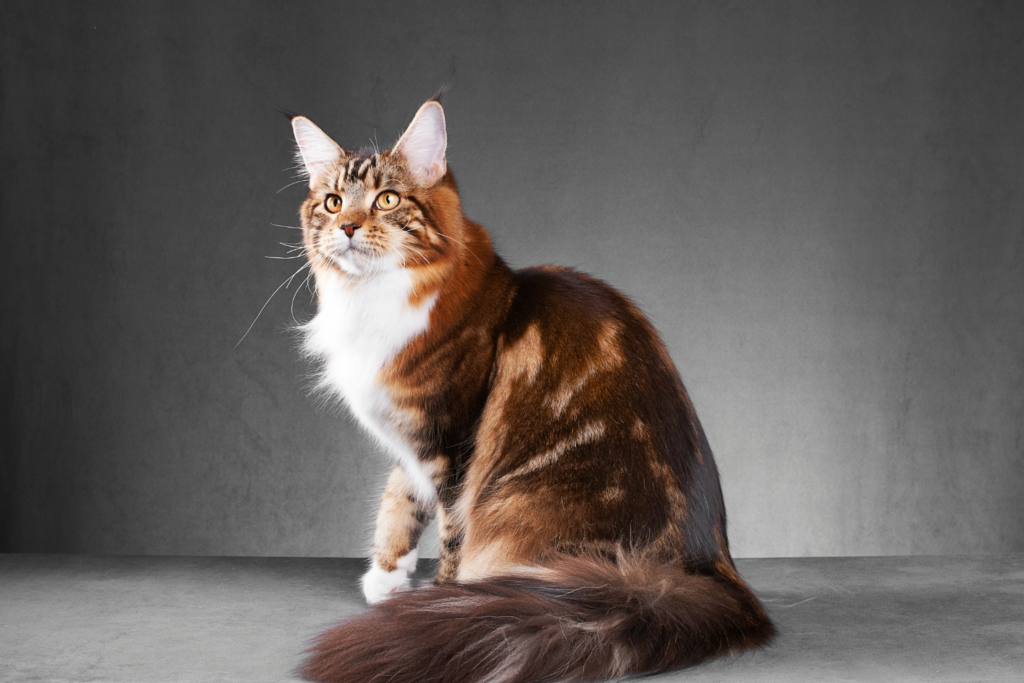
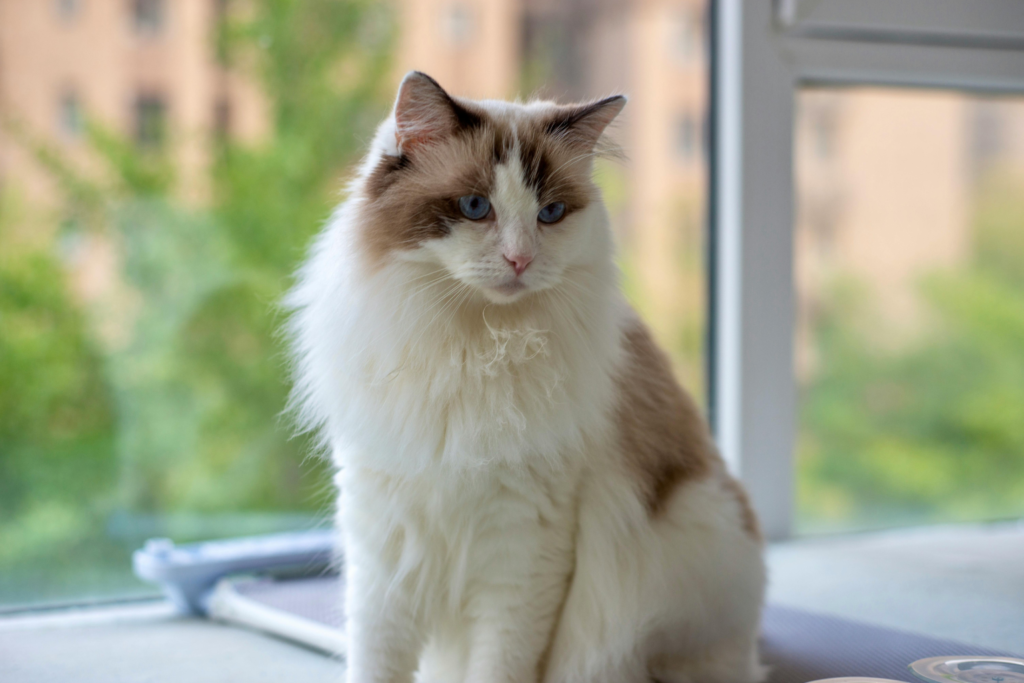
10 Most Popular Cat Breeds in the U.S. in 2026
By Demosthenes Staudinger | Updated August 23, 2026
Affiliate disclosure: This article contains affiliate links. As an Amazon Associate I earn from qualifying purchases. If you buy through one of these links, we may earn a commission at no additional cost to you. This does not affect our editorial recommendations.
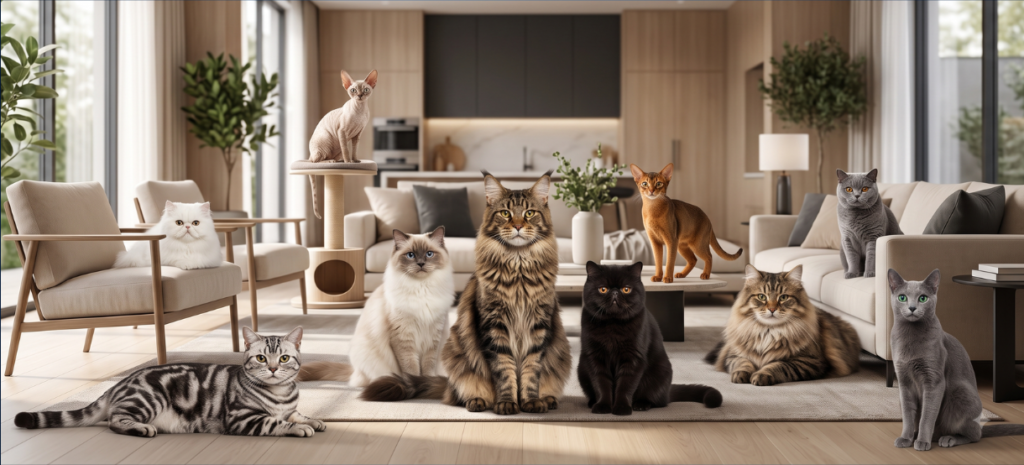
For readers researching the most popular cat breeds in the U.S., this 2026 guide uses the Cat Fanciers’ Association’s ranking published on April 22, 2026. CFA says the list is based on pedigree-registration data from the previous year [1].
A cat breed can look ideal in photographs and still be a difficult match for your everyday life. Activity, grooming, social needs, body size, health screening, and tolerance for time alone matter far more than a position on a popularity list.
That makes it a useful measure of interest within a major pedigreed-cat registry—not a census of every cat living in an American household. CFA’s public article also does not describe the figures as a U.S.-only registration subset, so the ranking should be read as a registry-based reference for U.S. readers rather than a national ownership survey.
The list is unusually diverse. It includes the substantial Maine Coon, the calm Ragdoll and Persian, the intensely social Devon Rex, the athletic Abyssinian, and comparatively independent shorthairs such as the British Shorthair and Russian Blue.
Popularity can make breed information and breeder networks easier to find, but it can also encourage rushed purchases, exaggerated marketing, and the assumption that every kitten will match a stereotype. No registry position guarantees health, temperament, or suitability.
The short answer is that the 2026 ranking is a useful starting point, not a decision. The best breed for you is the one whose real maintenance, behavior, size, and long-term costs fit the life you can consistently provide.
How we researched the 2026 ranking: This is a research-based editorial guide, not a hands-on evaluation of individual cats. We verified the ranking against CFA’s April 2026 announcement, then reviewed CFA’s current profile for each of the ten breeds and TICA’s pet-buyer guidance. Breed descriptions summarize documented tendencies, not guarantees. Modern Cat Society has not evaluated the health, temperament, breeder practices, or behavior of any individual cat mentioned or pictured.
Quick Verdict
Editorial verdict: CFA’s 2026 list is a credible registry-based snapshot of pedigreed-cat popularity, but it should be used to build a shortlist—not to choose a cat by rank.
Best for: Readers comparing established pedigreed breeds by temperament, activity, grooming, size, and household fit.
Skip it if: You want a census of all U.S. cats, a guaranteed personality, or proof that a highly ranked breed is healthier, easier, or better than a rescue cat.
Table of Contents
- How the 2026 ranking works
- The top 10 breeds at a glance
- 1. Maine Coon
- 2. Ragdoll
- 3. Persian
- 4. Exotic
- 5. Devon Rex
- 6. Abyssinian
- 7. British Shorthair
- 8. Siberian
- 9. American Shorthair
- 10. Russian Blue
- Lifestyle comparison
- Purebred or rescue
- How to choose
- Frequently asked questions
What the 2026 Ranking Actually Measures
CFA presents an annual popularity list using registrations from the preceding year. The 2026 article therefore reflects 2025 pedigree-registration activity within CFA [1]. It does not count every mixed-breed cat, unregistered purebred, shelter adoption, or cat registered only with another organization.
The word “popular” also has limits. Registration volume can reflect breeder activity, international demand within the registry, litter numbers, access to breeding programs, and owner interest. It does not measure satisfaction, health, ease of care, or how often a breed appears in all U.S. homes.
Use the ranking to discover breeds, then evaluate them with identical criteria: social style, activity, grooming, adult size, environmental needs, health-screening expectations, and whether you can meet those needs for the cat’s lifetime.
The 2026 CFA Ranking at a Glance
| Rank | Breed | Typical social style | Activity | Coat commitment | Strongest lifestyle fit | Main tradeoff |
|---|---|---|---|---|---|---|
| 1 | Maine Coon | Sociable, involved, moderately independent | Moderate to playful | Moderate | Interactive households wanting a large companion | Large equipment and breed-specific screening |
| 2 | Ragdoll | Affectionate, placid, people-oriented | Low to moderate | Moderate | Calm homes and families wanting close companionship | Size, coat care, and weight management |
| 3 | Persian | Quiet, affectionate, home-centered | Low | High | Owners who genuinely enjoy daily grooming | Intensive coat and facial care |
| 4 | Exotic | Quiet, loyal, adaptable | Low to moderate | Low to moderate | Persian admirers wanting a shorter coat | Shorter hair does not erase Persian-type care concerns |
| 5 | Devon Rex | Intensely social, playful, attached | High | Low, but specialized | People home often who want an active companion | Dislikes prolonged isolation; fragile coat |
| 6 | Abyssinian | Curious, affectionate, constantly engaged | High | Low | Active homes offering climbing and problem-solving | Can become frustrated without enrichment |
| 7 | British Shorthair | Calm, quiet, affectionate on its terms | Low to moderate | Low | Apartments and quieter households | May resist carrying; weight control matters |
| 8 | Siberian | Devoted, intelligent, easygoing with playful bursts | Moderate | Moderate to high | Forest-cat fans with room for stable climbing | Seasonal coat and slow maturity |
| 9 | American Shorthair | Even-tempered, playful, self-contained | Moderate | Low | Families wanting an adaptable classic | Strong hunting drive still needs an outlet |
| 10 | Russian Blue | Quiet, observant, affectionate after trust | Moderate | Very low | Predictable, peaceful homes | May be reserved with change or strangers |
These are editorial summaries of official breed tendencies [1]. Individual cats can differ substantially, and socialization, age, health, environment, and previous experience can matter as much as pedigree.
1. Maine Coon: The Social Gentle Giant
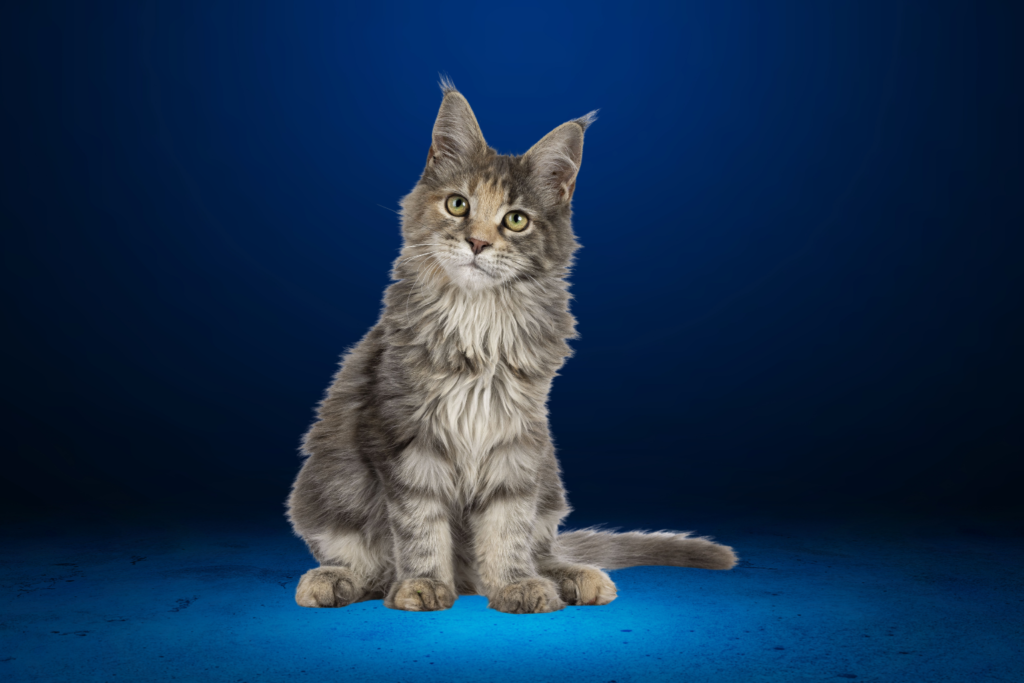
The Maine Coon holds CFA’s number-one position for the second consecutive year. CFA describes the breed as intelligent, adaptable, sociable, playful, and approachable [1]. Its rugged coat, long rectangular body, substantial paws, and large scale are major parts of its visual appeal.
What living with one can feel like
Many Maine Coons participate in household life without behaving like permanent lap cats. They may follow people, investigate routines, learn games, and communicate through chirps and trills. CFA’s fuller profile calls them friendly and easy to train while still fairly independent [2].
The phrase “gentle giant” should not become a size target. CFA says mature males may reach or exceed 20 pounds, but its standard emphasizes proportion and balance rather than exaggeration [2]. A healthy individual does not need to match the largest cat seen online.
Best fit and practical limitation
Choose a Maine Coon if you want an interactive, substantial cat and can provide a large carrier, roomy litter box, wide resting surfaces, stable climbing furniture, consistent combing, and responsible cardiac and orthopedic screening. Choose another breed if equipment footprint or coat care will become a burden.
For readers already comparing open-top automatic:
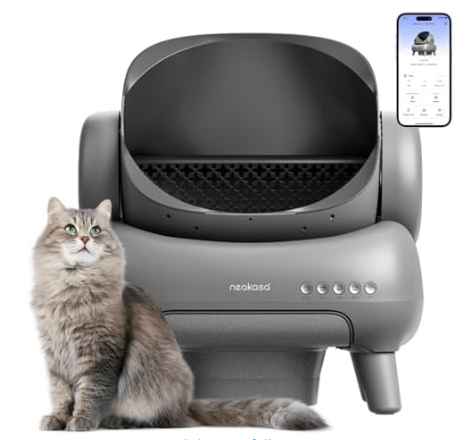
Measure usable space and keep a conventional box available during any transition; an automated box is optional and does not guarantee acceptance.
Read more: Maine Coon Cat: Complete Guide to Personality, Size, Care, Health, Lifespan, and Cost
2. Ragdoll: The Relaxed Companion
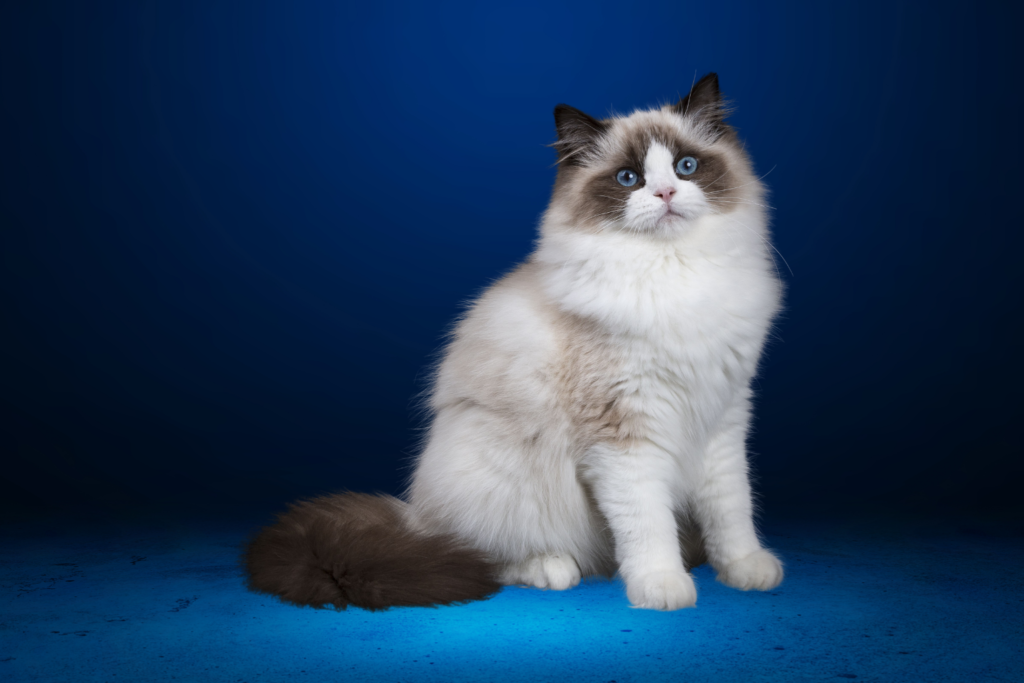
The Ragdoll ranks second. CFA describes it as docile, placid, affectionate, and devoted to human interaction, with vivid blue eyes and a medium-long pointed coat [1][3]. Its broad chest and sturdy body also make it one of the larger breeds.
What living with one can feel like
Ragdolls often appeal to people who want proximity and a calmer household rhythm. Their activity level is generally less intense than an Abyssinian’s, but they still need daily play and normal feline choice. The popular story that every Ragdoll goes limp when held is not a behavioral guarantee.
CFA advises combing at least once or twice weekly and notes that full size and weight may take about four years [3]. Their coat has less dense undercoat than some longhaired breeds, but “easy care” does not mean maintenance-free.
Best fit and practical limitation
A Ragdoll may suit a family, couple, or individual seeking a gentle, socially available companion and willing to manage coat, food portions, and large-cat equipment. It may disappoint someone wanting an independent cat or assuming calmness means the cat tolerates unlimited carrying.
For a deeper ownership overview, read the Modern Cat Society Ragdoll guide.
3. Persian: The High-Maintenance Homebody
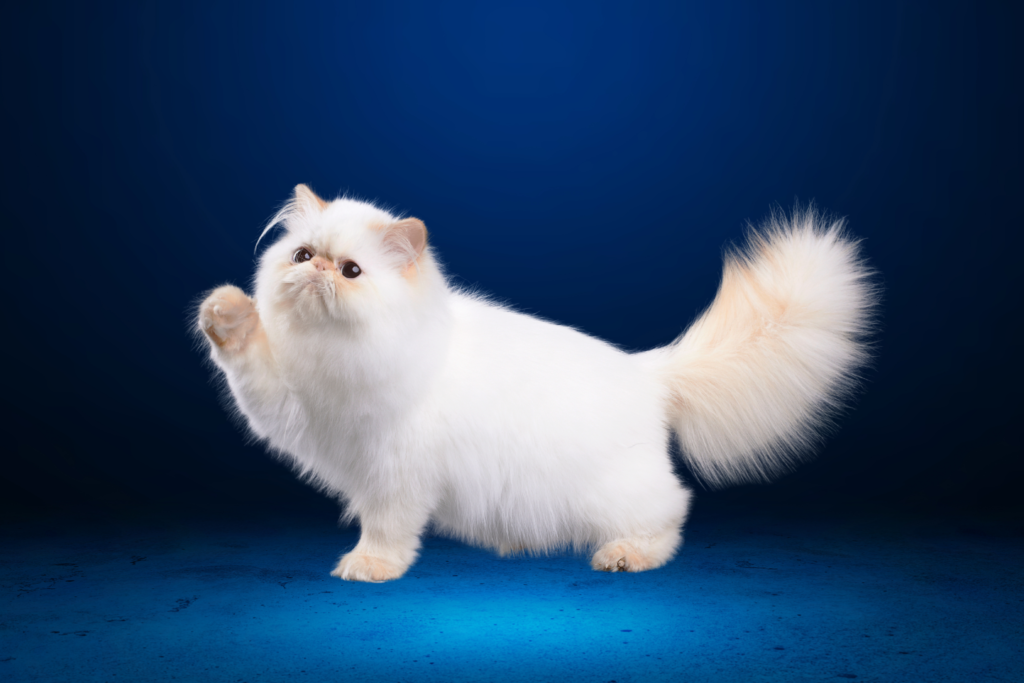
The Persian takes third place. CFA characterizes the breed as sweet, affectionate, quiet, playful in short periods, and generally happiest close to the ground [1][4]. The round head, substantial body, expressive eyes, and long flowing coat create its unmistakable appearance.
The coat is part of the lifestyle
Persian ownership requires more than occasional brushing. CFA calls for a serious grooming commitment, including thorough combing to prevent tangles, facial cleaning when needed, and sometimes professional grooming [4]. A prospective owner should practice cooperative handling early rather than waiting for mats to form.
The facial structure also deserves careful breeder selection. CFA notes that excessively small nostrils appeared in some lines and were associated with breathing problems, while responsible breeding has worked to reduce those issues [4]. Beauty should never be prioritized over comfortable breathing and function.
Best fit and practical limitation
Choose a Persian if you enjoy a serene cat and genuinely want grooming to become a daily care ritual. Skip the breed if coat work, eye-area care, bathing, or professional grooming would be postponed until a problem appears.
A vacuum-assisted tool may collect loose hair for a cat that accepts its sound, but it cannot remove tight mats or replace a metal comb. Introduce powered tools gradually and stop if the cat shows stress.
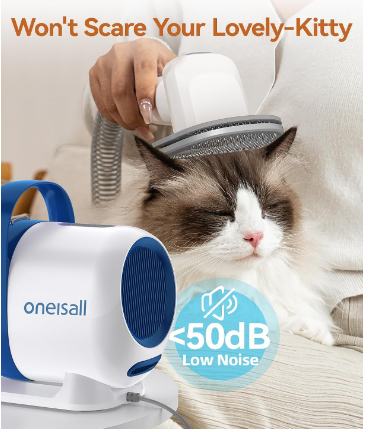
Read the Modern Cat Society Persian guide for more detailed coat and home-care planning.
4. Exotic: Persian Type With a Shorter Coat
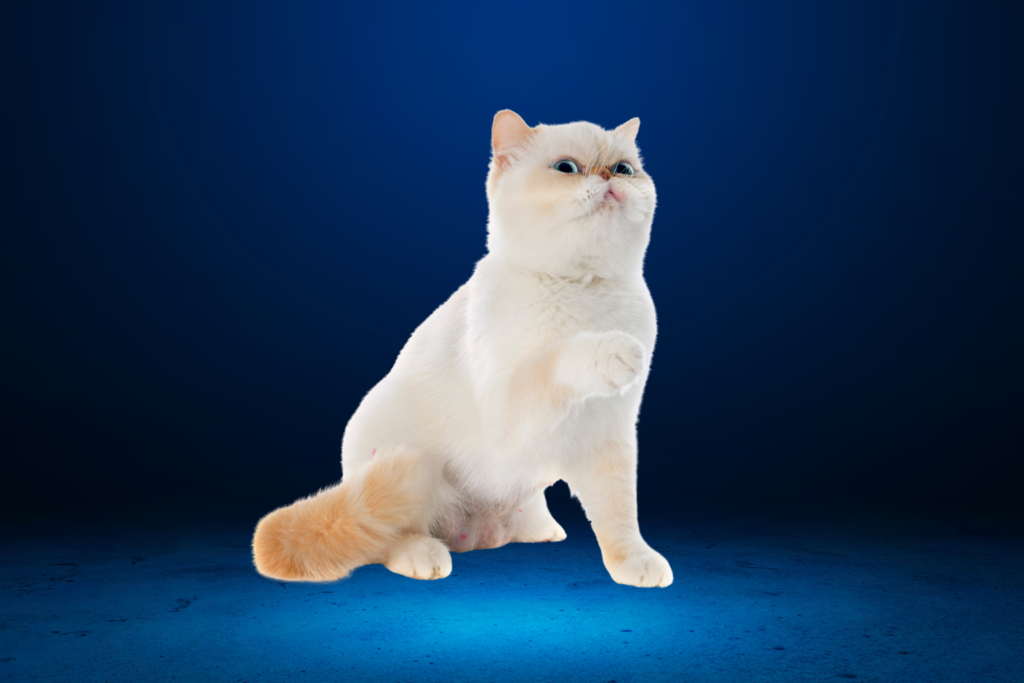
The Exotic ranks fourth. It was developed from Persians and selected shorthair breeds, producing a cat with Persian body and head type but a shorter, plush coat. CFA describes Exotics as sweet, quiet, loyal, adaptable, and generally a little more playful than Persians [1][5].
Easier coat does not mean effortless cat
Compared with a Persian, the coat usually takes less time. CFA says weekly combing may be sufficient for much of the year, with additional grooming or bathing during heavier seasonal shedding [5]. The dense undercoat can still release substantial fur.
The more important nuance is that the Exotic remains structurally Persian-like. Selecting the breed solely as a “low-maintenance Persian” ignores facial care, responsible genetic screening, and the possibility that individual coats or eyes need more attention.
Best fit and practical limitation
An Exotic may fit someone drawn to the Persian’s calm, affectionate style but unwilling to maintain a full flowing coat. It is not the right shortcut for someone seeking a cat with no grooming or breed-specific due diligence.
Ask breeders how they select for open nostrils, comfortable function, and relevant inherited-health screening. Request actual records rather than accepting a general claim that kittens are “health tested.”
Read more: Exotic Shorthair Cat: Personality, Care & Health Guide
5. Devon Rex: The People-Focused Entertainer
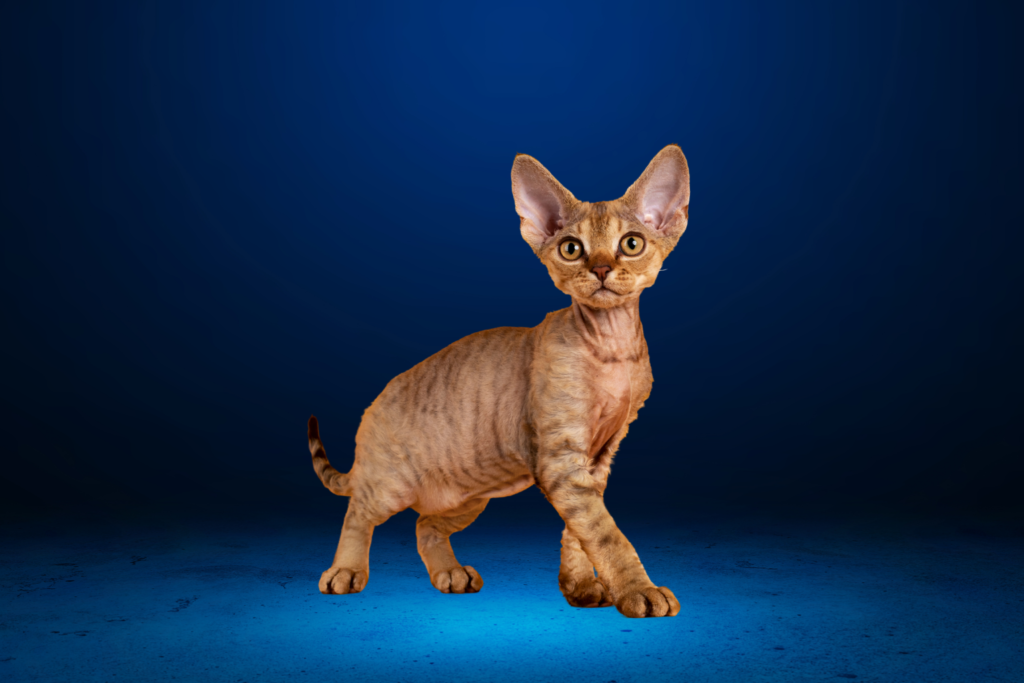
The Devon Rex is fifth and remains CFA’s highest-ranked shorthaired breed in the 2026 list [1]. Its large ears, expressive face, light wavy coat, and smaller frame make it visually distinct, but its social intensity is the more important ownership trait.
What living with one can feel like
CFA describes Devon Rex cats as deeply attached, playful, clever, and highly interested in human activity. Its profile warns that many dislike being left alone for long periods [6]. This can be delightful for someone who wants a constant companion and overwhelming for someone who expects a cat to remain quietly in the background.
The coat sheds less than many breeds but can be fragile, with sparse or bare areas in some individuals. CFA explicitly says the Devon Rex is not hypoallergenic [6]. Minimal fur does not eliminate allergen exposure or basic skin, ear, nail, and veterinary care.
Best fit and practical limitation
Choose a Devon Rex if your household offers frequent interaction, warmth, play, and companionship. Consider a more self-contained breed if the home is empty for long stretches or if constant feline involvement would feel intrusive.
Enrichment should emphasize participation: short training sessions, climbing, warm resting areas, puzzle activities, and games that involve people rather than a pile of unused toys.
Read more: Devon Rex Cat: Personality, Care, Health & Lifespan Guide
6. Abyssinian: The Feline Athlete
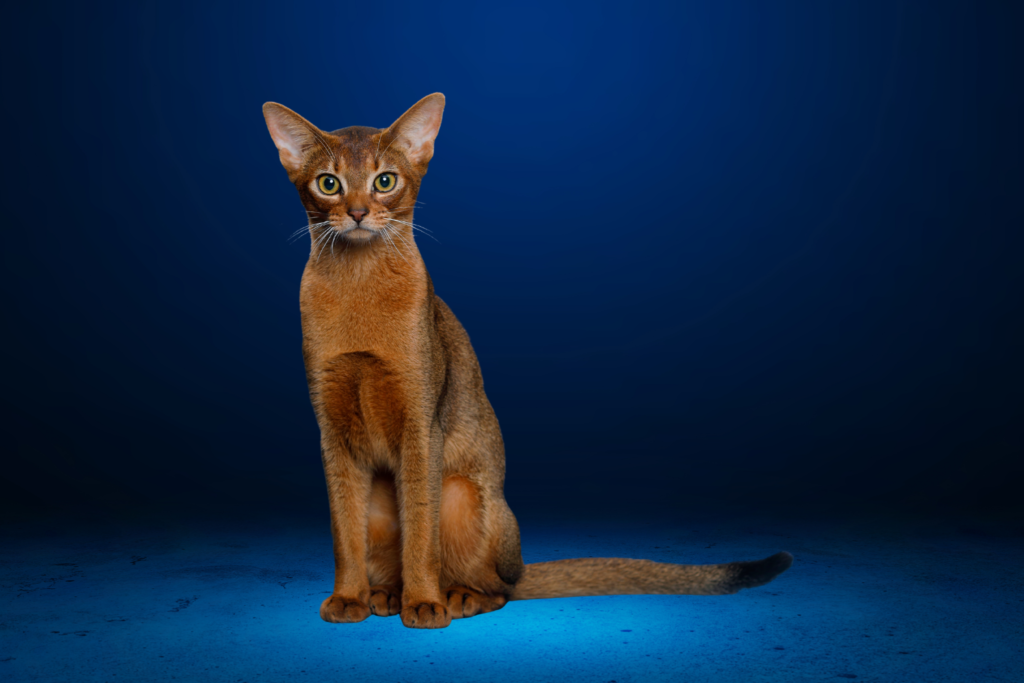
The Abyssinian ranks sixth. CFA summarizes the breed as busy, active, agenda-driven, affectionate, and intensely curious [1][7]. Its short ticked coat is visually elegant, but prospective owners should make the decision around energy rather than appearance.
What living with one can feel like
An Abyssinian tends to explore high and low, inspect changes, solve access problems, and request engagement. CFA notes that an under-enriched Aby may create its own activities [7]. This is rarely the best match for someone whose ideal cat spends most of the day decorating the sofa.
Coat maintenance is comparatively simple. CFA recommends brushing or combing a few times per month for shedding control [7]. The time saved on grooming is likely to be spent on interactive play and environmental design.
Best fit and practical limitation
Choose an Abyssinian if climbing structures, toy rotation, food puzzles, training, and active games sound enjoyable rather than optional. A small home can work when it offers safe vertical territory, but a bare apartment with little interaction is a poor match.
The breed can be affectionate without being a stationary lap cat. Readers who want predictable cuddling may prefer the Ragdoll’s calmer social style, while those who want an agile partner in household activity may find the Abyssinian compelling.
Read more: Abyssinian Cat: Complete Guide to Personality, Care, Lifespan, and Ownership
7. British Shorthair: The Calm, Independent Companion
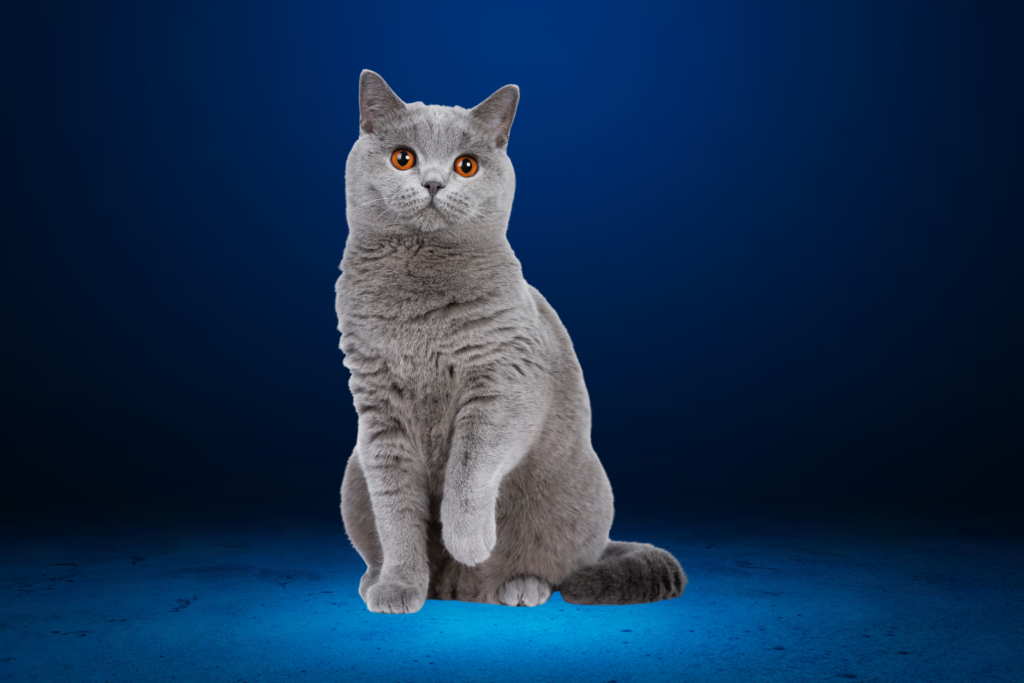
The British Shorthair ranks seventh. CFA describes it as calm, quiet, people-friendly, sturdy, and plush-coated [1][8]. Its round “teddy bear” appearance can imply constant cuddling, but many individuals prefer companionship beside their people rather than prolonged carrying.
What living with one can feel like
This breed often suits predictable households that appreciate quiet presence. CFA says British Shorthairs generally remain close to the ground and reach full size slowly, at around three years [8]. They still need play, scratching, and observation opportunities even if they are less acrobatic than an Abyssinian.
Weekly brushing is usually sufficient for the dense short coat [8]. Food management deserves equal attention: a naturally substantial frame should not be confused with excess body fat.
Best fit and practical limitation
A British Shorthair can fit apartments, professionals, and families that respect handling preferences. It may not satisfy someone seeking an intensely demonstrative shoulder cat or athletic climbing partner.
Scheduled dry-food dispensing can support a consistent routine, but it cannot determine the correct calorie intake.

Confirm the exact model, dry-food compatibility, app requirements, current price, and retailer terms before purchasing.
Read our British Shorthair complete guide for a more detailed look at weight, enrichment, and ownership.
8. Siberian: The Powerful Forest Cat
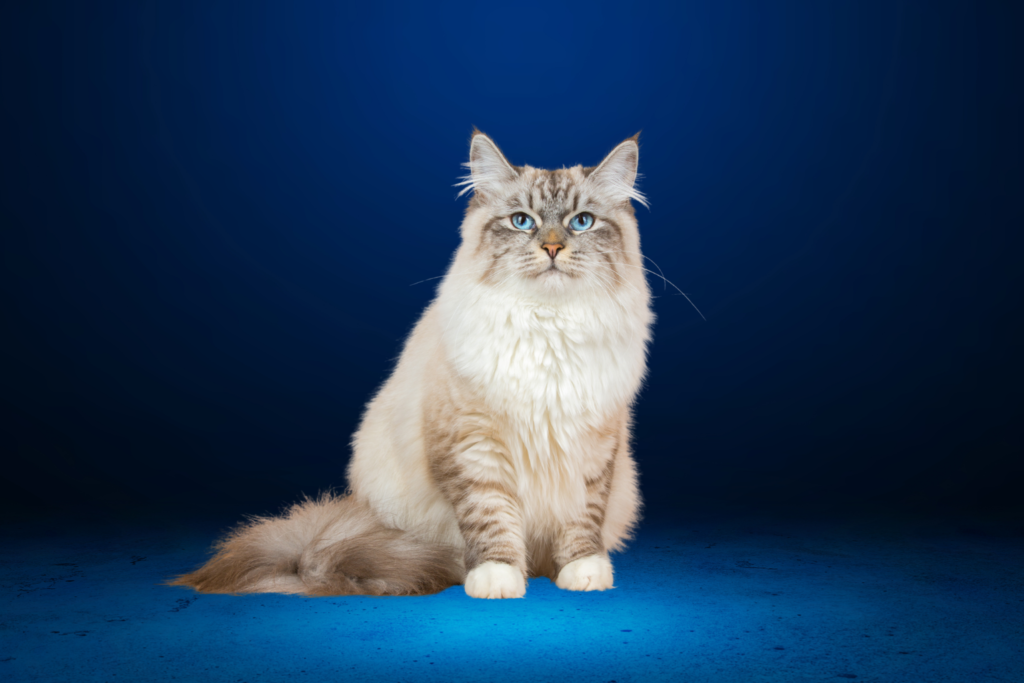
The Siberian takes eighth place. CFA describes this natural Russian breed as intelligent, devoted, easygoing, muscular, and protected by a dense triple coat [1][9]. It combines substantial forest-cat presence with playful bursts and strong interest in household life.
What living with one can feel like
Siberians may be calmer than their athletic build suggests, but they still benefit from stable climbing territory and interactive play. CFA describes them as sociable and curious without necessarily being intrusive [9]. Their quiet vocal style can suit people who want engagement without constant meowing.
The coat varies considerably. CFA advises checking the underside, tail, and britches several times weekly because some coats mat more readily than others [9]. Seasonal density changes can make a routine that works in summer inadequate in winter.
Best fit and practical limitation
Choose a Siberian if you want an affectionate, powerful cat and can manage a variable coat, slow maturity, sturdy equipment, and thoughtful breeder screening. Skip it if the “forest cat” appearance is appealing but recurring coat checks are not.
Claims that Siberians are universally hypoallergenic should also be treated cautiously. No individual cat should be purchased as an allergy guarantee; spend time with the specific cat and seek medical guidance when allergies are a serious concern.
Read more: Siberian Cat: Personality, Care, Health & Lifespan Guide
9. American Shorthair: The Adaptable Classic
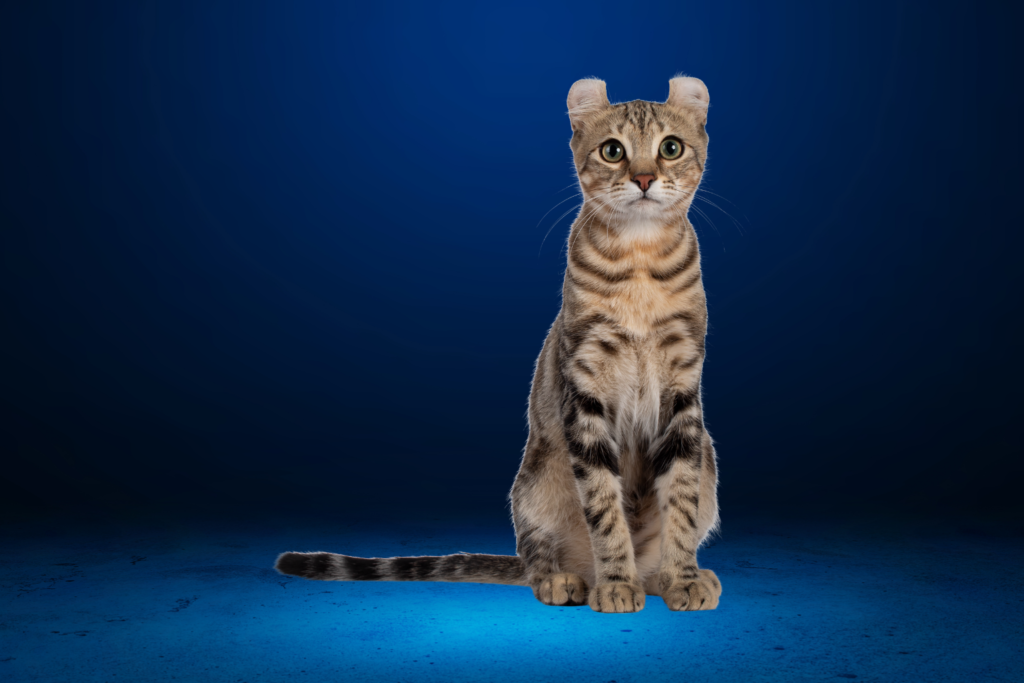
The American Shorthair returns to the top ten in ninth place for 2026. CFA describes it as muscular, patient, even-tempered, playful, and shaped by a working-cat history [1][10]. It is a pedigreed breed—not a generic label for every shorthaired cat born in the United States.
What living with one can feel like
This is often the easiest breed on the list to imagine in a broad range of households. American Shorthairs can participate without demanding nonstop attention and can channel their historic hunting behavior into wand toys, chase games, and food puzzles.
The short coat is straightforward, although CFA recommends more frequent brushing when seasonal undercoat sheds [10]. “Low maintenance” should describe the coat, not the whole relationship; every cat still needs exercise, dental care, nail care, litter maintenance, and veterinary attention.
Best fit and practical limitation
Choose an American Shorthair if you want a balanced, adaptable companion and appreciate play without the intensity of an Abyssinian or Devon Rex. A domestic shorthair from a rescue may offer many of the same practical advantages, though without predictable pedigree traits.
The distinction is important: paying for a pedigree should buy transparent lineage, documented care, and responsible breeding practices—not merely a familiar coat pattern.
Read more: American Shorthair Cat: Personality, Care & Lifespan Guide
10. Russian Blue: The Quiet Observer
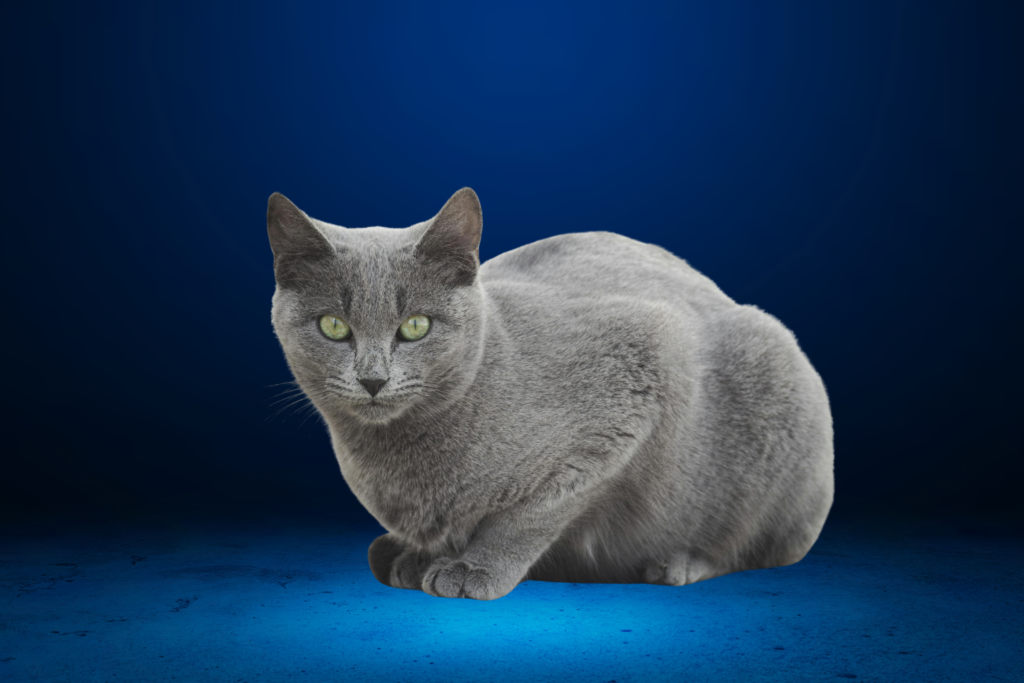
The Russian Blue completes CFA’s 2026 top ten. Its defining appearance includes a dense silver-tipped blue coat and green eyes. CFA describes the breed as graceful, playful, quiet, intelligent, and affectionate after it becomes comfortable [1][11].
What living with one can feel like
Russian Blues often appeal to owners who value routine and understated companionship. They may observe new people before engaging and then become closely attached within a trusted household. A reserved introduction should not automatically be mistaken for coldness.
Coat care is the lightest on this list. CFA suggests combing two or three times per month for shedding control [11]. The greater responsibility is providing predictable interaction, gentle play, and measured food rather than assuming a quiet cat needs little attention.
Best fit and practical limitation
Choose a Russian Blue if you want an elegant, relatively low-grooming companion and can provide a calm environment with gradual introductions. A louder, frequently changing household may still work for the right individual, but it should not rely on a breed stereotype to guarantee adaptability.
Be cautious with sellers who call any solid gray cat a Russian Blue. Coat color alone cannot establish pedigree, and a rescue’s descriptive label may not document ancestry.
Read more: Russian Blue Cat: Personality, Care, Health & Lifespan Guide
How the Most Popular Cat Breeds in the U.S. Compare by Lifestyle
| If your priority is… | Strong candidates | Why | What to verify before deciding |
| A large, interactive companion | Maine Coon, Siberian | Social forest-cat presence with playful involvement | Adult equipment, coat care, health screening, breeder records |
| A calmer affectionate cat | Ragdoll, Persian, Exotic | People-oriented temperaments with lower typical activity | Handling preferences, grooming, facial function, weight management |
| A highly active partner | Abyssinian, Devon Rex | Curiosity, training potential, and frequent interaction | Time alone, climbing space, warmth, daily enrichment |
| Quiet independence | British Shorthair, Russian Blue | Calm companionship without constant physical contact | Carrying tolerance, routine, food management, socialization |
| An adaptable family cat | American Shorthair, Maine Coon | Even temperament and household participation | Individual behavior around children and other pets |
| The simplest coat | Russian Blue, Abyssinian, American Shorthair | Short coats with comparatively modest grooming | Shedding still occurs; coat simplicity does not reduce other care |
| A dramatic long coat | Persian, Siberian, Maine Coon | Distinctive texture and volume | Real grooming schedule, mat risk, professional-grooming budget |
This table identifies reasonable starting points, not winners. If a particular temperament matters more than pedigree, an adult fostered cat may provide more reliable behavioral information than a young kitten whose personality is still developing.
Pros and Cons of Choosing From a Popular-Breed List
| Potential advantages | Important limitations |
| Easier access to established breed information | Popularity does not measure household suitability |
| More opportunities to meet examples at shows | Show behavior does not guarantee home behavior |
| Larger breeder networks for some breeds | High demand can attract scams and careless breeding |
| Documented breed standards clarify physical type | Standards do not guarantee health or temperament |
| Breed tendencies can improve lifestyle matching | Individuals can differ substantially from stereotypes |
| Health-screening guidance may be well established | Screening reduces risk but cannot eliminate disease |
| Rescue groups may specialize in popular breeds | Rescue labels may not document pedigree |
| Equipment needs can be planned in advance | Size and coat can vary within the same breed |
| Popular guides make comparisons easier | Repeated online claims can spread inaccuracies |
| Registration data offers a defined methodology | CFA registrations are not a census of all U.S. cats |
The ranking is most useful when it prompts better questions. It becomes least useful when number one is treated as “best,” rarity is confused with quality, or a visual trend replaces research into daily care.
Purebred Cat, Retired Breeder, or Rescue?
A responsibly bred kitten can offer documented ancestry and a more predictable range of physical traits. That does not make personality certain, and it does not make a pedigree morally or practically superior to adoption.
TICA advises buyers to research breed needs, verify breeder credibility, request health and genetic records for both parents, review written contracts, understand health guarantees and returns, and avoid pressure, wire transfers, gift cards, or sellers who withhold veterinary records [12]. Registration is one piece of evidence, not a complete ethical review.
Retired breeding or show cats can be an overlooked option. Their adult size, coat, and social style are easier to evaluate, and some breeders place them in pet homes after retirement. Ask about medical history, reproductive care, socialization, and transition needs.
Shelters and foster-based rescues offer cats whose individual behavior may already be observable. A cat described as a “Maine Coon mix” or “Russian Blue mix” may resemble that breed without documented ancestry; treat the label as descriptive unless records support it.
The decision should center on the animal you can support. A well-matched rescue is a better choice than a fashionable kitten acquired from a seller who cannot document responsible practices.
Cost, Availability, and Breeder Due Diligence
Popularity does not guarantee affordability or immediate availability. Region, breeder investment, lineage, age, transport, and demand all affect purchase price. An unusually high fee does not prove quality, and an unusually low fee can be a scam warning rather than a bargain [12].
Budget beyond acquisition. Long coats can require professional grooming; large cats need generously sized equipment; some breeds need more enrichment; and veterinary screening, insurance, dental care, food, litter, sitting, and emergencies continue for life.
Before placing a deposit, request the contract and relevant health reports. Match each result to the sire or dam, check the test date and issuing organization, and ask what the screening can and cannot rule out. A broad statement such as “DNA clear” is not equivalent to all breed-relevant cardiac, orthopedic, ophthalmic, or genetic evaluation.
For the optional Amazon products mentioned above, prices, model names, features, stock, returns, and warranties were checked only at a general listing level on August 23, 2026 and can change. Verify the exact model and retailer terms before purchasing. None of those products is required simply because a cat belongs to a particular breed.
Who Should Use This Ranking?
Use the list if you are early in the decision process and need a structured overview of recognized breeds. It is especially helpful when your next step is to compare two or three candidates using the same lifestyle criteria.
Choose another decision route if your highest priority is a known adult temperament, adopting locally, minimizing cost, or finding a cat that has already lived with children, dogs, or other cats. In those cases, a foster organization or reputable adult-placement program may provide more relevant information than registry popularity.
Do not use the ranking to justify extreme size, rare colors, immediate deposits, or a breeder who avoids documentation. Popularity is not due diligence.
How to Choose Among Popular Cat Breeds
Start with your non-negotiables
Write down realistic limits for grooming, daily interaction, activity, equipment space, allergies, travel, other pets, children, and veterinary budget. Eliminate mismatches before looking at kitten photographs.
Meet adult cats when possible
Kittens are appealing but do not show final size, coat, or mature behavior. Meeting adults from the same line—or considering an adult placement—can make expectations more realistic.
Compare identical criteria
Use the same questions for every breed: How often must the coat be combed? How does the typical cat express affection? How does it handle time alone? What equipment fits the adult? Which health records should a responsible breeder provide?
Verify the individual and the seller
Observe body condition, breathing, eyes, coat, movement, social behavior, and living conditions when possible. Review veterinary records and contracts before payment, and verify identities rather than accepting screenshots without context [12].
Plan the home before arrival
Buy the carrier, litter setup, scratching surfaces, resting areas, and basic grooming tools for the expected adult—not only the kitten. Introduce routines gradually and never force handling because a breed is marketed as gentle.
Leave room for individuality
A breed tendency is a probability, not a promise. Build trust with the cat in front of you instead of repeatedly testing whether it performs the personality described online.
Frequently Asked Questions
What is the most popular cat breed in 2026?
The Maine Coon ranks first in CFA’s 2026 list, followed by the Ragdoll and Persian [1]. The ranking is based on prior-year CFA registrations, not a census of every cat household.
What are the top 10 cat breeds in CFA’s 2026 ranking?
In order: Maine Coon, Ragdoll, Persian, Exotic, Devon Rex, Abyssinian, British Shorthair, Siberian, American Shorthair, and Russian Blue [1].
Does this prove these are the most popular cat breeds in all U.S. homes?
No. CFA registration data measures activity within that pedigreed-cat registry. Mixed-breed cats, unregistered purebreds, many rescues, and cats registered elsewhere are not fully represented.
Why is the Siamese not in the 2026 top ten?
The Siamese remains a recognized and culturally prominent breed, but it did not place among CFA’s ten highest registration positions in this specific 2026 list [1]. Absence from the list does not mean a breed is rare or declining in every population.
Why is the Bengal not included?
The Bengal did not appear in CFA’s 2026 top ten [1]. Different registries have different registration populations and recognized categories, so another organization’s ranking may differ.
Which popular breed is most affectionate?
Ragdolls, Maine Coons, Devon Rex, Persians, and Siberians are all described as people-oriented in different ways [2][3][4][6][9]. “Affectionate” may mean lap time, following, play, proximity, or conversation, so match the style rather than seeking one universal winner.
Which breed on the list needs the least grooming?
Russian Blues need very little coat work according to CFA, while Abyssinians and American Shorthairs also have straightforward short coats [7][10][11]. All still shed and require nail, dental, ear, and general health care.
Which breed needs the most grooming?
The Persian has the greatest routine coat commitment on this list. CFA recommends serious, consistent combing and notes that some owners use professional groomers [4]. Siberian and some Maine Coon coats can also require frequent attention [2][9].
Which popular breed is best for an apartment?
British Shorthairs, Russian Blues, Ragdolls, Exotics, and Persians can suit apartments when their individual needs are met. Floor area alone is not decisive; equipment footprint, activity, noise, climbing, and daily interaction matter.
Are popular cat breeds healthier than less popular breeds?
Not necessarily. Registration position is not a health outcome. Responsible selection, breed-relevant screening, genetic diversity, veterinary care, body condition, and the individual cat’s history matter more than rank.
Is a registered breeder automatically responsible?
No. Registration can document participation and lineage, but buyers should still verify health records, living conditions, contract terms, parent information, and seller credibility [12].
Is an adult rescue easier to match than a kitten?
It can be. Adult size, coat, activity, and social behavior are usually more developed, especially in a foster home that can describe daily behavior. History may still be incomplete, so an independent veterinary evaluation remains important.
Final Verdict: Which Popular Cat Breed Is Right for You in 2026?
The question of which are the most popular cat breeds in the U.S. has one credible but narrow answer here: the breeds generating the most registrations within CFA’s system based on the previous year’s data. The ranking does not identify the best cat, the healthiest breed, or the most common cat in every U.S. home.
The Maine Coon leads the list, but number one is not a recommendation for every household. A Ragdoll may better suit someone seeking calm companionship; an Abyssinian may fit an active home; a British Shorthair or Russian Blue may suit a quieter routine; and a Persian is appropriate only when intensive grooming is genuinely welcome.
Use popularity for discovery, then let daily life make the decision. The right cat is not the breed with the strongest trend—it is the individual whose needs, temperament, care, and long-term costs fit a home prepared to support them.
Sources and References
- Cat Fanciers’ Association — Most Popular Breeds for 2026. Official April 22, 2026 ranking and explanation that the list uses prior-year pedigree-registration data. View source
- Cat Fanciers’ Association — Maine Coon Cat. Official profile covering temperament, size, grooming, physical type, maturity, and breeder health-screening context. View source
- Cat Fanciers’ Association — Ragdoll. Official profile covering temperament, size, maturity, coat, grooming, and household behavior. View source
- Cat Fanciers’ Association — Persian. Official profile covering personality, coat commitment, facial structure, grooming, and health-screening context. View source
- Cat Fanciers’ Association — Exotic. Official profile covering Persian ancestry, temperament, coat, grooming, physical type, and screening context. View source
- Cat Fanciers’ Association — Devon Rex. Official profile covering social needs, activity, coat characteristics, grooming, size, and the hypoallergenic misconception. View source
- Cat Fanciers’ Association — Abyssinian. Official profile covering activity, intelligence, affection, coat, and grooming requirements. View source
- Cat Fanciers’ Association — British Shorthair. Official profile covering calm temperament, size, maturity, coat density, grooming, and household fit. View source
- Cat Fanciers’ Association — Siberian. Official profile covering temperament, size, maturity, triple coat, grooming variation, and screening context. View source
- Cat Fanciers’ Association — American Shorthair. Official profile covering even temperament, working history, activity, coat, and grooming. View source
- Cat Fanciers’ Association — Russian Blue. Official profile covering reserved affection, intelligence, size, dense short coat, and grooming. View source
- The International Cat Association — Pet Buyer’s Guide. Buyer guidance on breed research, breeder verification, parent health records, contracts, payment risks, guarantees, and scam warning signs. View source
Sources, specifications, prices, and policies reviewed August 23, 2026. Product features, retailer terms, warranty coverage, registry rankings, breed profiles, and manufacturer guidance may change. Verify critical details with the relevant organization, manufacturer, breeder, veterinarian, or retailer before making a decision.