Why Does My Cat Sleep on Me? 10 Reasons Explained
By Demosthenes Staudinger | Updated August 24, 2026
Affiliate disclosure: This article contains affiliate links. As an Amazon Associate I earn from qualifying purchases. If you buy through one of these links, we may earn a commission at no additional cost to you. This does not affect our editorial recommendations.
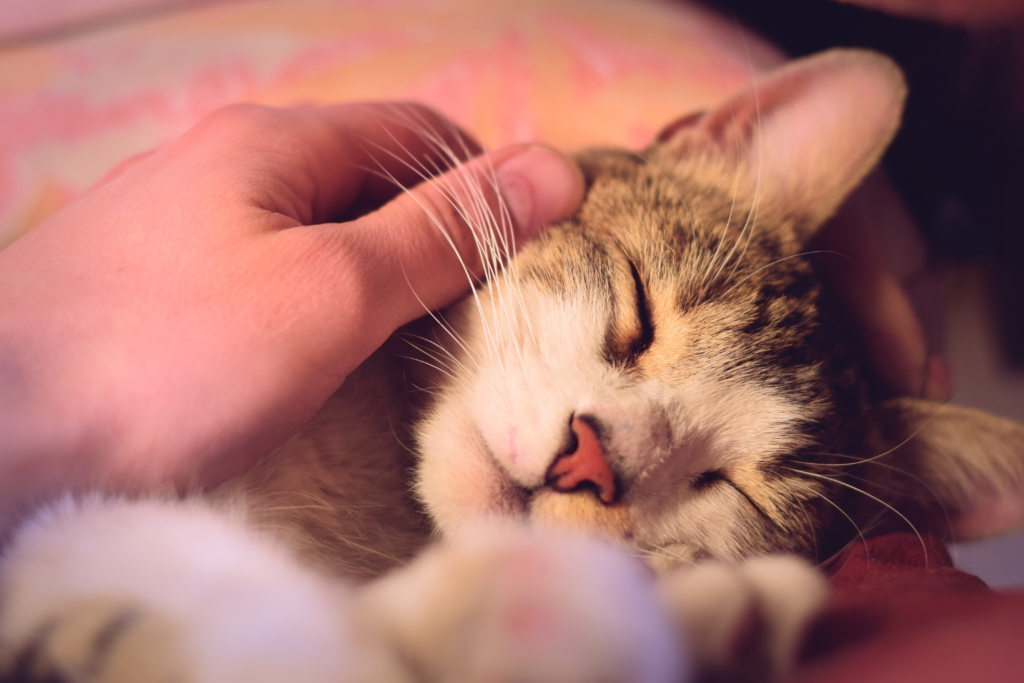
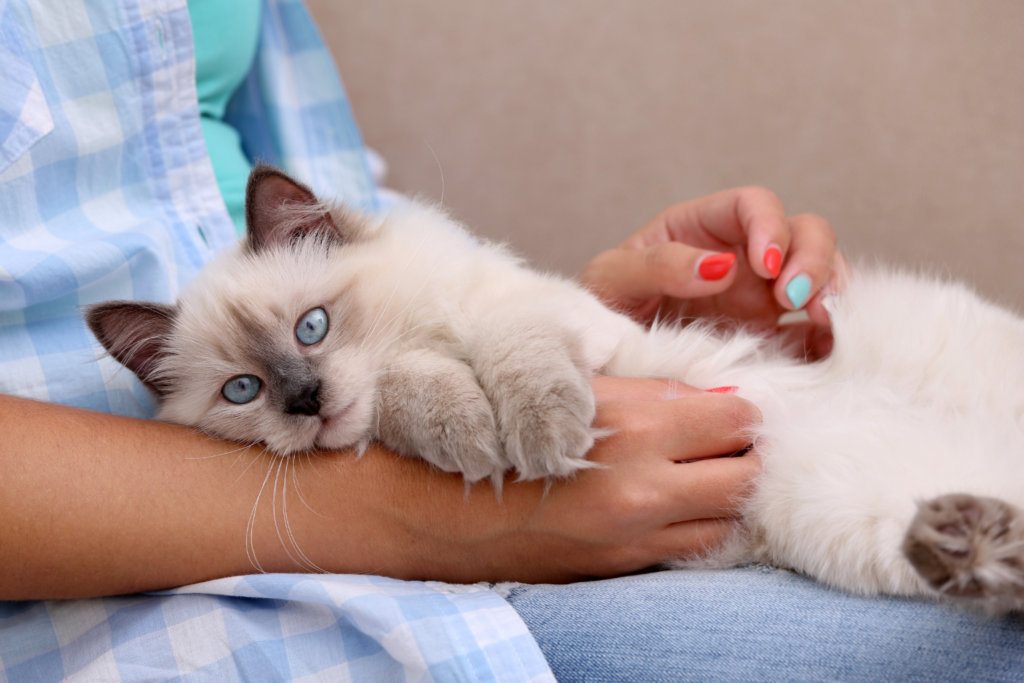
Your bedroom may contain a perfectly placed armchair, a plush cat bed, and several empty pillows—yet your cat still chooses your chest, lap, legs, or even your head. It can feel like an unmistakable declaration of love. Often, affection and social comfort are part of the explanation, but feline behavior is rarely driven by only one motive.
Your body is warm. Your scent is familiar. The bed is soft, elevated, and usually quiet. You also have a history of providing food, protection, play, and attention. From your cat’s perspective, sleeping on you may combine several valuable resources in one convenient location.
That does not mean every cat who sleeps elsewhere loves their person less. Cats have individual preferences for contact, temperature, elevation, and sleeping surfaces. Some prefer to touch you; others feel secure at the foot of the bed or from a nearby perch. The Feline Veterinary Medical Association emphasizes that positive human–cat interaction should be predictable and tailored to the individual cat rather than forced.[2]
In most cases, sleeping on you is normal. A sudden change, however—especially when paired with appetite changes, weight loss, increased thirst, reduced mobility, unusual vocalization, or altered litter-box habits—deserves closer attention.
This guide explains the ten most plausible reasons your cat sleeps on you, what different sleeping positions may suggest, when the behavior could indicate a problem, and how to create an appealing alternative without damaging the bond you share.
How we researched this article: This is a research-based editorial guide, not a veterinary diagnosis or a hands-on product test. We reviewed current feline-behavior research, Feline Veterinary Medical Association guidance, veterinary and allergy resources, human sleep research, and current manufacturer documentation for the products mentioned. Modern Cat Society has not purchased or field-tested every product in this guide. Manufacturer performance claims are identified as such.
Quick Answer: Why Does My Cat Sleep on Me?
Your cat probably sleeps on you because you offer some combination of:
- Warmth: human bodies provide a warmer surface than much of the room.
- Perceived safety: a trusted caregiver can be part of a secure resting environment.
- Social attachment: research shows that cats can form attachment bonds with human caregivers.[1]
- Familiar scent: cats rely heavily on scent to evaluate whether an environment feels familiar and safe.[2]
- Comfort: your lap, torso, and bedding are soft and supportive.
- Routine: repeating the same bedtime sequence makes the opportunity predictable.
- Reward: petting, conversation, and breakfast can reinforce returning to you.
Sleeping on a person is not a reliable test of love, dominance, protectiveness, or illness. Interpret it alongside your cat’s normal temperament, body language, age, health, and recent behavior.
What Your Cat’s Favorite Sleeping Spot May Suggest
Location alone cannot reveal a cat’s motive, but it can help identify the most practical benefits your cat is seeking.
| Where your cat sleeps | Plausible advantages | What to notice |
|---|---|---|
| On your chest | Warmth, elevation, your scent, and a broad resting surface | Make sure the weight does not disrupt your breathing or sleep |
| On your lap | Warmth, cushioning, easy access to attention | Often appears during quiet routines such as reading or watching television |
| Between or on your legs | A warm, gently enclosed area with limited movement | Restless sleepers may accidentally disturb the cat or strain their own position |
| At your feet | Proximity with more personal space and an easy exit | Common in cats that enjoy company without full-body contact |
| On your head or pillow | Warmth, a strong familiar scent, and less movement than your limbs | Use a separate washable pillow cover if hair or allergens are a concern |
| Beside you | Social closeness without the instability of a moving body | This may be just as meaningful as sleeping directly on you |
These are working explanations, not diagnoses. A cat may choose a different position from one night to the next because the room temperature, bedding, noise, household activity, or your own sleeping position has changed.
1. Your Body Is Warm
Warmth is one of the simplest and strongest explanations. A cat’s thermoneutral zone—the ambient temperature range in which the body does not need to spend extra energy maintaining its temperature—is commonly reported at approximately 86–100.4°F (30–38°C), considerably warmer than most human homes.[4]
That does not mean a healthy cat needs your bedroom heated to 90°F. It means cats often seek warmer microclimates: sunlight, freshly dried laundry, a blanket, the space above a radiator, or a human body. Your chest, abdomen, and thighs provide steady radiant warmth, while a comforter helps retain it.
You may notice stronger contact-seeking in winter, in air-conditioned rooms, after grooming, or as a cat ages. Senior cats can have more difficulty reaching former resting spots and may seek warm, accessible areas. Cornell’s Feline Health Center advises caregivers to pay attention to age-related changes in sleeping, mobility, and warmth-seeking rather than dismissing every change as “just old age.”[5]
Warmth-seeking is usually normal when your cat is otherwise eating, moving, grooming, and using the litter box as usual. Persistent shivering, cold extremities, weakness, or an inability to get comfortable requires veterinary advice.
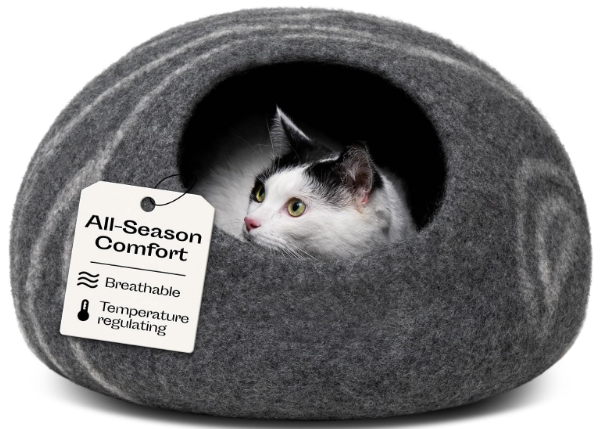
A cozy alternative: MEOWFIA Premium Felt Cat Cave
If your cat appears to choose you mainly for warmth and enclosure, the MEOWFIA Premium Felt Cat Cave is an attractive non-electric alternative. According to MEOWFIA, the cave is handmade from 100% Merino wool and can also be flattened into a mat.[10] Its enclosed shape retains body warmth without a cord, thermostat, or heating element.
Best for: cats that enjoy boxes, covered beds, felt, and compact hideaways.
Why it may work:
- The cave provides both a sheltered interior and an open mat configuration.
- The dark gray wool fits a neutral, modern bedroom more easily than many carpeted pet beds.
- Medium and large size options allow a better match for the cat’s weight and preferred curl-up position.
- Wool offers natural insulation without placing an electrical product in the bed.
Consider before buying: this is a felt cave, not an electrically heated cat bed. Handmade dimensions can vary, and cats that chew or ingest wool should use a different material. It is also less supportive than a structured orthopedic bed for a cat with arthritis. Check the current listing, size chart, and care label before ordering.
2. You Feel Like a Safe Resting Place
Sleep reduces an animal’s ability to monitor the environment and respond immediately. Cats therefore tend to select resting areas that feel protected, predictable, and easy to leave. FelineVMA guidance recommends providing secure resting places and notes that many cats prefer a space with surrounding sides, elevation, and control over entry and exit.[2]
A trusted person can become part of that safe setting. You are familiar, you tend to remain in one place at night, and your bed is raised above the floor. For a cat who has learned that you respond calmly to unfamiliar sounds or household movement, settling on you may be a practical safety choice.
Look at the whole body rather than assuming closeness always equals relaxation. A comfortable cat typically has loose muscles, a neutral facial expression, and calm breathing. A cat who is crouched, wide-eyed, repeatedly scanning the room, lashing the tail, flattening the ears, or unable to settle may be seeking proximity because something feels wrong.
If your cat suddenly sleeps on you only after a move, renovation, new pet, loud event, or household schedule change, improve the entire environment as well as offering reassurance. Provide separate food, water, litter, scratching, play, and resting resources; preserve familiar scents; and ensure the cat has quiet retreats that no person or pet can invade.[2]
3. Your Cat Has Formed a Social Attachment to You
The stereotype of the entirely detached cat is outdated. In a 2019 study using a secure-base test, researchers found that cats and kittens displayed distinct attachment styles toward human caregivers, including secure attachment.[1] The finding supports something many caregivers already observe: cats can use a person as a source of security.
Sleeping close to you is consistent with a social bond, but it is not an attachment assessment. A securely attached cat may prefer the dresser, a window hammock, or another room. Conversely, a very clingy cat may be distressed rather than securely attached. The meaningful evidence is a broader pattern of voluntary, relaxed interaction: approaching with soft body language, resting nearby, playing, rubbing, slow blinking, or returning after exploration.
It is also worth separating attachment from dependence. A healthy relationship gives a cat control. Let your cat initiate and end contact, maintain independent resting options, and avoid holding them in place when they try to leave. Predictable, choice-based interaction is more valuable than maximizing the amount of physical contact.[2]
4. Your Scent Is Familiar
Humans organize a bedroom visually; cats also organize it through scent. Felines have an exceptionally important olfactory world. FelineVMA materials explain that cats rub their face and body on familiar areas, depositing pheromones that help create recognizable boundaries.[2]
Your skin, hair, pajamas, sheets, and pillow form a concentrated familiar scent profile. That may explain why some cats choose the pillow even when a cooler, larger section of mattress is available. It may also explain why a recently washed bed temporarily seems less appealing—or why a worn T-shirt can make a new cat bed more inviting.
This is better described as maintaining familiarity than “claiming ownership” of you. Facial rubbing before sleep can be social, attention-seeking, or scent-related. It does not prove that your cat considers you property or is trying to dominate another person.
When introducing a replacement bed, place it where your cat already sleeps and add a small, safe item carrying your scent. Avoid strong fragrance sprays, essential oils, and heavily scented detergents. Some concentrated essential oils can be hazardous to cats, and an unfamiliar odor may make the new bed less—not more—appealing.
5. Contact Sleeping May Support Your Social Bond
Cats that belong to the same social group may rest in contact or close proximity. With people, voluntary contact sleeping can serve a similar social function: it allows the cat to remain near a familiar individual during a long period of inactivity.
The key word is voluntary. Some cats enjoy full contact, some settle within arm’s reach, and others choose a perch that provides visual access. All three can be socially comfortable behaviors. A cat’s early socialization, previous experiences, age, health, and personality influence how much petting, holding, and lap time they enjoy.[2]
If your cat sleeps on another household member but not on you, consider simple variables before taking it personally. That person may move less, radiate more heat, use a softer blanket, go to bed earlier, or provide fewer unwanted touches. You can strengthen your relationship through short interactive play sessions, calm feeding routines, and contact that ends before the cat becomes overstimulated.
6. You Are Soft, Stable, and Convenient
Sometimes the best explanation is physical comfort. A lap creates a natural bowl. Bent legs form a sheltered pocket. Your torso is elevated above floor drafts, and the mattress underneath you adds cushioning. If you remain still for long periods, the combined surface can be more comfortable than a thin pet mat.
This practical explanation matters because the solution may be equally practical. A cat who repeatedly leaves a flat bed for your knees may prefer:
- raised edges to lean against;
- a smaller sleeping area that supports a curled posture;
- a softer or warmer fabric;
- a higher location with a better view;
- distance from a vent, doorway, appliance, child, or other animal; or
- a stable surface that does not wobble when jumped on.
Before buying another bed, observe the shape your cat chooses. A sprawler may prefer a wide mat; a cat who curls tightly may prefer a bolster or cave; a senior cat may need a low-entry orthopedic bed. Placement often matters more than price. The most luxurious bed in the wrong location can remain untouched.
7. Bedtime Has Become a Predictable Routine
Cats learn household sequences remarkably well. Closing a laptop, turning off the television, brushing your teeth, and pulling back the covers can all predict a long, quiet rest period. When the sequence repeats nightly, your cat may join you before you even enter the bedroom.
Predictability is valuable because it gives the cat information and control. FelineVMA guidance recommends positive, consistent, predictable interaction adapted to each cat.[2] A steady evening pattern—interactive play, a small meal, quiet grooming if the cat enjoys it, then rest—can support a calmer transition into nighttime.
Routine also explains why travel, a new work schedule, daylight-saving changes, or a partner moving in can alter sleeping behavior. The cat is not necessarily jealous or offended; the cues and access to preferred resources have changed.
If bedtime companionship works for both of you, there is no need to stop it. If it disrupts sleep, establish a new routine gradually: reward the cat for using a nearby bed, provide the same alternative every night, and keep your response consistent.
8. The Behavior Has Been Rewarded
When your cat climbs onto your chest, what happens next? You may stroke their head, speak softly, adjust the blanket, or offer breakfast after getting up. Each pleasant consequence can increase the chance that the cat repeats the behavior.
FelineVMA behavior guidance specifically notes that cats may return to places where they previously received attention—including a lap, desk, or bed—and that caregivers can unintentionally reinforce attention-seeking behavior.[3] This is learning, not manipulation.
The timing of a reward matters. If you want the cat beside you instead of on you, avoid pushing, shouting, spraying water, or physically intimidating them. Set up the preferred bed within reach, reward calm use of it, and provide attention there. If the cat returns to your chest, quietly redirect once the alternative is available.
Expect repetition. A behavior practiced hundreds of nights will not disappear after two training sessions. Short, consistent reward-based practice is more humane and more likely to succeed than punishment.[3]
9. Your Cat Is Waiting for Breakfast—or for You to Wake Up
Some cats fall asleep on a person because that is where the morning begins. If getting up leads directly to food, the cat has a strong reason to monitor your breathing, movement, alarm, and first trip to the kitchen.
Cats are often active around dawn and dusk, but “cats are nocturnal” is an oversimplification. Indoor cats adapt their activity to light, food availability, household routines, age, and individual preference. A cat who paws your face at 4:00 a.m. may be responding to a learned breakfast schedule rather than an immutable biological clock.
First confirm that the daily ration is appropriate with your veterinarian, particularly if hunger has increased. Diabetes, hyperthyroidism, gastrointestinal disease, parasites, medication effects, and other conditions can change appetite. An automatic feeder should never be used to conceal unexplained hunger or weight loss.
For a healthy, food-motivated cat, a timed feeder can move the breakfast cue away from your body and alarm clock. International Cat Care notes that timed feeders can help manage early-morning food-seeking in some older cats, alongside a broader assessment of health and routine.[6]
For scheduled early meals: PETLIBRO Granary 2 Vision Smart Feeder
The PETLIBRO Granary 2 Vision Smart Feeder (PLAF205) adds intake tracking to automated dry-food feeding. Its built-in scale records consumption in 1-gram increments, while the camera uses PETLIBRO’s AI recognition to associate bowl visits with individual cats. This can answer “Did my cat actually eat?” more usefully than a feeder that records only what it dispensed.[11]
Best for: dry-food-fed cats that wake their caregiver early or need closer observation of feeding patterns.
Why it may work:
- Schedule up to ten daily meals so the feeder—not your face—becomes the pre-dawn breakfast cue.
- Use scheduled portions or Smart Refill Mode, which tops up a low bowl within a configured daily limit.
- Review gram-level intake alongside 1080p video, night vision, a 169.5° field of view, two-way audio, and AI pet recognition.
- A 5-liter hopper, low-food and blockage alerts, dual-band Wi-Fi, and rechargeable backup battery support routine reliability.[11]
Consider before buying: it accepts dry kibble approximately 2–15 mm and needs a hard, level surface for accurate weighing. AI recognition is not infallible, and the open bowl cannot prevent food stealing. The AF205 has no local microSD storage; recorded playback and some advanced insights require paid PETLIBRO services. It can reveal appetite changes but cannot diagnose them or replace veterinary care, daily observation, or a pet sitter.

10. Stress, Aging, Pain, or Illness May Increase Clinginess
Most cats sleeping on people are comfortable, not sick. The concern is a new or intensified pattern, particularly when the cat cannot settle anywhere else or shows additional changes.
After a move, storm, renovation, household conflict, or arrival of a new pet, your familiar presence may temporarily be the least threatening option. In that situation, do not remove access to you without also providing safe hiding and resting areas, separate resources, predictable play, and control over interaction.[2]
Aging can also change sleep. Senior cats may sleep more, lose muscle, experience arthritis, have reduced vision or hearing, or become less able to jump to previous beds. Cognitive dysfunction can cause nighttime waking, altered interactions, vocalization, disorientation, and changes in the sleep–wake cycle.[5][6]
Pain and illness can produce either increased proximity or withdrawal. There is no single “sick cat sleeping position.” What matters is deviation from that individual cat’s baseline.
Contact your veterinarian if a new need to sleep on you occurs with:
- reduced or increased appetite;
- unexplained weight change;
- increased thirst or urination;
- vomiting, diarrhea, or constipation;
- litter-box accidents;
- reluctance to jump, stiffness, hiding, or sensitivity to touch;
- nighttime pacing, confusion, or unusual vocalization;
- poor grooming or a greasy, matted coat;
- coughing, labored breathing, or persistent restlessness; or
- any other rapid change in energy or personality.
Difficulty breathing, collapse, open-mouth breathing, pale or blue gums, repeated straining without producing urine, or severe weakness can be emergencies. Seek urgent veterinary care rather than waiting to see whether the sleeping behavior resolves.
Should You Let Your Cat Sleep With You?
For many healthy adults and cats, sharing a bed is a personal choice. There is no universal rule that a cat must sleep with you—or must be excluded. The right decision depends on sleep quality, allergies, household health, the cat’s behavior, and whether everyone can rest safely.
| Possible benefits | Possible tradeoffs |
| Enjoyable companionship and closeness | Movement, kneading, grooming, or vocalization can fragment sleep |
| A predictable bonding routine | Hair, litter particles, and allergens can reach bedding |
| Warmth for both cat and person | A cat may restrict your sleeping position or increase discomfort |
| Easier observation of an older or recovering cat | Feeding cues may lead to early waking |
| Reassurance for some cats during temporary change | Bed access can be difficult to manage consistently in multi-pet homes |
Be cautious about popular wellness claims. Research does not establish that sleeping with a cat will lower your blood pressure, cure anxiety, or improve sleep. A 2024 cross-sectional study of 1,591 U.S. adults found that pet co-sleeping overall was associated with poorer perceived sleep quality and greater insomnia severity, although exploratory analysis suggested that the negative association was driven by dogs rather than cats.[7] Because the study was observational, it cannot show that pets caused the sleep differences.
Use your own functioning as the practical test. If you wake refreshed and your cat settles quietly, co-sleeping may be working well. If you have repeated awakenings, pain from holding one position, worsening asthma, or daytime fatigue, an adjacent cat bed may preserve closeness while protecting sleep.
What about cat allergies?
Cat allergy is usually a reaction to proteins found in dander, saliva, and urine—not simply to visible hair. Those allergens can remain airborne and settle on fabric. The American Academy of Allergy, Asthma & Immunology recommends keeping a pet out of the bedroom as one way to reduce exposure and notes that a HEPA air cleaner may be helpful as part of a broader plan.[8]
An air purifier can reduce some airborne particles; it cannot remove allergens already embedded in pillows, mattresses, rugs, and bedding, and it cannot make close exposure risk-free. Launder bedding regularly, vacuum with an appropriate filtered machine, wash hands after prolonged contact, and discuss persistent symptoms with a physician or board-certified allergist.
For airborne-particle reduction: Blueair Blue Pure 211i Max
The Blueair Blue Pure 211i Max is a large-room purifier suited to bedrooms where noise, appearance, and particle removal all matter. Blueair currently lists a recommended room size of 674 square feet, smoke CADR of 435 cfm, dust CADR of 452 cfm, pollen CADR of 450 cfm, and a sound range of 23–53 dB.[12] Its HEPASilent system is the manufacturer’s proprietary combination of mechanical and electrostatic filtration.
Best for: larger bedrooms or open spaces where the unit’s CADR appropriately matches the room size.
Why it may work:
- High listed CADR values make it a more realistic choice for a large room than a tiny desktop purifier.
- A low manufacturer-listed minimum noise level may suit overnight use on a lower setting.
- App controls and an air-quality display make filter and room-status checks convenient.
- The washable fabric prefilter can capture larger debris before the main filter.
Consider before buying: Blueair’s “up to 99.97%” particle-removal statement is a manufacturer performance claim under specified conditions, not a promise to eliminate cat allergy symptoms. The EPA advises selecting a portable purifier by both room size and CADR and stresses that no air cleaner removes every indoor pollutant.[9] Measure the room, allow clearance around the unit, price replacement filters, and follow the manufacturer’s replacement schedule. If a clinician has advised a cat-free bedroom, a purifier is not a substitute for that recommendation.

How to Get Your Bed Back Without Damaging the Bond
You can change the sleeping arrangement without making your cat feel unsafe. The objective is to make the desired location more rewarding and reliable than your body.
1. Identify what your cat is actually choosing
Observe the current pattern for several nights. Does your cat arrive only after the room becomes cold? Do they choose the bend in your knees, the pillow, or the point closest to the door? Do they leave after receiving petting? Does the behavior begin an hour before breakfast?
The answer determines whether the replacement should prioritize warmth, enclosure, height, softness, attention, or meal timing.
2. Put the alternative in the winning location
Start with a bed directly beside you, at the head or foot of the mattress, or on a stable bedside surface. Asking a cat to move from your chest to a bed across the house changes too many variables at once. Once the cat reliably uses the new spot, move it gradually if necessary.
Ensure any elevated stand is stable, large enough for the entire bed, and positioned so the cat cannot fall between furniture. Senior cats may benefit from steps, a ramp, or a lower platform.
3. Match the preferred shape and temperature
Choose a bolster for a cat who leans against your legs, a cave for a cat who burrows under blankets, or a broad orthopedic mat for a cat who stretches. Add a familiar blanket or worn cotton shirt. Keep electrical heated beds away from damaged cords, moisture, and cats that chew; use only products specifically designed for pets and follow every safety instruction.
4. Reward the place you want
When your cat steps into the alternative bed, calmly offer the reward they prefer: a tiny portion of food from the daily allowance, gentle petting, praise, or a short play session. Reward while the cat is in the desired location. Never force the cat into an enclosed cave or hold them there.
5. Build a complete evening routine
Schedule an interactive play session before bed, allow the cat to catch the toy periodically, and follow with an appropriate portion of the evening meal. Provide clean water, a clean litter box, scratching options, and independent resting spaces. Meeting environmental needs reduces the likelihood that your body is the cat’s only appealing nighttime resource.[2]
6. Separate breakfast from waking you
If food drives the behavior, delay your own involvement in breakfast or use a properly programmed timed feeder. Keep the total daily calories unchanged unless your veterinarian recommends otherwise. Place the feeder away from the bedroom so its sound does not become a new alarm beside your bed.
7. Be consistent about bedroom access
If the bedroom must become cat-free, make the rule consistent and provide an attractive sleep station outside the door. Intermittently opening the door after prolonged meowing can teach the cat that persistence works. Begin the transition when the household can tolerate a temporary adjustment period, and never punish the cat for trying an arrangement that was previously allowed.
If distress is intense, prolonged, or accompanied by house-soiling, aggression, self-injury, or reduced appetite, ask your veterinarian for help. A qualified feline behavior professional may be appropriate after medical causes have been assessed.
When Does Sleeping on You Warrant a Veterinary Call?
Book a non-emergency appointment when the behavior changes suddenly or forms part of a broader change in sleep, appetite, activity, mobility, grooming, elimination, or social interaction. Take notes and, if possible, record short videos of nighttime pacing, vocalization, breathing, or difficulty jumping.
Questions that help distinguish preference from a health change include:
- Did the behavior begin suddenly or increase gradually?
- Is the room colder, noisier, or less accessible than before?
- Has another person or animal changed the cat’s normal resting area?
- Is the cat eating and drinking the usual amount?
- Has body weight changed?
- Can the cat still jump, climb, and turn comfortably?
- Is the cat sleeping peacefully or repeatedly waking and repositioning?
- Are there changes in urination, defecation, grooming, or vocalization?
Do not wait for a routine visit if your cat has respiratory distress, collapse, severe weakness, suspected urinary obstruction, repeated seizures, significant trauma, or another obvious emergency.
Frequently Asked Questions
Does my cat sleeping on me mean they love me?
It can be one sign of a comfortable social relationship. Your cat voluntarily chooses close contact in a vulnerable resting state, which is consistent with trust and familiarity. But it is not a definitive “love test.” Warmth, softness, habit, and access to attention may also contribute, and a cat who sleeps elsewhere can still be strongly bonded to you.
Why does my cat sleep on my chest?
Your chest is warm, elevated, broad enough to curl on, and strongly scented like you. It also tends to move less than hands and feet once you settle. People often suggest that cats specifically seek a heartbeat, but current evidence does not establish heartbeat as the reason. If the cat’s weight affects your breathing, sleep, reflux, or pain, redirect them to a bed beside you.
Why does my cat sleep on my legs or between my knees?
Bent legs create a warm, supported pocket similar to a bolster bed. This position lets the cat remain close without being near your moving arms. If holding your legs still causes discomfort, place a narrow bolster or folded blanket beside your knees and reward the cat for shifting onto it.
Why does my cat sleep on my head or pillow?
The pillow carries a concentrated familiar scent, stays relatively warm, and may move less than your torso or legs. It also offers an elevated location at the top of the bed. If hair or allergens near your face are a problem, provide a small washable pillow or raised bed near the headboard and launder covers frequently.
Why does my cat knead me before falling asleep?
Kneading is a normal behavior that begins during nursing and can continue into adulthood during comfortable or anticipatory moments. Adult cats may knead soft surfaces while settling, stretching, or depositing scent from glands around the paws. It does not by itself mean the cat was separated from the mother too early. Place a thick blanket between the claws and your skin rather than punishing the behavior.
Why does my cat sleep on my partner but not me?
Your partner may be warmer, remain still longer, use a preferred blanket, go to bed at a more appealing time, or allow the cat to control contact. The choice is not a ranking of affection. Build your own positive routines through play, feeding, and gentle interaction, but let the cat choose where to sleep.
Why has my cat suddenly started sleeping on me?
First check for environmental changes: colder weather, a moved bed, a new pet, visitors, construction, or a changed schedule. Then look for health changes such as appetite or weight differences, stiffness, increased thirst, hiding, vocalization, or litter-box changes. A sudden unexplained personality or sleep change warrants a veterinary conversation, especially in a senior cat.
Is it safe to let my cat sleep in my bed?
It is generally a personal decision for a healthy adult and a healthy, appropriately cared-for cat, but individual medical circumstances matter. Allergies, asthma, compromised immunity, sleep disorders, pregnancy concerns, parasite control, and the presence of infants or vulnerable household members should be discussed with the relevant physician and veterinarian. Keep routine veterinary care and parasite prevention current, and do not allow a cat to obstruct your breathing.
Can I train my cat to sleep somewhere else?
Yes. Match the alternative to the cat’s preferred warmth, shape, height, and location; add familiar scent; and reward voluntary use. Start beside the current sleeping spot and move the bed gradually. Maintain a predictable nighttime routine and avoid punishment. If breakfast drives the behavior, a veterinarian-approved feeding schedule or timed feeder may help.
Why does my cat wake me at 4:00 a.m.?
The cat may be anticipating food, responding to dawn activity, seeking attention, or following a schedule that has been unintentionally reinforced. Do not assume every case is normal hunger. Increased appetite, weight loss, excessive thirst, or new nighttime vocalization can signal illness. Once medical and dietary needs are addressed, timed feeding, evening play, and a consistent response can reduce learned early waking.
Final Thoughts
When your cat sleeps on you, the most likely explanation is not one dramatic instinct but a valuable combination: warmth, familiarity, physical comfort, predictable attention, and a trusted social relationship. Appreciate the choice without turning it into a universal measure of feline affection.
If you both sleep well, there may be nothing to change. If you need more space, protect the relationship by offering an alternative that solves the same problem your body currently solves. A well-placed felt cave can provide warmth and enclosure, a timed feeder can move breakfast away from your alarm clock, and a properly sized air purifier can reduce some airborne particles—provided each product matches the real need and its limitations are understood.
Most importantly, treat a sudden change as information. Observe the whole cat, not just the sleeping position, and involve your veterinarian when clinginess appears alongside changes in appetite, mobility, elimination, breathing, or behavior.
Read more:
The Midnight Zoomies: Why Your Cat Goes Crazy at 3 AM (And How to Stop It)
Why Does My Cat Bite Me? 8 Common Reasons and What to Do About It
The Complete Guide to Keeping Your Indoor Cat Healthy and Happy
Sources and References
- Vitale KR, Behnke AC, Udell MAR. Attachment bonds between domestic cats and humans. Current Biology. 2019;29(18)–R865.
- Feline Veterinary Medical Association and International Cat Care. Your Cat’s Environmental Needs: Practical Tips for Cat Caregivers. 2026.
- Feline Veterinary Medical Association. Setting Up the Environment for Success. Accessed August 24, 2026.
- Stella JL, Croney CC. Environmental Aspects of Domestic Cat Care and Management: Implications for Cat Welfare. The Scientific World Journal. 2016;2016:6296315.
- Cornell Feline Health Center. Loving Care for Older Cats. Cornell University College of Veterinary Medicine. Accessed August 24, 2026.
- International Cat Care. Cognitive Dysfunction Syndrome in Cats. Accessed August 24, 2026.
- Chin BN, et al. Co-sleeping with pets, stress, and sleep in a nationally representative sample of United States adults. Scientific Reports. 2024;14:3775.
- American Academy of Allergy, Asthma & Immunology. Pet Allergy Symptoms, Diagnosis, Treatment & Management. Accessed August 24, 2026.
- U.S. Environmental Protection Agency. Guide to Air Cleaners in the Home. Accessed August 24, 2026.
- MEOWFIA. Premium Felt Cat Bed Cave—Handmade Merino Wool Bed for Cats and Kittens. Accessed August 24, 2026.
- PETLIBRO. Granary Automatic Cat Feeder with Camera. Accessed August 24, 2026.
- Blueair. Blue Pure 211i Max Air Purifier. Accessed August 24, 2026.
Product specifications, app features, subscription terms, warranties, prices, and availability can change. Verify the current Amazon listing and manufacturer documentation before purchasing. This article was last reviewed on August 24, 2026.