The Midnight Zoomies: Why Does My Cat Get Zoomies at Night—and How Can I Stop the 3 AM Sprints?
By Demosthenes Staudinger | Updated August 25, 2026
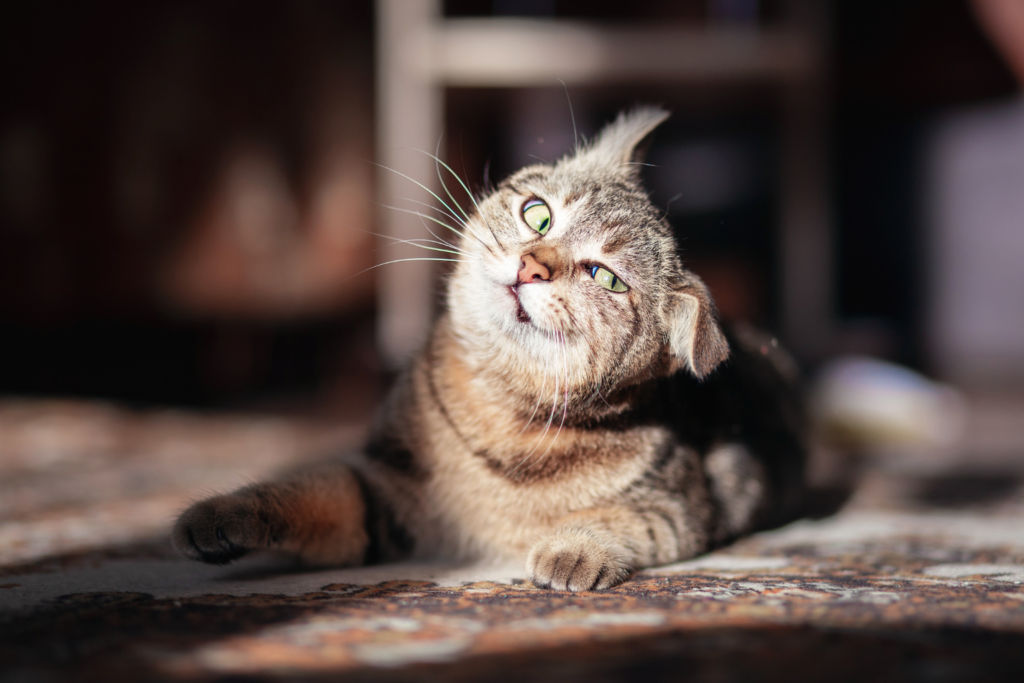
It is 3:00 AM, the house is quiet, and your cat suddenly launches down the hallway. Claws scramble across the floor, a chair becomes a parkour obstacle, and an invisible opponent is pursued from one room to the next. Five minutes later, the same cat may be calmly grooming as though nothing happened.
These explosive bursts are commonly called the “zoomies.” They are often normal, especially in kittens and young adult cats. But when your cat gets zoomies at night, attacks feet under the blanket, cries outside the bedroom, or repeatedly wakes the household, a harmless burst of play can become a genuine sleep problem.
The original explanation is usually too simple: your cat slept all day, stored a huge reserve of energy, and must be “exhausted” before bed. Activity matters, but feline behavior is more flexible than that. Cats can be active around dawn and dusk, yet their routines also respond to light, feeding, human interaction, household schedules, age, health, and whatever has worked for them in the past.[3][7]
That means midnight zoomies are not cured by one robotic toy. The lasting solution is a coordinated routine: meet your cat’s physical and behavioral needs during waking hours, schedule an appropriate play-and-meal sequence before bed, avoid accidentally rewarding 3 AM demands, and rule out medical causes when the behavior is new or unusual.
Smart toys can help, especially when work makes daytime play difficult. They should supplement—not replace—interactive play, environmental enrichment, veterinary care, or a consistent household schedule.
How we researched this guide: This is a research-based editorial guide, not a hands-on product test. We reviewed current feline veterinary guidance, peer-reviewed research on cat activity rhythms, and official manufacturer specifications for the featured products. Modern Cat Society has not yet purchased or field-tested these products. Manufacturer performance claims are identified as such.
Quick Answer
- Most likely explanation: Your cat’s natural activity pattern, daytime routine, feeding schedule, and learned responses are combining to make nighttime rewarding.
- Best first step: Add short interactive play sessions during the day and evening, then finish a structured pre-bed hunt-catch-eat routine with a measured meal.
- Do not rely on: Punishment, one marathon play session, or an automatic toy marketed as a guaranteed “energy burner.”
- Call your veterinarian if: The behavior starts suddenly, involves disorientation, yowling, pain, skin rippling, self-biting, collapse, abnormal elimination, weight loss, or major appetite and thirst changes.
What Are Cat Zoomies?
“Zoomies” describes a brief episode of intense running, jumping, turning, climbing, or play. You may also see the phrase frenetic random activity period, or FRAP, online. It is a useful informal description, but it is not a specific veterinary diagnosis.
A typical episode has a clear play-like quality. The cat remains coordinated and aware, changes direction intentionally, may chase a toy or another cat, and returns to normal afterward. The burst usually lasts seconds or a few minutes rather than continuing as distressed pacing for hours.
Zoomies can occur after waking, during social play, after using the litter box, when a familiar person arrives home, or around a predictable meal. Some cats sprint after being startled and then convert that arousal into play. Others have learned that racing into the bedroom produces attention.
The behavior is not automatically evidence of anxiety, hyperactivity, or poor care. The question is whether the episode is normal for that cat, whether it disrupts sleep or causes damage, and whether any physical or neurological signs appear with it.
Why Does My Cat Get Zoomies at Night?
There is rarely one cause. Most nighttime activity reflects several factors operating together.
1. Cats often have activity peaks around low-light periods
Cats are frequently described as crepuscular, meaning they tend to show increased activity around dawn and dusk. That helps explain evening play and very early morning movement, but it does not mean every cat is biologically programmed to race at exactly 3:00 AM.
Research shows considerable flexibility. Indoor cats can shift activity and feeding patterns according to light, housing, scheduled care, food availability, and human contact.[3] A cat living closely with people may synchronize much of their activity with the household. This adaptability is good news: a predictable routine can influence when play, food seeking, and rest occur.
2. The day may not offer enough meaningful activity
A cat can sleep while you work without necessarily being deprived. The concern is not the number of naps alone; it is whether the cat has opportunities to climb, scratch, hide, observe, forage, play, and interact in ways that suit their temperament.
Current Feline Veterinary Medical Association guidance identifies opportunities for play and predatory behavior as one part of a healthy indoor environment. It also emphasizes safe places, separated resources, predictable positive interaction, and respect for the cat’s senses.[1][2]
When the environment remains unchanged and toys are always available in the same positions, a cat may save their most energetic social behavior for the moment a person finally becomes available. If your schedule ends with a quick dinner and immediate sleep, the cat’s preferred interaction window may begin just as yours ends.
3. Your response may be reinforcing the routine
Behavior that produces a desired consequence is more likely to happen again.[6] If running across your pillow makes you talk, move your feet, toss a toy, or serve food, the cat has learned that nighttime activity works.
This does not mean the cat is manipulating you maliciously. They are repeating a successful strategy. Even occasional rewards can maintain a persistent pattern because the cat never knows which attempt will pay off.
Scolding can also function as attention, while moving feet under a blanket can resemble prey. Physical punishment, spraying water, or frightening the cat may add stress and damage trust without teaching a better nighttime behavior.[5][6]
4. Hunger or meal timing may be waking the cat
Cats naturally eat multiple small meals, and a long overnight gap may be difficult for some individuals. A cat fed early in the evening may become active several hours later because food seeking has become part of the routine.
VCA guidance notes that changing the timing of play and feeding can help align feline activity with the household, and that a timed feeder can be useful for a cat who sleeps for most of the night but wakes very early for food.[4] The important distinction is timing: the feeder should operate independently of crying, not appear because you got out of bed in response to it.
Any feeding change must preserve the cat’s appropriate daily calorie allowance. Do not add a 3 AM meal on top of the existing diet. Divide the planned daily amount into smaller portions, and speak with your veterinarian if your cat has diabetes, kidney disease, food allergies, obesity, unintended weight loss, or a therapeutic diet.
5. Another cat, animal, or household trigger may be involved
A cat outside the window, rodents in a wall, insects near a lamp, hallway noise, or movement from another pet can activate hunting or defensive arousal. In multi-cat homes, one cat may initiate a chase that becomes a household sprint.
Look at the direction of your cat’s attention before the episode. A fixed stare at a window, tail lashing, growling, or repeated patrol of one wall suggests a specific trigger rather than generalized excess energy. Curtains, privacy film, humane pest control, separated resources, or a calmer nighttime room may be more effective than extra exercise.
6. Age changes both energy and sleep
Kittens and adolescents have short, intense play cycles and limited impulse control. Frequent zoomies are expected, but their environment still needs to be kitten-proofed.
A senior cat is different. New nighttime waking, pacing, or vocalization can reflect pain, declining vision or hearing, hyperthyroidism, hypertension, or cognitive dysfunction. AAHA and AAFP guidance recommends medical evaluation for new or unusual behavior in older cats.[8]
Normal Zoomies or a Reason to Call the Vet?
Use the whole episode—not speed alone—to judge what you are seeing.
| More consistent with ordinary play | More concerning and worth veterinary advice |
|---|---|
| Brief, coordinated sprint with normal awareness | Stumbling, circling, collapse, rigid limbs, or loss of awareness |
| Cat returns quickly to normal behavior | Prolonged confusion, temporary blindness, or marked weakness afterward |
| Pattern is familiar and stable | Sudden onset or major increase in frequency or intensity |
| Loose, playful body language | Panic, persistent hiding, growling, or apparent pain |
| No physical symptoms | Weight loss, increased thirst, appetite change, vomiting, or litter-box changes |
| Occasional post-litter-box sprint with normal elimination | Straining, repeated box visits, crying, blood, or inability to pass urine or stool |
| Chasing a toy or another willing cat | Skin rippling, frantic licking, tail attacking, or self-injury |
Feline hyperesthesia can involve extreme skin sensitivity, rippling over the back, dilated pupils, intense scratching, tail chasing, vocalization, or self-trauma. Cornell advises ruling out pain, skin disease, parasites, allergies, and neurological causes rather than assuming these episodes are quirky zoomies.[9]
A seizure can sometimes include paddling or running-like movements, altered awareness, salivation, urination, rigid limbs, or confusion afterward. A seizure lasting five minutes or longer is an emergency, according to VCA.[10] Record a video if it is safe to do so, note the duration, and contact a veterinarian rather than trying to diagnose the episode from appearance alone.
How to Stop Midnight Zoomies: A Practical Seven-Step Plan
The goal is not to eliminate every joyful sprint. It is to shift the predictable high-energy period away from your sleep window and make calm nighttime behavior easier to maintain.
Step 1: Track the pattern for one week
Write down when the episode begins, what happened in the previous hour, the last meal, litter-box use, external noises, which people or pets were present, and how you responded. Note whether the cat was asleep, waiting for food, staring outside, or already playing.
A simple log often reveals that “random” zoomies follow a consistent cue: the television turns off, you brush your teeth, a neighbor arrives home, an automatic light activates, or another cat uses the litter box.
Step 2: Add several short activity opportunities
One exhausting session is not the only answer, and forcing an unfit cat to run hard can be inappropriate. Offer manageable bursts across the day instead. FelineVMA guidance recommends interactive play at least twice daily and encourages predictable interaction before and after work or near bedtime.[5]
Use a wand toy that moves like prey: away from the cat, around corners, beneath safe obstacles, and with pauses. Let the cat stalk and capture it repeatedly. Cats need opportunities to catch the “prey”; endless pursuit without capture can create frustration.[1]
Keep hands and feet out of the game. Store string, wire, feather, and elastic toys after supervised use.
Step 3: Build a pre-bed hunt-catch-eat routine
About 30 to 60 minutes before you intend to sleep, begin a predictable sequence:
- Dim household activity and remove distracting noises where practical.
- Provide 10 to 15 minutes of interactive play suited to the cat’s age and fitness.
- Allow several successful captures rather than keeping the toy permanently out of reach.
- End with a measured portion of the cat’s evening meal or a food puzzle.
- Clean the litter box, refresh water, and transition the home into a calm period.
The purpose is not to run the cat until they collapse. It is to complete a satisfying behavioral sequence and create a reliable cue that active interaction has ended for the night.
Older cats, brachycephalic cats, kittens, overweight cats, and cats with heart, respiratory, orthopedic, or neurological conditions may need shorter or modified play. Ask your veterinarian what intensity is appropriate.
Step 4: Make daytime enrichment worth waking up for
Rotate toys rather than leaving every option out indefinitely. Place a sturdy perch near a secure window, add vertical pathways, provide scratching surfaces in social areas, and offer cardboard boxes or tunnels with safe exits.
Use part of the daily food allowance in puzzle feeders or small searches around the home. Begin with an easy puzzle so the cat succeeds. In multi-cat homes, provide separate opportunities; one confident cat should not monopolize food, elevated space, or play.[1][2]
Novelty does not require buying something every week. Move a box, rotate two toys into storage, introduce a paper packing layer without handles or staples, or change the route of a wand-toy hunt. Supervise any new object until you know how the cat interacts with it.
Step 5: Redesign the feeding schedule
If hunger reliably drives early waking, shift a portion of the daily ration later in the evening or use a timed feeder for a small predawn meal. Move the dispensing time gradually if your cat currently wakes you at 3:00 AM; an abrupt change may simply move the protest.
Do not fill the bowl after meowing, pawing, or attacking feet. If food arrives only through a schedule that does not require your participation, the association between waking you and receiving breakfast can weaken.
Measure portions. Free-pouring extra food to buy silence can contribute to weight gain, and obesity makes vigorous exercise less safe. If the cat seems constantly hungry or loses weight despite eating well, schedule a veterinary evaluation.
Step 6: Stop making 3 AM interesting
First confirm that your cat has water, a clean and accessible litter box, a safe resting area, and no sign of illness or distress. Once those needs are met, keep your nighttime response boring and consistent.
Do not speak, play, chase, or serve food because the zoomies began. Avoid moving your feet enticingly beneath the blanket. Reward calm behavior during daytime and evening training instead of waiting for a nighttime disruption.
If you choose to keep the bedroom closed, make the decision consistent across the household. Provide a comfortable alternative sleeping area with water, litter access, a scratcher, and safe resting choices. Do not suddenly isolate a cat who shows panic or has a medical need; ask your veterinarian or a qualified feline behavior professional for a gradual plan.
Step 7: Protect the home while the routine changes
Anchor unstable furniture, remove breakable objects from launch points, secure blind cords, close unsafe windows, and block access to toxic plants, hot appliances, open toilets, and loose electrical cables. Use rugs or runners where repeated hard-floor sprints create slipping.
Separate cats if a nighttime chase becomes one-sided. Play should include pauses and role changes; stalking, cornering, screaming, persistent hiding, urine marking, or resource blocking suggests conflict rather than mutual fun.
A 14-Day Midnight Zoomies Reset
Consistency matters more than perfection. Use this as a starting framework and adjust it to your cat’s health and household.
| Days | What to change | What to observe |
| 1–3 | Record activity, meals, litter use, triggers, and your responses | Look for a repeatable cue and any medical warning sign |
| 4–6 | Add two short interactive sessions and rotate enrichment | Note which play style holds attention without causing distress |
| 7–9 | Begin the same hunt-catch-eat routine before bed | Track the start time, duration, and intensity of nighttime activity |
| 10–12 | Shift a measured food portion later or program a timed meal if hunger is involved | Confirm total daily calories remain unchanged |
| 13–14 | Remove accidental nighttime rewards and reinforce calm behavior earlier | Compare the number of awakenings with the first three nights |
Progress may be gradual. A reduction from four awakenings to one is meaningful even if an occasional sprint remains. If there is no improvement, revisit triggers, confirm that every household member follows the plan, and consider veterinary or behavior support.
Can Smart Toys Help With Cat Zoomies at Night?
Yes, if they are used for the right job. A smart toy can add movement, novelty, or remote interaction during the day and evening. It cannot guarantee sleep, replace human-guided predatory play, diagnose anxiety, or safely “exhaust” every cat.
Affiliate disclosure: This article contains affiliate links. As an Amazon Associate I earn from qualifying purchases. If you buy through one of these links, we may earn a commission at no additional cost to you. This does not affect our editorial recommendations.
| Option | Best use | Human involvement | Main limitation |
| Enabot EBO Air 2 | Remote check-ins and app-controlled movement or laser play | High; the useful play features are app-controlled | Premium price, network dependence, motor noise, and no physical “catch” from the laser |
| Cheerble Wicked Ball M3 | Short autonomous movement sessions on varied indoor surfaces | Moderate; supervise and inspect the toy | Some cats ignore moving balls, and the manufacturer requires supervised play |
| Wand toy | Structured hunt-catch play and bonding | High | Requires your time and safe storage after use |
| Food puzzle or timed feeder | Foraging and schedule-based meals | Low after setup | Must fit the cat’s diet, skill level, and calorie plan |
Premium Remote-Play Option: Enabot EBO Air 2
The Enabot EBO Air 2 is better understood as a mobile home-and-pet camera with interactive features than as a fully autonomous cat exerciser. Through the app, an owner can move the robot, use two-way audio, activate movements and sounds, and operate its laser feature. It also returns to its charging dock automatically.[11]
According to Enabot, the EBO Air 2 has a 2K camera, dual-band 2.4/5 GHz Wi-Fi, a 32 GB card in the package, and support for storage up to 256 GB. The manufacturer lists dimensions of approximately 3.7 × 3.7 × 3.5 inches (95 × 95 × 89.2 mm), a weight of about 9.9 ounces (282 g), a two-to-three-hour charge time, and four to seven hours of battery life. Its listed operating noise is 61 dB, so “silent” would be an inaccurate description.[11]
Why it may help: You can create a short remote interaction during the day, observe whether your cat is resting or active, and add movement before the late-evening routine. The mobile camera may offer more flexible viewing than a fixed camera.
Important limitations: The current documentation supports app-controlled pet play, not a promise that the robot recognizes your individual cat or autonomously schedules a complete exercise program. Thresholds, rugs, clutter, connectivity, and furniture can restrict movement. Clear the operating area, protect stairs and drops, and follow the manual.
Use the laser only while actively observing the session. Never aim toward eyes or reflective surfaces, and finish by directing your cat to a tangible toy or treat they can capture. If laser play creates searching or frustration after the light stops, use movement without the laser or choose a wand toy instead.
The manufacturer’s direct store currently lists a one-year warranty and a 14-day return statement, but an Amazon purchase follows the retailer and seller terms shown at checkout. Confirm the exact EBO Air 2 model, seller, return window, warranty route, app requirements, and current price before ordering.

Compact Automated Option: Cheerble Wicked Ball M3
The linked red Cheerble cat toy is more accurately described using Cheerble’s current feline model, the Wicked Ball M3, rather than the Wicked Ball PE. Cheerble markets the PE as a much larger toy for medium-to-large dogs. The M3 is the cat-specific product and is currently offered in Vintage Red.[12]
Cheerble lists the M3 at about 1.9 inches (47 mm) in diameter and 2.1 ounces (60 g), with synthetic fiber, silicone, and TPU components. It uses a 200 mAh rechargeable battery, USB-C charging, three movement modes, and obstacle-avoidance behavior. The cycle runs for 10 minutes and then rests for 30 minutes until reactivated by a nudge.[12]
Why it may help: The small ball can add a brief, prey-like movement session when you are cooking, working, or preparing for bed. Different modes let you begin gently, and the rest cycle prevents the motor from running continuously.
Important limitations: “Automatic” does not mean maintenance-free or universally engaging. Cheerble instructs owners to inspect the toy and supervise play to reduce the risk of damage or accidental ingestion.[12] Remove any optional bell or lanyard if your cat chews attachments, and discontinue use if the shell, fabric, charging port, or internal structure becomes damaged.
Begin with the gentlest mode in an open room. Some cats chase immediately; others need the ball placed beside a familiar toy or activated at a distance. Never force a fearful cat to approach. A motorized ball is an enrichment option, not a substitute for human-guided play or a treatment for anxiety.
Cheerble’s direct product page currently states a 60-day return and replacement policy for direct purchases, less applicable shipping costs. Amazon terms may differ. Confirm that the linked listing identifies the feline M3 or equivalent current red cat model, model CWQ02 when shown, along with the seller, returns, warranty support, and current price.

Which Tool Is Better for Your Routine?
Choose the EBO Air 2 if remote viewing and owner-controlled interaction are valuable beyond play. It is the more capable home device, but it is also larger, louder, more complex, network-dependent, and likely more expensive than a cat ball.
Choose the Cheerble M3 if you want a compact movement toy with short automatic cycles. It is simpler and more directly focused on cat play, but it offers no camera, two-way communication, or remote control.
Choose a wand toy first if the main problem is the absence of a satisfying hunt-catch sequence before bed. It is less technologically impressive but gives you precise control over speed, difficulty, pauses, and successful capture.
Choose a food puzzle or timed feeder when the behavior is closely tied to food seeking. The correct solution depends on the cause; buying the most advanced product does not compensate for a mismatched strategy.
Read more:
Why Indoor Cats Need Mental Stimulation?
Best Interactive Cat Toys to Keep Your Cat Active.
What Not to Do
Do not deliberately keep your cat awake all day
Cats need sleep and rest. Repeatedly interrupting naps can create stress without producing a healthier activity pattern. Invite daytime engagement with food searches, play, training, and environmental changes; do not force constant wakefulness.
Do not use punishment or frightening deterrents
Yelling, spraying water, throwing objects, or using shock devices can make the cat afraid of you or the environment. Reward desirable calm behavior and change the antecedents that make nighttime activity rewarding.[5][6]
Do not play with hands or feet under the blanket
Movement beneath bedding can look like hidden prey. Use toys that maintain distance between claws and skin, and stop turning your bed into a hunting arena.
Do not rely on laser play alone
A laser provides pursuit but no physical capture. Always conclude with something tangible, and stop using it if your cat continues searching after the session.
Do not feed extra calories to buy silence
Reschedule the planned daily ration instead. A cat who suddenly acts ravenous, loses weight, drinks more, or urinates more needs medical assessment rather than a larger unsupervised meal.
Adjusting the Plan for Different Cats
Kittens and young cats
Offer more frequent short play sessions and make the environment physically safe. Kittens may need several appropriate outlets but still should not be driven into prolonged panting or exhaustion. Secure wires, small objects, plants, and unstable furniture.
Senior cats
Choose low-impact movement on nonslip surfaces. Add warm beds, night-lights where vision is reduced, and easy access to water and litter. New nighttime behavior should be medically evaluated before being treated as a training problem.[8]
Overweight or sedentary cats
Begin gradually with ground-level stalking and short pursuits. Coordinate food puzzles and meal changes with a veterinary weight plan so treats do not erase the calorie deficit.
Multi-cat households
Play with cats individually when possible and provide duplicated, separated resources. A nighttime chase is not healthy play if one cat consistently hides, screams, loses access to litter or food, or is cornered by the other.[1][2]
When to Seek Professional Help
Contact your veterinarian when nighttime activity is sudden, escalating, or accompanied by physical or behavioral change. Seek prompt advice for:
- Repeated straining, crying in the litter box, or inability to pass urine.
- Collapse, seizure-like movement, altered awareness, or prolonged confusion.
- Skin rippling, frantic self-biting, tail attacking, or wounds.
- Weight loss, marked hunger, increased thirst, or increased urination.
- Persistent nighttime yowling or disorientation, especially in a senior cat.
- Limping, reluctance to jump, sensitivity to touch, or inability to settle.
- Panic, sustained aggression, or conflict that endangers another cat.
- A major sleep-wake change after medication, illness, injury, or household disruption.
Bring a video and a written log if possible. Timing, duration, body language, responsiveness, elimination, and behavior after the episode can help the veterinary team distinguish play from pain, neurological events, sensory changes, or another medical concern.
If medical causes are excluded and the routine remains disruptive, a qualified feline behavior professional can help identify reinforcement patterns, environmental stress, or inter-cat conflict. Choose reward-based guidance and avoid dominance or punishment-based programs.
Frequently Asked Questions
1. Are cat zoomies at night normal?
Brief, coordinated, play-like sprints can be normal, particularly in kittens and young cats. A familiar episode that ends with a rapid return to normal is less concerning than a sudden pattern involving distress, confusion, pain, or physical symptoms.
2. Are cats nocturnal or crepuscular?
Cats commonly show increased activity around dawn and dusk, so “crepuscular” is often useful. Domestic cats are behaviorally flexible, however, and activity can shift with light, food, housing, people, and routine.[3][7]
3. Why does my cat get zoomies at exactly 3 AM?
The time may reflect a learned schedule, hunger, household noise, another animal, or the point when a long quiet period ends. Log the preceding events for a week. An exact recurring time often reveals a predictable cue rather than a mysterious biological alarm.
4. How long should I play with my cat before bed?
Start with approximately 10 to 15 minutes of interactive play, adjusted for age, health, and interest. Quality matters more than duration: include stalking, bursts of pursuit, pauses, and successful captures, then offer a measured meal.
5. Should I ignore my cat at night?
First ensure that the cat is safe, healthy, and has access to water, litter, and an appropriate resting space. If the behavior is a learned request for play or food, a calm and consistent lack of nighttime reward can help. Do not ignore signs of pain, illness, panic, or urinary difficulty.
6. Will feeding my cat before bed stop the zoomies?
It may help when hunger and meal timing are part of the pattern, especially after structured play. It will not solve external triggers, medical problems, conflict, or a lack of daytime enrichment. Use part of the daily ration rather than adding calories.
7. Can an automatic feeder stop early-morning waking?
A timed feeder can separate food delivery from your response and may help a cat who wakes primarily for breakfast.[4] Program a measured portion and adjust the timing gradually. Cats with medical or therapeutic dietary needs require veterinary guidance.
8. Is the Enabot EBO Air 2 an automatic cat toy?
It is primarily a mobile camera robot with app-controlled pet interaction, laser, movements, sounds, and automatic docking.[11] It can support remote play, but current documentation does not justify treating it as a fully autonomous exercise program that guarantees a tired cat.
9. Is the Cheerble Wicked Ball M3 safe to leave unattended?
Cheerble instructs owners to inspect the M3 and supervise play.[12] No powered toy is appropriate for unattended use after damage or when a cat chews components. Introduce it gradually and remove it if parts loosen or the exterior deteriorates.
10. Why did the original article call the Cheerble toy Wicked Ball PE?
The manufacturer currently categorizes the Wicked Ball PE as a larger dog toy. Cheerble’s cat-specific M3 is approximately 1.9 inches and 2.1 ounces and is offered in Vintage Red.[12] Confirm the exact model shown in the linked Amazon listing before buying because titles and variants can change.
11. Are post-litter-box zoomies normal?
Some cats sprint after elimination without another problem. What matters is whether urination and defecation are comfortable and normal. Straining, repeated trips, blood, crying, constipation, or inability to urinate needs veterinary attention; urinary obstruction can be an emergency.
12. When are zoomies an emergency?
Seek emergency veterinary help for difficulty breathing, collapse, suspected poisoning, severe injury, inability to urinate, or seizure activity lasting five minutes or longer.[10] If you are unsure whether an episode is play or a neurological event, keep the cat away from hazards, record it if safe, and call a veterinarian.
Final Verdict: Can You Stop Midnight Zoomies?
If your question is “Why does my cat get zoomies at night?”, the answer is usually a mix of natural activity, daily routine, feeding, environmental triggers, and learned rewards. You may not eliminate every healthy sprint, but most households can reduce disruptive midnight zoomies with daytime enrichment, predictable interactive play, a pre-bed hunt-catch-eat routine, thoughtful meal timing, and consistent responses after lights-out.
The Enabot EBO Air 2 can add premium remote interaction, while the Cheerble Wicked Ball M3 can provide shorter autonomous movement sessions. Neither is a permanent cure or a substitute for human-led play. Start with the routine, select technology only when it fills a specific gap, and involve your veterinarian whenever nighttime behavior changes suddenly or no longer looks like ordinary play.
Read more:
Your Indoor Cat Has Separation Anxiety?
Why Does My Cat Follow Me Everywhere?
Sources and References
- Feline Veterinary Medical Association — Your Cat’s Environmental Needs. Supports safe spaces, separated resources, predatory play, successful capture, food puzzles, toy rotation, and individualized interaction. View source
- Feline Veterinary Medical Association — 2025 Indoor Cats Position Statement. Supports the five pillars of a healthy indoor environment and the importance of meeting emotional and behavioral needs. View source
- Parker et al. — Comparison of Locomotor and Feeding Rhythms Between Indoor and Outdoor Cats. Supports the variability of feline activity patterns and the effects of environment, feeding, and human intervention. View source
- VCA Animal Hospitals — Cat Behavior Problems: Nocturnal Activity. Supports changing daytime and evening interaction, feeding schedules, and the selective use of a timed feeder for early food-related waking. View source
- Feline Veterinary Medical Association — Training Techniques for Addressing Undesirable Behaviors. Supports twice-daily interactive play, predictable interaction, medical evaluation for new vocalization, and reward-based behavior change. View source
- Feline Veterinary Medical Association — How Cats Learn. Supports positive reinforcement and explains why behavior that produces a desired consequence becomes more frequent. View source
- International Cat Care — Helping Your New Cat or Kitten Settle In. Supports dawn-and-dusk activity tendencies and the ability of cats to adjust sleep patterns to a household routine. View source
- AAHA/AAFP — Behavior and Environmental Needs: Senior Cats. Supports veterinary assessment of new senior behavior and the connection between nighttime waking and sensory change, cognitive dysfunction, pain, hyperthyroidism, or hypertension. View source
- Cornell Feline Health Center — Hyperesthesia Syndrome. Supports the description of skin rippling, extreme sensitivity, self-directed behavior, and the need to exclude medical causes. View source
- VCA Animal Hospitals — Seizures and Epilepsy in Cats. Supports distinguishing seizure signs from ordinary play and the five-minute threshold for emergency care. View source
- Enabot — EBO Air 2 Official Product Page and Specifications. Supports camera, Wi-Fi, dimensions, weight, battery, operating noise, app-controlled pet features, laser, automatic recharge, direct-store return statement, and warranty listing. View source
- Cheerble — Wicked Ball M3 Official Product Page. Supports model identification, dimensions, weight, materials, battery, modes, play-rest cycle, supervision guidance, and direct-purchase return terms. View source
Sources, specifications, prices, and policies reviewed August 25, 2026. Product features, retailer terms, warranty coverage, and manufacturer guidance may change. Verify critical details with the manufacturer or retailer before purchasing.