British Shorthair Cat: Complete Guide to Personality, Care, Health, Lifespan, and Ownership
By Demosthenes Staudinger | Updated August 29, 2026
Affiliate disclosure: This article contains affiliate links. As an Amazon Associate I earn from qualifying purchases. If you buy through one of these links, we may earn a commission at no additional cost to you. This does not affect our editorial recommendations.
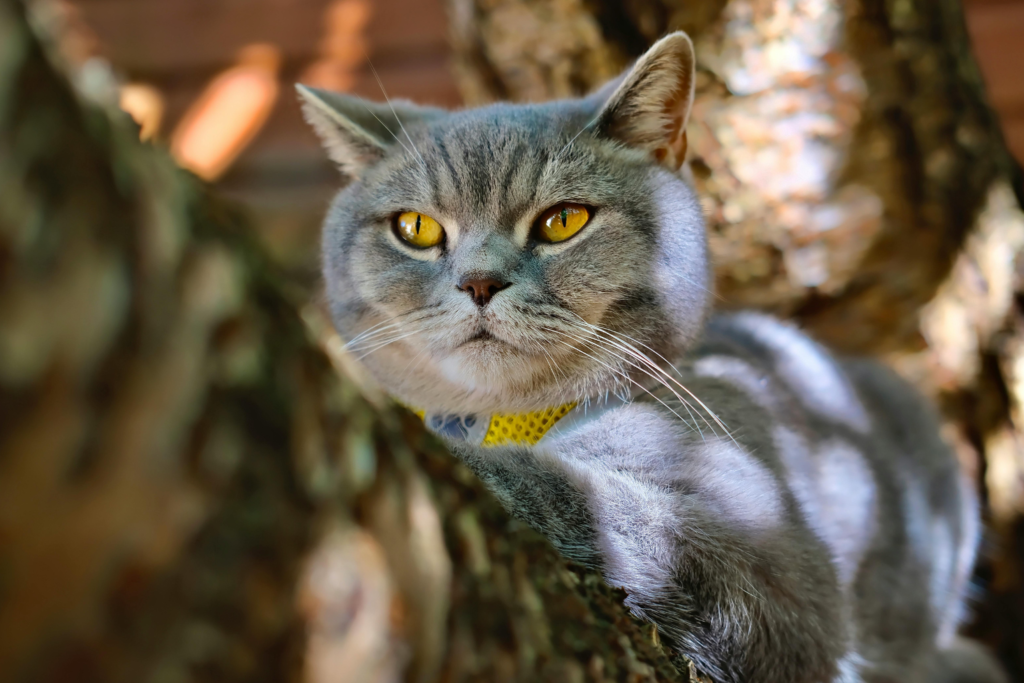
The British Shorthair cat can look almost engineered for cuddling: round face, full cheeks, large eyes, powerful body, and an exceptionally plush coat. That teddy-bear appearance is real. The assumption that every British Shorthair wants to be carried like one is not.
This breed is typically calm, observant, affectionate, and less acrobatic than a Bengal or Abyssinian. Many British Shorthairs prefer settling beside their people rather than occupying a lap, and many tolerate ordinary work schedules better than highly demanding breeds. Those are useful tendencies—not guarantees of a silent, sedentary, or emotionally self-sufficient cat.
The practical commitments are easy to underestimate. A British Shorthair matures slowly, can carry excess fat beneath a naturally substantial frame, sheds from an extremely dense coat, and deserves careful health screening when purchased from a breeder. Good ownership is less about buying “luxury” technology and more about portions, play, body-condition monitoring, preventive veterinary care, and affection that respects the individual.
This complete guide explains British Shorthair personality, size, grooming, nutrition, enrichment, family compatibility, health, lifespan, breeder questions, and three optional products that may simplify parts of daily care.
How we researched this British Shorthair guide: This is a research-based editorial guide, not a hands-on product test, veterinary diagnosis, or guarantee about an individual cat. We reviewed current TICA and CFA breed information, the CFA British Shorthair standard revised in 2026, veterinary resources from Cornell and UC Davis, feline environmental and nutrition guidance, TICA’s buyer guidance, and current manufacturer or retailer documentation for the featured products. Modern Cat Society has not purchased or field-tested those products. Manufacturer and retailer claims are identified as such.
Quick Verdict
Editorial verdict: The British Shorthair is an excellent candidate for someone seeking quiet, undemanding companionship—provided that “calm” is not mistaken for “needs no play,” and “substantial” is not mistaken for “should be overweight.”
Best for: Quieter families, apartment residents, first-time owners, and professionals who want an affectionate but generally self-possessed indoor companion and can maintain portions, activity, grooming, and veterinary care.
Skip it if: You specifically want a guaranteed lap cat, enjoy carrying cats frequently, expect a kitten to reach full size quickly, or will not verify cardiac and genetic screening before buying from a breeder.
British Shorthair Cat at a Glance
| Characteristic | Typical British Shorthair |
|---|---|
| Origin | United Kingdom; one of the oldest established British breeds |
| Adult size | Medium to large; compact, muscular, and heavily built |
| Typical weight | Females about 8–11 lb; males about 10–16 lb |
| Full maturity | CFA’s current standard says approximately 3–5 years |
| Coat | Short, very dense, crisp, resilient; not described by CFA as double-coated |
| Colors | Blue is iconic, but many colors and patterns exist |
| Personality | Calm, affectionate, observant, independent; individuals vary |
| Activity | Low to moderate, with playful bursts |
| Grooming | Usually weekly, with more attention during shedding |
| Life expectancy | TICA currently lists approximately 12–20 years |
| Important screening | HCM assessment, PKD1 status, and breeding-related blood type considerations |
| Best environment | Predictable indoor home with play, scratching, rest, observation, and choice |
| Main ownership challenge | Distinguishing healthy substance from excess body fat |
TICA currently lists adult females at 8–11 pounds and males at 10–16 pounds, while CFA notes that some males reach about 17 pounds. TICA gives a broad lifespan estimate of 12–20 years. These are population-level reference points, not promises about an individual kitten.[1][2]
British Shorthair History
TICA traces the breed’s distant background to cats that accompanied the Romans into Britain and later worked as durable mousers. The recognizable pedigree breed emerged through organized cat fancy and selective breeding rather than remaining an unchanged Roman-era cat.[1]
British populations were severely reduced by both World Wars. TICA records the use of domestic shorthairs, Russian Blues, Persians, and other carefully managed crosses as breeders rebuilt the lines. Persian crosses also introduced the longhair gene, which helps explain the later development of the British Longhair as a related breed.[1]
CFA describes early British cats at Crystal Palace shows and notes that U.S. registrations originally used the label “British Blue.” The current name matters because blue is only one color within the British Shorthair breed.[2]
History adds context, not a temperament guarantee. A pedigree verifies ancestry and registration eligibility; it cannot promise that a kitten will enjoy laps, tolerate children, remain quiet, or avoid disease.
What Does a British Shorthair Look Like?
The current CFA standard describes a compact, balanced, powerful cat with a broad chest, short-to-medium strong legs, rounded paws, and a thick tail that ends in a rounded tip. The head is round and wide, with full cheeks, firm chin, prominent whisker pads, widely spaced ears, and large round eyes.[3]
Roundness should not become exaggeration. The 2026 standard calls for balance and proportion and penalizes or disqualifies features associated with weakness, poor dentition, malocclusion, narrowed nostrils, or an excessively shortened head.[3] A responsible breeder should value comfortable breathing, normal movement, sound teeth, and overall function—not only a dramatic “teddy-bear” photograph.
Is the British Shorthair brachycephalic?
The breed has a relatively short, broad face, but it should not have the extreme facial compression associated with severely brachycephalic cats. CFA asks for a gentle nose dip without a definite stop and for wide-open nostrils.[3]
Persistent noisy breathing, open-mouth breathing, chronic eye irritation, difficulty eating, or exercise intolerance should not be dismissed as normal breed type. Appearance cannot replace a veterinary examination.
The dense coat is not officially a “double coat”
British Shorthair fur feels plush because it is exceptionally dense and stands away from the body. The CFA standard describes it as short, firm, crisp, and resilient—and explicitly says it is not double-coated or woolly.[3]
That distinction corrects a common online description. Whatever label a seller uses, evaluate the practical reality: the coat sheds, needs regular loose-hair removal, and should return toward position when brushed against the grain. A soft, overlong, fluffy coat is not the shorthair texture described by the standard.
British Blue and other colors
The classic British Blue is a solid blue-gray British Shorthair, usually with gold or copper eyes under the standard. TICA calls blue the most popular color, but the breed appears in many solids, tabbies, bicolors, tortoiseshells, silvers, goldens, smokes, and other recognized expressions.[1][3]
Color does not create a separate personality or prove pedigree. A round blue mixed-breed cat is not automatically a British Shorthair, and a registered British Shorthair need not be blue. Documentation matters more than resemblance.
British Shorthair Size and Slow Maturity
British Shorthairs can look compact without being small. Their broad chest, strong bone, muscular torso, dense coat, and mature male jowls create substantial visual mass.[1][3]
The development timeline is slower than the original article suggested. CFA’s consumer profile says the breed reaches full size at approximately three years, while the revised 2026 show standard states that full maturity and development take three to five years.[2][3] A one-year-old may therefore have considerable filling out left to do.
Slow maturity is not permission to overfeed a kitten until it looks round. Feed for the correct life stage, follow body-condition trends with your veterinarian, and let bone and muscle develop naturally. Targeting an unusually high scale number can turn breed substance into preventable obesity.
British Shorthair Personality
TICA and CFA portray the typical British Shorthair as calm, affectionate, intelligent, and quietly interested in household routines. Many follow their people from room to room, notice schedule changes, and choose a nearby chair or sofa cushion from which to supervise.[1][2]
The breed’s independence is attractive, but it is easy to romanticize. “Undemanding” does not mean a cat can be routinely ignored. British Shorthairs still need social contact, play, clean resources, predictable care, and the freedom to withdraw.
Are British Shorthairs lap cats?
Many are better described as beside-you cats. CFA says they often wait for an invitation to sit nearby rather than jumping onto a lap, and TICA similarly describes them as preferring the sofa beside their person.[1][2]
Some individuals do enjoy laps. Others dislike prolonged holding and prefer four supported feet. Invite contact instead of forcing it, teach children not to carry the cat around, and judge affection by the individual cat’s behavior rather than its plush appearance.
Are they quiet?
British Shorthairs are generally described as quiet and unobtrusive, but they are not mute.[1][2] One may communicate through a small voice, gaze, touch, or changes in routine. Breed reputation cannot predict exact vocal frequency.
A sudden increase in crying, nighttime vocalization, silence, hiding, or irritability can signal stress or illness. Establish the cat’s normal pattern and investigate meaningful change.
Are they lazy?
Calm is more accurate. TICA notes that British Shorthairs are not known for high-flying acrobatics but still have playful bursts and can enjoy teaser toys and retrieving.[1] Their moderate drive makes deliberate activity especially important because they may not create enough movement to balance unlimited food.
The Best Home Setup for a British Shorthair
The Feline Veterinary Medical Association emphasizes that indoor care should provide safe rest, play and predatory opportunities, food and water, clean toileting, and vertical territory.[7] A British Shorthair needs the same categories, even if the arrangement can be calmer and lower than a Bengal-focused room.
Stable vertical territory
This breed may not seek the ceiling, but elevated choice remains valuable. A medium-height tree, broad window perch, sturdy shelf, or stepped route can provide observation and separation from children or pets.
Prioritize platform dimensions, grip, base stability, and realistic dynamic load. A 15-pound cat landing at speed places different forces on furniture than the same cat sleeping. Anchor equipment where required and keep routes away from unsecured windows, hot appliances, and fragile objects.
Scratching in more than one orientation
Provide a tall, stable post that permits a full stretch and consider a horizontal cardboard surface as well. Place scratchers near sleeping areas, routes, or furniture the cat already targets. Scratching serves stretching, claw maintenance, communication, and scent marking; it is not misbehavior.
Play that fits the cat
Several short sessions usually suit a British Shorthair better than one demanding marathon. Move a wand toy like prey, allow stalking and capture, roll lightweight balls, hide a few pieces of measured kibble, or teach a simple retrieve or target touch.
Do not use hands as prey. Adjust jumping for kittens, seniors, and cats with mobility or cardiac limitations. A sudden refusal to play, difficulty jumping, panting, or lameness deserves veterinary attention rather than a “lazy breed” explanation.
Litter, Water, and Everyday Comfort
A broad-bodied cat needs room to turn, dig, and position comfortably. Choose a litter box by the cat’s actual dimensions rather than a package label such as “large.” High sides can contain scattered litter, but the entrance must remain accessible; kittens, seniors, and cats with joint pain may need a lower step. Scoop at least daily and provide multiple boxes in different locations when more than one cat shares the home.[7]
Keep fresh water available away from dirty litter and, when practical, separate from the main food station. A fountain is optional. Some British Shorthairs prefer moving water; others favor a simple wide bowl. Cleanliness, easy access, and observed preference matter more than app features. A sudden change in thirst or urination should prompt veterinary advice rather than a fountain upgrade.
Resting areas should support the whole body without forcing a tight curl. Offer more than one temperature and elevation: perhaps a broad sofa corner, washable bed, window perch, and quiet floor-level retreat. “Heavy breed” does not automatically mean every young healthy British Shorthair needs an orthopedic bed. Watch how the individual rises, jumps, and settles, then adapt access as age, weight, or mobility changes.
Apartment Living, Work Schedules, Children, and Pets
British Shorthairs often adapt well to apartments because they are generally quiet and moderately active. Square footage alone does not determine welfare; usable resting, scratching, observation, play, litter, food, and water areas matter more.[7]
An adult may also cope with an ordinary workday better than a highly social, high-energy breed. Offer activity before or after work and meaningful companionship when home. Kittens, ill cats, and individuals showing distress may need a different plan. Independence is not permission for chronic isolation.
TICA and CFA describe the breed as generally tolerant of children and compatible pets.[1][2] Teach children to pet and play without restraining or carrying. Introduce dogs and cats gradually, distribute essential resources, and ensure that the British Shorthair can leave noisy activity.
Compatibility is individual. A calm breed label cannot make a chasing dog safe or force two cats to become friends.
Weight Management and Nutrition
TICA warns that British Shorthairs enjoy food and can gain weight with sedentary habits.[1] The challenge is visual: a round face, broad torso, primordial pouch, and dense coat can make excess fat look like correct breed type.
Use hands and trends, not a single photograph. Your veterinary team can show you how to assess ribs, waist, abdominal contour, muscle, and a 9-point body-condition score. Weigh the cat periodically on the same scale and investigate unexpected gain or loss.
A British Shorthair does not require breed-branded, raw, grain-free, or “ancestral” food simply because of its pedigree. Choose a diet labeled complete and balanced for the correct life stage and any diagnosed medical need. The FDA explains that nutritional-adequacy claims should be supported by an AAFCO nutrient profile or qualifying feeding trial.[8]
Measure calories rather than relying on a scoop whose fill level changes. Include treats, puzzle food, and table scraps in the daily total. Neutering, maturity, age, activity, and medical conditions can change requirements, so adjust portions with veterinary guidance.
Three Optional Products for British Shorthair Care
None of these products is required. A measuring cup or gram scale, a simple puzzle, and a suitable comb may be enough. Buy only when the exact product, maintenance, materials, size, and use case fit your cat.
| Product | Best use | Main limitation |
| PETLIBRO Granary Smart Camera Feeder | Scheduled dry-food portions and remote meal viewing | Does not measure body condition or guarantee how much the cat swallowed |
| Nina Ottosson Cat Puzzle Games | Supervised foraging with part of a measured ration | Exact model and difficulty may vary at the linked listing |
| Swihauk Self-Cleaning Slicker Brush | Removing loose surface hair from a tolerant short coat | It is a slicker brush, not the wide-toothed metal comb described in the old draft |
PETLIBRO Granary Smart Camera Feeder
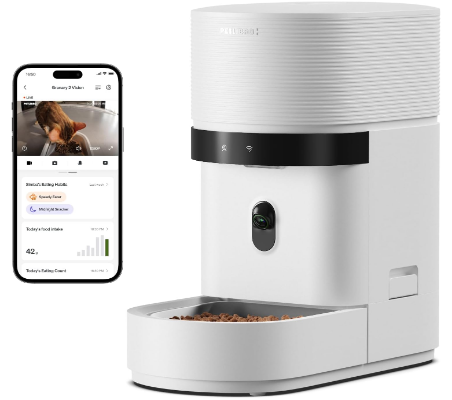
PETLIBRO’s current Granary camera-feeder page lists a 5-liter dry-food hopper, app scheduling, a 1080p camera with a 145-degree view, two-way audio, and single- or dual-bowl options. Emergency battery power can continue scheduled feeding, but the manufacturer says camera and Wi-Fi functions are disabled while running only on backup batteries.[10]
There is an official inconsistency worth knowing: the feature summary currently says up to 10 meals or snacks per day, while the FAQ still says up to six. Verify the exact Amazon variant, app capabilities, and current documentation before purchasing.[10]
The camera can show that a cat approached the bowl; it cannot establish exact caloric intake, prevent another pet from stealing food, or diagnose appetite change. The feeder handles dry food only. Total calories, treat intake, activity, and body condition still determine whether portions are appropriate.
Best for: A single-cat household that wants scheduled dry-food delivery and visual meal checks.
Skip it if: Your cat eats wet food, multiple pets can access the bowl, you need identity-controlled feeding, or you expect the device to manage obesity automatically.
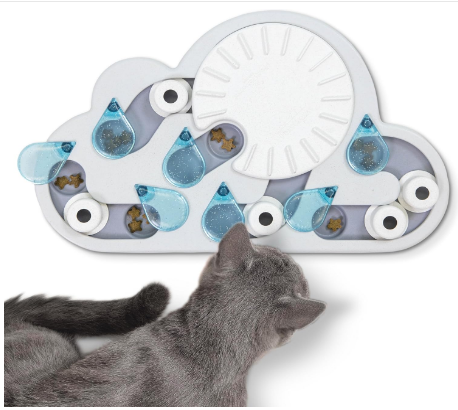
Nina Ottosson Cat Puzzle Games
Outward Hound currently offers several Nina Ottosson cat puzzles with different layouts and difficulty levels. They generally ask the cat to slide, rotate, or move pieces to uncover food. Manufacturer guidance for the line emphasizes gradual introduction, supervision, and removing damaged toys.[11]
The affiliate link supplied for this article is labeled generically rather than as a confirmed model. Verify the exact puzzle, dimensions, compartment design, and safety instructions on the Amazon page. Begin with easy access, use part of the cat’s measured ration instead of adding unlimited treats, and make sure the cat can still obtain its full food allocation.
Best for: A food-motivated cat that needs gentle mental activity and supervised foraging.
Skip it if: The cat guards food, chews hard plastic, becomes frustrated, or needs an accessible feeding method for medical or mobility reasons.
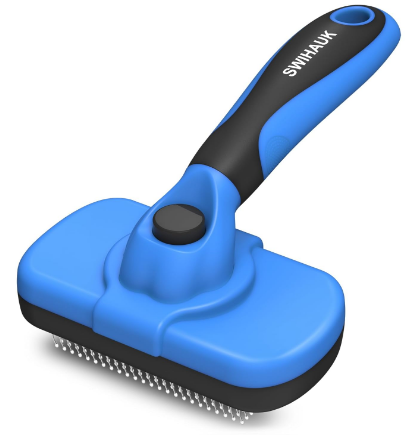
Swihauk Self-Cleaning Slicker Brush
The linked Swihauk product is a self-cleaning slicker brush, not a wide-toothed metal comb. Its current retailer listing describes rounded protective tips and a release mechanism intended to remove collected hair from the brush head.[12] Those are listing claims, not evidence that the brush suits every skin or coat.
Use light pressure and short sessions. A slicker can collect loose surface coat, but it should not scrape the skin or be forced through a mat. Stop for discomfort, redness, or static-related irritation. Some British Shorthairs will prefer a simple metal comb or soft rubber tool.
Best for: A tolerant shorthaired cat whose owner values quick hair release from the tool.
Skip it if: Your cat has sensitive or inflamed skin, dislikes slicker pins, has painful tangles, or already does well with a gentler comb.
Grooming the Plush Coat
CFA says a quick weekly combing or brushing is sufficient for many British Shorthairs, while TICA recommends extra grooming during seasonal coat changes.[1][2] Individual shedding varies, and a dense coat can release more hair than the phrase “low maintenance” suggests.
Work gently in the direction of growth, then check the underarms, chest, rear, and other friction areas. Grooming is also a chance to feel body condition and notice wounds, parasites, swelling, or tenderness. A sudden decline in self-grooming can reflect obesity, arthritis, dental pain, or illness.
Routine care also includes nail trimming, ear observation, dental care, parasite prevention, vaccination, and clean litter boxes. For gradual home dental training, see How to Brush Your Cat’s Teeth: A Stress-Free Guide.
Frequent bathing is not normally necessary. Use cat-appropriate products only when there is a practical reason, and seek professional or veterinary help for painful mats or skin disease rather than escalating force at home.
British Shorthair Health and Lifespan
British Shorthairs can develop conditions seen in any cat. For a pedigree kitten, three topics deserve specific discussion: hypertrophic cardiomyopathy, PKD1 status, and blood type in the breeding program. Screening reduces defined risks but cannot guarantee lifelong health.
Hypertrophic cardiomyopathy
HCM causes abnormal thickening of the heart muscle. Cornell explains that affected cats may initially appear normal; disease can progress to congestive heart failure or arterial thromboembolism, which can cause sudden painful hind-limb weakness or paralysis.[4]
TICA specifically recommends echocardiographic screening of British Shorthair breeding cats by a veterinary cardiologist.[1] UC Davis’s current British Shorthair test page lists PKD1 and blood-group testing, not a validated British Shorthair-specific HCM DNA test.[6] A generic “DNA clear” statement therefore does not replace cardiac imaging or family-history questions.
Ask who performs the echocardiograms, when each breeding cat was last screened, whether testing is repeated as adults age, and what is known about older relatives. Open-mouth breathing, collapse, marked respiratory effort, or sudden painful hind-limb weakness is an emergency.
Polycystic kidney disease
UC Davis includes British Shorthairs among breeds appropriate for PKD1 testing because of Persian ancestry in some lines. The tested condition is autosomal dominant: one copy of the associated variant can place a cat at risk of developing kidney cysts and later kidney disease.[5]
Ask for the actual laboratory reports for both parents. A DNA result addresses the known PKD1 variant; it does not replace urinalysis, bloodwork, blood-pressure assessment, imaging when clinically indicated, or ordinary preventive care.
Blood type
CFA notes that many British Shorthair lines carry type B, while UC Davis offers a DNA test for variants associated with B and AB blood types.[2][6] This is especially important in breeding decisions because incompatible matings can endanger newborn kittens. For pet owners, knowing the confirmed blood type can also help if a transfusion is ever needed.
Genetic prediction and clinical blood typing are not interchangeable in every situation. Breeders and veterinarians should interpret results in context rather than relying on a consumer panel alone.
How long do British Shorthairs live?
TICA currently lists approximately 12–20 years.[1] This is a broad estimate, not a guaranteed minimum or ceiling. Genetics, heart and kidney health, body condition, dental care, indoor safety, and access to veterinary treatment all influence longevity.
Keep a consistent preventive-care schedule and investigate changes in appetite, thirst, urination, breathing, movement, weight, coat, litter use, or social behavior. A calm cat may express illness subtly.
Choosing a Responsible Breeder or Rescue
TICA’s buyer guidance recommends verifying the breeder, seeing how cats are raised, reviewing parental health and genetic records, checking registration documents, reading the contract, and avoiding pressure or unusual payment methods.[9]
For a British Shorthair, ask for:
- PKD1 laboratory results for both parents
- Dates and reports for echocardiographic HCM screening
- Blood-type information and how breeding compatibility is managed
- Family history, including older relatives and causes of death when known
- Registration, pedigree, and age-appropriate veterinary records
- Details about socialization, handling, and the age kittens may leave
- A written health agreement and return-to-breeder policy
Observe the kitten moving, breathing, eating, and interacting—not only sitting in a posed photograph. Be cautious when a seller treats color, “giant” size, or an exceptionally round face as more important than function and documentation.
Rescue is also worth considering. Adult personality is easier to observe, and a calm adult mixed-breed cat may provide exactly the companionship you want. Without pedigree records, treat a visual “British Shorthair” label as an estimate rather than certainty.
A Realistic British Shorthair Care Routine
Every day
- Measure food and include treats or puzzle portions in the total.
- Refresh water, wash bowls, and scoop litter boxes.
- Offer short interactive play and calm social contact.
- Notice appetite, breathing, movement, elimination, and behavior.
Every week
- Comb or brush the coat and feel body condition beneath it.
- Inspect nails, ears, mouth, skin, and paw pads without forcing handling.
- Clean puzzle feeders and check equipment for damage.
- Rotate selected toys while keeping important resources predictable.
Periodically
- Weigh the cat and review the body-condition trend.
- Trim nails at an individual interval.
- Confirm microchip registration and preventive-care dates.
- Reassess access, play, portions, and furniture as the cat ages.
Pros and Cons of British Shorthair Ownership
| Pros | Considerations |
| Calm, quietly affectionate personality | Often prefers proximity to carrying or prolonged lap time |
| Usually adapts well to indoor and apartment life | Still needs daily play and environmental choice |
| Can manage reasonable work periods alone | Independence can be misread as needing little attention |
| Dense short coat is relatively easy to maintain | Plush coat sheds and can hide body-condition changes |
| Often compatible with respectful children and pets | Noise, restraint, and poor introductions can still create stress |
| Many colors and patterns | Blue color or round appearance does not prove pedigree |
| Moderate activity suits many households | Portion control and weight monitoring are important |
| Long potential lifespan | HCM, PKD1, and breeding-related blood type deserve attention |
Who Should Choose a British Shorthair Cat?
Choose this breed if you appreciate companionship that is close but not necessarily physically demanding. You should be comfortable letting affection happen on the cat’s terms, creating gentle daily activity, monitoring weight, maintaining the dense coat, and asking detailed health questions before buying.
The breed can suit a first-time owner who understands that easy grooming does not mean maintenance-free ownership. It can also fit a family or professional household when the cat receives interaction rather than merely sharing an address.
Choose another individual if your priority is a guaranteed lap cat, frequent carrying, intense athletic play, or immediate adult size. The best match is not the breed that photographs most attractively; it is the cat whose actual needs and boundaries fit your life.
Frequently Asked Questions
1. Are British Shorthair cats affectionate?
Yes, generally. TICA and CFA describe them as affectionate, loyal, and interested in family life.[1][2] Many show affection by following, sitting nearby, greeting, or sharing routines rather than demanding constant contact.
2. Are British Shorthairs lap cats?
Some are, but the typical breed description emphasizes sitting beside a person rather than on a lap.[1][2] Many also dislike prolonged carrying. Let the individual choose proximity and teach children to keep all four feet supported.
3. How big do British Shorthair cats get?
TICA lists females at about 8–11 pounds and males at about 10–16 pounds; CFA notes that some males reach around 17 pounds.[1][2] Healthy body condition matters more than reaching the top of a breed range.
4. When is a British Shorthair fully grown?
CFA’s consumer profile says approximately three years, while its revised 2026 standard gives a fuller three-to-five-year maturity window.[2][3] Growth rate varies, so do not use slow development as a reason to overfeed.
5. How long do British Shorthair cats live?
TICA currently estimates 12–20 years.[1] No individual lifespan is guaranteed. Genetics, cardiac and kidney health, body condition, dental care, safety, and veterinary treatment all affect longevity.
6. Are British Shorthairs lazy?
They are generally calm and less acrobatic than some breeds, but they still need daily play, scratching, foraging, observation, and social contact.[1][7] Reduced activity can also reflect pain, obesity, or illness.
7. Can a British Shorthair live in an apartment?
Yes. Provide stable vertical choice, scratching, comfortable rest, clean litter, play, food, water, and interaction.[7] A thoughtfully arranged small home can meet feline needs better than a large but empty one.
8. Can a British Shorthair be left alone during the workday?
Many healthy adults tolerate reasonable work periods, but no cat should receive almost no interaction. Provide enrichment and meaningful contact before or after work. Kittens, older cats, and individuals with medical or behavioral needs may require more support.
9. Do British Shorthairs shed a lot?
Their short coat is extremely dense, so shedding is normal. CFA says weekly combing or brushing works for many cats, with extra attention during coat changes.[2] No brush makes the breed non-shedding.
10. Do British Shorthairs need special food?
No breed-specific diet is automatically required. Choose complete and balanced food for the correct life stage and medical needs, measure total calories, and adjust portions using weight and body condition.[8]
11. What health tests should a British Shorthair breeder provide?
Ask for PKD1 results, current echocardiographic HCM screening records, and blood-type information relevant to the breeding pair.[1][5][6] Also review family history, veterinary records, pedigree, contract, and socialization practices.
12. Is a British Blue different from a British Shorthair?
A British Blue is a blue-colored British Shorthair, not a separate personality type. The breed occurs in many colors and patterns.[1][3] Blue-gray fur and a round face alone do not verify pedigree.
Final Verdict: Is a British Shorthair Right for You?
The British Shorthair’s greatest strength is balance. It is usually affectionate without being intrusive, playful without demanding nonstop action, visually substantial without needing to be overweight, and independent without being indifferent.
Its greatest ownership risk is misunderstanding that balance. The plush coat can hide weight gain. A calm temperament can hide discomfort. A teddy-bear face can encourage unwanted carrying. A robust reputation can make buyers overlook HCM, PKD1, blood type, and ordinary preventive care.
The right home provides measured nutrition, gentle daily activity, stable observation and scratching areas, weekly coat care, respectful contact, and careful breeder screening. Smart feeders, puzzles, and self-cleaning brushes can make parts of that routine more convenient, but none replaces observation or veterinary judgment.
If you want a cat that spends every hour climbing on you, the British Shorthair may feel reserved. If you value a composed companion that follows the household, settles nearby, and turns quiet proximity into affection, this breed can be extraordinary.
Sources and References
- The International Cat Association — British Shorthair. Current size, lifespan, history, personality, activity, grooming, weight, family suitability, and echocardiographic HCM-screening guidance. View source
- Cat Fanciers’ Association — British Shorthair. Current consumer breed profile covering temperament, family fit, maturation, grooming, physical attributes, and blood-type considerations. View source
- Cat Fanciers’ Association — British Shorthair Show Standard, revised 2026. Current conformation language covering balance, body, head, open nostrils, coat texture, maturation, colors, and functional disqualifications. View standard
- Cornell Feline Health Center — Hypertrophic Cardiomyopathy. HCM presentation, potentially silent disease, diagnostic evaluation, congestive heart failure, and arterial-thromboembolism complications. View source
- UC Davis Veterinary Genetics Laboratory — Polycystic Kidney Disease (PKD1). Autosomal-dominant inheritance, kidney-cyst development, result interpretation, and breeds considered appropriate for testing. View source
- UC Davis Veterinary Genetics Laboratory — British Shorthair. Current breed-relevant tests, including PKD1 and genetic variants associated with B and AB blood types. View source
- Feline Veterinary Medical Association — 2024 Indoor/Outdoor Lifestyle Position Statement. Indoor environmental needs, safe rest, play, predatory behavior, vertical territory, food, water, and toileting. View source
- U.S. Food and Drug Administration — “Complete and Balanced” Pet Food. Nutritional-adequacy labeling, AAFCO profiles or feeding trials, and life-stage distinctions. View source
- The International Cat Association — Pet Buyer’s Guide. Breeder verification, parental records, registration, contracts, housing conditions, payment safety, and scam avoidance. View source
- PETLIBRO — Granary Automatic Cat Feeder With Camera. Current manufacturer capacity, camera, app, audio, scheduling, dry-food limitation, backup-power behavior, maintenance, and conflicting meal-count language. View source
- Outward Hound — Nina Ottosson Cat Games. Current puzzle range, differing layouts and difficulty levels, feeding use, supervision, introduction, and safety guidance. View source
- Amazon Swihauk Store — Self-Cleaning Slicker Brush. Current retailer-controlled product identification and listed brush design, rounded tips, grooming purpose, and self-cleaning release. View source
Sources, breed information, veterinary guidance, and product documentation reviewed August 29, 2026. Manufacturer features, retailer listings, purchase terms, and screening recommendations can change. Verify critical details before purchasing and consult your veterinarian about an individual cat.