Siberian Cat: Complete Guide to Personality, Care, Health, Lifespan, and Ownership
By Demosthenes Staudinger | Updated August 28, 2026
Affiliate disclosure: This article contains affiliate links. As an Amazon Associate I earn from qualifying purchases. If you buy through one of these links, we may earn a commission at no additional cost to you. This does not affect our editorial recommendations.
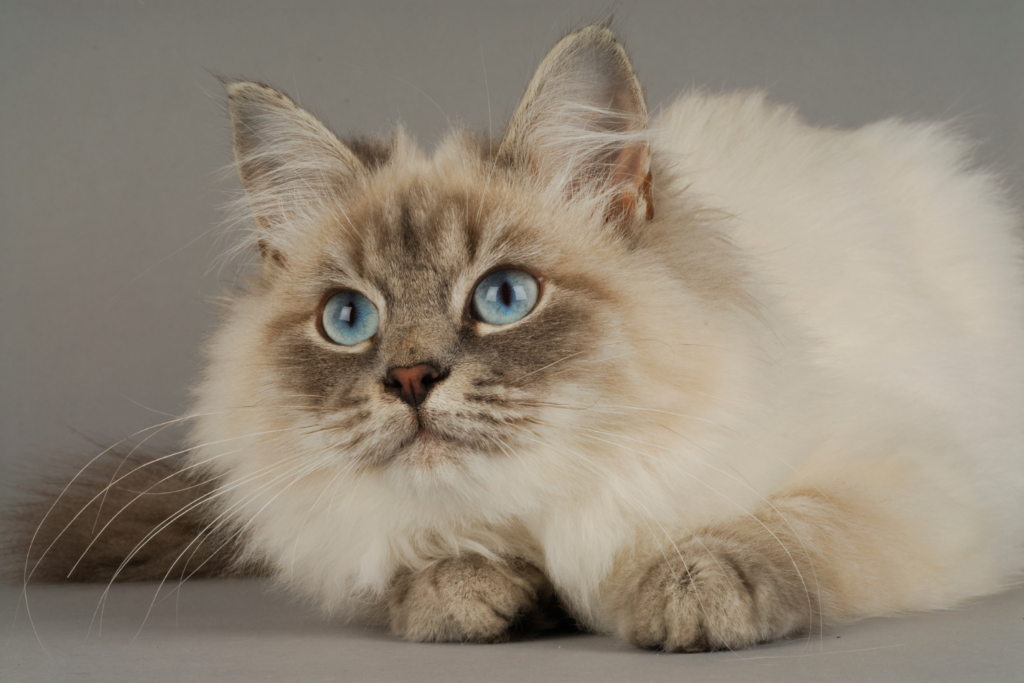
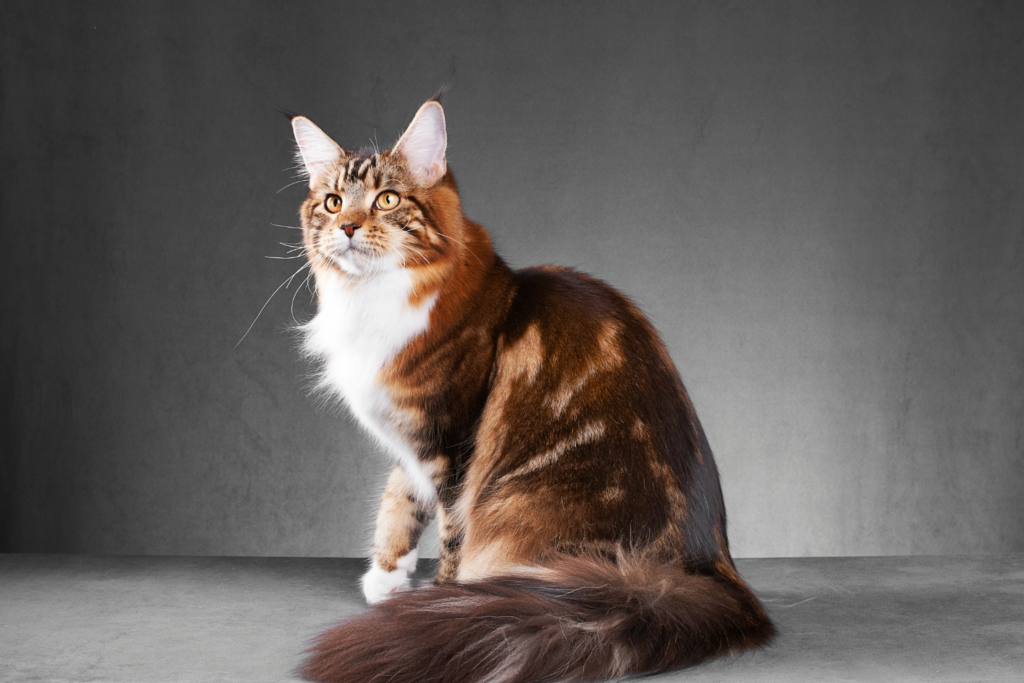
A Siberian cat can look almost impossibly substantial. The winter coat creates a broad silhouette, rounded paws support a muscular body, and the full tail seems built for a Russian snowstorm. Then the same cat chirps at you, follows you into the kitchen, and launches onto the highest shelf in the room.
That contrast explains much of the breed’s appeal. TICA and CFA describe Siberians as intelligent, affectionate, playful, and socially involved, but generally not as relentlessly demanding as some highly vocal breeds.[1][2]
The popular shorthand—”large, hypoallergenic forest cat”—is less useful. Many mature males fall in CFA’s 12–18-pound range, yet size varies and excess weight is not breed type. Some people with allergies report tolerating an individual Siberian, but allergy specialists do not recognize any cat breed as reliably hypoallergenic.[2][8]
The coat usually needs less intensive care than a Persian coat, but the dense seasonal undercoat can shed heavily and conceal tangles. Stable climbing space, a roomy litter box, routine grooming, and weight monitoring still matter.
Hypertrophic cardiomyopathy, or HCM, is a breed concern, and Maine Coon and Ragdoll DNA tests should not be presented as Siberian HCM tests. Echocardiography remains central. UC Davis also lists PKD1 and pyruvate kinase deficiency tests for Siberians, but each answers only a specific genetic question.[1][2][6][7]
This guide covers Siberian cat personality, history, size, coat, grooming, allergy evidence, activity, feeding, litter-box needs, health, lifespan, breeder questions, optional products, and everyday ownership so you can decide whether this powerful, people-oriented breed fits your home.
How we researched this Siberian cat guide: This is a research-based breed guide, not a diagnosis or a guarantee of any individual cat’s temperament, health, size, allergen production, or lifespan. We reviewed current TICA, CFA, and FIFe breed information; feline veterinary and environmental-care guidelines; university genetic-testing resources; peer-reviewed allergy research; and current manufacturer pages for the optional products mentioned. Modern Cat Society has not examined a breeder or hands-on tested those products. Manufacturer specifications and policies are identified as such.
Quick Verdict: Is a Siberian Cat Right for You?
- Editorial verdict: A Siberian can be a rewarding companion for someone who wants an affectionate, athletic, large-framed cat and accepts seasonal shedding, regular grooming, sturdy equipment, and meaningful health-screening research. The breed is adaptable, but neither maintenance-free nor allergy-safe.
- Best for: Interactive homes that can provide vertical territory, daily play, several weekly coat checks, appropriately sized resources, and a budget for preventive and breed-relevant veterinary care.
- Skip it if: You need a guaranteed hypoallergenic pet, dislike loose fur, want a reliably sedentary lap cat, cannot accommodate stable climbing furniture and a large litter box, or are unwilling to verify cardiac and genetic records before buying from a breeder.
Table of Contents
- Siberian Cat at a Glance
- History and Russian Origins
- Appearance, Size, Coat, and Colors
- Personality and Family Life
- Activity and Indoor Environment
- Grooming and Shedding
- The Hypoallergenic Question
- Feeding and Litter-Box Needs
- Health and Lifespan
- Choosing a Breeder or Rescue
- Frequently Asked Questions
- Final Veredict
Siberian Cat at a Glance
| Characteristic | Siberian cat profile |
|---|---|
| Origin | Russia; organized breed development expanded during the 1980s |
| Size | Medium-large to large, muscular, and heavily boned |
| Typical adult female weight | Approximately 8–12 lb, according to CFA |
| Typical mature male weight | Approximately 12–18 lb, according to CFA |
| Full maturity | Often around 3 years; full physical development may take up to 5 years |
| Lifespan information | TICA lists 11–18+ years; this is not an individual guarantee |
| Coat | Semi-long, seasonal triple coat |
| Typical personality | Affectionate, intelligent, playful, curious, and generally easygoing |
| Activity | Moderate to high, with strong jumping and climbing ability |
| Grooming | Coat checks and combing several times weekly; more during seasonal shedding |
| Vocal style | Often relatively quiet, with chirps, trills, and deep purrs |
| Allergy reality | No Siberian is guaranteed hypoallergenic |
| Major health discussions | HCM screening, PKD1 testing, PK-deficiency testing, weight, and routine preventive care |
| Best home | Social, enriched, indoors or securely contained, with large and stable resources |
The table summarizes registry descriptions and care guidance reviewed August 28, 2026.[1][2] Breed averages are not targets. A healthy adult may fall outside a published weight range, and body condition matters more than making a cat match a number.
Siberian Cat History and Russian Origins
The Siberian is considered a natural Russian breed rather than a recently designed hybrid. Registry histories refer to Siberian-type cats in Russia as far back as approximately 1000 AD, although that date should be understood as breed history and folklore, not a continuous modern pedigree record.[1][2]
Formal documentation developed much later. TICA describes Russian clubs establishing records and a breed standard during the 1980s. In 1990, Elizabeth Terrell imported the first breeding Siberians to the United States. TICA placed the breed in its New Breed program in 1992 and granted championship status in 1996.[1]
CFA accepted Siberians for registration in 2000 and granted championship status in 2007.[2] This produces an interesting timeline: the landrace behind the breed is old, while organized North American breeding and show recognition are comparatively recent.
“Ancient” does not mean genetically uniform, unchanged for a millennium, or free of inherited disease. Modern breeding still requires documented health screening and honest discussion of problems found in a line.
Appearance, Size, Coat, and Colors
The ideal Siberian is powerful without exaggeration. Both major U.S. standards emphasize a medium-large, muscular cat with substantial bone, rounded contours, a broad chest, a modified-wedge head, an almost-round eye shape, and hind legs slightly longer than the front.[1][2]
The outline is more rounded than rectangular, helping distinguish the breed from the long Maine Coon and triangular-headed Norwegian Forest Cat. Size remains secondary to balanced breed type.
How Big Do Siberian Cats Get?
CFA gives approximately 8–12 pounds for adult females and 12–18 pounds for mature males.[2] Those figures describe common breed ranges, not a safe ceiling or minimum for every cat.
The triple coat creates a visual illusion. A winter Siberian may look several pounds heavier than the body beneath the fur. Use hands as well as eyes when assessing ribs, waist, abdominal contour, and muscle, and ask a veterinarian to demonstrate a body-condition score.
Siberians mature slowly. CFA says many reach much of their adult size by about three years, while its standard and TICA allow as long as five years for full development.[1][2] A slowly maturing frame is not a reason to feed without limits. Excess calories create fat, not better bone or breed type.
The Seasonal Triple Coat
The coat is one of the breed’s defining characteristics. In cold conditions, an adult can carry a dense undercoat, longer guard hairs, a prominent ruff, full britches, belly fur, toe tufts, and a heavily furnished tail. During warmer months, much of that winter coat is shed and the silhouette can change dramatically.[1][2]
“Weather-resistant” does not mean waterproof or appropriate for unsupervised winter exposure. A companion Siberian still needs dry shelter and ordinary preventive care.
Colors and the Neva Masquerade
Siberians appear in many colors and patterns, including solids, tabbies, silver, smoke, red-associated colors, white spotting, and pointed patterns. Color should remain secondary to health, structure, and temperament.
Colorpoint Siberians are commonly called Neva Masquerades. TICA and CFA include pointed cats in their Siberian standards, while FIFe lists Siberian and Neva Masquerade under separate breed codes, SIB and NEM.[1][2][3] A pointed cat has a lighter torso with darker cooler areas—the face, ears, legs, and tail—and blue eyes.
The registry distinction matters for showing, registration, and breeding paperwork. For a companion home, the breeder’s health practices and the individual cat’s behavior matter much more than the label used for the color division.
Siberian Cat Personality and Family Life
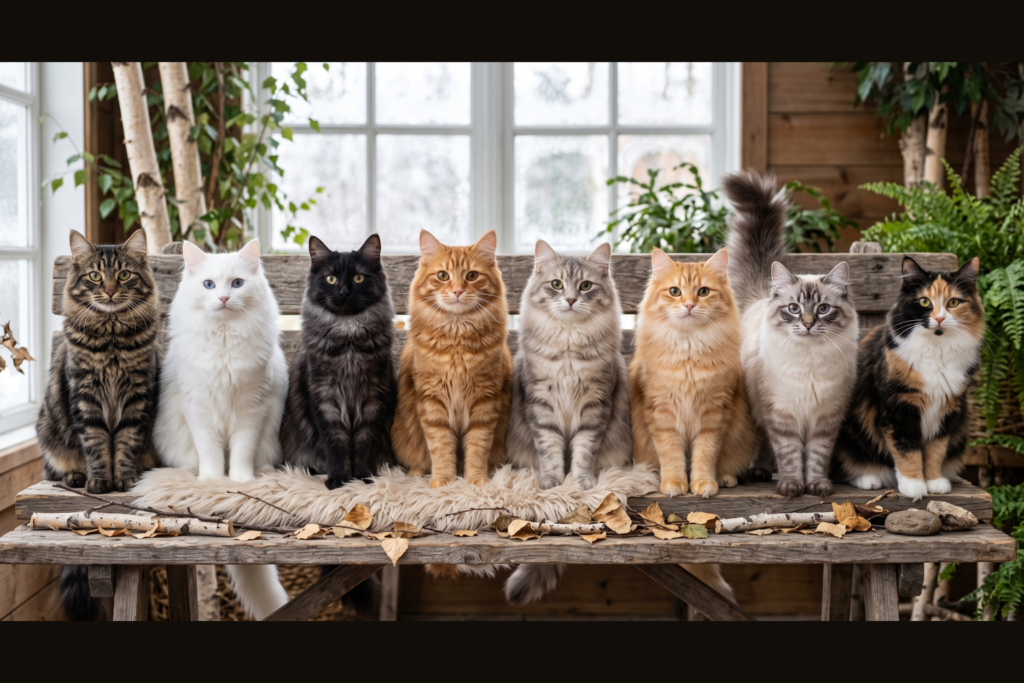
TICA portrays Siberians as lively, affectionate cats that follow family members, wait patiently for attention, play enthusiastically, and often greet people with chirps. CFA similarly describes an intelligent, sociable, curious, and easygoing breed that wants to know what is happening around the home.[1][2]
A typical day may alternate between watching you work, inspecting an open cabinet, chasing a wand toy, resting nearby, and appearing on a high surface you did not realize was reachable. The useful expectation is not “calm” or “hyperactive” in isolation, but composed with athletic bursts and strong social interest.
Breed tendencies cannot predict an individual. Early handling, socialization, health, age, learning history, and the household all influence behavior. A shy Siberian, an independent Siberian, and a highly vocal Siberian are still possible.
Are Siberian Cats Affectionate?
Many are closely connected to their people. Some sleep on a lap; others sit beside the person or follow from room to room. Affection should not be measured only by tolerance of carrying.
Let the cat initiate and end contact. A large, gentle-looking cat can still become fearful when restrained, and forced handling can weaken trust. Teach children to stroke briefly, use toys rather than hands, and let the cat walk away.
Are Siberian Cats Vocal?
They are usually described as quieter than Siamese and related breeds. Chirps, trills, and conspicuous purrs are common registry descriptions.[1][2] Individual vocabulary varies.
A sudden increase in vocalization can reflect a medical or environmental problem rather than personality.
Children, Dogs, and Other Cats
TICA and CFA both describe many Siberians as compatible with respectful children and other animals.[1][2] Their physical substance may make them feel robust, but it does not make rough handling acceptable.
Introduce dogs behind barriers, prevent chasing, and introduce cats gradually. Distribute food, water, litter boxes, resting places, scratchers, and perches so one animal cannot control every resource.[4]
A friendly breed label cannot overcome a high-prey-drive dog, chronic intercat tension, or an introduction that moves too quickly. Compatibility belongs to the individuals.
Activity, Enrichment, and the Indoor Environment
Siberians are strong jumpers. TICA specifically links their powerful hindquarters with the ability to reach elevated places, while feline environmental guidance identifies perches, hiding places, scratching, play, and separated essential resources as core parts of a healthy indoor environment.[1][4]
Useful enrichment can include:
- Wand play that allows stalking, chasing, pouncing, and capture
- Food puzzles introduced at an easy level
- Treat or kibble searches counted within the daily ration
- Stable window perches with secure screens
- Tall and horizontal scratching options
- Boxes, tunnels, and quiet hiding places
- Short reward-based training sessions
- Toy rotation instead of leaving every item out permanently
Store strings, ribbons, feathers, and detachable pieces after supervised play.
Vertical Territory for a Large, Athletic Cat
For a Siberian, stability is as important as advertised weight capacity. A structure must handle a dynamic landing, not only a cat sitting still. Check the base footprint, fasteners, platform dimensions, wall-anchor instructions, and clearance around the intended location.
Place climbing routes where the cat gains a useful view without being trapped by another pet. Senior cats may continue to value elevation but need lower steps, ramps, closer platform spacing, and nonslip surfaces.
Optional Climbing Aid: Mau Cento
The current Mau Cento is a furniture-style tree with a 23-inch base, 45.5-inch height, two woven baskets, washable cushions, a lower cave, jute-wrapped real-branch trunks, and replaceable wear parts. Mau states that it supports cats up to 23 pounds each.[10]
That manufacturer-listed limit covers CFA’s typical Siberian weight ranges, but weigh and measure your cat, compare usable basket dimensions, assemble the tree exactly as directed, and recheck hardware. The 23-inch base also needs a level location away from unstable furniture.
Mau lists a 45-day direct-purchase trial and one-year limited warranty; geographic conditions and exclusions apply.[10] Amazon terms may differ, so verify the listing.
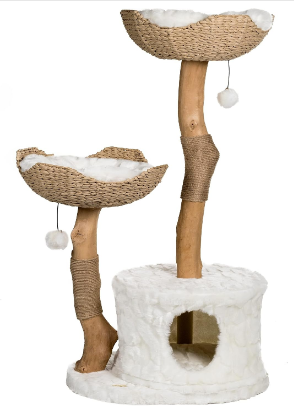
A premium tree is optional. Secure shelves, a correctly anchored lower-cost tree, and rearranged furniture can create excellent vertical territory if dimensions and stability suit the cat.
Siberian Cat Grooming and Seasonal Shedding
The coat is often manageable, but it is not maintenance-free. TICA recommends combing or brushing a couple of times per week and increasing frequency during spring and fall shedding. CFA notes substantial individual variation and advises checking the underside, tail, and britches several times weekly for tangles.[1][2]
Run your fingers through the coat before combing. Pay particular attention to:
- Behind the ears
- The ruff and chest
- Under the front legs
- The belly and groin
- The hind-leg britches
- The base and length of the tail
Work in short sessions while a tangle is small. Hold hair near the skin, separate loose tangles gently with fingers, and never cut a skin-level mat with scissors.
For tight, extensive, painful, damp, or skin-level mats, ask a veterinarian or experienced cat groomer for help. Shaving is not a routine seasonal shortcut and should be done only when there is a welfare reason and safe handling plan.
The Most Useful Basic Tool
A simple steel-toothed comb can reach through a dense coat and help reveal small tangles that a surface brush misses. Tooth spacing, rounded tips, handle comfort, and the cat’s tolerance matter more than an elaborate tool count.
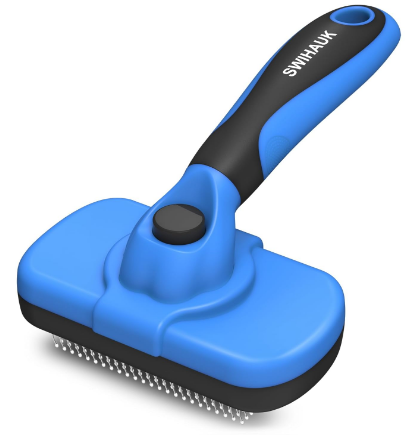
Begin with one or two passes in an easy area, reward, and stop before the cat struggles. Gradually include sensitive zones. A tool that is technically effective but frightening to the cat will be difficult to use consistently.
Managing the Seasonal Coat Change
During a major shed, daily brief combing may be more comfortable than an occasional long session. Wash bedding, use a vacuum or lint roller for the home, and expect the summer coat to look much lighter.
Grooming can reduce loose hair and identify tangles early, but it cannot stop normal shedding. Excessive bald patches, broken hair, itch, inflamed skin, sudden coat thinning, or a major change outside the usual seasonal pattern warrants veterinary assessment.
Does a Siberian Need Baths?
Usually not on a fixed schedule. TICA says bathing is rarely necessary and describes the coat as highly water-resistant.[1] A bath may be reasonable after contamination, for a specific grooming need, or when recommended medically.
Use a cat-labeled product, comfortable lukewarm water, a nonslip surface, thorough rinsing, and complete drying in a warm room. Human shampoo, essential oils, and highly fragranced products are not appropriate defaults.
Optional Grooming Vacuum: oneisall LM5C
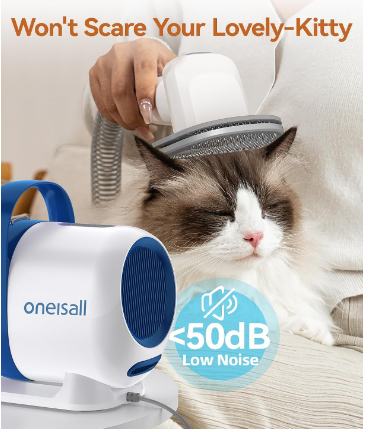
The oneisall LM5C combines grooming and deshedding brushes with suction. The manufacturer currently lists 8,000 Pa suction, a 1.5-liter dust cup, corded power, and noise below 48 dB. The kit also contains clippers and trimming attachments, but clipping a Siberian’s coat is not routine breed care.[11]
The decibel claim does not predict acceptance; airflow, vibration, and hose movement also matter. Introduce the unit at a distance, use the gentlest suitable setting, and stop when the cat shows distress.
Oneisall lists a 30-day direct-sale refund period, with return shipping excluded, and a two-year warranty.[11] Retailer terms may differ. A comb remains simpler for many homes.
Are Siberian Cats Hypoallergenic?
No Siberian should be promised as allergy-free.
Fel d 1 is the major cat allergen for many sensitized people, but cats produce multiple allergens. These proteins are present in saliva, skin material, and other secretions and become distributed through grooming and the environment. Coat length does not remove them.[8]
The American College of Allergy, Asthma & Immunology states that all cats produce allergens and that studies have not established a truly hypoallergenic cat breed.[8] This is more clinically useful than treating “hypoallergenic” as a breed feature.
Why does the Siberian reputation persist? A 2017 study sequenced the genes for the two Fel d 1 chains in Siberian cats and identified multiple variants, including changes that the authors proposed might affect the protein.[9] That work is biologically interesting, but it did not establish that every Siberian produces less Fel d 1, measure symptoms in allergic owners, or prove that the breed is safe for people with asthma.
Allergen production and human sensitivity vary. A short kitten visit cannot guarantee tolerance after continuous exposure at home.
If allergies influence the decision:
- Consult a board-certified allergist, especially when asthma or systemic reactions are possible.
- Spend meaningful time with the individual cat and, when buying a kitten, with adult relatives if feasible.
- Do not treat coat color, sex, pedigree language, or an unvalidated breeder “allergen test” as a guarantee.
- Make sure the breeder or rescue has a humane written return plan if the placement is medically unsustainable.
The honest conclusion is narrower than the marketing claim: some people may tolerate a particular Siberian better, but the breed is not reliably hypoallergenic.[8][9]
Feeding, Weight, and Litter-Box Needs
A Siberian does not require a special “forest cat” diet. Choose nutritionally complete food appropriate to life stage and individual health, and use the package amount only as a starting point. Age, neuter status, activity, environment, body condition, muscle, and calorie density change actual needs.
Because fur obscures shape, record weight, feel the body beneath the coat, and ask the veterinary team to score body condition and muscle.[5]
Rapid weight gain should not be celebrated as proof that a young cat is becoming “giant.” Increased appetite with weight loss, persistent vomiting or diarrhea, reduced appetite, increased thirst, or declining muscle needs veterinary evaluation.
Choosing a Litter Box for a Siberian
Ignore the word “large” on packaging and measure usable interior space. The AAHA/AAFP guidelines recommend a box approximately one and a half times the cat’s body length and note that many manufactured boxes are too small.[5]
The cat should be able to enter, turn, dig, posture, and exit without pressing against the sides. An oversized open storage box can outperform an expensive enclosed unit. Provide a low entry for kittens, seniors, and cats with mobility problems; keep boxes clean and place them away from food, water, noisy appliances, and ambush points.[4][5]
In multi-cat homes, distribute boxes rather than lining every unit together in one room. A group of adjacent boxes can function as one contested location.
Optional Automatic Litter Box: Neakasa M1 Plus
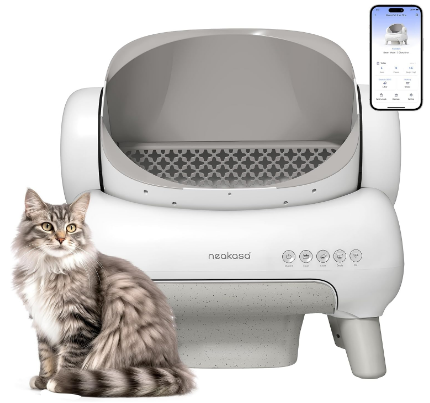
The Neakasa M1 Plus uses an open-top, self-sifting design. Current manufacturer information lists an approximate cat range of 2.2–33 pounds, a 13.86-inch entry, dimensions of about 23.3 by 20.7 by 20.2 inches, an 11.23-liter waste bin, app control, and compatibility with clumping or scoopable litter rather than wood pellets, newspaper litter, or non-clumping substrates.[12]
The open top may suit some substantial Siberians, but weight alone does not prove fit. Compare usable space with the cat’s length and posture. The 13.86-inch entry may require a stable step for a senior, kitten, or cat with arthritis.[12]
Automatic cycling cannot replace observation. Inspect waste, empty and clean the unit as directed, and keep a conventional box available during introduction or malfunction. App records cannot diagnose disease.
Siberian Cat Health and Lifespan
No breed is defined by a disease, and a Siberian may live for many years without developing the conditions below. A useful breed guide nevertheless separates actionable screening from vague claims that the cats are “naturally healthy.”
Hypertrophic Cardiomyopathy
HCM causes abnormal thickening of the heart muscle and can be silent. Some cats never develop obvious signs; others experience congestive heart failure, blood clots, arrhythmias, collapse, or sudden death. TICA recommends checking Siberians for HCM, and CFA identifies it among hereditary concerns in the breed.[1][2]
Cornell describes echocardiography as the gold standard for feline HCM diagnosis.[6] A normal stethoscope examination cannot replace an ultrasound, and one normal scan in a young cat cannot guarantee that age-dependent disease will never appear.
The commercial MYBPC3 tests commonly discussed online were developed for specific Maine Coon and Ragdoll variants. They should not be relabeled as a Siberian HCM-clearance test. For a breeder, ask for dated echocardiogram reports on both parents, who performed or interpreted the scans, the schedule for repeat screening, and HCM history in older relatives.
For a pet owner, ask the veterinarian whether cardiac referral or screening is appropriate based on examination, family history, age, and breeding status. Rapid or labored breathing, open-mouth breathing, collapse, or sudden painful weakness or paralysis of the hind legs is an emergency.[6]
PKD1 and Pyruvate Kinase Deficiency
UC Davis currently lists both PKD1 and erythrocyte pyruvate kinase deficiency among tests available for Siberian cats.[7]
PKD1 testing addresses a specific inherited form of polycystic kidney disease. PK-deficiency testing addresses an inherited red-blood-cell enzyme disorder that can cause hemolytic anemia. A result applies to the tested variant; it does not certify that every kidney value is normal, exclude every cause of anemia, or replace lifetime veterinary care.
Ask to see both parents’ laboratory reports, verify cat identity, and have a veterinarian or genetics professional explain any carrier result and mating plan. “Clear panel” is inadequate when the seller will not name the laboratory, variants, date, and cats tested.
Other Preventive-Care Priorities
Maintain individualized vaccination, parasite prevention, dental care, reproductive care, identification, and age-appropriate examinations. Monitor appetite, weight, breathing, coat, mobility, drinking, and litter-box output. Subtle trend changes are often more useful than waiting for dramatic illness.
Dense fur can conceal wounds, skin inflammation, parasites, and body-condition changes. Grooming is therefore a health check as well as coat maintenance.
What Is the Siberian Cat Lifespan?
TICA currently lists 11–18+ years.[1] Treat that as a broad registry estimate, not a promise and not a substitute for breed-specific mortality research.
Lifespan reflects genetics, disease, body condition, care, environment, and accident risk. Neither a breeder nor an HCM diagnosis can predict one fixed outcome.
Focus on controllable actions: responsible acquisition or adoption, a healthy body condition, indoor or securely contained living, dental and preventive care, prompt evaluation of changes, and an established veterinary relationship.
How to Choose a Responsible Siberian Breeder or Rescue
Adoption is worth considering. A rescue or retired adult may reveal more about personality, size, and coat needs, although pedigree records may be incomplete.
If buying from a breeder, ask for evidence rather than reassurance:
- Dated echocardiogram reports for both parents and an explanation of repeat HCM screening
- HCM history in siblings, parents, grandparents, and older offspring
- PKD1 and PK-deficiency reports from an identified laboratory
- Veterinary records, vaccination history, microchip information, and a written health contract
- The kitten’s diet, litter, grooming experience, socialization, and age at departure
- Registration details that can be verified with the named registry
- A written lifetime return provision if the owner can no longer keep the cat
- Permission to have documents reviewed by your veterinarian before a nonrefundable payment
Be cautious of guaranteed “non-allergenic” kittens, claims that a generic DNA panel makes a cat HCM-free, pressure to pay before records are reviewed, constant availability of many litters, refusal to show the mother, and marketing centered on giant size or rare color.
A registry directory can help locate candidates, but listing is not the same as independent approval of every practice. Interview more than one breeder and verify every document.
Can a Siberian Fit Your Home?
Apartment Living
Yes. Floor area matters less than usable territory. A well-planned apartment with vertical routes, hiding places, scratching surfaces, window views, play, and appropriately sized litter facilities can be more enriching than a large empty house.[4]
Consider where a 23-inch tree base, long carrier, and oversized box will fit before bringing the cat home. Secure windows and balconies. A standard insect screen is not designed to contain a determined, muscular cat.
First-Time Owners
A motivated first-time owner can do well with a Siberian by learning grooming, body-condition monitoring, enrichment, gentle handling, and health-record evaluation.
The breed is a weaker match for someone who chose it only because long fur looks luxurious or because “hypoallergenic” appears in an advertisement. Honest expectations matter more than previous cat ownership.
Siberian vs. Maine Coon vs. Norwegian Forest Cat
| Feature | Siberian | Maine Coon | Norwegian Forest Cat |
| Overall outline | Rounded, powerful, barrel-like | Long and rectangular | Athletic with a more triangular head |
| Muzzle | Full and rounded | Distinctly square | Tapered with a straighter profile |
| Coat emphasis | Seasonal triple coat | Shaggy, uneven coat | Water-resistant outer coat and dense undercoat |
| Maturity | Slow; up to about 5 years | Slow | Slow to moderate |
| Useful buying question | HCM imaging and relevant DNA records | HCM/SMA records and fit for large size | GSD IV and breed-relevant screening |
These are breed-standard tendencies, not personality guarantees. An adult rescue of any breed may be a better match than a pedigree kitten when temperament predictability is the priority.
Read next:
- Siberian vs. Maine Coon vs. Norwegian Forest Cat: Which Forest Cat Is Right for You?
- Norwegian Forest Cat vs. Maine Coon: How to Tell Them Apart
Pros and Considerations of Living With a Siberian
| Potential appeal | Important consideration |
| Often affectionate and people-oriented | Individual cats vary; affection does not guarantee lap sitting |
| Intelligent, playful, and trainable | Needs daily interaction and safe problem-solving opportunities |
| Athletic but often capable of settling | Strong jumping requires stable vertical furniture |
| Usually not excessively vocal | Chirping and individual communication can still be frequent |
| Striking seasonal triple coat | Heavy seasonal shedding and several weekly coat checks |
| Often compatible with respectful children and pets | Introductions and resource distribution still determine success |
| Can adapt well to apartments | Large litter, carrier, and climbing equipment consume real space |
| TICA lists a potentially long lifespan | No lifespan range is a guarantee |
| Some allergic people report better tolerance of an individual | The breed is not reliably hypoallergenic |
| PKD1 and PK-deficiency tests are available | HCM still requires attention to echocardiography and family history |
Frequently Asked Questions
How big do Siberian cats get?
CFA gives approximately 8–12 pounds for adult females and 12–18 pounds for mature males.[2] Coat volume can exaggerate apparent size, so evaluate body condition and muscle rather than using the range as a weight target.
How long does a Siberian cat take to mature?
Many reach much of their adult size by about three years, but full physical development can take up to five years.[1][2] Do not overfeed a young cat in an attempt to accelerate this normal timeline.
How long do Siberian cats live?
TICA lists 11–18+ years.[1] This broad registry range cannot predict an individual. Genetics, disease, body condition, preventive care, dental health, environment, and accident prevention all influence longevity.
Are Siberian cats hypoallergenic?
No breed is reliably allergy-free. The ACAAI states that all cats produce allergens, and Siberian-specific genetic research has not proved that every cat in the breed produces a low-allergen exposure.[8][9] Consult an allergist and evaluate the individual cat when allergies could affect the placement.
How often should you groom a Siberian cat?
TICA recommends combing or brushing a couple of times per week, with more frequent grooming during spring and fall shedding.[1] Check high-friction areas several times weekly even when the surface coat looks smooth.
Do Siberian cats shed a lot?
They can shed heavily during seasonal coat changes. Regular combing removes some loose undercoat and finds tangles early, but no tool stops normal shedding. Sudden patchy hair loss or inflamed skin is not an ordinary seasonal change.
Do Siberian cats need baths?
Usually not on a fixed routine. TICA says bathing is rarely necessary.[1] Bathe for contamination, a specific grooming need, or veterinary direction, using a cat-labeled product and thorough drying.
Are Siberian cats affectionate lap cats?
Many are affectionate and socially involved, but not every Siberian wants to be held or sit on a lap.[1][2] Following, sleeping nearby, greeting, playing, and choosing proximity can all be forms of attachment.
Are Siberian cats vocal?
They are generally described as relatively quiet, with chirps, trills, and deep purrs.[1][2] A sudden change in vocal behavior should prompt a review of health and environment rather than being attributed automatically to breed.
Are Siberian cats good with children, dogs, and other cats?
They often can be, provided the children handle them respectfully and introductions are gradual.[1][2] Compatibility depends on the individuals. Give every cat distributed access to essential resources and prevent dogs from chasing.
Can a Siberian cat live in an apartment?
Yes. Provide stable vertical territory, daily interactive play, hiding and resting places, scratching options, secure windows, and a litter box large enough for the cat.[4][5] Usable enrichment matters more than square footage alone.
What health tests should a Siberian breeder provide?
Ask for dated echocardiograms and family history for HCM, plus identified laboratory reports for PKD1 and PK deficiency.[1][2][6][7] No generic panel or Maine Coon/Ragdoll HCM result proves that a Siberian is free of future heart disease.
Final Verdict: Is the Siberian Cat Right for You?
The Siberian combines qualities that do not always appear together: substantial size, remarkable jumping ability, a dramatic natural coat, social confidence, and an often easygoing relationship with the household.
For the right owner, that creates an engaging companion—social without necessarily being frantic and athletic without requiring an enormous home. A thoughtful apartment can work with height, play, stable equipment, and roomy resources.
The trade-offs are equally real. Seasonal fur will spread through the home. Dense coat needs regular hands-on checks. The allergy reputation cannot protect a sensitive person, and responsible acquisition requires more than accepting the words “health tested.” HCM imaging, family history, named genetic reports, and transparent contracts matter.
Choose a Siberian if the grooming, interaction, climbing behavior, equipment footprint, and health research all sound like acceptable parts of the relationship. Choose another individual or breed if the decision depends on guaranteed allergy tolerance, giant size, minimal shedding, or a cat content with little engagement.
Optional products can make care more convenient: a stable tree can add territory, a comb can simplify coat checks, a grooming vacuum may contain loose fur, and an automatic box may reduce scooping. None replaces gradual introduction, daily observation, veterinary care, or an environment designed around the individual cat.
The Siberian’s appearance was shaped by a demanding climate. Its success in a modern home depends on something less dramatic but more important: informed expectations, reliable care, and the freedom to behave like a cat.
Sources and References
- The International Cat Association — Siberian. Breed history, maturity, temperament, activity, coat, grooming, lifespan listing, and HCM guidance. View source
- Cat Fanciers’ Association — Siberian. U.S. breed history, weight ranges, maturity, appearance, temperament, grooming, and hereditary-health discussions. View source
- Fédération Internationale Féline — Recognized Breeds and Standards. Current separate SIB and NEM registry designations for Siberian and Neva Masquerade. View source
- Ellis SLH, et al. — AAFP and ISFM Feline Environmental Needs Guidelines. Vertical space, hiding, play, scratching, and separation of essential environmental resources. View source
- Quimby J, et al. — 2021 AAHA/AAFP Feline Life Stage Guidelines. Preventive care, body weight, life-stage adjustments, litter-box dimensions, placement, cleanliness, and accessibility. View source
- Cornell Feline Health Center — Hypertrophic Cardiomyopathy. Disease mechanism, possible complications and emergencies, and echocardiography as the diagnostic gold standard. View source
- UC Davis Veterinary Genetics Laboratory — Siberian and Breed-Specific Cat Tests. The Siberian test catalog includes PKD1 and erythrocyte pyruvate kinase deficiency; the available MYBPC3 HCM tests identify their applicable breeds and variants. Siberian tests | Maine Coon HCM | Ragdoll HCM
- American College of Allergy, Asthma & Immunology — Pet Allergies. Cat-allergen sources, variability, symptoms, clinical evaluation, and the absence of a reliably hypoallergenic cat breed. View source
- Sartore S, et al. — Polymorphism Analysis of Ch1 and Ch2 Genes in the Siberian Cat. Siberian Fel d 1 gene variation and the limits of interpreting sequence findings as proof of low allergen production. View source
- Mau — Cento. Current manufacturer-listed dimensions, weight guidance, materials, replaceable parts, care, direct returns, and limited warranty. View source
- oneisall — LM5C 6-in-1 Cat Grooming Vacuum Kit. Current manufacturer-listed suction, noise, capacity, power source, accessories, direct refund period, and warranty. View source
- Neakasa — M1 Plus Open-Top Self-Cleaning Litter Box. Current manufacturer-listed dimensions, entry height, weight guidance, capacities, litter compatibility, app support, and M1 Plus bundle details. View source
Sources, breed information, product specifications, and manufacturer policies reviewed August 28, 2026. Research interpretations, registry standards, product features, retailer terms, warranty coverage, and veterinary recommendations may change. Verify critical details with the relevant registry, manufacturer, laboratory, breeder, retailer, allergist, or veterinarian.