Russian Blue Cat Review (2026): Is This Breed Right for You?
By Demosthenes Staudinger | Updated August 23, 2026
Affiliate disclosure: This article contains affiliate links. As an Amazon Associate I earn from qualifying purchases. If you buy through one of these links, we may earn a commission at no additional cost to you. This does not affect our editorial recommendations.
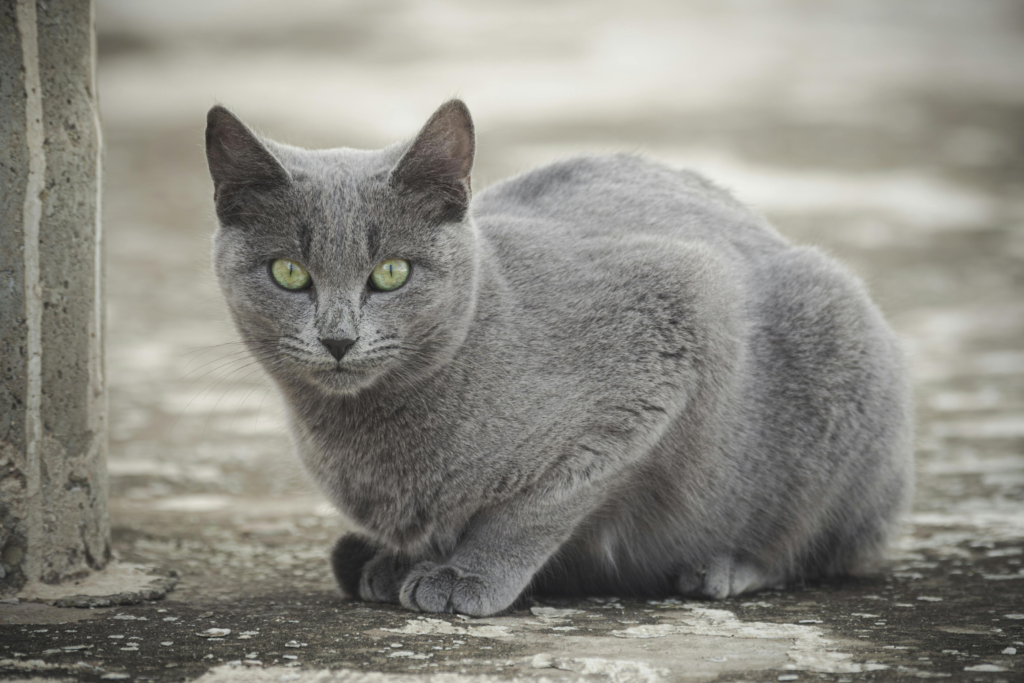
The Russian Blue is easy to recognize but easy to misunderstand. Its silver-blue coat, green eyes, and reserved first impression can suggest a distant cat. In a compatible home, however, this is often an observant, playful companion that forms close relationships and learns routines quickly.
That combination is the breed’s main attraction and its central tradeoff. A Russian Blue may be content while an owner works, yet still needs daily interaction. It may live comfortably in an apartment, yet require vertical territory and challenging play. It may be quiet around visitors, yet become conversational with trusted people.
This Russian Blue Cat review treats the breed as a long-term household decision. It covers temperament, grooming, allergies, nutrition, lifespan, emerging genetic research, sourcing, and comparisons with other blue-coated cats.
Breed descriptions predict tendencies, not an individual’s behavior or health. Socialization, age, experience, medical status, and environment can matter as much as pedigree. A reputable breeder or rescue should help you evaluate the actual cat, not sell a stereotype.
How We Reviewed the Russian Blue
How we reviewed: This is a research-based editorial assessment, not a hands-on test of one cat or one breeder. We compared current breed information and standards from The International Cat Association (TICA) and the Cat Fanciers’ Association (CFA), veterinary genetics information from UC Davis, peer-reviewed health studies, veterinary nutrition guidance, and TICA’s buyer guidance. We prioritized primary or authoritative sources, identified disagreements between registries, and treated small or regional studies as limited evidence rather than universal prevalence estimates. Product details were checked against the manufacturer’s current page. Sources were reviewed on August 23, 2026.
Quick Verdict
Editorial verdict: The Russian Blue is a strong choice for a calm, predictable home that wants an intelligent, moderately active, closely bonded shorthaired cat. Its coat care is manageable, but its need for mental stimulation, gradual introductions, weight control, and respectful handling should not be underestimated.
Best for: Patient adults, considerate families, apartment residents, and first-time owners willing to maintain routines, provide daily interactive play, and let trust develop at the cat’s pace.
Skip it if: You want an instantly sociable cat for a constantly changing household, expect any breed to be hypoallergenic, cannot provide daily enrichment, or are choosing primarily for color rather than individual temperament and responsible sourcing.
Russian Blue Cat at a Glance
| Specification | What to expect |
|---|---|
| Breed size | Medium; fine-boned but muscular rather than fragile |
| Adult weight | CFA says females are commonly 5–8 pounds and males rarely exceed 10 pounds; individuals vary [2] |
| Coat | Short, dense, plush, solid blue with silver tipping |
| Eye color | Vivid green in the adult show standard; color develops as kittens mature |
| Recognized colors | One in TICA’s current breed description: blue [1] |
| Temperament | Intelligent, observant, loyal, playful, and often reserved with strangers |
| Activity needs | Moderate, with daily interactive play, climbing, and problem-solving |
| Grooming | Low to moderate; official recommendations range from two or three times monthly to once or twice weekly [1][2] |
| Typical lifespan | TICA lists 10–20 years; health, genetics, preventive care, and environment affect the individual [1] |
| Shedding | Yes; the dense double coat releases hair even though it is short |
| Allergy status | Not hypoallergenic; no cat breed is scientifically established as allergen-free [8] |
| Home fit | Often suitable for apartments and calm families when given hiding places, vertical space, and routine |
| Main ownership watchouts | Slow adjustment, stranger reserve, boredom, overeating, and misleading “hypoallergenic” claims |
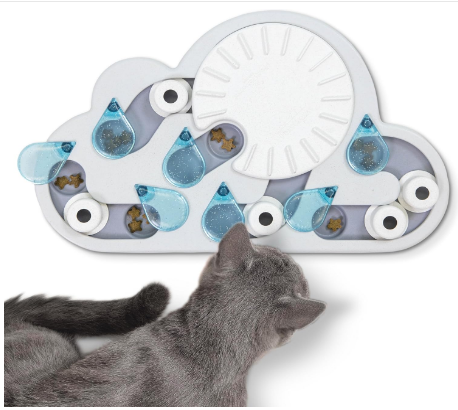
The puzzle is optional, not a breed requirement. The manufacturer describes 14 treat compartments and adjustable difficulty for supervised foraging [12]. A cardboard search box, measured scattered kibble, or simple training can serve the same purpose at lower cost.
What Is a Russian Blue Cat?
The Russian Blue is a pedigreed shorthaired breed defined by more than gray fur. In cat-fancy terminology, “blue” is diluted black. UC Davis explains that variants affecting the MLPH gene alter pigment distribution so black appears gray or blue; the laboratory describes the Russian Blue as fixed for dilute coloration [4]. Silver-tipped hair, plush texture, green eyes, and graceful structure complete the characteristic appearance.
TICA traces the breed’s traditional association to Arkhangelsk, a Russian port on the White Sea, and notes that blue cats appeared at English cat shows in the 1880s. However, romantic claims about cats of the Russian czars are better treated as breed lore than documented origin. Modern lines were shaped by deliberate breeding in Britain, Scandinavia, and North America, including reconstruction after wartime disruption [1].
CFA’s “Most Popular Breeds for 2026” list placed the Russian Blue at number 10 using the prior year’s registration data [3]. The ranking reflects CFA registrations, not every household cat and not proof that an unregistered blue-gray cat is a Russian Blue.
A coat color alone does not establish breed identity. Blue domestic shorthairs occur naturally, while the Korat, Chartreux, and blue British Shorthair have different standards and histories. Pedigree documentation from a recognized registry is the reliable basis for identifying a pedigreed Russian Blue. A shelter can accurately describe an undocumented cat as a “Russian Blue mix” only as an appearance-based estimate, not a confirmed ancestry.
Appearance, Size, and Breed Standard
Body and head
The Russian Blue should look balanced and athletic. CFA describes a medium-long, graceful body, fine boning, a modified wedge-shaped head, large ears set well apart, and vivid green eyes [2]. This is not the round, heavy “teddy bear” silhouette of a British Shorthair, nor the robust, woolly build of a Chartreux.
Official size descriptions are guides, not targets. CFA places adult females commonly at 5–8 pounds and says males rarely exceed 10 pounds [2]; TICA calls the breed medium-sized [1]. A veterinarian should judge healthy weight through body and muscle condition rather than forcing a cat into a breed average.
Coat and color
The coat is short but unusually dense, with a plush stand-away quality. Each hair has lighter silver tipping that reflects light, while the base color should remain even blue. Temporary “ghost” markings may be visible in young kittens, but adult show standards favor an even coat. Sunlight, nutrition, grooming, and normal coat cycles can change how the color looks without changing genetic identity.
TICA’s public description recognizes one color and length: blue and short [1]. Registry rules can differ internationally, so exhibitors should read the exact applicable standard. Pet families do not need cosmetic perfection; health and temperament matter more than show points.
Eyes and the “Russian Blue look”
Adult green eyes define major US standards, but kittens are not born with their final eye color. Green-eyed gray fur still does not prove pedigree. CFA’s comparison emphasizes different head shapes: a wedge for the Russian Blue, a heart for the Korat, and a broader, rounded form for the Chartreux [11].
Russian Blue Personality: What Living With One Is Really Like
The typical Russian Blue personality combines attachment with discretion. TICA and CFA describe a cat that may observe unfamiliar people before participating, then become affectionate and involved once trust is established [1][2]. “Reserved” is more accurate than “aloof”: many follow a preferred person, rest nearby, request play, or use soft vocalizations to continue a familiar exchange.
This selectivity rewards someone who appreciates a gradually developing relationship. It frustrates owners who expect every cat to greet visitors or tolerate immediate handling. Hiding during a party is not a defect. Provide an undisturbed retreat and let the cat initiate contact.
Russian Blues quickly learn meal, play, and sleep patterns and may object when familiar events are late. Predictability helps a new cat settle, but gentle exposure to different play locations, short visitor sessions, carrier practice, and gradual schedule shifts can build resilience.
The breed can be vocal, though generally not at the intensity associated with some Oriental breeds. TICA notes that Russian Blues may develop a conversational back-and-forth when people speak to them [1]. A sudden increase in vocalization, especially with appetite, litter-box, mobility, or sleep changes, deserves veterinary attention rather than being dismissed as a breed trait.
No registry description guarantees a lap cat. Some individuals enjoy prolonged contact; others prefer sitting nearby. Positive handling, respect for body language, and avoiding forced restraint matter more than training toward a predetermined affection style.
Routine, Alone Time, and Separation
TICA considers Russian Blues content with their own company while people are away and well suited to apartment living [1]. That does not mean they should routinely be left without care or social contact for long periods. It means a well-adjusted adult may cope with a normal workday when the home provides resources, enrichment, and dependable interaction before and after.
Kittens, seniors, medicated cats, and new adoptees need more supervision. Any cat left alone requires water, food, a clean litter area, safe temperature, and emergency support. For travel, arrange care based on medical and behavioral needs; an automatic feeder is not a caregiver.
A practical rhythm is hunt-style play and a meal before departure, safe independent enrichment during the day, and another interactive session after returning. Rotate part of the toy selection while keeping familiar resting places stable.
If a cat stops eating, overgrooms, eliminates outside the box, or cannot settle when alone, rule out medical causes, document the pattern, and seek qualified behavior support where necessary.
Intelligence, Play, and Enrichment
Russian Blues are observant problem-solvers. TICA describes individuals learning fetch, tricks, and even how to open doors or drawers [1]. Intelligence is not self-maintaining: without appropriate outlets, the same persistence may be directed toward food cabinets, fragile shelves, or waking the household early.
Use several forms of enrichment rather than relying on one toy:
- Two or more short interactive play sessions using a wand or other chase toy.
- Stable cat trees, shelves, or window perches for climbing and observation.
- Food puzzles loaded with part of the cat’s measured daily ration.
- Reward-based training for targeting, carrier entry, mat settling, or recall.
- Paper bags without handles, boxes, tunnels, and safe scent exploration.
- Quiet hiding spots that remain available even when visitors arrive.
Food puzzles should start easy. Let the cat see and retrieve accessible pieces, then increase difficulty after repeated success. Supervise new devices, inspect them for damage, and count all food used toward the daily intake. Frustration, frantic pawing, chewing parts, or walking away repeatedly means the task should be simplified.
Our guides to mental stimulation for indoor cats and keeping an indoor cat healthy and happy offer additional low-cost ideas. The goal is not constant entertainment; it is a healthy cycle of seeking, playing, eating, grooming, and resting.
Grooming, Shedding, and Allergies
How much grooming does a Russian Blue need?
The short coat is relatively easy to maintain, but “low maintenance” does not mean no maintenance. Official recommendations differ: TICA suggests brushing or combing once or twice weekly, while CFA’s public breed page suggests two or three grooming sessions per month [1][2]. That difference is reasonable because shedding, climate, age, and the individual coat vary.
Use the lower frequency when the coat remains clean, increasing it during seasonal shedding. A soft rubber tool or gentle comb can remove loose hair without scraping skin. Stop for repeated skin rippling, tail lashing, flattened ears, or biting; short cooperative sessions beat forced grooming.
Routine care also includes nail trims, dental care directed by a veterinarian, and periodic ear and skin checks. Do not insert cotton swabs into the ear canal. A greasy coat, bald patches, heavy dandruff, odor, sores, persistent itching, or a sudden grooming decline is a medical sign, not a cosmetic problem.
Do Russian Blues shed?
Yes. The dense coat releases hair, even though each strand is short. Brushing can reduce loose hair in the home but cannot stop normal shedding. Nutrition, parasites, allergies, stress, hormonal disease, and other medical issues can also affect the coat, so dramatic change warrants a veterinary exam.
Are Russian Blue cats hypoallergenic?
No cat breed can be promised as hypoallergenic. Cat allergens come from sources including saliva and skin secretions, not simply loose fur. A 2024 peer-reviewed review found no scientific evidence for a truly hypoallergenic cat breed and noted that even hairless cats produce the major allergen Fel d 1 [8]. Individual cats and individual people vary, but that variability is not a breed guarantee.
If someone in the home has cat allergy or asthma, consult an allergist before committing. Spend repeated time with the specific cat in a realistic indoor setting, while recognizing that a brief visit cannot guarantee long-term tolerance. Discuss environmental controls and treatment with a clinician. Never rely on a breeder’s claim that a Russian Blue “does not cause allergies,” and make a humane backup plan before acquisition.
Feeding and Weight Management
Russian Blues do not require a breed-specific diet. They need a complete and balanced food appropriate for life stage and health status, fed in portions that maintain a healthy body condition. TICA specifically cautions that the breed can have a healthy appetite and recommends regular feeding rather than excessive treats [1].
Cornell identifies obesity as the most common nutrition-related problem in cats and uses a 1–9 body-condition scale, with 5 considered ideal [10]. Weigh food rather than estimating by eye, include treats and puzzle food in the daily total, and ask the veterinarian to show you how to assess ribs, waist, abdominal contour, and muscle condition. A sleek coat can conceal gradual weight gain.
Fresh water must always be available. Wet food, fountains, or multiple bowls may help some cats drink, but urinary or kidney conditions require veterinary guidance. Abrupt appetite loss, rapid weight change, repeated vomiting, increased thirst, or difficulty urinating needs prompt evaluation. Straining without producing urine is an emergency.
Health, Genetic Research, and Lifespan
Is the Russian Blue generally healthy?
Major registries describe the Russian Blue as generally healthy, and TICA lists a broad life expectancy of 10–20 years [1][2]. That range is not a promise. Longevity depends on the individual cat’s genetics, preventive care, nutrition, indoor safety, dental health, and early treatment of illness.
Broad statements such as “no breed-specific problems” should also be interpreted cautiously. A condition can be uncommon, newly characterized, concentrated in certain lines, or poorly studied. Responsible breeders track pedigrees and health outcomes instead of treating a breed’s healthy reputation as a substitute for screening.
FAM8A1-related REM sleep behavior disorder
A 2025 peer-reviewed study described five young adult Russian Blue cats from two related families with progressive REM sleep behavior disorder. Reported signs included abnormal movements during REM sleep, often with urine loss; some affected cats also developed urinary retention or dilated pupils. Researchers identified a 23-base-pair frameshift deletion in FAM8A1 consistent with autosomal recessive inheritance [5][6].
The finding is important but easy to overstate. The affected group was only five related cats. In a screening set of 68 West-European Russian Blues, the reported allele frequency was 1.5%, and the variant was not found in 276 cats from 32 other breeds [5][6]. That regional sample does not establish worldwide prevalence. It does support asking a breeder whether FAM8A1 testing is relevant to the lines being paired and requesting interpretable documentation rather than accepting “DNA clear” as a vague slogan.
Because the variant is recessive, a carrier is not equivalent to an affected cat. Responsible breeding can use test results to avoid producing affected kittens without automatically removing every carrier from a limited gene pool. Breeding decisions should be made with veterinary genetics expertise and the current policies of the relevant registry or breed program.
Hereditary cataract evidence
A 2018 Swedish study examined 66 Russian Blue cats and found cataracts in 22, usually bilateral. Most were small, but six affected cats had more extensive cataracts associated with impaired vision or blindness. Pedigree analysis supported a hereditary component, although the inheritance mode was not established [7].
This was a regional convenience sample, not a random global survey, so 22 of 66 must not be presented as the prevalence for every Russian Blue. The practical lesson is narrower: ask whether breeding cats have been examined by a veterinary ophthalmologist, obtain dates and results, and discuss cloudy eyes, navigation changes, or altered pupil appearance with a veterinarian.
Preventive care still matters most
Genetic tests cover specific variants, not total health. Every Russian Blue still needs routine veterinary exams, vaccinations based on lifestyle and local risk, parasite prevention, dental assessment, weight monitoring, and prompt investigation of behavioral change. Keep the cat indoors or use a secure enclosure or harness plan to reduce trauma, infectious exposure, and loss.
When choosing a kitten, request health information for both parents and ask what happens if a clinically significant inherited condition appears. For an adult rescue, obtain all available records and schedule a baseline exam. Neither route offers certainty, but transparent records improve decisions.
Home Fit: Families, Pets, Apartments, and First-Time Owners
Children
TICA and CFA describe Russian Blues as capable of living well with children [1][2]. The better predictor is the behavior of both the child and the individual cat. Children should not chase, corner, carry without support, disturb sleep, or follow the cat into its safe zone. A reserved adult may prefer a quiet household, while a well-socialized kitten may adapt more easily to respectful family activity.
Supervise children, teach them to use wand toys instead of fingers, and stop when the cat turns away. Families seeking a tolerant playmate should evaluate the actual cat with the breeder or foster rather than relying on the breed label.
Other cats and dogs
Russian Blues can live with other pets, but compatibility is individual. Use scent exchange, separate resources, a barrier stage, and brief controlled meetings. Each cat needs access to litter boxes, food, water, resting places, scratching surfaces, and vertical routes without being blocked by another animal.
A calm, cat-experienced dog is a different proposition from a dog that stares, chases, or guards resources. Never force proximity to “get it over with.” If either animal cannot eat, rest, or use the litter box normally during an introduction, slow down and seek qualified help.
Apartments and smaller homes
Floor area matters less when the environment uses height and provides separation. A Russian Blue can thrive in an apartment with a sturdy tall perch, scratching options, window access, hiding places, and daily interactive play. Secure screens and windows; a curious cat can push through a weak mesh. Quiet neighbors may appreciate the breed’s generally moderate voice, but no breed is silent.
First-time cat owners
This can be a good first breed for someone willing to learn feline body language. The less obvious work includes socialization, dental care, enrichment, weight control, carrier training, and a veterinary budget. For a rounder, heavier alternative, compare our British Shorthair guide.
Choosing a Breeder or Adopting a Russian Blue
How to evaluate a breeder
TICA’s Pet Buyer’s Guide advises buyers to verify breeder credibility, see where cats are raised when possible, request sire and dam health or genetic records, and read a contract covering health guarantees and return policy [9]. Registry membership does not replace your own verification.
Ask a breeder:
- Which registry documents the kitten’s pedigree, and when will registration paperwork be provided?
- Which health tests were performed on each parent, by which laboratory or specialist, and on what dates?
- Is FAM8A1 testing relevant to these lines, and how were mating decisions made?
- Have breeding cats received veterinary ophthalmic examinations?
- How are kittens socialized to handling, household sounds, carriers, scratching posts, and different people?
- At what age will the kitten leave, and what vaccinations, parasite care, microchip, and veterinary records are included?
- What support and return-to-breeder provisions remain in force throughout the cat’s life?
Warning signs include payment pressure, withheld records, implausibly available litters, stock photos, no questions about your home, and requests for wire transfers or gift cards. TICA warns against several of these practices [9]. Verify identities and documents before paying.
Adoption and breed rescue
Adoption is worth checking, especially if pedigree papers are not essential. Breed rescues and shelters occasionally receive Russian Blues, but blue domestic shorthairs are much more common. An appearance-based label should not be treated as genetic proof. The advantage of an adult foster placement is that energy level, handling preferences, litter habits, and pet compatibility may already be observable.
Ask for veterinary records, known behavior history, reasons for surrender, and any bite, urinary, or allergy concerns. If a rescue cannot know ancestry, that uncertainty is not a flaw; honest uncertainty is more useful than an unsupported breed claim.
Return Policy and Health Guarantees
There is no universal Russian Blue “warranty.” The written agreement from the breeder or rescue controls the practical terms, subject to applicable law. Read it before paying and retain a complete copy, invoices, health records, advertisements, and correspondence.
A responsible contract should explain what the health guarantee covers, its duration, required veterinary examination window, documentation needed for a claim, and available remedy. It should distinguish a specific congenital or infectious condition from ordinary future illness. A health guarantee cannot promise that a living animal will never become sick.
Look for a return-to-breeder or return-to-rescue clause if you can no longer keep the cat. Clarify whether refunds are available, whether veterinary expenses are covered, and what happens in a dispute. Do not assume “lifetime support” means reimbursement. If terms are unclear, ask for written revision before purchase; verbal assurances are difficult to enforce.
Russian Blue vs. Similar Cats
Several cats can look blue at a glance, but body type, coat, eyes, temperament, and pedigree distinguish them. CFA’s current comparison describes the Russian Blue, Korat, and Chartreux as separate blue-only breeds with notably different head shapes and builds [11]. The British Shorthair is often seen in blue but is recognized in many colors.
| Cat | Structure and coat | Eyes and head | Typical household distinction |
| Russian Blue | Graceful, fine-boned, dense short blue coat with silver tipping | Green eyes; modified wedge, large pointed ears | Observant, routine-oriented, playful, often reserved initially |
| Korat | Compact and muscular; close-lying silver-tipped blue coat | Peridot-green eyes; heart-shaped head | Often more socially insistent and energetic; matures slowly |
| Chartreux | Robust body; medium-short woolly blue coat | Copper-to-gold eyes; broad rounded head and tapered muzzle | Calm, quiet, and more substantial in build |
| British Shorthair | Stocky, rounded body; plush coat in blue and many other colors | Large round eyes, commonly copper in blue cats; round head | Usually less athletic-looking and more teddy-bear-like |
| Blue domestic shorthair | Any build or blue shade; no breed standard | Any compatible eye or head shape | Temperament and ancestry are individual; usually easier to find in rescue |
Choose by lifestyle and the individual, not by which shade photographs best. A domestic shorthair can offer every quality a pet home values. If lineage matters, verify papers and health practices rather than relying on appearance.
Pros and Cons
Pros
- Forms close, often loyal relationships with trusted people.
- Intelligent and responsive to reward-based training.
- Moderate activity can fit many apartments.
- Short coat is generally straightforward to groom.
- Distinctive silver-blue coat and green adult eyes.
- Often capable of entertaining itself during a normal workday.
- Enjoys interactive play, climbing, and food puzzles.
- Commonly described as compatible with respectful children and pets.
- Usually less continuously vocal than highly talkative breeds.
- Broad lifespan range includes many long-lived individuals with appropriate care.
Cons
- May hide from visitors or need a long adjustment period.
- Routine sensitivity can make abrupt household changes harder.
- Intelligence and food motivation can become cabinet-opening or overeating.
- Dense short coat still sheds and needs regular care.
- No valid hypoallergenic guarantee despite frequent marketing claims.
- Breed rarity can attract scams and unsupported “Russian Blue mix” labels.
- Responsible breeder screening requires time, records, and careful contract review.
- Emerging FAM8A1 research adds a line-specific testing question.
- Regional cataract evidence makes eye history worth investigating.
- An individual may not be a lap cat despite affectionate breed descriptions.
Who Should Choose a Russian Blue?
Choose this breed if you enjoy a cat that watches before joining, can provide predictable care without demanding instant sociability, and will make daily play and problem-solving part of the routine. It suits owners who appreciate quiet companionship, subtle communication, and a relationship built through consistency.
Consider another cat—or evaluate adult rescue cats individually—if your home has constant unpredictable traffic, you need a pet proven comfortable with a particular dog or child, or allergies make the placement uncertain. An adult fostered cat with known behavior may be a safer match than selecting any kitten by breed expectation.
Do not choose a Russian Blue only for its appearance. Owners live with the observant mind, need for agency, and potential 10-to-20-year commitment [1].
How to Help a Russian Blue Thrive
- Protect the first weeks. Begin with a quiet base room, familiar food and litter, hiding options, and gradual access to the home.
- Keep resources predictable. Feed measured meals and maintain dependable play, cleaning, and sleep routines.
- Build consent into handling. Pair brief touches, grooming, nail work, and carrier entry with rewards; stop before the cat becomes distressed.
- Use the cat’s intelligence. Rotate puzzle difficulty, teach useful behaviors, and provide daily chase-and-catch play.
- Add vertical territory. Offer stable perches and routes that let the cat observe without being cornered.
- Monitor body condition. Weigh the cat periodically and adjust food with veterinary guidance before obesity becomes established.
- Keep a health baseline. Record appetite, water intake, litter output, weight, sleep, and normal behavior so change is easier to recognize.
- Practice for change. Make the carrier familiar, introduce trusted caregivers early, and rehearse short, positive departures.
Frequently Asked Questions
Are Russian Blue cats affectionate?
Often, yes, but affection may be selective. Registries describe close bonds with family and initial reserve with strangers [1][2]. Some individuals sit on laps; others follow a person, sleep nearby, or request short interactions. Let the cat initiate contact and evaluate the specific kitten or adult rather than expecting one universal style.
Are Russian Blue cats hypoallergenic?
No. There is no scientifically proven hypoallergenic cat breed, and cat allergens are produced in saliva and skin secretions as well as spread on fur [8]. Some allergic people may react less to one individual than another, but a breed label cannot guarantee tolerance. Consult an allergist and spend time with the specific cat before committing.
How long do Russian Blue cats live?
TICA lists a life expectancy of 10–20 years [1]. This broad range is descriptive, not predictive for one cat. Genetics, indoor safety, weight, dental care, preventive veterinary medicine, and early response to illness all affect longevity. Anyone adopting a kitten should plan financially and practically for a commitment that may approach two decades.
How big do Russian Blue cats get?
They are medium-sized and usually look longer and finer-boned than round-bodied breeds. CFA says females commonly weigh 5–8 pounds and males rarely exceed 10 pounds [2]. Healthy individuals can fall outside those figures. Use veterinary body- and muscle-condition assessment rather than feeding toward a number on a breed chart.
Do Russian Blue cats shed a lot?
They do shed, although the hair is short. Their dense coat can release noticeable loose fur during seasonal changes. Gentle brushing from two or three times monthly up to once or twice weekly is consistent with current CFA and TICA guidance [1][2]. Sudden excessive shedding, baldness, or itching calls for veterinary evaluation.
Can a Russian Blue be left alone during the workday?
Many well-adjusted adults can manage a normal workday with safe resources and interaction before and after, and TICA describes the breed as content with some time alone [1]. This does not apply equally to kittens, sick cats, or newly adopted cats. No cat should be left for extended travel without a competent caregiver checking health and supplies.
Are Russian Blues good apartment cats?
They often are. TICA specifically notes apartment suitability [1]. Success depends on usable vertical space, scratching surfaces, hiding places, secure windows, clean litter facilities, and daily play—not just square footage. A bored cat in a large home may fare worse than an enriched cat in a smaller one.
Are Russian Blues good with children and dogs?
They can be, but breed tendency is not an individual guarantee. TICA and CFA describe compatibility with children and other pets [1][2]. Choose a cat with an appropriate history, supervise children, prevent chasing, and introduce dogs gradually through barriers and controlled sessions. The cat must always have escape routes and protected resources.
What health tests should a Russian Blue breeder provide?
Ask for verifiable health records for both parents, any genetic tests relevant to the line, and recent veterinary ophthalmic information. The 2025 FAM8A1 finding makes a specific testing discussion reasonable, while the 2018 Swedish cataract study supports asking about eye examinations [5][7]. Testing choices should reflect current veterinary genetics advice; no panel proves total health.
How can I tell a Russian Blue from a gray domestic shorthair?
You cannot confirm pedigree from color alone. A Russian Blue combines a documented ancestry with the registry’s structure, dense silver-tipped blue coat, and adult green eyes. Domestic shorthairs may look similar and make excellent pets, but their ancestry is usually unknown. Registration records—not a seller’s claim or a phone app—establish pedigreed identity.
Final Verdict: Is the Russian Blue Right for You?
The Russian Blue earns a positive editorial verdict for the right household. It offers a compelling balance: affectionate without always being demanding, playful without usually requiring nonstop activity, and visually refined without high-maintenance coat care. Its intelligence and moderate independence can work especially well for adults and calm families who maintain a stable routine.
The breed is not a shortcut to an allergy-safe, silent, or universally cuddly pet. Expect shedding, daily enrichment, careful introductions, measured feeding, routine veterinary care, and a relationship that may unfold slowly. Treat emerging genetic findings as targeted screening questions, not reasons for alarm or claims that every Russian Blue is affected.
If you buy, choose records and transparency over color, convenience, or urgency. If you adopt, value an honest behavioral history over an uncertain breed label. In both cases, the best Russian Blue match is the individual cat whose needs, temperament, and long-term care fit your real household.
Sources
- The International Cat Association. Russian Blue breed profile. Accessed August 23, 2026.
- Cat Fanciers’ Association. Russian Blue breed profile. Accessed August 23, 2026.
- Cat Fanciers’ Association. Most Popular Breeds for 2026. Published April 22, 2026; accessed August 23, 2026.
- UC Davis Veterinary Genetics Laboratory. Dilute coat-color test in cats. Accessed August 23, 2026.
- Stee K, et al. A FAM8A1 frameshift variant is associated with REM sleep behavior disorder, urinary retention, and mydriasis in Russian Blue cats. Animal Genetics. 2025.
- Online Mendelian Inheritance in Animals. REM sleep behavior disorder, FAM8A1-related in domestic cats. Accessed August 23, 2026.
- Nygren K, et al. Hereditary cataracts in Russian Blue cats. Journal of Feline Medicine and Surgery. 2018.
- Hilger C, Janssen-Weets B, Swiontek K. Hypoallergenic animals: A promise of hope for allergic patients?. Allergologie Select. 2024.
- The International Cat Association. Pet Buyer’s Guide. Accessed August 23, 2026.
- Cornell Feline Health Center. Feeding Your Cat. Updated April 30, 2026; accessed August 23, 2026.
- Cat Fanciers’ Association. Got the Blues? Comparing the Russian Blue, Korat, and Chartreux. Accessed August 23, 2026.
- Outward Hound. Nina Ottosson Rainy Day Puzzle & Play Cat Puzzle Game. Accessed August 23, 2026.
Last updated August 23, 2026. This guide is reviewed when breed standards, peer-reviewed health research, or buyer guidance changes.