American Shorthair Cat Review (2026): Is This Breed Right for You?
By Demosthenes Staudinger | Updated August 23, 2026
Affiliate disclosure: This article contains affiliate links. As an Amazon Associate I earn from qualifying purchases. If you buy through one of these links, we may earn a commission at no additional cost to you. This does not affect our editorial recommendations.
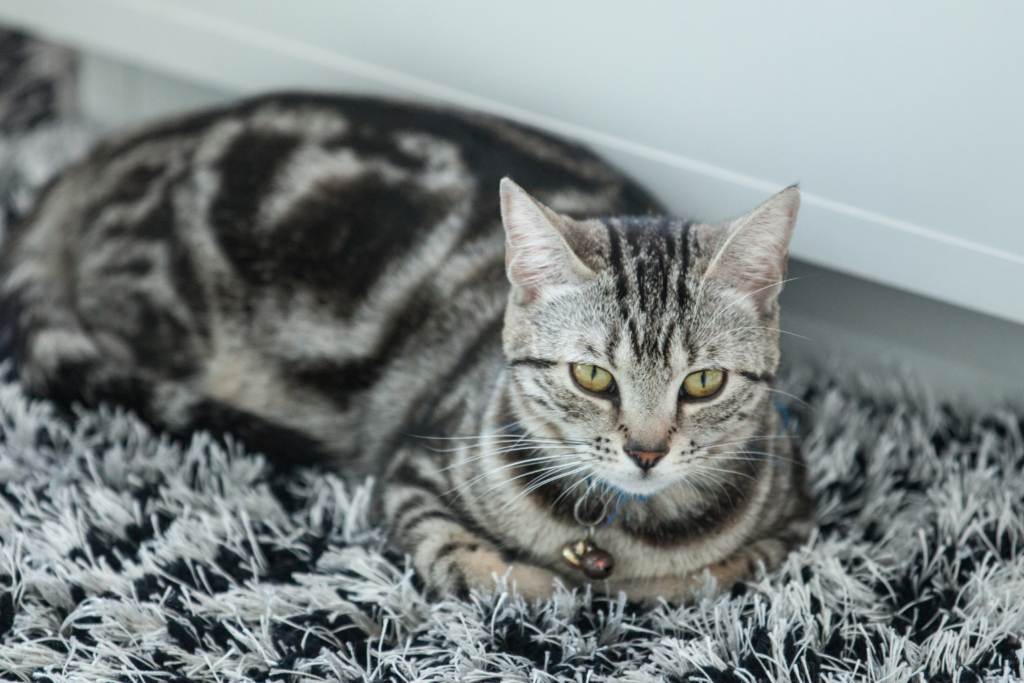
The American Shorthair does not depend on an extreme feature to be memorable. Its appeal is balance: a powerful but proportionate body, an alert working-cat mind, a practical short coat, and an affectionate temperament that usually leaves room for independence.
That balance can make the breed look effortless. It is not maintenance-free. American Shorthairs still need interactive play, weight control, scratching and climbing choices, preventive veterinary care, and introductions that respect the individual cat. Their calm reputation should never become an excuse for boredom or unwanted handling.
The breed is also widely misidentified. A silver tabby from a shelter may resemble an American Shorthair closely, but color and coat length do not establish pedigree. “American Shorthair” names a defined breed; “Domestic Shorthair” describes short hair on a cat of mixed or unknown ancestry.
This American Shorthair review evaluates the breed as a long-term household decision. It covers history, personality, size, colors, grooming, exercise, HCM, lifespan, family compatibility, breeder screening, adoption, and the practical differences between similar shorthaired cats.
Breed descriptions identify tendencies, not guarantees. Socialization, age, health, previous experience, and the home environment can influence behavior as much as ancestry. The right decision therefore depends on the specific cat as well as the breed profile.
How We Reviewed the American Shorthair
How we reviewed: This is a research-based editorial assessment, not a hands-on test of one cat, breeder, or rescue. We compared current breed profiles and standards from The International Cat Association (TICA) and the Cat Fanciers’ Association (CFA), veterinary guidance from Cornell and VCA, the UC Davis feline genetic-test catalog, feline nutrition and environmental-needs guidelines, and TICA’s buyer guidance. Where authorities disagree—most notably on grooming frequency and how strongly to frame HCM—we present the disagreement instead of selecting the most reassuring claim. Product specifications were checked against the manufacturer’s current page. Sources were reviewed on August 23, 2026.
Quick Verdict
Editorial verdict: The American Shorthair is one of the most broadly adaptable pedigreed cats for homes seeking moderate activity, straightforward coat care, quiet companionship, and playful intelligence. Its strongest quality is balance, but responsible ownership still requires enrichment, portion control, respectful handling, and sensible cardiac questions.
Best for: First-time cat owners, families with considerate children, singles, seniors, apartment residents, and working households that can provide dependable daily interaction without expecting constant attention.
Skip it if: You need a guaranteed lap cat, want a highly vocal or intensely athletic breed, cannot provide daily play, or are choosing solely because a seller labels any silver tabby an “American Shorthair.”
American Shorthair at a Glance
| Specification | What to expect |
|---|---|
| Breed size | Medium to large, muscular, athletic, and balanced; males are generally more substantial |
| Published weight guide | VCA lists 8–12 pounds, but registry standards do not impose one official pet-weight range [4] |
| Maturity | Slow; TICA says the breed may not fully mature until about 3–4 years [1] |
| Coat | Short, dense, protective, and relatively firm in texture |
| Colors and patterns | All traditional colors in TICA; CFA describes more than 100 combinations [1][2] |
| Personality | Easygoing, intelligent, playful, affectionate, and moderately independent |
| Activity needs | Moderate; daily hunt-style play and problem-solving are still important |
| Grooming | Low to moderate; official recommendations range from weekly combing to daily brushing [1][2] |
| Published lifespan guide | VCA lists 15–20 years; this is an estimate, not an individual promise [4] |
| Vocalization | Generally quiet; CFA describes a characteristic “silent meow” in some cats [2] |
| Home fit | Often suitable for families, seniors, multi-pet homes, apartments, and normal workdays |
| Health focus | Weight, dental care, routine prevention, and a careful discussion of HCM screening |
| Main ownership watchouts | Overfeeding, underestimating enrichment, forced handling, and unsupported pedigree claims |
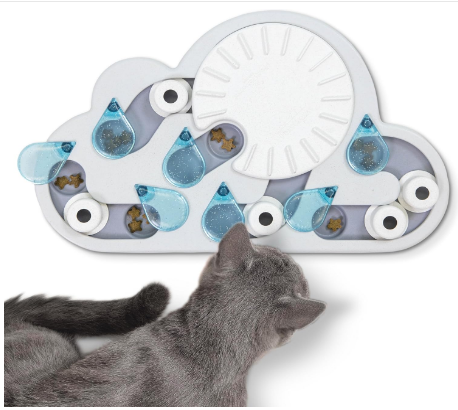
The puzzle is optional, not a breed requirement. The manufacturer describes 14 treat compartments and adjustable difficulty for supervised foraging [10]. A cardboard search box, measured scattered kibble, or reward-based training can provide similar problem-solving at lower cost.
What Is an American Shorthair Cat?
The American Shorthair is a pedigreed North American breed descended from practical shorthaired working cats. TICA and CFA connect its history to cats transported by early settlers to control rodents aboard ships and later around farms, homes, and stored food [1][2]. The broad historical outline is credible; claims that a particular undocumented cat sailed on a famous vessel should be treated as tradition rather than verified pedigree.
Selective breeding transformed a varied working population into a consistent breed. CFA records American Shorthairs at the first major US cat show in 1895 and among the first five breeds recognized when CFA was founded in 1906 [2]. The breed was originally called Domestic Shorthair and was renamed American Shorthair in the 1960s to distinguish the pedigree from mixed-ancestry shorthaired cats [1][2].
The breed remains prominent. CFA’s 2026 popularity list placed the American Shorthair at number 9 using the previous year’s registration data [3]. That means it ranked ninth among CFA pedigreed registrations in that dataset; it does not measure every cat in US homes or prove that a familiar-looking shelter cat belongs to the breed.
American Shorthair vs. Domestic Shorthair
An American Shorthair has documented ancestry and is bred toward a written standard. A Domestic Shorthair may have any short coat, body type, color, personality, or unknown ancestry. “Domestic” is a population description, not an inferior category.
A brown or silver classic tabby can look remarkably breed-like because those patterns are common and visually associated with the American Shorthair. Appearance remains insufficient for confirmation. Registration records from a recognized registry establish pedigree; an online photo comparison, shelter label, or seller’s assertion does not.
This distinction affects predictability, not worth. A Domestic Shorthair can be equally loving, trainable, healthy, and attractive, and may be easier to find through adoption. If pedigree is unimportant, evaluate adult temperament and foster history rather than paying for a label.
Appearance, Size, Colors, and Coat
A working body without exaggeration
CFA’s standard defines the American Shorthair as a true working cat whose anatomy should indicate power, endurance, and agility without exaggeration that creates weakness [2]. The body is slightly longer than tall, with a developed chest and hindquarters, substantial muscle, and strong bone. Females may be less massive than males without being penalized when balance is correct.
The head is broad and slightly longer than wide rather than perfectly round. Full cheeks, a strong jaw, a square-looking muzzle, medium ears, and wide-set eyes create the characteristic open expression. Mature males can look especially substantial. This structure separates the breed from the rounder, cobby British Shorthair even when both wear a silver or blue coat.
How big does an American Shorthair get?
TICA calls the breed medium-sized and athletic, while the full standard describes American Shorthairs and American Wirehairs as medium to large [1]. CFA also uses medium to large and explicitly says quality should not be sacrificed for size [2]. VCA publishes an 8–12-pound guide [4], while other veterinary breed references use broader ranges. These figures are descriptions, not feeding targets.
Slow maturity matters. TICA says Americans may not reach their full type until around three or four years [1]. A young adult can continue developing muscle without needing surplus calories. A veterinarian should assess body-condition and muscle-condition scores rather than trying to make a cat reach the highest number found online.
Colors and the famous silver tabby
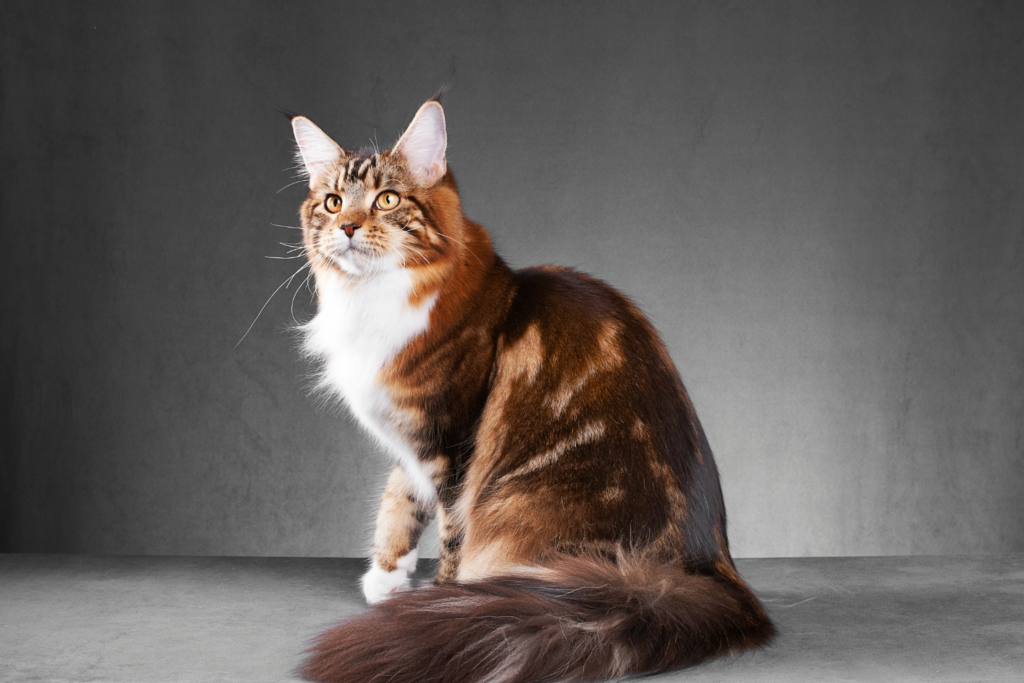
Silver classic tabby is the breed’s signature look, but it is only one possibility. TICA accepts traditional colors and identifies tabby and tabby-with-white as common; CFA describes more than 100 color combinations [1][2]. Depending on registry rules, these include multiple tabby patterns, solids, bicolors, calicos, tortoiseshells, smokes, and shaded colors.
Color does not change the core care requirements, and rarity should not outrank health or temperament. Anyone buying for exhibition must consult the exact current standard because allowable colors and disqualifications can vary by registry. A pet home does not need a show-perfect pattern.
Coat texture and shedding
The coat is short, dense, and functional rather than cloud-soft. CFA describes a hard texture capable of protecting a working cat from rough weather and vegetation [2]. TICA calls it short, lustrous, and easy to care for [1]. It still sheds, with CFA noting a heavier undercoat shed in spring and a lighter guard-hair change in fall [2].
American Shorthair Personality: Balanced, Not Boring
The typical American Shorthair personality sits between several extremes. TICA and CFA describe a good-natured, people-oriented cat that participates in family life but can also entertain itself [1][2]. It may follow a person, anticipate playtime, rest nearby, and then choose a separate sleeping place.
This is affection without a lap guarantee. TICA notes that many are lap cats while others prefer proximity [1]. Neither response indicates a weaker bond. Greeting, following, sleeping nearby, slow blinking, initiating play, and choosing the same room are all social behavior. An owner who insists on being able to carry or cuddle a cat at any time may find an independent individual frustrating.
American Shorthairs are generally quieter than conspicuously vocal breeds. CFA describes effective communication without frequent loud meowing and mentions a “silent meow” greeting [2]. Individuals still vary. A sudden increase in vocalization, especially with changes in appetite, litter use, breathing, mobility, or sleep, deserves veterinary attention rather than being assigned to personality.
The working-cat history appears in curiosity and prey interest. CFA recommends hunting-style play, and TICA describes Americans watching birds and investigating insects [1][2]. That instinct should be given safe outlets; it is not a reason to release a pet cat to hunt wildlife.
Trainability and boundaries
Food rewards, play, and predictable consequences can teach useful behaviors such as entering a carrier, using a scratching post, targeting a mat, retrieving a toy, or stepping onto a scale. Avoid punishment, spraying water, or physical correction. Those methods can suppress behavior in front of the owner without teaching an acceptable alternative and may damage trust.
Intelligence can also appear as cupboard exploration or persistent breakfast reminders. Secure hazards and food rather than treating curiosity as misconduct. Build a routine that rewards the behavior you want and makes the unwanted option less available.
Exercise, Hunting Play, and Mental Enrichment
The American Shorthair is moderately active, not sedentary. Many retain playful behavior into later life, but a muscular silhouette can hide declining activity and gradual weight gain. Two or more short interactive sessions usually fit the breed better than one long, exhausting workout.
A practical enrichment mix includes:
- Wand play that allows stalking, chasing, pouncing, and a final capture.
- Toy mice, lightweight balls, and safe objects that can be carried or retrieved.
- Food puzzles loaded with part of the measured daily ration.
- Stable scratching posts in both vertical and horizontal formats.
- A secure window view, elevated resting place, and private hiding area.
- Brief reward-based sessions for carrier entry, recall, targeting, or cooperative care.
The 2026 Feline Veterinary Medical Association caregiver guide emphasizes safe places, separate key resources, opportunities for play and predatory behavior, positive human interaction, and respect for feline scent needs [9]. These are species needs, not luxury accessories and not unique to one breed.
Start food puzzles with easy, visible rewards. Increase difficulty only after repeated success, supervise unfamiliar products, inspect them for damage, and count every treat or piece of kibble toward daily calories. Repeated walking away, frantic biting, or pawing without success signals frustration, not lack of intelligence.
For more ideas, see our guide to mental stimulation for indoor cats and our selection of minimalist cat furniture. The aim is a sustainable cycle of searching, playing, eating, grooming, observing, and resting—not nonstop entertainment.
Alone Time and Apartment Living
CFA describes American Shorthairs as independent enough to amuse themselves while owners work, and TICA calls the breed suitable for busy households and apartments [1][2]. A well-adjusted adult can therefore be a reasonable match for a normal workday when the environment is safe and interaction remains dependable.
That does not make the cat self-sufficient. Kittens, seniors, new adoptees, and cats receiving medication may need more frequent supervision. Every cat left alone requires food, water, clean litter, safe temperature, and an emergency plan. For travel, arrange a competent caregiver; an automatic feeder cannot evaluate illness or distress.
Apartment success depends on usable territory, not floor area alone. Add stable vertical space, protected hiding sites, scratching options, secure screens, and resource locations that do not trap the cat in conflict. A stimulating small home can serve a cat better than a large but empty one.
Watch for reduced appetite, overgrooming, house-soiling, destructive exit behavior, or an inability to settle when alone. Medical causes should be ruled out before assuming a behavior problem. If health is clear, document the pattern and seek qualified feline behavior guidance.
Grooming, Shedding, and Routine Care
How often should an American Shorthair be groomed?
Official guidance diverges. TICA says the coat needs little extra care and that combing about weekly or as needed removes dead hair [1]. CFA recommends daily brushing, particularly to control seasonal shedding [2]. The practical answer depends on the individual coat, season, tolerance, and amount of loose hair.
Begin with one gentle weekly session for a healthy pet and adjust. A grooming mitt or suitable short-coat comb can lift loose fur without scraping skin. Increase frequency during spring shedding or if hair accumulates. Short, rewarded sessions are better than restraint after the cat wants to stop.
Bathing is usually unnecessary for a household pet. A greasy coat, odor, dandruff, bald patches, itching, sores, or a sudden decline in self-grooming warrants veterinary evaluation rather than repeated cosmetic washing.
Nails, ears, and teeth
Check nails regularly and provide stable scratchers. Inspect the visible ear for debris, odor, redness, or discomfort, but do not push cotton swabs into the canal. Tooth brushing with feline toothpaste and veterinary dental assessment should be part of preventive care. Our stress-aware tooth-brushing guide explains how to build cooperation gradually.
Feeding and Weight Management
American Shorthairs do not require breed-branded food. They need a complete and balanced diet appropriate for life stage, health, and reproductive status, supplied in portions that maintain an ideal body and muscle condition.
The 2021 AAHA/AAFP Feline Life Stage Guidelines recommend recording body weight, body-condition score, and muscle-condition score across life stages so trends are detected early [8]. That distinction is especially useful in a naturally muscular breed: a powerful-looking body is not permission for excess fat.
Measure food rather than estimating by eye. Include treats and puzzle food in the daily total, recheck portions after neutering or activity changes, and use a veterinary nutritional assessment instead of copying another cat’s calorie allowance. Free-choice feeding works for some individuals but can encourage overconsumption in others.
Fresh water should always be available. Multiple bowls, wet food, or a fountain may suit individual preferences, but kidney, urinary, endocrine, or weight conditions require an individualized plan. Abrupt appetite loss, rapid weight change, increased thirst, repeated vomiting, or straining to urinate needs prompt veterinary attention.
Health, HCM, and Lifespan
Is the American Shorthair generally healthy?
TICA describes the breed as not known to be prone to genetic or hereditary illness, while CFA says no breed-specific health problem is currently known and that HCM seen in some lines during the 1980s and 1990s has largely declined through testing and selection [1][2]. These are reassuring registry statements, but they are not proof that present-day risk is zero.
All cats remain vulnerable to common problems involving teeth, weight, kidneys, urinary tract, thyroid, joints, cancer, infections, and injury. A breed’s robust reputation should not replace preventive care or transparent breeder records.
What owners should know about HCM
Hypertrophic cardiomyopathy causes thickening of the heart’s muscular walls and is the most common heart disease in cats. Cornell’s veterinary guidance, updated in May 2025, includes the American Shorthair among breeds in which HCM is reported more frequently and identifies echocardiography as the diagnostic gold standard [5]. That current veterinary source is more cautious than the registry summaries.
These positions are not fully aligned. Public sources do not provide a reliable current prevalence estimate for American Shorthairs, so it would be misleading to say either that HCM is a defining disease of the breed or that it has been eliminated. The useful response is proportionate screening and honest family history.
As of this review, the UC Davis feline test catalog lists breed-specific HCM DNA tests for Maine Coons and Ragdolls, not American Shorthairs [6]. A broad commercial DNA panel therefore cannot genetically clear an American Shorthair of all HCM risk. DNA testing and echocardiography answer different questions, and a normal test at one time is not a lifetime guarantee.
Ask a breeder whether breeding cats receive cardiac examinations, who performs them, how often, and whether reports can be reviewed. If echocardiography is claimed, look for an identifiable cat, date, and veterinary cardiology result. Discuss the appropriate screening plan for your own cat with a veterinarian, particularly if a murmur, abnormal rhythm, concerning family history, or symptom is present.
HCM may be silent. Urgent signs can include open-mouth or labored breathing, collapse, severe lethargy, or sudden painful weakness or paralysis of the hind limbs. These require emergency veterinary assessment [5]. Do not wait for a routine appointment.
American Shorthair lifespan
VCA publishes a 15–20-year lifespan guide for the breed [4]. It should be treated as a broad estimate, not a promised minimum or average for every population. Genetics, body condition, dental health, indoor safety, preventive care, and timely treatment all influence longevity.
A kitten could remain part of the household for nearly two decades. Budgeting, housing, travel care, and responsibility for senior medical needs should be considered before acquisition, not after the cat ages.
Family Fit: Children, Other Pets, and First-Time Owners
Children
TICA and CFA describe American Shorthairs as tolerant and well suited to children [1][2]. The actual match still depends on the child and cat. Children should not chase, corner, wake, dress up, or carry a cat that wants to leave. Use wand toys rather than hands and protect a retreat that remains off-limits to people.
Adult supervision matters even with a patient cat. Families seeking a companion for a young child should evaluate the individual kitten or adult with the breeder or foster instead of assuming the breed label guarantees tolerance.
Dogs and other cats
The breed is commonly described as compatible with other pets [1][2], but gradual introductions remain essential. Begin with separation and scent exchange, progress through a secure barrier, and keep meetings short. Do not force nose-to-nose contact.
Multi-cat homes need separated food, water, resting places, scratching options, elevated routes, and litter facilities so one animal cannot guard everything. The 2026 environmental-needs guide specifically emphasizes separate resources and territories to reduce tension [9]. A calm cat-experienced dog is a different risk from a dog that stares, chases, or guards.
First-time owners and seniors
The manageable coat, moderate activity, trainability, and adaptable social style can make this a strong first breed. Seniors may also appreciate quiet companionship without the coat workload of a longhaired breed. However, “easy” still includes litter care, play, dental work, veterinary visits, a financial plan, and arrangements if the owner becomes unable to provide care.
Choosing a Breeder or Adopting
How to assess an American Shorthair breeder
TICA’s Pet Buyer’s Guide recommends verifying credibility, asking for sire and dam health or genetic records, reviewing pedigree documentation, and signing a contract with health-guarantee and return terms [7]. Registry membership can support verification, but it does not replace questions or records.
Ask the breeder:
- Which registry documents the kitten and parents, and when will registration paperwork be released?
- What veterinary and cardiac screening has been completed on each parent, by whom, and on what dates?
- What HCM or sudden-death history is known among parents, siblings, and older relatives?
- How are kittens socialized to handling, carriers, scratching posts, household sounds, and different people?
- At what age do kittens leave, and which vaccinations, parasite care, microchip, and health records are included?
- What happens if a significant congenital or inherited condition is diagnosed?
- Will the breeder take the cat back at any age if the home can no longer keep it?
Red flags include payment pressure, withheld records, implausibly constant availability, stock photos, little interest in your household, and requests for wire transfers or gift cards. TICA specifically warns against rushed decisions and several unsafe payment practices [7]. Verify identities and documents before sending money.
Adoption and retired adults
American Shorthairs sometimes enter breed rescue, and breeders may place retired adults. Domestic Shorthairs with similar coloring are much more common in general shelters. If pedigree is not important, an adult in foster care can offer unusually useful information about energy, handling, children, dogs, litter habits, and affection style.
Treat “American Shorthair mix” as an appearance-based estimate unless records exist. Honest uncertainty is preferable to invented ancestry. Ask for medical and behavior history, then arrange a baseline veterinary examination after adoption.
Return Policy and Health Guarantees
There is no universal American Shorthair warranty. The breeder’s or rescue’s written agreement governs the practical terms, subject to applicable law. Read it before payment and retain advertisements, invoices, correspondence, health records, and the signed contract.
A useful agreement explains what the health guarantee covers, its duration, the required post-purchase veterinary exam, claim documentation, and the available remedy. It should distinguish specific congenital or infectious conditions from ordinary future illness. A health guarantee cannot promise that a living animal will never become sick.
Clarify return-to-breeder obligations, refund eligibility, responsibility for veterinary expenses, breeding restrictions, registration timing, and what happens if you can no longer keep the cat. “Lifetime support” is not automatically a lifetime refund or medical reimbursement. Obtain any change in writing before paying.
American Shorthair vs. Similar Cats
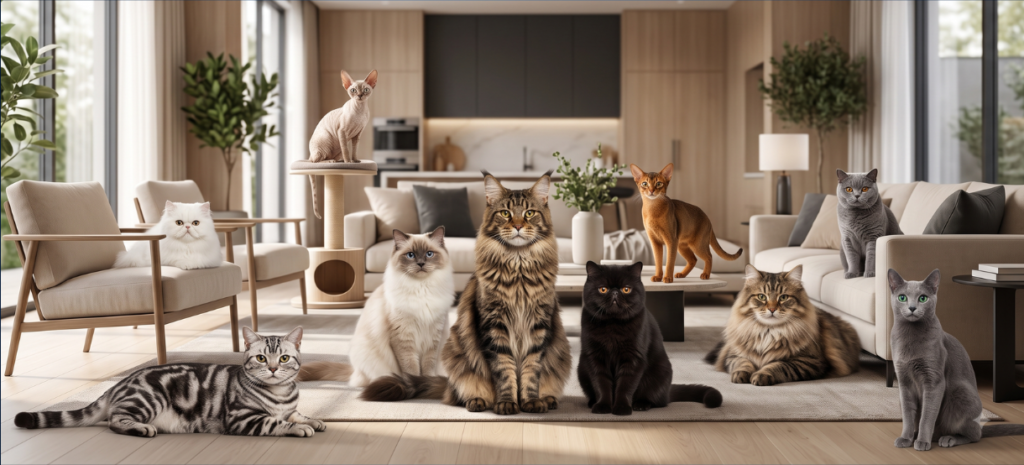
The closest alternatives differ in structure, coat, predictability, and availability. Compare the same practical dimensions rather than judging one photograph.
| Cat | Structure and coat | Typical social and activity profile | Practical distinction |
| American Shorthair | Medium-to-large working build; dense, firm short coat; many colors | Easygoing, playful, intelligent, affectionate, moderately independent | Pedigreed US breed; athletic balance rather than a round teddy-bear silhouette |
| British Shorthair | Stockier, rounder, more imposing body; very dense plush coat | Calm, reserved, usually less acrobatic and often prefers sitting beside people | TICA calls it a “four feet on the floor” breed; larger round head and heavier look [11] |
| American Wirehair | Similar balanced, muscular build; hard, springy or wiry coat | Closely related household profile: gentle, adaptable, playful | TICA says the main difference from the American Shorthair is coat type [12] |
| Domestic Shorthair | Any build, color, and short-coat texture; no single standard | Entirely individual; foster history may predict behavior better than appearance | Mixed or unknown ancestry; common in rescue and not a lesser companion |
If you want the rounder, quieter teddy-bear look, read our British Shorthair guide. If pedigree is optional, meet adult Domestic Shorthairs whose behavior is already known. The best match is determined by the household and individual cat, not registry status alone.
Pros and Cons
Pros
- Adaptable to many family structures and home sizes.
- Affectionate without usually requiring constant contact.
- Moderate activity level suits many first-time owners.
- Intelligent and responsive to reward-based training.
- Short coat is relatively straightforward to maintain.
- Generally quiet communication can suit apartments.
- Often compatible with respectful children and other pets.
- Retains playful hunting interests that are easy to channel into toys.
- Broad range of accepted colors and patterns.
- Balanced structure avoids deliberate physical exaggeration.
Cons
- No breed can guarantee a lap cat or tolerance of carrying.
- Dense short coat still sheds, particularly seasonally.
- Moderate independence can be mistaken for needing little interaction.
- Food motivation and declining activity can contribute to weight gain.
- HCM guidance is not fully consistent across current authorities.
- No American Shorthair-specific HCM DNA test clears total cardiac risk.
- Pedigree claims are easily confused with ordinary tabby appearance.
- Responsible breeder evaluation requires records, time, and contract review.
- Intelligent curiosity may lead to cupboard or food exploration.
- Pedigreed availability may be limited compared with Domestic Shorthair adoption.
Who Should Choose an American Shorthair?
Choose this breed if you want a companion that can play enthusiastically, settle comfortably, enjoy people, and retain some independence. It is especially compelling for a household seeking a pedigreed cat without an extreme coat, face, size, or activity requirement.
Consider another cat—or evaluate fostered adults individually—if you need proven compatibility with a particular child or dog, expect prolonged carrying and lap time, or want the constant conversation of a highly vocal breed. Breed reputation cannot replace an individual match.
Do not choose solely for the silver-tabby appearance. Owners live with the mind, care needs, health uncertainty, and potential 15-to-20-year commitment—not a photograph [4].
How to Help an American Shorthair Thrive
- Set up a calm arrival room. Provide familiar food and litter, hiding choices, scratching, and gradual access to the home.
- Use measured meals. Track treats and puzzle food, monitor body condition, and adjust intake with veterinary guidance.
- Schedule hunting play. Offer short stalking-and-chasing sessions daily and let the cat complete a safe catch.
- Create useful territory. Add stable perches, window access, horizontal and vertical scratchers, and an undisturbed retreat.
- Train cooperative care. Reward carrier entry, weighing, brushing, nail handling, and brief mouth checks before they become urgent.
- Respect social choice. Invite contact instead of forcing laps, carrying, or introductions.
- Track a health baseline. Note normal appetite, breathing, weight, water intake, litter output, and activity so change is easier to recognize.
- Review records over time. Keep contracts, pedigree documents, cardiac information, laboratory results, and veterinary reports together.
Frequently Asked Questions
Is an American Shorthair the same as a Domestic Shorthair?
No. The American Shorthair is a pedigreed breed developed toward a written standard; Domestic Shorthair describes a shorthaired cat of mixed or unknown ancestry. They can look nearly identical. Registration records establish pedigree, while coat color, a shelter label, or a seller’s opinion does not.
How big do American Shorthairs get?
Registries describe a medium-to-large, muscular breed with males generally more substantial than females [1][2]. VCA lists 8–12 pounds as a guide [4], but healthy individuals vary. Body-condition and muscle-condition scores are more useful than feeding toward an online maximum.
When is an American Shorthair fully grown?
TICA says the breed may not fully mature until about three or four years [1]. Much of the visible growth occurs earlier, but the body can continue gaining adult muscle and substance. Slow maturity does not justify overfeeding; development should occur while the cat remains lean and well muscled.
Are American Shorthairs affectionate and do they like laps?
They are generally affectionate and people-oriented, but lap preference varies. TICA notes that many enjoy laps while others prefer remaining nearby [1]. An individual may show attachment by following, greeting, playing, sleeping in the same room, or choosing brief contact rather than prolonged holding.
Are American Shorthairs vocal?
Usually not excessively. CFA describes communication without frequent loud vocalization and notes a “silent meow” in some cats [2]. Every individual differs. New or persistent vocalization with appetite, litter-box, breathing, pain, or sleep changes should be medically evaluated.
Do American Shorthairs shed and how often should they be brushed?
Yes. CFA describes seasonal shedding, with a stronger spring undercoat change [2]. TICA suggests weekly or as-needed combing, while CFA recommends daily brushing [1][2]. Begin with a gentle weekly session and increase frequency according to loose hair, season, and the cat’s comfort.
Are American Shorthairs good with children, dogs, and other cats?
They often are, and both registries describe broad family and pet compatibility [1][2]. This is not a guarantee. Supervise children, protect the cat’s retreat, use gradual pet introductions, prevent chasing, and provide separated resources so no animal controls access.
Can an American Shorthair live in an apartment or stay alone during work?
Often, yes. TICA specifically describes apartment suitability, and both registries note adaptable independence [1][2]. The cat still needs daily interaction, play, safe vertical territory, scratching, clean litter, and reliable care. Kittens, seniors, new adoptees, and ill cats require closer supervision.
Are American Shorthairs healthy, and should breeders screen for HCM?
Registries describe the breed as generally robust, but Cornell includes American Shorthairs among breeds with more frequently reported HCM [1][2][5]. Ask about family cardiac history and veterinary screening. There is no current UC Davis American Shorthair-specific HCM DNA test; echocardiography is the diagnostic gold standard [5][6].
How long do American Shorthair cats live?
VCA lists a broad 15–20-year guide [4]. It is not a guarantee or a precise population average. Longevity depends on genetics, body condition, dental and preventive care, indoor safety, and early treatment. Plan for the financial and practical possibility of nearly two decades of care.
Final Verdict: Is the American Shorthair Right for You?
The American Shorthair earns a positive editorial verdict for a wide range of homes. It combines a capable working-cat body with manageable grooming, moderate activity, trainability, quiet communication, and affection that usually does not become constant demand.
Its ease should be understood correctly. This cat still needs daily predatory play, environmental choices, measured feeding, cooperative care, and veterinary attention. The disagreement between current registry reassurance and Cornell’s HCM guidance makes transparent cardiac history and sensible screening questions more useful than either alarm or dismissal.
If you buy, choose verifiable pedigree and health practices over pattern, size, or urgency. If you adopt, value honest behavior history over an uncertain breed label. In either route, the best companion is the individual whose needs and social style fit the household for the long term.
Sources
- The International Cat Association. American Shorthair breed profile. Accessed August 23, 2026.
- Cat Fanciers’ Association. American Shorthair breed profile and standard. Accessed August 23, 2026.
- Cat Fanciers’ Association. Most Popular Breeds for 2026. Published April 22, 2026; accessed August 23, 2026.
- VCA Animal Hospitals. American Shorthair breed profile. Accessed August 23, 2026.
- Cornell Feline Health Center. Hypertrophic Cardiomyopathy. Updated May 2025; accessed August 23, 2026.
- UC Davis Veterinary Genetics Laboratory. Find Cat Tests. Accessed August 23, 2026.
- The International Cat Association. Pet Buyer’s Guide. Accessed August 23, 2026.
- Quimby J, et al. 2021 AAHA/AAFP Feline Life Stage Guidelines. Journal of the American Animal Hospital Association. 2021.
- Feline Veterinary Medical Association and iCatCare. Your Cat’s Environmental Needs: Practical Tips for Cat Caregivers. 2026.
- Outward Hound. Nina Ottosson Rainy Day Puzzle & Play Cat Puzzle Game. Accessed August 23, 2026.
- The International Cat Association. British Shorthair breed profile. Accessed August 23, 2026.
- The International Cat Association. American Wirehair breed profile. Accessed August 23, 2026.
Last updated August 23, 2026. This guide is reviewed when breed standards, veterinary evidence, or buyer guidance changes.