Devon Rex Cat: Personality, Care, Health & Lifespan Guide
By Demosthenes Staudinger | Updated August 28, 2026
Affiliate disclosure: This article contains affiliate links. As an Amazon Associate I earn from qualifying purchases. If you buy through one of these links, we may earn a commission at no additional cost to you. This does not affect our editorial recommendations.
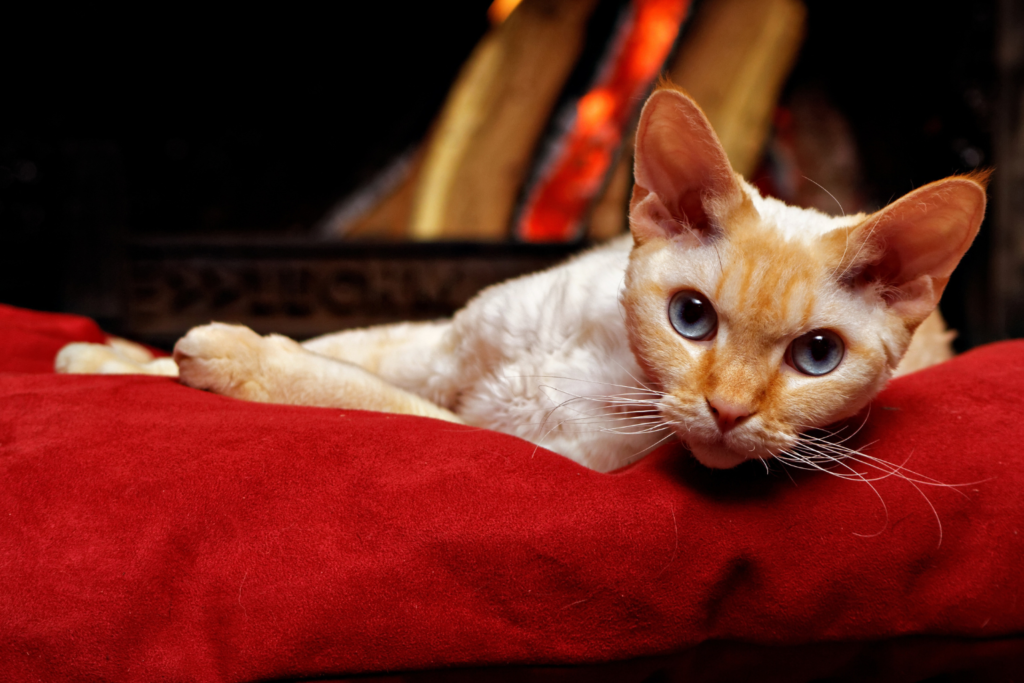
A Devon Rex looks delicate at first glance: enormous ears, wide eyes, prominent cheekbones, a short wavy coat, and whiskers that may curl into little stubs. Beneath that elfin face, however, is usually a warm, muscular athlete with a talent for reaching the highest shelf in the room.
Breed organizations describe the Devon Rex as playful, intelligent, people-oriented, and eager to participate in household life.[1][2] Many follow their humans, ride on shoulders, investigate visitors, and turn routine tasks into group activities.
That sociability is part of the appeal, but it does not make the breed effortless. A Devon may become bored without interaction. The fine coat needs gentle handling, large ears may collect debris, and reduced insulation makes warm resting choices valuable.
Health and allergy claims need equal care. Congenital myasthenic syndrome, sometimes called Devon Rex myopathy, has an actionable DNA test. HCM cannot be excluded by a generic genetic panel; echocardiography remains the diagnostic standard.[3][5] The breed is not reliably hypoallergenic because it still produces feline allergens.[1][2][6]
This guide separates established information from folklore and covers personality, care, health screening, lifespan, breeder questions, and everyday ownership.
How we researched this Devon Rex guide: This is a research-based breed guide, not a diagnosis or a guarantee of any cat’s temperament, health, size, or lifespan. We reviewed current breed, veterinary, genetics, allergy, feline-care, and manufacturer sources. Modern Cat Society has not examined a breeder or hands-on tested the products. Manufacturer claims are labeled, and medical decisions belong with a veterinarian who knows the cat.
Quick Verdict: Is a Devon Rex Right for You?
- Editorial verdict: The Devon Rex is an excellent match for someone who wants an affectionate, clever, active indoor companion and is willing to provide daily interaction, vertical territory, gentle coat care, and responsible health screening.
- Best for: Engaged households, respectful families, apartment residents who can build upward, people who enjoy training and interactive play, and owners who want a cat closely involved in daily life.
- Think twice if: You want a reliably independent cat, routinely leave home for very long periods, expect a hypoallergenic pet, prefer a perfectly predictable coat, or are unwilling to verify CMS results and dated cardiac screening records.
- Care reality: The short coat is relatively easy to maintain, but “low grooming” does not mean “no care.” Ears, claws, teeth, body condition, warmth, and skin still need observation.
Table of Contents
- Devon Rex at a glance
- History and origin
- Appearance, size, coat, and colors
- Personality and life at home
- Activity and enrichment
- Grooming, shedding, allergies, and warmth
- Feeding and preventive care
- CMS, HCM, and other health priorities
- Lifespan
- Home and family fit
- Choosing a breeder or rescue
- Devon Rex comparisons
- Frequently asked questions
- Final Veredict
Devon Rex at a Glance
| Characteristic | Devon Rex profile |
|---|---|
| Origin | Devon, England; the modern breed traces to Kirlee, born in 1960 |
| Size | Small to medium, muscular, with males often larger than females |
| Typical adult weight | TICA lists females at 5–7 lb and males at 7–9 lb; CFA gives a typical overall range of 6–9 lb |
| Lifespan information | TICA lists 14–17+ years; this is a registry estimate, not an individual guarantee |
| Coat | Short, fine, soft, and wavy; density can vary and sparse areas may occur |
| Colors | All genetically possible colors and patterns are accepted |
| Typical personality | Affectionate, curious, playful, social, intelligent, and mischievous |
| Activity level | Moderate to high; often a powerful jumper and enthusiastic climber |
| Grooming | Light, gentle coat care plus routine ear, claw, dental, and skin checks |
| Allergy reality | Not reliably hypoallergenic |
| Health priorities | CMS DNA status, serial HCM screening in breeding cats, routine preventive care |
| Best home | Warm, enriched, indoor, interactive, and prepared for a highly involved companion |
These are breed tendencies, not specifications for every kitten. Genetics, early socialization, health, age, learning history, and the individual home all shape behavior.[1][2]
Devon Rex History: From Kirlee to a Distinct Breed
The Devon Rex originated in Devon, England, rather than being a variation of the Cornish Rex from neighboring Cornwall. TICA traces the breed to a curly-coated feral tom living near an abandoned tin mine in Buckfastleigh. In 1960, a stray cat cared for by Beryl Cox produced a curly-coated brownish-black male kitten. Cox named him Kirlee.[1]
At first, breeders reasonably suspected that Kirlee carried the same curly-coat mutation already known in the Cornish Rex. Test matings showed otherwise: the offspring had straight coats. The two rexing traits therefore depended on different genetic mechanisms, and separate breeding programs were developed.[1]
Kirlee became the foundation cat of the Devon Rex breed. Today’s pedigreed Devons trace their ancestry back to him, although responsible breed development has also required careful management of genetic diversity.
This history matters for more than trivia. “Rex” describes an unusual curly or wavy coat; it does not mean all Rex breeds are interchangeable. A Devon Rex, Cornish Rex, and Selkirk Rex have different body types, coat structures, histories, and genetic causes.
Devon Rex Appearance, Size, Coat, and Colors
The Devon Rex’s “pixie” look comes from very large low-set ears, expressive eyes, prominent cheekbones, and a short muzzle. CFA also describes a broad chest, slender neck, muscular body, and a characteristic front-leg stance that can look slightly bowed.[1][2]
A healthy adult should feel surprisingly substantial for its size. TICA lists females at 5–7 pounds and males at 7–9 pounds; CFA gives a typical overall range of 6–9 pounds.[1][2] These are references, not target weights. Assess body and muscle condition with a veterinary professional rather than relying on the scale alone.
The Wavy Devon Rex Coat
The coat ranges from full loose curls to a thin, suede-like covering, with variation in density, texture, and length. Kittens may temporarily lose coat as it develops, and some adults have sparse areas.[1][2]
Guard hairs are short and sparse; curled whiskers and eyebrows can be fragile. Rough brushing, repeated friction, tight clothing, and excessive bathing may damage them. New bald areas with redness, crusting, itching, odor, scales, or sores are not merely a breed feature and need veterinary assessment.
Coat Genetics: Related to the Sphynx, but Not the Same
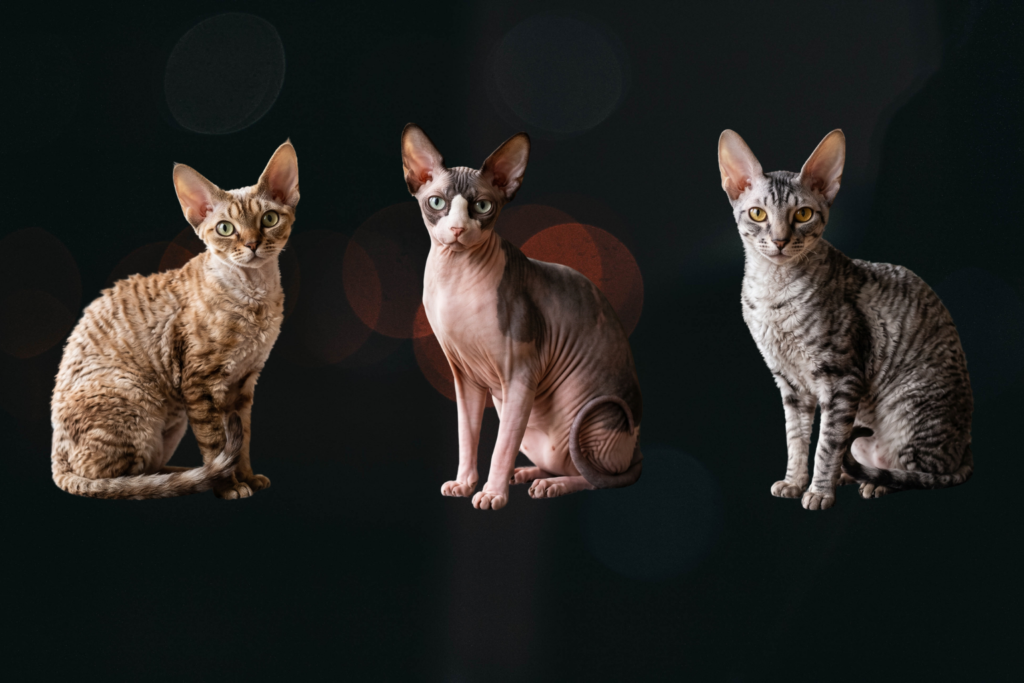
UC Davis identifies the Devon Rex curly-coat and Sphynx hairless variants in the KRT71 gene.[4] That relationship does not make a Devon a coated Sphynx; the breeds differ in history, standards, appearance, and care. The Cornish Rex curl arose independently, as early Devon–Cornish matings that produced straight-coated offspring demonstrated.[1]
Colors and Patterns
Devon Rex cats occur in all genetically possible colors and patterns.[1][2] Color should remain secondary to temperament, health documentation, structure, and responsible breeding; “rare color” never compensates for missing CMS or cardiac records.
Devon Rex Personality: What Is This Breed Really Like?
The typical Devon Rex personality is interactive rather than ornamental. TICA describes intelligent, mischievous cats that want to join every activity, while CFA portrays a welcoming companion whose soft chirps, trills, and peeps accompany household life.[1][2] A shoulder supplies both height and contact, so many Devons use one as a favorite perch.
Are Devon Rex Cats Affectionate?
Many Devons seek laps, shoulders, warm sleeping companions, and visitors.[1][2] Affection still varies. A social cat may prefer sitting beside you to being carried. Let the cat approach, support the body when lifting is welcome, and stop before it struggles; pedigree tendencies never override body language.
Are Devon Rex Cats Vocal?
Many are communicative without being conventionally loud; CFA describes soft chirps, trills, peeps, and purrs.[2] Individuals vary. A sudden vocal change with pain, appetite loss, breathing difficulty, disorientation, or litter-box changes should not be dismissed as personality.
Can a Devon Rex Be Left Alone?
A healthy adult can spend ordinary working periods alone when essential care and enrichment are covered, but TICA warns that prolonged isolation can lead to boredom.[1] Kittens and cats with medical or feeding needs require more frequent attention.
For predictable absences, provide climbing space, window views, resting choices, scratchers, hiding places, safe solo toys, and small food searches. A compatible pet may help, but it is not a guaranteed treatment for loneliness; introductions must be gradual and resources separated.[7]
Pet cameras may reveal patterns but cannot replace direct care. See Best Cat Cameras for Monitoring Your Pet and our Furbo review if that tool suits your schedule.
Activity, Climbing, and Mental Enrichment
Devon Rex cats are serious jumpers in compact bodies.[1][2] Create a legal route upward before the cat invents one through lamps or artwork: use a stable tree, properly anchored wall perches, secure window platforms, and sturdy furniture.
For a decor-conscious layout, read Minimalist Cat Furniture That Looks Great in Any Home.
Useful enrichment serves behavior rather than merely filling the floor:
- Climbing and surveying: stable elevated routes with more than one way down
- Hiding and resting: quiet covered and open choices in different rooms
- Scratching: tall vertical and horizontal surfaces near sleep and activity areas
- Hunting play: wand sessions that allow stalking, chasing, pouncing, and catching
- Foraging: small, achievable food searches and appropriately introduced puzzles
- Learning: short reward-based sessions for targeting, stationing, carrier entry, or fetch
- Choice: the ability to approach, retreat, rest, play, or observe without being forced
Feline guidelines emphasize safe places, separated resources, predatory play, positive interaction, and respect for scent.[7] No single product is a “boredom cure.”
Optional Enrichment Aid: Rainy Day Puzzle & Play
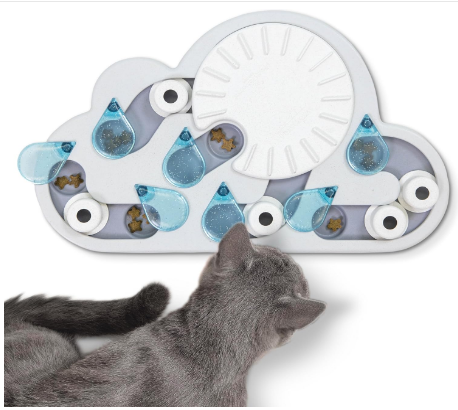
The Nina Ottosson Rainy Day Puzzle & Play can turn part of a meal into supervised problem-solving. Outward Hound lists 14 hidden food compartments, adjustable difficulty, and slow-feeding use.[10]
Begin with an easy configuration. Some Devons will manipulate every piece; others prefer scatter feeding or a simpler puzzle. Count food toward the daily ration, supervise, prevent chewing, inspect for damage, and clean food-contact areas. Verify the current retailer variant before buying.
Grooming a Devon Rex: Gentle Care for a Fragile Coat
Devon Rex grooming is usually restrained. TICA says smoothing the coat with a hand may be enough, and CFA describes the breed as comparatively easy-care.[1][2] If a tool is needed, use an exceptionally soft one with light pressure; aggressive grooming can break the fine hair.
Does a Devon Rex Need Baths?
Not on a universal schedule. Some need an occasional gentle bath; others remain comfortable with a damp soft cloth on a dirty area. Weekly bathing is not an automatic breed requirement.
Use a nonslip surface, lukewarm water, cat-labeled shampoo, and a warm drying area. Avoid eyes and ear canals, rinse thoroughly, and do not rub the coat harshly. Human shampoo, essential oils, and strong degreasers are unsuitable. Persistent grease, odor, scale, itch, redness, or lesions need veterinary assessment rather than stronger bathing.
Ear Care
Large Devon ears can collect oily debris. TICA recommends cleaning when they look dirty—not repeatedly cleaning a normal ear because it is large.[1] Ask a veterinarian to demonstrate a safe method, and never push swabs into the canal. Odor, pain, redness, head shaking, heavy debris, or discharge warrants examination.
Claws, Teeth, Eyes, and Skin
Introduce paw handling gradually, trim only the translucent claw tip, and provide sturdy scratchers. Brush teeth with pet toothpaste and maintain professional dental assessment. Feline life-stage guidelines place dental care, weight management, vaccination, parasite control, and screening within lifelong prevention.[8]
Remove ordinary eye-corner debris with a clean damp pad. Squinting, cloudiness, pain, redness, or colored discharge needs veterinary attention. So do new sores, crusts, pigment changes, persistent dandruff, excessive licking, or unusual odor.
Do Devon Rex Cats Shed?
Yes. The fine, short coat makes loose hair less visible than in many breeds, but shedding still occurs.[1][2] “Less obvious” does not mean no allergens or no coat cycle; kittens may molt, and adult density varies.
Are Devon Rex Cats Hypoallergenic?
No cat breed has been shown to be reliably hypoallergenic. ACAAI explains that cat allergens occur in skin, saliva, and fur; hair length or visible shedding does not eliminate them.[6] TICA and CFA likewise caution that the Devon Rex produces allergens even though some allergic people report tolerating an individual cat better.[1][2]
If allergies matter, do not commit based on a breeder’s guarantee. Spend time with the specific adult cats or line on more than one occasion, notice delayed reactions, and involve a board-certified allergist when symptoms could be significant. Kittens, adults, intact cats, and the home environment may not produce identical exposure.
No shampoo, air purifier, special diet, or cleaning routine can guarantee a reaction-free home. Environmental measures may reduce exposure for some people, but they do not change the breed into a nonallergenic one.
Warmth and Temperature Safety
Devon Rex cats have the same body temperature as other cats but often feel warmer because their thin coat provides less insulation.[1] Offer a draft-free room, washable fleece, and covered and open beds, always with access to a cooler surface.
Human heating pads, hot-water bottles, space heaters, and electric blankets can create burn or cord risks. Clothing is optional and must allow normal movement, grooming, breathing, and toileting without rubbing the coat.
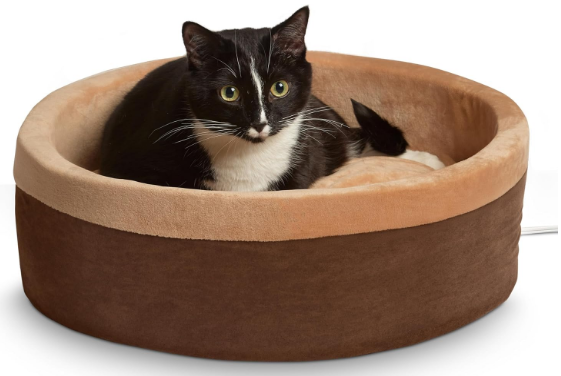
Optional Warmth Aid: K&H Thermo-Kitty Bed
K&H currently lists the Thermo-Kitty Bed in 16- and 20-inch diameters. According to the manufacturer, both use a removable, thermostatically controlled 4-watt heater, have a removable washable cover, and are safety-certified as complete products. K&H also lists a one-year limited warranty.[11]
This is a comfort product, not medical treatment. K&H says the cat must be able to move off the heat and advises veterinary consultation for young kittens, convalescent pets, or animals unable to leave voluntarily.[11] Inspect the bed and cord, follow all instructions, and confirm the retailer variant before ordering.
Feeding a Devon Rex
Some Devon Rex cats have enthusiastic appetites. TICA notes that individuals range from determined eaters who need measured limits to cats that regulate intake more easily.[1] Neither tendency justifies free-feeding every Devon or assuming a hungry-looking cat needs more calories.
Choose food with a nutritional adequacy statement for the correct life stage. The FDA explains that a “complete and balanced” claim means the diet meets an AAFCO nutrient profile or passed an AAFCO feeding trial for the stated life stage.[9]
Use package directions as a starting point. Needs vary with age, body and muscle condition, activity, neuter status, health, and calorie density. Count treats and puzzle rewards in the daily total. Wet, dry, or combined feeding can work; the coat does not automatically require a raw, grain-free, luxury, or unusually high-calorie diet.
Monitor weight and muscle over time. A robust appetite with weight loss, repeated vomiting, diarrhea, difficulty chewing, increased thirst, or a sudden appetite change is a health signal—not merely a famous Devon love of food.
Devon Rex Health: Congenital Myasthenic Syndrome
Congenital myasthenic syndrome, or CMS, is an inherited neuromuscular condition associated with a COLQ variant in Devon Rex and Sphynx cats. It has historically been described as Devon Rex myopathy or “spasticity,” but CMS is the more precise genetic diagnosis.[3]
UC Davis reports that signs can begin at about three weeks of age. Moderately or severely affected cats may develop generalized weakness after exertion, stress, or excitement and may adopt a characteristic upright “dog-begging” or “chipmunk” position for support. The disorder can progress and may lead to choking or aspiration pneumonia.[3]
Inheritance is autosomal recessive:
| CMS test result | Interpretation |
| N/N | No copies of the tested CMS variant; the cat is not expected to develop or transmit this variant |
| N/CMS | One copy; the cat is expected to be clinically unaffected but can transmit the variant |
| CMS/CMS | Two copies; the cat is genetically affected or expected to become affected |
When two carriers are bred, each conception has a predicted 25% chance of producing an affected kitten, a 50% chance of producing a carrier, and a 25% chance of producing an N/N kitten. A small litter does not have to match those percentages because every conception is independent.[3]
Testing creates a practical prevention tool, but the result must be interpreted responsibly. A carrier is not automatically a sick cat. In a managed breeding program, a carrier may be paired only in a way that cannot produce affected kittens, with every relevant result documented. Eliminating all carriers without considering diversity can create other population-level problems.
For a buyer, ask for identifiable laboratory reports for both parents rather than accepting “health tested” as an answer. Confirm that the report specifically includes the Devon Rex/Sphynx COLQ CMS variant.
Weakness, collapse, swallowing difficulty, abnormal posture, or exercise intolerance requires veterinary assessment. CMS is not the only possible cause; heart disease, anemia, metabolic disease, toxins, trauma, infection, and other neuromuscular disorders can look similar.
HCM Screening: Why a DNA Panel Is Not Enough
Hypertrophic cardiomyopathy is characterized by abnormal thickening of the heart’s ventricular walls. Cornell identifies HCM as the most common heart disease in cats and explains that it can reduce cardiac efficiency and contribute to congestive heart failure or blood clot formation.[5]
TICA recommends that Devon Rex breeding parents be scanned for HCM.[1] In this context, “scanned” means cardiac imaging—not a generic breed DNA panel. Cornell identifies echocardiography as the gold standard for diagnosis.[5]
A normal scan is valuable but time-specific. Because HCM can emerge later, one normal examination in a very young breeding cat cannot guarantee lifelong freedom from disease. Ask a breeder for dated echocardiogram reports for both parents, who performed or interpreted them, how often the program repeats screening, and what the breeder does when HCM appears in a relative or offspring.
For a pet Devon, ask your veterinarian whether cardiac evaluation is appropriate based on examination findings, age, family history, reproductive status, and any symptoms. A murmur can occur without HCM, and some cats with HCM have no audible murmur; the stethoscope alone cannot settle the diagnosis.
Labored or open-mouth breathing, collapse, profound weakness, or sudden painful weakness or paralysis of the hind legs is an emergency. Do not wait for a routine appointment.[5]
Blood Type B and Breeding Decisions
CFA notes a high incidence of blood type B in the Devon Rex gene pool. If a type B female is bred to a type A male, antibodies in her colostrum can damage a type A kitten’s red blood cells after nursing, a condition known as neonatal isoerythrolysis.[2]
This is primarily a breeder-management issue, not a reason for an ordinary pet owner to panic. Responsible breeders know the parents’ blood types and work with reproductive veterinarians on compatible matings and neonatal plans.
Blood type is also relevant to transfusion medicine, but a veterinary team performs compatibility testing when needed. Owners should not attempt to infer type from breed, color, or a consumer kit.
Other Preventive-Care Priorities
Devon Rex cats still need the same foundations as other cats: individualized vaccination, parasite prevention appropriate to lifestyle, identification, reproductive care, dental assessment, nutrition review, and age-appropriate screening. The AAHA/AAFP life-stage framework emphasizes adapting preventive care as cats move from kittenhood through young adult, mature adult, and senior life.[8]
Keep a record of weight, body condition, appetite, activity, breathing, medications, dental findings, CMS results, and echocardiogram dates. Trends often reveal more than a single observation.
Seek veterinary advice for persistent vomiting or diarrhea, unexplained weight change, reduced appetite, breathing changes, weakness, new skin or ear problems, pain, urinary changes, or a meaningful behavior shift. A charming breed personality should never be used to explain away a medical change.
How Long Do Devon Rex Cats Live?
TICA lists a Devon Rex life expectancy of 14–17+ years.[1] This is useful as a registry’s general orientation, but it is not a survival guarantee and should not be presented as a precisely measured outcome for every pedigree line.
Individual longevity depends on many interacting factors: inherited disease risk, breeding decisions, preventive care, nutrition, body condition, dental health, indoor safety, environment, accident exposure, and chance. A kitten from screened parents can still become ill, while a cat with incomplete history may live well into old age.
Focus on controllable actions rather than promising a number: verify health documentation, maintain a healthy body and muscle condition, keep the cat safely indoors or use secure outdoor access, schedule life-stage veterinary care, protect dental health, and investigate changes early.[8]
Living With Children, Dogs, and Other Cats
TICA and CFA describe many Devon Rex cats as comfortable with respectful children, other cats, and cat-friendly dogs.[1][2] Their playfulness can make them appealing family companions, but breed friendliness does not replace supervision or a careful introduction.
Teach children to let the cat approach, use toys instead of hands, support the body when lifting is welcome, and respect food, litter, sleep, and hiding. Introduce dogs behind barriers and prevent chasing. Move cat introductions at the cautious animal’s pace and provide separate essential resources.[7]
Can a Devon Rex Live in an Apartment?
Yes. Vertical space and daily play can make a modest apartment functional. Secure windows and balconies, anchor climbing furniture, and protect fragile decor; a Devon may reach places that seemed impossible when it arrived.
Is a Devon Rex Good for Busy Professionals?
A predictable workday followed by engaged play and companionship can suit a healthy adult. Chronic long absences and little interaction are a poor fit. A sitter should observe appetite, litter, movement, and breathing—not merely refill bowls. Technology can support this plan but cannot confirm wellness or replace responsive care.
Is a Devon Rex Good for a First-Time Cat Owner?
Yes, for a motivated beginner willing to learn body language, gentle grooming, dental and claw care, enrichment, body-condition monitoring, and health-screening questions. It is a poor choice when selected mainly for supposed hypoallergenic or maintenance-free qualities.
How to Choose a Responsible Devon Rex Breeder or Rescue
Adoption can be an excellent route. A breed rescue or general shelter may not have full pedigree or genetic information, but current examination records, known behavior, foster observations, and a forward-looking veterinary plan still provide real value. Retired breeding adults may also become available through responsible programs.
If buying a kitten, treat the transaction as a long-term welfare decision, not an impulse purchase. TICA’s buyer guidance recommends verifying breeder credibility, requesting parent and kitten health records, reviewing a written contract, understanding return and health-guarantee terms, avoiding pressured payments, and checking for scam warning signs.[12]
Ask for documents that can be matched to the parents:
- CMS reports: Results for the breed-specific COLQ variant for both sire and dam
- Cardiac records: Dated echocardiogram reports for both parents, plus the program’s repeat-screening schedule
- Family history: Known HCM, sudden death, weakness, swallowing problems, or early mortality in relatives and older offspring
- Blood typing: The breeding pair’s types and the management plan for any incompatible mating
- Veterinary records: Vaccination, parasite, illness, medication, and examination history for the kitten
- Pedigree and identity: Registered names and identifiers that correspond across health reports
- Socialization: How kittens experience handling, carriers, ordinary household sounds, grooming, people, and suitable animals
- Placement age and support: When kittens leave, what food and litter they know, and whether post-placement guidance is available
- Contract: Health terms, reproductive terms, and a return-to-breeder provision if the owner can no longer keep the cat
“DNA tested,” “vet checked,” and “champion lines” are incomplete answers. Ask which conditions were tested, which method was used, when the test occurred, and whether you may verify the report with your veterinarian.
Be cautious if a seller refuses live video or an in-person visit, keeps the parents’ identities vague, always has many litters available, requests wire transfers or gift cards, promises the breed cannot trigger allergies, claims a generic DNA panel makes a kitten “HCM clear,” or pressures you to pay before reviewing documents.[12]
A registry listing is one data point, not an independent health guarantee. Transparency, living conditions, socialization, longitudinal health records, contract quality, and responsible answers matter together.
Devon Rex vs. Sphynx vs. Cornish Rex
These breeds are often grouped because all can have unusual coats and dramatic ears, but the practical differences are substantial.
| Feature | Devon Rex | Sphynx | Cornish Rex |
| Typical coat | Short, soft waves with variable density and sparse guard hairs | Nearly hairless with fine down; visible skin oil requires individualized care | Very short, tight waves composed primarily of undercoat |
| Genetic relationship | Curly KRT71 variant | Different hairless KRT71 variant | Independently inherited rex mutation |
| General build | Small to medium, broad chest, muscular, large low-set ears | Medium, sturdy and muscular, with prominent bare skin and wrinkles | Slender, long-legged, arched, and fine-boned in appearance |
| Grooming emphasis | Gentle coat handling, ears, claws, teeth, occasional skin care | Skin oil, individualized bathing, ears, claw folds, teeth, warmth | Gentle coat care, skin observation, ears, claws, teeth |
| Allergy reality | Not reliably hypoallergenic | Not reliably hypoallergenic | Not reliably hypoallergenic |
| Common appeal | Affectionate “pixie” personality and tousled waves | Bare appearance and intense social contact | Athletic build and close marcel-like waves |
The best choice is not the breed with the most unusual silhouette. Compare the actual adult temperament, care routine, health documentation, breeder practices, and your tolerance for social intensity.
Pros and Considerations of Living With a Devon Rex
| Potential appeal | Important consideration |
| Often affectionate and people-oriented | May struggle with chronic isolation or low interaction |
| Intelligent, playful, and trainable | Needs daily outlets and safe vertical territory |
| Short coat with less obvious shedding | Still sheds and is not reliably hypoallergenic |
| Usually light coat maintenance | Fine hair and whiskers can break with rough handling |
| Compact size | Athletic jumping can reach high or fragile areas |
| Often sociable with respectful children and pets | Introductions and separate resources remain essential |
| Can thrive in an apartment | Usable vertical space matters more than an empty floor |
| CMS has an actionable DNA test | HCM screening still requires cardiac imaging and follow-up |
| Often seeks warmth and close contact | Heating products require safe setup and voluntary exit |
| Long lifespan range listed by TICA | No breeder can guarantee an individual lifespan |
Frequently Asked Questions
How big do Devon Rex cats get?
TICA lists adult females at approximately 5–7 pounds and males at 7–9 pounds, while CFA gives a typical overall range of 6–9 pounds.[1][2] Healthy size depends on frame, muscle, age, and body condition, so use the numbers as orientation rather than a target.
How long do Devon Rex cats live?
TICA lists 14–17+ years.[1] That is a general breed estimate, not a promise for an individual. Genetics, screening, preventive care, body condition, dental health, safety, and chance all affect longevity.
Are Devon Rex cats hypoallergenic?
No. Devon Rex cats still produce allergens found in saliva, skin, and fur.[1][2][6] Some allergic people tolerate an individual better, but no breeder can guarantee a reaction-free cat. Spend time with the specific cats and consult an allergist when appropriate.
Do Devon Rex cats shed?
Yes. Their fine, short coat can make shed hair less noticeable than it is with many other breeds, but shedding still occurs.[1][2] Less visible hair does not mean an allergen-free home.
How often should you groom or bathe a Devon Rex?
Many need only gentle hand-smoothing or very soft grooming, plus regular checks of ears, claws, teeth, skin, and eyes.[1] Bathe only when the individual actually needs it or a veterinarian recommends it; an automatic weekly schedule can dry skin and damage fragile hair.
Are Devon Rex cats affectionate?
Many are highly people-oriented and seek laps, shoulders, beds, and household participation.[1][2] Individual preferences still matter, and not every Devon enjoys being held or handled in the same way.
Are Devon Rex cats vocal?
They can be communicative, but CFA characterizes their voices as soft chirps, trills, and peeps rather than constant loud calling.[2] A sudden change in vocal behavior, especially with other symptoms, warrants attention.
Can a Devon Rex be left alone during the workday?
A healthy adult may manage an ordinary workday with safe resources and enrichment, but the breed generally needs meaningful interaction before and after absences. Kittens, ill cats, and individuals showing distress need more frequent care. Repeated very long isolation is a poor fit.
Do Devon Rex cats get cold easily?
Their body temperature is not unusually high, but the fine coat offers less insulation, so many actively seek warm places.[1] Provide blankets and warm resting choices while preserving access to cooler areas.
What health tests should a Devon Rex breeder provide?
Ask for both parents’ breed-specific COLQ CMS results and dated echocardiogram reports, plus family health history and the cardiac repeat-screening schedule.[1][3][5] Blood typing is also relevant to responsible mating decisions.[2] A broad DNA panel alone cannot rule out HCM.
Are Devon Rex cats good with children and other pets?
Many are, and both TICA and CFA describe the breed as commonly sociable with children and compatible animals.[1][2] Supervision, respectful handling, slow introductions, and duplicated resources are still essential.
What is the difference between a Devon Rex, Cornish Rex, and Sphynx?
The Devon has a short, variable wavy coat and its own compact, muscular type. The Cornish Rex has a different independently inherited curl and a more slender build. The Sphynx is nearly hairless and has a more intensive skin-care routine. None is reliably hypoallergenic.[1][2][4][6]
Final Verdict: Is the Devon Rex Right for You?
The Devon Rex combines an unconventional appearance with an unusually participatory personality. For the right household, this is a warm, clever, comical companion who turns a shoulder into a perch, a paper bag into an expedition, and an ordinary evening into a shared event.
The trade-off is not an elaborate coat routine. It is involvement. A Devon needs safe height, daily play, responsive social contact, gentle handling, and an owner who notices changes rather than attributing everything to the breed’s eccentric reputation.
Health diligence also matters. CMS can be managed at the breeding level with a specific DNA test. HCM cannot be dismissed with a generic “clear” certificate; dated echocardiograms, family history, and ongoing screening are the more meaningful questions. Blood typing belongs in the breeder’s reproductive plan, while lifelong preventive care belongs in every owner’s plan.
Choose a Devon Rex if you want closeness, curiosity, and play—and if the realities of allergy uncertainty, delicate hair, warm sleeping habits, and documented health screening feel manageable. Choose another individual or breed if you mainly want a low-contact cat, a guaranteed hypoallergenic pet, or an animal content with routine isolation.
A puzzle feeder or heated bed can support one part of daily life. Neither is required, and neither substitutes for a thoughtfully designed environment, good veterinary care, or time with the person a Devon has decided to follow.
Sources and References
- The International Cat Association — Devon Rex. Breed history, size, lifespan listing, appearance, personality, activity, shedding, allergies, warmth, grooming, feeding, and health-screening guidance. View source
- Cat Fanciers’ Association — Devon Rex. Breed history, appearance, coat, temperament, vocalization, allergy limitations, and blood type B breeding relevance. View source
- UC Davis Veterinary Genetics Laboratory — Sphynx and Devon Rex Congenital Myasthenic Syndrome. COLQ variant, clinical signs, inheritance, genotype interpretation, and testing scope. View source
- UC Davis Veterinary Genetics Laboratory — Sphynx Hairless and Devon Rex Curly Coat Variants. KRT71 coat genetics and allele relationships. View source
- Cornell Feline Health Center — Hypertrophic Cardiomyopathy. HCM mechanism, potential complications, diagnosis, echocardiography, and emergency signs. View source
- American College of Allergy, Asthma & Immunology — Pet Allergies. Sources of pet allergens and the absence of reliably hypoallergenic cat breeds. View source
- Ellis SLH, et al. — AAFP and ISFM Feline Environmental Needs Guidelines. Safe places, separated resources, play, predatory behavior, positive interaction, and sensory considerations. View source
- AAHA/AAFP — 2021 Feline Life Stage Guidelines. Individualized preventive care, nutrition, weight management, dental care, screening, and environmental needs across life stages. View source
- U.S. Food and Drug Administration — “Complete and Balanced” Pet Food. Nutritional adequacy statements, AAFCO profiles, feeding trials, and life-stage labeling. View source
- Outward Hound — Rainy Day Puzzle & Play Cat Game. Current manufacturer-listed compartments, adjustable difficulty, slow-feeding use, and supervision guidance. View source
- K&H Pet Products — Thermo-Kitty Bed. Current manufacturer-listed sizes, heater specifications, care, safeguards, certification claim, and warranty. View source
- The International Cat Association — Pet Buyer’s Guide. Breeder verification, health records, contracts, payment caution, and scam warning signs. View source
Sources, product specifications, and manufacturer guidance reviewed August 28, 2026. Breed information, product variants, testing recommendations, and veterinary guidance may change. Verify critical details with the relevant breeder, laboratory, manufacturer, allergist, or veterinarian