Scottish Fold Cat: Complete Guide to Personality, Care, Health, Lifespan, and Ownership
By Demosthenes Staudinger | Updated August 28, 2026
Affiliate disclosure: This article contains affiliate links. As an Amazon Associate I earn from qualifying purchases. If you buy through one of these links, we may earn a commission at no additional cost to you. This does not affect our editorial recommendations.
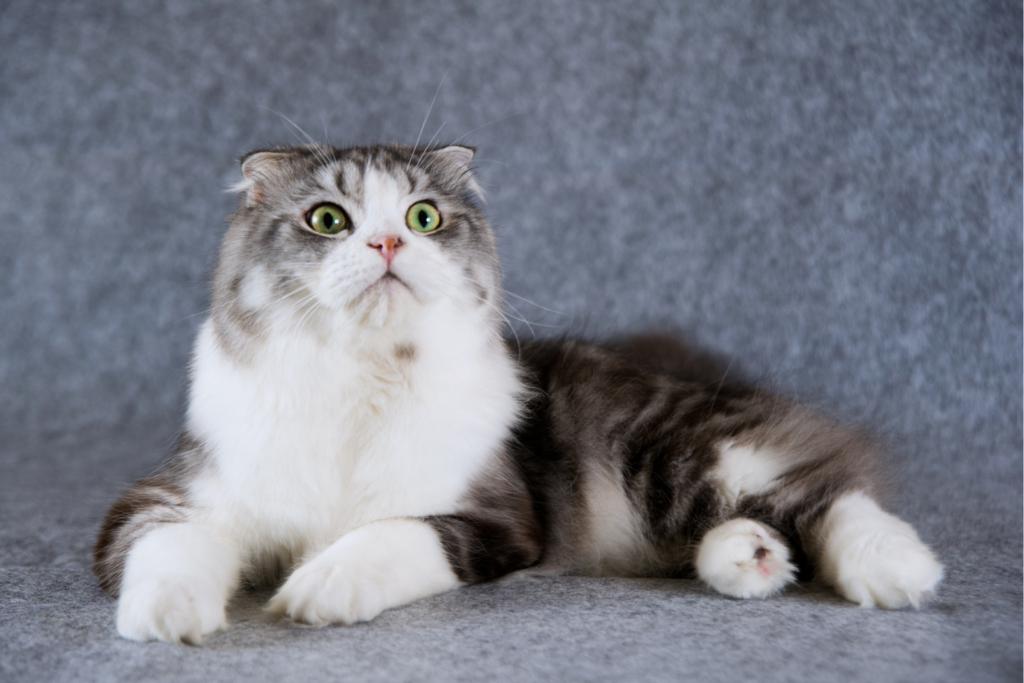
Few cats are as recognizable as the Scottish Fold. A rounded head, large eyes, plush coat, and small ears folded toward the skull create its famous owl-like expression.
The Scottish Fold is also a breed that cannot be discussed responsibly through appearance and personality alone. Its signature ears are caused by a variant in the TRPV4 gene that affects cartilage and bone development throughout the body—not only the ear flap.[3]
That variant is associated with Scottish Fold osteochondrodysplasia, often abbreviated SFOCD: a progressive disorder that can alter the tail, paws, ankles, limbs, and joints. Cats with two copies of the variant are at particularly high risk of severe disease, while cats with one copy show substantial variation in structural changes, age of onset, pain, and mobility.[3][4][5][6]
Two common online claims are therefore too simplistic: not every Scottish Fold is visibly disabled as a kitten, and a Fold who appears comfortable today cannot be declared genetically unaffected.
For someone who already loves and cares for a Scottish Fold, this guide is not an invitation to feel guilty. It is a practical framework for recognizing subtle changes, arranging an accessible home, maintaining normal feline activity, and working with a veterinarian before discomfort becomes severe.
For someone considering a kitten, the harder question is whether selecting folded ears fits your welfare priorities when the visible trait and disease-associated variant are inseparable.
How we researched this Scottish Fold cat guide: This research-based guide is not a diagnosis or a guarantee of personality, health, size, or lifespan. We reviewed current registry information, university genetic guidance, peer-reviewed studies from 2008–2026, and feline pain resources. The literature includes small samples and different disease definitions; relevant limitations appear below. Modern Cat Society has not examined a breeder, assessed an individual cat, or hands-on tested the optional product categories.
Quick Verdict: Is a Scottish Fold Right for You?
- Editorial verdict: Scottish Folds are often affectionate, gentle, intelligent companions, but the folded-ear phenotype carries a genuine lifelong welfare concern. Existing owners should focus on attentive, nonjudgmental care. Prospective buyers should understand that the trait cannot be separated from the TRPV4 variant and should seriously consider rescue, a genetically confirmed non-Fold cat, or another breed.
- Best for: An informed adopter prepared for lifelong mobility monitoring, accessible home design, regular veterinary care, possible chronic-pain treatment, and costs that may exceed routine cat care.
- Skip it if: Your main reason for choosing the breed is the tightest possible ear fold; a seller will not provide verifiable genotypes and health records; or you are not prepared for the possibility of progressive orthopedic disease.
Scottish Fold Cat at a Glance
| Characteristic | Scottish Fold profile |
|---|---|
| Origin | Scotland; the modern breed traces to a barn cat named Susie, found in 1961 |
| Size | Medium, rounded, and sturdy rather than extreme |
| Typical adult weight | TICA lists approximately 7–10 lb (3.2–4.5 kg) |
| Listed life expectancy | Approximately 11–14+ years according to TICA; no individual lifespan is guaranteed |
| Coat | Short or long; dense and plush, in many colors and patterns |
| Typical personality | Affectionate, curious, loyal, quiet, and people-oriented |
| Activity level | Moderate; individuals still need daily play and normal opportunities to move |
| Grooming | Usually weekly for shorthair; several times weekly for longhair |
| Signature feature | Forward-folding ears caused by a TRPV4 variant |
| Central health concern | Scottish Fold osteochondrodysplasia, with variable clinical expression |
| Best home | Calm, enriched, accessible, and attentive to changes in mobility |
| Major ownership decision | Whether deliberately selecting the folded-ear phenotype is ethically acceptable |
These are breed-level descriptions rather than promises. Health, age, early socialization, environment, and individual temperament can matter more than the name on a pedigree.[1][2]
Scottish Fold History: From One Farm Cat to a Global Breed
In 1961, shepherd William Ross noticed a white barn cat with folded ears on a farm in Perthshire, Scotland. Susie later produced a folded-ear daughter named Snooks, and CFA traces the modern line through that family.[2]
Outcrosses including British and American Shorthairs helped establish the rounded outline, dense coat, and broad color range. Straight-eared kittens also occur in Scottish breeding programs.
Scottish Fold kittens are born with straight ears. In kittens that express the Fold phenotype, the cartilage begins changing and the ears generally fold at about three to four weeks. TICA places the visible change around 18–24 days.[1]
Because registries classify folded- and straight-eared varieties differently, health discussions should identify the ear phenotype and genetic result rather than rely on a marketing label.
Appearance, Size, Coat, and Colors
Roundness is the dominant visual theme. Scottish Folds generally have a rounded head, prominent cheeks, large round eyes, a short-to-medium nose, a medium body, and a padded appearance. The legs should support normal movement, and the tail should be proportionate and flexible.[1][2]
TICA lists approximately 7–10 pounds, but healthy individuals can fall outside that range. Body condition, muscle, and weight trends are more useful than a breed-average number.
Folded Ears
Breed terminology describes single, double, and tighter triple folds. A dramatic fold may be prized in showing, but tightness is not evidence of superior health.
The ears are a visible marker of a systemic cartilage-and-bone change, not an isolated decorative feature.[3]
Scottish Fold Shorthair and Longhair
Both coat lengths occur. The shorthair coat is dense and plush; the longhair may include a fuller ruff, toe tufts, britches, and a plumed tail. CFA accepts a wide range of colors and patterns, so blue-gray is popular but not the only legitimate appearance.[2]
Long hair increases grooming needs but does not change the Fold genetics. “Highland Fold” may describe the longhair in some regions; the health question remains TRPV4 status and clinical condition.
Scottish Fold Personality: Gentle, Curious, and Social
TICA and CFA describe Scottish Folds as intelligent, inquisitive, affectionate, loyal, and strongly interested in their people. CFA characterizes them as generally laid-back and quiet, while TICA notes that many follow family members and enjoy games.[1][2]
In a compatible home, that can look like a cat who sits beside you, watches household routines, joins calm play, and moves from room to room without demanding constant attention. Some are lap cats; others prefer to rest nearby. No breed can guarantee affection, quietness, or tolerance of handling.
The “Buddha Sit” Is Not a Health Test
Scottish Folds are often photographed sitting upright with hind legs extended and paws resting on the belly. The pose is sometimes called the Buddha sit. A relaxed cat may simply find it comfortable, and one photograph cannot diagnose pain.
Context matters. A new or increasingly frequent unusual posture, especially alongside stiffness, reduced jumping, irritability, altered grooming, or reluctance to use the litter box, deserves attention. Do not use a cute pose to dismiss other mobility changes, and do not assume the pose proves disease by itself.
Many are softly vocal rather than persistently loud, but individuals vary. New crying during movement, nighttime restlessness, growling when touched, or withdrawal matters more than a breed stereotype and can warrant veterinary assessment.
The Fold Gene: What TRPV4 Results Actually Mean
UC Davis identifies the Scottish Fold-associated variant as TRPV4 c.1024G>T. The laboratory describes it as autosomal dominant: one copy is sufficient to produce the typical folded-ear phenotype, although newer evidence shows that the adult ear appearance can occasionally be misleading.[3][7]
| Genetic result | Common interpretation | What it does—and does not—tell you |
| N/N | No detected copy of the tested Fold variant | Usually associated with straight ears; the cat cannot pass this specific variant, but the result is not a complete health guarantee |
| N/SF | One copy of the Fold variant | Usually folded; the cat is genetically affected and may develop cartilage, bone, or joint changes of variable severity |
| SF/SF | Two copies of the Fold variant | Folded; associated with a substantially higher risk of earlier and more severe skeletal disease |
The word “carrier” can be misleading for N/SF cats. In a simple recessive disorder, a carrier may have no trait or disease. Here, one copy produces the defining phenotype and may affect the skeleton. UC Davis therefore reports N/SF and SF/SF as affected genotypes, while acknowledging variable severity.[3]
Genotyping is not a crystal ball. It identifies the tested variant; it cannot state exactly when a particular cat will become painful, which joints will be affected, or what treatment will eventually be needed. Clinical examination, owner observations, and imaging answer different questions.
Scottish Fold Osteochondrodysplasia: What the Evidence Shows
Scottish Fold osteochondrodysplasia affects cartilage and endochondral bone formation. Reported findings include thickened or misshapen bones of the paws and lower limbs, narrowed joint spaces, bony growth around joints, shortened or stiff tails, abnormal gait, and progressive osteoarthritis. Severe disease can make ordinary movement painful.[3][4][8]
There is no responsible basis for saying the mutation affects only the ears. There is also no responsible basis for predicting identical clinical outcomes for every heterozygous cat.
The apparent contradiction in online discussions often comes from collapsing three different concepts:
- Genotype: whether the cat has the TRPV4 variant.
- Structural change: whether radiographs or another assessment show skeletal abnormalities.
- Clinical disease: whether the cat currently shows pain, lameness, or functional limitation.
A cat may have the variant and subtle radiographic changes without an obvious limp. A caregiver may also miss pain because cats commonly reduce activity gradually rather than cry out. Conversely, a single awkward posture is not enough to prove clinical SFOCD.
Why Studies Seem to Disagree
| Evidence | Main finding | Important limitation |
| 2008 pedigree and radiographic study | Reported distal-limb osteochondrodysplasia in heterozygous folded cats, with milder cases sometimes clinically unapparent; homozygous cats were more severely affected[4] | A selected pedigree and older breeding population may not represent every modern Fold |
| 2021 blinded radiographic comparison | Ten heterozygous folded cats had numerically worse skeletal scores than 12 straight-eared wild-type cats, but abnormalities were considerably milder than classic reports[5] | Small sample; radiographs do not measure the full lived experience of chronic pain |
| 2023 clinical and genetic study | All 12 folded cats tested were heterozygous; one showed clinical SFOCD in that sample[6] | Only 12 folded cats, limited follow-up, and absence of visible clinical disease is not proof of no structural risk |
| 2026 ear-phenotype study | Seven of 55 heterozygous cats in the studied cohort developed straight-looking adult ears after folded kitten ears[7] | Photo-based phenotype work; it did not assess systemic SFOCD severity or establish population prevalence |
The defensible conclusion is not that the variant is harmless, nor that every heterozygote is destined for the same severe course. The variant is causally connected to the Fold phenotype and skeletal disease; homozygotes face greater severity; and clinical expression among heterozygotes is variable and still incompletely quantified.[3][4][5][6]
That uncertainty strengthens the case for careful monitoring. It does not justify intentionally producing more affected cats on the assumption that a mild outcome is likely.
The 2026 “Cryptic Fold” Finding: Straight Ears Are Not Enough
A 2026 Animal Genetics study followed photographs and genotypes from 114 cats. Among 55 cats with one copy of the Fold variant, seven had folded ears as kittens that later appeared straight in adulthood. The authors described these cats as having straightened small pinnae, or a cryptic Fold presentation.[7]
An adult with straight-looking ears is therefore not automatically N/N. Visual inspection can miss a heterozygous cat.
A “Scottish Straight” label is not a genetic result. Both cats in any proposed mating need documented DNA tests; appearance alone could allow two variant copies to be combined in offspring.
The study does not show that 12.7% of all heterozygous cats everywhere will straighten; that figure describes seven of 55 heterozygotes in one cohort. It also did not determine whether straightening predicts milder or more severe skeletal disease. Those questions remain open.[7]
Fold-to-Fold and Fold-to-Straight Breeding
Breeding two N/SF cats creates, on average across many conceptions, a 25% probability of SF/SF offspring, a 50% probability of N/SF offspring, and a 25% probability of N/N offspring. Each kitten is an independent genetic event; a small litter will not necessarily match those percentages exactly.
Because SF/SF cats are at greater risk of severe disease, responsible registries and laboratories warn against Fold-to-Fold mating.[2][3]
Breeding a genetically confirmed N/SF Fold to a genetically confirmed N/N cat avoids SF/SF kittens. It does not remove the welfare issue: approximately half of offspring are expected to inherit N/SF and therefore the same variant that creates folded ears and may affect the skeleton.
This distinction matters because “Fold-to-Straight” is sometimes advertised as eliminating the disease. It reduces the risk of the homozygous form; it does not make folded N/SF kittens genetically unaffected.
The Welfare Debate and Registry Positions
Recognition differs across organizations. TICA and CFA recognize Scottish Folds and publish breeding and health guidance.[1][2] Other organizations take a more restrictive position. FIFe prohibits the breeding, registration, exhibition, and promotion of cats with osteochondrodysplasia traits, including Scottish Folds and cats with such ancestry, under its health and welfare rules.[11]
The policies reflect different judgments about whether reducing severe outcomes justifies continuing a disease-associated phenotype. Prospective owners should ask not only whether a seller follows registry rules, but whether they are comfortable creating demand for folded ears. Adopting an existing Fold does not cause the genetics; purchasing a deliberately bred kitten supports continued production.
If you already have a Scottish Fold, the ethics debate should not overshadow the cat in front of you. Your useful tasks are observation, preventive care, appropriate activity, timely pain assessment, and a home that can adapt as needs change.
Signs of Pain or Mobility Change
Cats often express chronic pain through small behavioral changes rather than obvious crying. The Feline Veterinary Medical Association emphasizes that caregivers are central to recognizing gradual changes at home and recommends structured pain-assessment tools.[9]
Watch for a change from your cat’s normal, including:
- Hesitation before jumping, climbing stairs, or stepping into the litter box
- Choosing lower surfaces when higher favorites were previously easy
- Shorter jumps, awkward landings, or pulling up with the front legs
- Stiffness after rest or a shortened, uneven stride
- A tail that appears less mobile, thickened, or painful
- Lameness, enlarged joints, or unusual paw shape
- Reduced play, exploration, scratching, or grooming
- Irritability when touched or picked up
- Matted fur over areas the cat no longer reaches comfortably
- Urinating or defecating beside a high-entry litter box
- Sleeping more, hiding, or withdrawing from family contact
- Appetite or weight changes occurring with reduced activity
These signs are not specific to SFOCD; injuries, spinal or neurologic disease, ordinary osteoarthritis, urinary disease, and other conditions can alter movement or litter-box use. Veterinary examination matters.
Home videos can capture normal walking, jumping, stairs, and litter-box entry for later comparison. Never provoke a painful movement to obtain footage.
Never bend the tail or manipulate joints as a home “test.” A veterinarian can choose appropriate examination or imaging.
Seek prompt care for sudden inability to bear weight, severe distress, collapse, paralysis, an obviously injured limb, inability to urinate, or a rapid loss of function. Those are not wait-and-see situations.
Veterinary Monitoring and Pain Management
There is no disease-modifying cure that removes the inherited TRPV4 variant or reverses established skeletal deformity. Management is individualized and may include environmental changes, weight management, veterinarian-prescribed analgesia, physical rehabilitation, and—in selected severe cases—specialist procedures.[8][10]
Medication decisions belong with a veterinarian. The 2024 ISFM/AAFP guidance on long-term NSAID use emphasizes patient selection, dosing, monitoring, caregiver communication, and a multimodal plan rather than casual self-treatment.[10]
Never give a cat a human pain reliever unless a veterinarian has specifically prescribed and directed it for that cat. Acetaminophen can be fatal to cats, and common nonsteroidal drugs can cause serious harm. Do not use leftover medication from another pet.
Supplements are not substitutes for diagnosis or analgesia. Ask about evidence, quality, interactions, and suitability; “natural” does not guarantee safe or effective.
Routine visits plus earlier reassessment for movement changes let the veterinarian establish a baseline, review videos, track body and muscle condition, and decide whether imaging would change care. A normal kitten examination cannot guarantee a symptom-free lifetime.
Creating an Accessible Home Without Treating the Cat as Fragile
A comfortable Fold should be allowed to walk, play, scratch, explore, and make normal feline choices. Restricting all jumping or keeping a healthy cat inactive “just in case” can reduce fitness, enrichment, and quality of life.
Design for options rather than assuming disability:
- Provide stable platforms at multiple heights, including lower choices.
- Add steps or a ramp to a favorite bed or window if the direct jump becomes difficult.
- Use nonslip runners on slick routes where the cat accelerates or lands.
- Choose a litter box large enough to turn comfortably, with at least one low-entry option.
- Keep food, water, beds, scratchers, and litter accessible without stairs being mandatory.
- Place resources in more than one location in multi-cat homes so another animal cannot block access.
- Use scratching surfaces that do not wobble and can be reached without an extreme stretch.
- Keep nails at a functional length so traction is not compromised.
Accessibility can remain attractive: a firm ottoman becomes an intermediate step, a washable runner adds traction, and a low bench can connect the floor to a window perch.
Observe what the cat uses. Two broad, stable steps may work better than a steep, slippery ramp.
Optional Comfort Aid: A Low-Entry Supportive Bed
A supportive bed should have a stable base, low opening, washable fabric, room to turn, and cushioning that does not collapse completely.
A bed does not prevent, slow, or cure SFOCD or arthritis. Sudden avoidance can reflect difficult access, temperature, location, or pain.
<a href=”https://amzn.to/45t3rqd” rel=”sponsored nofollow”>Browse low-entry supportive cat beds on Amazon (paid link)</a>
Play and Enrichment for a Scottish Fold
Moderate activity does not mean no activity. TICA recommends interactive play and puzzle toys for this intelligent breed.[1] Appropriate movement supports muscle, confidence, normal behavior, and mental welfare; the amount and intensity should match the individual cat’s ability.
Use short, repeatable sessions with a wand toy moved like prey: hide, pause, dart, and let the cat catch it. Avoid forcing high vertical leaps. A comfortable cat may enjoy climbing, while a cat with limited mobility may prefer ground-level stalking across a nonslip surface.
Add boxes with two exits, secure window views, scent exploration, training, food searches, broad scratching pads, and toy rotation. Store string toys after supervised play.
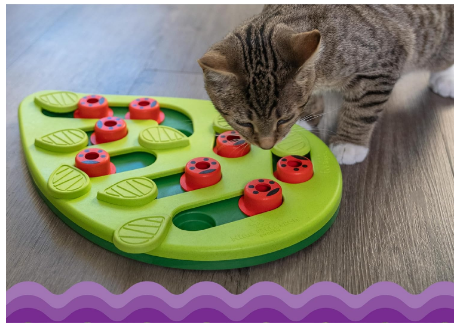
Optional Enrichment Aid: A Puzzle Feeder
A puzzle can turn part of a meal into low-impact exploration. Start easy, demonstrate it, and count the food in the daily ration.
Choose a stable, washable design. A cat with paw or neck discomfort may need a textured scatter mat or very easy toy rather than a complex board.
Feeding and Healthy Body Condition
Healthy body condition can reduce unnecessary mechanical load, but the goal is appropriate fat cover, muscle, nutrition, and function—not simply a low number on the scale.
Choose a food labeled complete and balanced for the cat’s life stage. The FDA explains that the nutritional adequacy statement indicates whether a food is intended to serve as the sole diet by meeting an AAFCO nutrient profile or passing an AAFCO feeding trial.[12]
Use the package feeding guide as a starting point. Actual calorie needs vary with age, neuter status, body condition, activity, health, and food energy density. Include treats and puzzle portions in the total. Your veterinarian can help set a target and monitor muscle, especially if activity declines.
Wet, dry, or combined feeding can work with individual guidance. An automatic feeder offers scheduling convenience but cannot confirm intake, recognize pain, or replace observation.
Never aggressively restrict a painful cat without veterinary guidance; rapid weight loss and inadequate intake are dangerous. Appetite loss, repeated vomiting, difficulty chewing, weight change, or increased thirst needs assessment.
Grooming, Ears, Nails, and Dental Care
Shorthaired Scottish Folds generally benefit from weekly combing; longhaired cats often need grooming several times per week to prevent tangles. TICA and CFA both characterize routine coat care as manageable.[1][2]
Keep grooming brief and use it to notice changes in skin, coat, muscle, posture, or touch tolerance. Do not force handling of a sore back, tail, or limb.
Do Folded Ears Need Special Cleaning?
Folded ears should be observed, not compulsively cleaned. TICA states that the fold does not inherently make these cats more prone to ear infections than other cats.[1]
Odor, redness, discharge, head shaking, swelling, or pain warrants guidance. Never insert swabs into the canal or apply oils, peroxide, or unprescribed drops.
Nails and Paws
Trim the translucent nail tips as needed. Check for overgrowth, swelling, damaged pads, or reduced scratching; paw changes can be medically relevant in this breed.
Dental Care
Dental disease can cause pain independently of orthopedic disease. Introduce toothbrushing with cat-safe toothpaste in small stages and maintain regular oral examinations. Never use human toothpaste.
For a practical introduction plan, read How to Brush Your Cat’s Teeth: A Stress-Free Guide.
Preventive Care Beyond the Skeleton
A Fold still needs ordinary preventive care: individualized vaccination, risk-appropriate parasite control, safe identification, and dental assessment.
For a current overview, see the Cat Vaccination Schedule: The Complete Guide.
Ask about visit frequency, blood pressure, age-appropriate laboratory screening, and reproductive care. A mobility focus must not obscure other feline diseases.
Track weight, appetite, medication, play, litter use, and movement; trends matter more than one day.
Living With Children, Cats, and Dogs
TICA and CFA describe many Scottish Folds as compatible with respectful children and pets after appropriate introductions.[1][2] A gentle reputation never permits rough handling.
Children should let the cat approach, support the body when lifting is allowed, use toys rather than hands, and respect retreats. They must never pull or flex the ears, tail, paws, or legs.
Introduce dogs behind barriers and prevent chasing. Introduce cats gradually, with separate food, water, litter, scratching, resting, and hiding resources.
If an animal guards key resources, separate them and seek qualified behavioral help when needed.
Can a Scottish Fold Live in an Apartment?
Yes. A well-arranged apartment can provide an excellent life. Floor area matters less than safe, usable territory, predictable care, accessible resources, window views, play, and social contact.
Use stable furnishings and cat-secure screens; ordinary insect screens are not containment. Keep unenclosed balconies off-limits.
Place at least one resting area and litter box where stairs are unnecessary. In a larger home, duplicating resources on each level can become valuable as the cat ages. Apartment-friendly should never be confused with naturally inactive or maintenance-free.
Scottish Fold Lifespan
TICA lists a life expectancy of approximately 11–14+ years.[1] That is a broad breed estimate, not a promise and not a deadline. Some cats live shorter lives; others exceed the range.
Genotype, severity of orthopedic disease, pain recognition, nutrition, body condition, dental health, indoor safety, access to veterinary care, and unrelated illnesses can all influence longevity and quality of life.
The more useful goal is not maximizing a number at any cost. It is preserving comfortable function and good days while responding early to change. A cat who reaches an advanced age still deserves pain assessment; slowing down should not automatically be dismissed as normal aging.
Choosing a Scottish Fold Breeder, Rescue, or Alternative
The lowest-risk way to avoid intentionally selecting the Fold-associated variant is to choose a cat who is genetically N/N, adopt a non-Fold cat, or select another breed. If you adopt an existing Scottish Fold from a shelter or rescue, ask for medical records and plan for mobility monitoring; lack of pedigree papers does not eliminate the variant.
If you are still considering a breeder, do not let a reservation deposit or cute photograph prevent careful questions.
Ask for:
- The actual TRPV4 DNA reports for both parents, with identity information that can be matched to the cats
- Confirmation that no Fold-to-Fold mating occurred
- A clear explanation that N/SF offspring remain genetically affected even from Fold-to-N/N mating
- Veterinary records and information about gait, tail flexibility, mobility, and orthopedic findings in parents and older relatives
- Early kitten photographs and genotypes for cats marketed as Scottish Straights, because adult ear appearance alone can be misleading[7]
- Details of socialization, living conditions, diet, vaccinations, parasite care, and veterinary examinations
- A written contract, return policy, and lifetime provision that the breeder will take the cat back if the owner cannot keep it
- Time to review records independently with your own veterinarian
“The parents walk normally” is not genetic documentation or a lifetime guarantee. Contact the laboratory if a report’s authenticity is uncertain.
Avoid sellers who market extreme folds as “rare,” minimize the genotype, claim Fold-to-Straight removes all risk, conceal living conditions, or pressure immediate payment.
No breeder can guarantee that a kitten will never experience pain. A transparent seller should be willing to discuss uncertainty, not merely repeat registry eligibility.
Scottish Fold vs. Scottish Straight
Scottish Straights share much of the same ancestry, rounded appearance, and broad personality description, but the name is used inconsistently. Traditionally, a straight-eared kitten from a Scottish breeding program was assumed not to have inherited the Fold variant.
The 2026 cryptic-Fold evidence shows why assumption is insufficient. Some N/SF cats can have folded ears as kittens and straight-looking ears later. A genuinely N/N Scottish Straight has no detected copy of the tested variant and cannot pass it to offspring; an adult described as straight based only on appearance may not meet that definition.[3][7]
If your priority is the Scottish look without deliberately selecting folded ears, request the original N/N laboratory report. Remember that N/N excludes this specific variant; it does not guarantee temperament or freedom from every disease.
Pros and Considerations of Living With a Scottish Fold
| Potential appeal | Important consideration |
| Often affectionate, quiet, and people-oriented | The folded-ear trait is caused by a systemic cartilage-and-bone variant |
| Usually adaptable to calm homes and apartments | Osteochondrodysplasia can be progressive and painful |
| Intelligent and responsive to gentle enrichment | Clinical severity among heterozygotes is variable, not safely predictable |
| Short coat is relatively easy to maintain | Longhair needs more frequent grooming |
| Often compatible with respectful families and pets | Rough handling of the tail, limbs, or ears is inappropriate |
| Distinctive appearance | Choosing appearance creates a serious welfare decision |
| Existing cats can be supported with attentive care | Environmental products provide comfort, not genetic treatment |
Frequently Asked Questions
Do all Scottish Folds have osteochondrodysplasia?
Every true folded-ear Scottish Fold has at least one copy of the disease-associated TRPV4 variant, and UC Davis classifies N/SF and SF/SF results as affected.[3] The presence, visibility, and clinical severity of skeletal changes vary. “Affected genotype” does not mean every cat is severely disabled today, while “no obvious limp” does not mean the cat is genetically unaffected.
Do Scottish Folds always develop severe arthritis?
No. Severe, early disease is especially associated with two variant copies, but heterozygous cats show a wide range of outcomes.[3][4][5][6] Small studies disagree about how frequent clinically important disease is, partly because they measure different populations and outcomes. Lifelong observation remains appropriate.
Is a Scottish Fold in pain if it sits like a Buddha?
Not necessarily. A posture alone cannot diagnose pain. Treat a new sitting style as one piece of context and look for changes in jumping, gait, grooming, play, litter-box access, touch tolerance, and social behavior. Ask a veterinarian to assess concerning patterns rather than manipulating the cat’s joints at home.
How big do Scottish Fold cats get?
TICA lists Scottish Folds as medium cats around 7–10 pounds.[1] Healthy size varies with frame, sex, muscle, age, and body condition. Use veterinary body-condition assessment rather than trying to force every cat into the published range.
How long do Scottish Folds live?
TICA lists approximately 11–14+ years.[1] It is an estimate, not a guarantee. Quality and length of life depend on the individual cat’s genetics, clinical disease, pain management, preventive care, nutrition, environment, and unrelated health conditions.
Do Scottish Folds need special ear cleaning?
Not routinely. TICA says folded ears are not inherently more likely to become infected.[1] Observe for odor, redness, discharge, head shaking, or pain, and use only veterinarian-recommended cleaning methods. Unnecessary cleaning can irritate the ear.
Are Scottish Folds good with children?
Many can be, provided the child is calm and respectful. Supervise interaction and prohibit pulling or flexing the ears, tail, paws, or legs. The cat must always have a private place to retreat.
Can a Scottish Fold live with dogs or other cats?
Often, but individual compatibility and gradual introductions matter more than breed labels. Provide separate resources and prevent chasing or body-slamming play, especially if the Fold has limited mobility.
Are Scottish Folds good apartment cats?
They can be. A good apartment offers accessible litter, food, water, resting, scratching, views, and daily play. Stable intermediate steps and nonslip paths can be added if movement changes. Secure windows and balconies regardless of breed.
Can a Scottish Fold be left alone during the workday?
A healthy adult may cope with an ordinary workday when needs are met, but many enjoy companionship and should not be chronically isolated. A camera or automatic feeder does not replace someone checking appetite, elimination, gait, and well-being. Kittens and medically managed cats require more frequent care.
Is Fold-to-Straight breeding safe?
It avoids SF/SF offspring only when the Fold is N/SF and the other cat is genetically confirmed N/N. It does not eliminate the variant: about half the offspring are expected to inherit N/SF. Because some variant-positive cats can look straight as adults, appearance alone is not sufficient.[3][7]
What is a genetically confirmed Scottish Straight?
In this health context, it is a straight-eared Scottish-line cat with an N/N result for the tested TRPV4 Fold variant. The laboratory report matters because 2026 research documented some heterozygous cats whose folded kitten ears appeared straight in adulthood.[7] N/N is not a guarantee against every other condition.
Final Verdict: Responsible Scottish Fold Ownership
Many Scottish Folds are gentle, curious, devoted companions and deeply loved family members.
The signature look’s biology cannot be edited out: folded ears result from a TRPV4 variant associated with cartilage and skeletal disease. Two copies carry greater risk, one copy can still matter, and current evidence cannot promise a harmless lifetime.
If a Fold already shares your home, respond with knowledge rather than guilt. Learn normal movement, record changes, support healthy body and muscle condition, keep resources accessible, and involve a veterinarian early. Comfort products are not treatment.
If choosing a future companion, consider adoption or a confirmed N/N alternative. If you continue with a breeder, insist on original DNA reports for both parents and understand them.
The best Scottish Fold home is not defined by luxury. It is defined by honest expectations, respectful handling, adaptable design, careful pain recognition, and a willingness to place the cat’s welfare ahead of the trait that made the breed famous.
Sources and References
- The International Cat Association. Scottish Fold. Accessed August 28, 2026.
- Cat Fanciers’ Association. Scottish Fold. Accessed August 28, 2026.
- UC Davis Veterinary Genetics Laboratory. Scottish Fold. Accessed August 28, 2026.
- Takanosu M, et al. Incomplete dominant osteochondrodysplasia in heterozygous Scottish Fold cats. Journal of Small Animal Practice. 2008.
- Rorden C, et al. Radiographical Survey of Osteochondrodysplasia in Scottish Fold Cats caused by the TRPV4 gene variant. Human Genetics. 2021.
- Sartore S, et al. Osteochondrodysplasia and the c.1024G>T variant of TRPV4 gene in Scottish Fold cats: genetic and radiographic evaluation. Journal of Feline Medicine and Surgery. 2023.
- Matsumoto Y, et al. Straightened Small Pinnae in TRPV4 c.1024G>T Heterozygous Cats. Animal Genetics. 2026.
- International Cat Care. Scottish Fold Osteochondrodysplasia. Accessed August 28, 2026.
- Feline Veterinary Medical Association. Chronic Pain Toolkit: Assessment. Accessed August 28, 2026.
- ISFM and AAFP. 2024 Guidelines on the Long-Term Use of NSAIDs in Cats. Accessed August 28, 2026.
- Fédération Internationale Féline. Health and Welfare Rules. Accessed August 28, 2026.
- U.S. Food and Drug Administration. “Complete and Balanced” Pet Food. Accessed August 28, 2026.