Sphynx Cat: Complete Guide to Personality, Care, Health, Lifespan, and Ownership
By Demosthenes Staudinger | Updated August 28, 2026
Affiliate disclosure: This article contains affiliate links. As an Amazon Associate I earn from qualifying purchases. If you buy through one of these links, we may earn a commission at no additional cost to you. This does not affect our editorial recommendations.
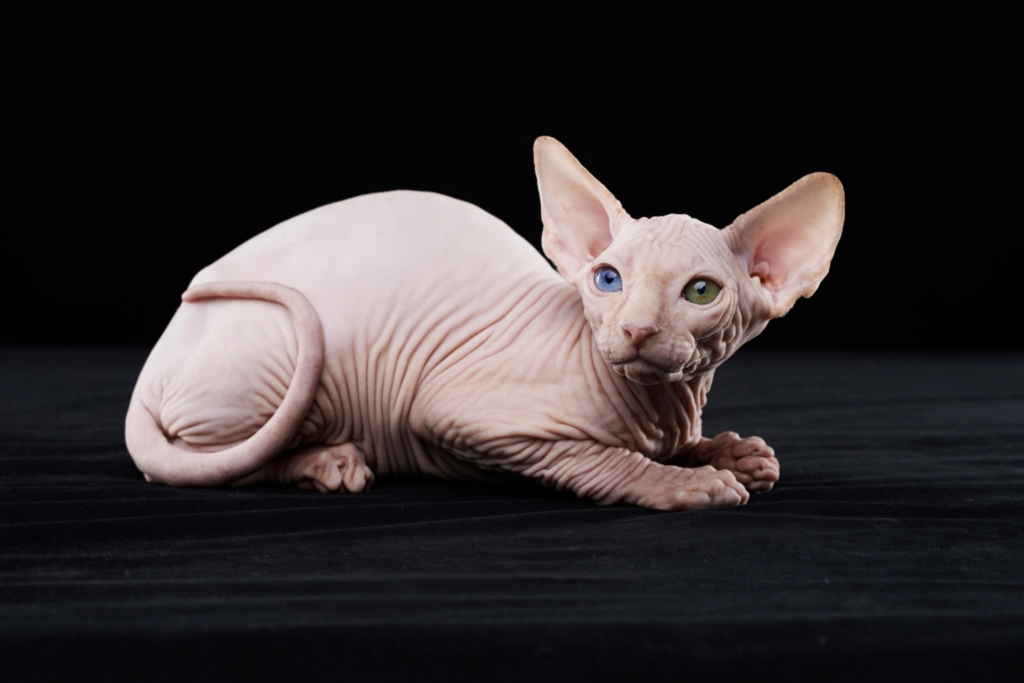
A Sphynx cat can overturn your expectations within minutes. The nearly bare skin and angular profile look otherworldly, but the personality inside is often warm, athletic, curious, and determined to participate in whatever the household is doing.
That combination has earned the breed a “Velcro cat” reputation. TICA and CFA describe Sphynx cats as affectionate, outgoing, intelligent, playful, and notably people-oriented.[1][2]
The other popular description—“a low-maintenance cat that does not shed”—is much less accurate. A Sphynx does not need a long coat combed, but skin oils, ears, claws, teeth, temperature, sun exposure, and social needs all require attention.
Health screening deserves equal weight. Hypertrophic cardiomyopathy, or HCM, occurs in the breed, and current research shows why a DNA result cannot replace cardiac ultrasound. Congenital myasthenic syndrome, a different inherited condition, does have a useful breed-specific DNA test.[3][4][5][6][7]
Lifespan claims also need context. TICA lists 7–15 years, while a 2024 UK life-table study produced a much lower Sphynx estimate from a small breed sample. Neither number can predict one cat’s future.[1][8]
This guide explains Sphynx personality, size, bathing, skin and ear care, warmth, feeding, enrichment, HCM screening, CMS testing, lifespan evidence, breeder questions, and everyday ownership so you can decide whether this remarkably social breed fits your home.
How we researched this Sphynx cat guide: This is a research-based breed guide, not a diagnosis or a guarantee of any individual cat’s temperament, health, size, or lifespan. We reviewed current TICA and CFA breed information, university veterinary guidance, genetic-test documentation, peer-reviewed studies through June 2026, and current manufacturer pages for the optional products mentioned. Modern Cat Society has not examined a breeder or hands-on tested those products. Manufacturer specifications are identified as such, and conflicting health evidence is presented rather than silently simplified.
Quick Verdict: Is a Sphynx Cat Right for You?
- Editorial verdict: A Sphynx can be an extraordinary companion for someone who wants an intensely social, active indoor cat and is prepared for hands-on grooming and meaningful cardiac screening. Hairlessness changes the care routine; it does not remove it.
- Best for: Interactive households, owners who enjoy close companionship, allergy-aware families who can test their individual response before committing, and people prepared for routine skin care plus potentially higher veterinary costs.
- Skip it if: You want a reliably independent cat, expect “hypoallergenic” to mean reaction-free, dislike bathing and ear or claw care, cannot provide warm indoor choices, or are unwilling to investigate dated echocardiograms and genetic records before choosing a breeder.
Sphynx Cat at a Glance
| Characteristic | Sphynx cat profile |
|---|---|
| Origin | Modern development in Canada and the United States |
| Size | Medium, sturdy, muscular, and heavier than the bare appearance may suggest |
| Typical adult weight | TICA lists 6–12 lb overall; approximately 7–10 lb for females and 8–12 lb for males |
| Lifespan information | TICA lists 7–15 years; a small 2024 UK study estimated 6.68 years at age 0 for its Sphynx sample |
| Coat | Nearly hairless, usually with fine down and possible short hair on the nose, ears, feet, or tail |
| Typical personality | Affectionate, outgoing, intelligent, playful, curious, and people-oriented |
| Activity level | High, especially in kittens and young adults |
| Grooming | Individualized bathing plus routine skin, ear, claw, eye, and dental care |
| Temperature needs | Indoor warmth and freedom to move away from any heat source |
| Allergy reality | Not reliably hypoallergenic |
| Major health discussions | HCM, congenital myasthenic syndrome, skin and ear health, and dental care |
| Best home | Warm, enriched, indoor, socially engaged, and prepared for ongoing preventive care |
These are breed-level tendencies, not specifications. An individual cat’s genetics, health, early socialization, age, and experience can matter more than the label on a pedigree.[1][2]
Sphynx Origins: A North American Breed, Not an Egyptian One
Despite the name and statue-like appearance, the modern Sphynx did not originate in ancient Egypt. Its documented development is North American.
CFA traces a central line to a naturally hairless kitten born in Toronto, Canada, in 1966. Additional naturally hairless cats found in Minnesota and Toronto during the 1970s contributed to later breeding programs. Outcrosses, including Devon Rex and coated domestic cats, helped establish the population.[2]
Hairlessness results from a naturally occurring genetic change, but the modern breed was created through deliberate selection. The Egyptian reference is aesthetic: large ears, prominent cheekbones, visible skin, and an elegant outline suggested the name.
Appearance, Size, Skin, and Colors
The Sphynx is a medium cat with sturdy bone, developed muscle, broad chest, rounded abdomen, long toes, thick paw pads, very large ears, and lemon-shaped eyes. The lack of a conventional coat makes every muscle, wrinkle, and color boundary unusually visible.[1][2]
TICA lists a 6–12-pound overall range, with females commonly around 7–10 pounds and males around 8–12 pounds. Those ranges are orientation, not an ideal weight for every individual. The rounded abdomen described in breed standards should not be used to dismiss excess body fat, and a slim visual outline does not prove adequate muscle.[1]
Is a Sphynx Completely Hairless?
Usually not. TICA and CFA describe fine down with a suede-, chamois-, or peach-like texture. Short hair may appear on the nose, ears, feet, tail, or other areas, and hormonal or seasonal changes can affect how much is visible.[1][2]
Colors and patterns are expressed through skin pigmentation and whatever fine hair is present. Solid, tabby, tortoiseshell, bicolor, pointed, and other patterns can therefore be striking even without a conventional coat.
Wrinkling is expected, especially around the head and shoulders, but inflamed folds, odor, crusting, pustules, persistent scaling, or open sores are not simply breed features. They require veterinary assessment.
Sphynx Cat Personality: The Social “Velcro Cat”
The typical Sphynx personality is not reserved. TICA describes cats that greet visitors, sit on shoulders, sleep under covers, and seek human contact. CFA similarly portrays an outgoing, curious cat that follows people and communicates a desire for attention.[1][2]
Daily life may include supervising the laptop, investigating deliveries, climbing onto a shoulder, joining visitors, and sleeping pressed against a warm person. Some of that contact provides body heat, but the consistent people orientation described by both registries goes beyond temperature alone.
No breed guarantees a lap cat. Some Sphynx cats prefer moving interaction, play, or proximity rather than being held. Meet the individual adult when possible, and let the cat choose the intensity of contact.
Can a Sphynx Be Left Alone?
A healthy adult can spend ordinary periods alone when food, water, litter, safety, warmth, and enrichment are covered. However, this is rarely the best breed for a home where the cat is routinely isolated for long stretches and receives little interaction afterward.
There is no universal maximum number of hours. Age, health, medication, feeding needs, temperament, and the home environment all matter. Kittens need more frequent supervision than healthy adults, and a cat with HCM or another medical condition may require an individualized schedule.
A second compatible cat or dog may provide companionship, but another animal is not an automatic solution. Introductions must be gradual, and every cat needs separate access to food, water, litter, scratching, hiding, and resting resources.
Are Sphynx Cats Vocal?
Many communicate readily with chirps, meows, physical contact, and persistent participation. Individuals vary. A sudden increase in vocalization, especially with labored breathing, weakness, pain, appetite change, or nighttime distress, should not be dismissed as personality.
Activity and Environmental Enrichment
The bare skin can make the Sphynx look delicate, but the breed is generally muscular and athletic. TICA describes Sphynx cats as active, agile, and curious.[1]
Provide stable climbing routes, secure window views, tall and horizontal scratchers, hiding places, tunnels, boxes, wand play, food searches, and brief training sessions. Secure screens carefully; an ordinary insect screen is not designed to contain a determined cat.
Interactive play should imitate parts of a hunting sequence: watch, stalk, chase, pounce, and catch. Let the cat capture the toy periodically. Store strings, feathers, and detachable pieces after supervised use.
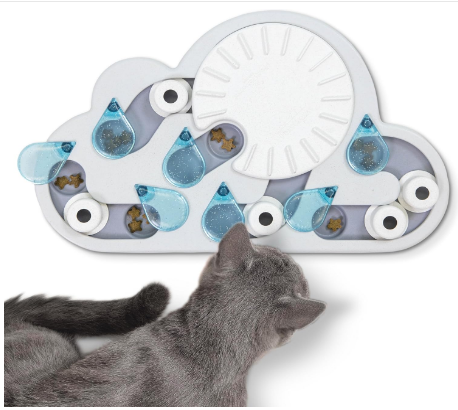
Optional Enrichment Aid: Rainy Day Puzzle & Play
The Nina Ottosson Rainy Day Puzzle & Play is one way to turn part of a meal into supervised problem-solving. Outward Hound lists 14 food compartments, capacity up to 1/4 cup, adjustable difficulty, and no removable play pieces. The company instructs owners to supervise, prevent chewing, inspect for damage, and store the puzzle after use.[12]
Begin with compartments open and easy. A frustrated cat may stop engaging, and a puzzle should never prevent access to enough food. Count everything placed inside toward the daily ration and wash food-contact areas regularly.
Sphynx Grooming: Hairless Does Not Mean Maintenance-Free
A conventional coat absorbs and distributes some skin oil. With little hair available, oil and environmental debris can remain more visible on Sphynx skin and transfer to bedding, clothing, and furniture.[1][2]
The goal is comfortable, healthy skin—not a permanently squeaky-clean surface. Use washable blankets in favorite sleeping areas and learn the individual cat’s normal texture, color, and oil level. A sudden change is more informative than comparing the cat with a photograph online.
How Often Should You Bathe a Sphynx?
There is no evidence-based calendar that fits every Sphynx. Official breed pages even use different language. CFA says oily skin requires regular bathing, while TICA warns that mandatory weekly bathing is a misconception and says some cats may need a gentle bath only every few months.[1][2]
That difference is a reason to individualize, not to choose the most convenient claim. Factors include oil accumulation, skin health, climate, bedding, product tolerance, and veterinary advice.
Bathing too infrequently can leave uncomfortable buildup. Bathing too aggressively or reacting to every trace of oil with another wash can irritate skin. Persistent odor, redness, itching, scaling, acne-like lesions, or excessive grease may indicate a dermatologic problem rather than a need for stronger shampoo.
How to Bathe a Sphynx Safely
Prepare everything before bringing the cat to the bathing area:
- A nonslip mat or folded towel for secure footing
- Comfortably lukewarm water
- A shampoo labeled for cats
- A cup or gentle sprayer kept away from the face and ears
- Clean towels and a warm, draft-free drying area
- Rewards the cat already values
Keep the session calm and brief. Support the body, avoid scrubbing wrinkles or claw folds aggressively, keep shampoo out of eyes and ear canals, rinse thoroughly, and towel-dry. Do not use human shampoo, essential oils, or fragranced products simply because they smell pleasant to you.
Introduce bathing gradually before a full wash is necessary: explore the dry tub, stand on a nonslip mat, hear water at a distance, and receive rewards. Punishment and restraint can make future care harder and increase injury risk.
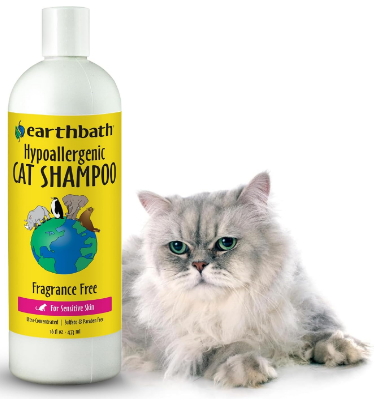
Optional Bathing Product: earthbath Hypoallergenic Cat Shampoo
Earthbath lists its Hypoallergenic Cat Shampoo as fragrance-free, pH-balanced, and intended for cats and kittens over six weeks. The manufacturer advises stopping use and contacting a veterinarian if irritation develops, and it recommends consultation before use in sensitive pets.[10]
“Hypoallergenic” is a product description, not a promise that no cat will react. Check the current ingredient list, follow the label, avoid the eyes, and rinse completely. A veterinarian should choose products for a cat with diagnosed skin disease.
Ear, Claw, Eye, and Dental Care
Sphynx grooming extends beyond the torso. Large, relatively hairless ears can accumulate visible wax, and oil or debris can collect around the claw sheaths.[1]
Ears
Look before cleaning. Normal wax amount and color vary, and aggressive routine cleaning can irritate the canal. Ask a veterinarian to demonstrate a cat-safe method and recommend a product if the individual needs it.
Strong odor, redness, swelling, pain, head shaking, persistent scratching, or heavy or unusual discharge warrants assessment. Those signs may reflect infection, mites, allergy, or another condition that ordinary cleaning will not cure. Never push cotton swabs into the canal.
Claws and Toes
Introduce paw handling in short, rewarded stages. Trim only the translucent tip when needed, and gently clean visible debris around—not deep beneath—the claw sheath. Stop if the area is painful, inflamed, swollen, or draining.
For tool options and a low-stress introduction, read Best Cat Nail Clippers for Stress-Free Grooming in 2026.
Eyes
The breed may have little or no eyelashes. Gently remove ordinary corner debris with a clean, damp, soft pad, using a fresh area for each eye. Recurrent squinting, redness, cloudiness, pain, swelling, or colored discharge needs veterinary attention.
Teeth
Hairlessness has no protective effect on dental disease. Use toothpaste formulated for pets, introduce brushing gradually, and maintain professional oral examinations. Never use human toothpaste.
See How to Brush Your Cat’s Teeth: A Stress-Free Guide for a step-by-step routine.
Keeping a Sphynx Warm Without Overheating
Without a typical insulating coat, Sphynx cats often seek warm laps, blankets, covered beds, sunny areas, and heat-producing electronics.[1] Provide warm options, but preserve the ability to leave them.
Start with low-tech choices: fleece blankets, a covered bed, draft-free sleeping spots, and comfortable room temperature. Wash fabric frequently because skin oil can accumulate.
Some cats tolerate sweaters. Clothing must allow normal movement, toileting, grooming, and breathing; seams should not rub the skin. Remove and wash it regularly, check beneath it, and never force clothing on a distressed cat. A sweater does not make cold outdoor exposure safe.
Avoid unsupervised human heating pads, hot-water bottles, space heaters, or electric blankets that were not designed for pets. Burns can occur when an animal cannot recognize excessive heat or move away.
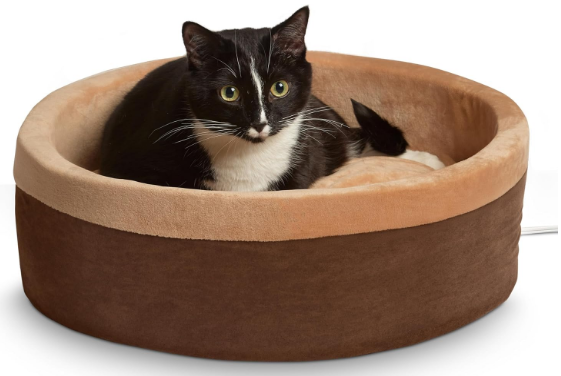
Optional Warmth Aid: K&H Thermo-Kitty Bed
K&H lists the current Thermo-Kitty Bed in 16- and 20-inch diameters, both with a removable, thermostatically controlled 4-watt heater and washable cover. The company states that the full product is safety-certified and carries a one-year limited warranty.[11]
This is an optional comfort product, not a medical device. K&H instructs owners to ensure the cat can leave the heated area and to consult a veterinarian before use with kittens, convalescent animals, or pets unable to move away voluntarily. Inspect the bed and cord, follow all placement and washing instructions, and discontinue use if damaged.[11]
Sun Exposure and Indoor Safety
Warm sunlight may feel appealing, but sparsely haired skin has little physical coverage. TICA advises protecting Sphynx cats from sunburn and skin damage.[1]
Limit prolonged exposure during intense sun, provide shade, and watch lightly pigmented areas especially closely. A sunny window is not automatically harmless simply because the cat is indoors. Ask a veterinarian before applying any topical sunscreen; human products are not formulated around feline grooming and ingestion.
An indoor lifestyle offers better control over temperature, ultraviolet exposure, parasites, skin injury, traffic, predators, and weather. Safe outdoor experiences can include a secure catio or supervised harness time in mild conditions with shade. Never leave a Sphynx on an exposed balcony or patio simply because the air feels comfortable to you.
Feeding a Sphynx Cat
TICA describes a hearty appetite and higher caloric intake than the average coated cat, but that is a breed-level observation—not permission for unlimited food.[1]
Choose a diet carrying a nutritional adequacy statement for the appropriate life stage. The FDA explains that “complete and balanced” food is formulated to meet an AAFCO nutrient profile or has passed an AAFCO feeding trial for the stated life stage.[9]
Use the package guide as a starting point. Actual needs depend on age, body condition, muscle, activity, neuter status, health, environment, and the food’s calorie density. Count treats and puzzle food in the daily total.
Wet, dry, or combined feeding can work depending on the individual and veterinary advice. There is no evidence that every Sphynx needs a raw diet, luxury food, or unusually high-protein product because of hairlessness. Raw animal products can carry microbial and nutritional risks and should not be improvised.
Monitor weight and body condition over time. The breed-standard rounded abdomen should not obscure a disappearing waist, declining muscle, or unexplained weight change. Increased appetite with weight loss, repeated vomiting, diarrhea, reduced appetite, or increased thirst warrants veterinary assessment.
An automatic feeder may add convenience, but it cannot determine calorie needs, confirm which pet ate, or notice illness. A human should still observe daily appetite and behavior.
Sphynx Cat Health: Hypertrophic Cardiomyopathy
HCM causes abnormal thickening of the heart muscle. Cornell identifies it as the most common heart disease in cats and lists Sphynx among predisposed breeds. Some cats appear well for years; others develop congestive heart failure, blood clots, arrhythmias, or sudden death.[3]
Echocardiography—ultrasound imaging of the heart—is the diagnostic gold standard. A veterinarian may also need to exclude high blood pressure, hyperthyroidism, and other causes of heart-wall thickening before diagnosing primary HCM.[3]
HCM Can Be Silent
A normal-looking cat can have heart disease. A stethoscope examination is valuable, but the absence of a murmur does not equal a normal echocardiogram. Likewise, one normal scan at a young age cannot guarantee that age-dependent disease will never appear.
Ask your veterinarian whether and when a cardiologist-performed echocardiogram is appropriate for your Sphynx. Frequency should reflect age, family history, prior findings, reproductive status, and professional advice rather than a generic online calendar.
Rapid or labored breathing, open-mouth breathing, collapse, profound lethargy, sudden painful weakness, or paralysis of the hind legs is an emergency. Cornell identifies breathing difficulty and arterial blood clots affecting the hind limbs among serious HCM presentations.[3]
Does the ALMS1 DNA Test Rule Out HCM?
No. NC State currently offers a Sphynx HCM test for an ALMS1 variant initially associated with disease. Its own guidance states that a negative cat may still develop HCM and recommends interpreting results alongside the health of the line and echocardiography.[4]
More recent population studies make the limitation even clearer:
| Evidence | What the study found | What it means for owners |
| 2024 New Zealand study | Among 55 apparently healthy Sphynx cats followed prospectively, 20 had HCM by a median age of 5.8 years; the ALMS1 variant was common but was not associated with diagnosis in that cohort[5] | The cohort supports genuine HCM concern, but its 40% figure should not be treated as universal breed prevalence |
| 2026 Thailand study | In 47 Sphynx cats, the tested ALMS1 variant was present in 44.68%, but no significant association with the HCM phenotype was found[6] | A DNA result alone has limited predictive value and cannot replace cardiac evaluation |
The studies examined different geographic populations and were not designed to prove that ALMS1 can never influence risk. Together, they show why marketing a kitten as “HCM clear” based only on this DNA test is not justified.[4][5][6]
For a breeder, the responsible documentation is not DNA or echocardiography. It is transparent use of all relevant information, with current serial echocardiograms remaining central. For a pet owner, an ALMS1 result may inform a veterinary conversation but cannot diagnose or exclude HCM.
Congenital Myasthenic Syndrome
Congenital myasthenic syndrome, or CMS, is different from HCM. It is an inherited neuromuscular disorder associated with a COLQ variant in Sphynx and Devon Rex cats. Affected cats can show generalized muscle weakness, particularly after exertion, excitement, or stress.[7]
UC Davis describes autosomal recessive inheritance:
| CMS result | Meaning |
| N/N | No copies of the tested CMS variant; the cat will not transmit it |
| N/CMS | Clinically unaffected carrier; expected to pass the variant to about half of offspring |
| CMS/CMS | Genetically affected; the condition can be progressive and fatal |
Two carriers are expected, across many conceptions, to produce 25% affected kittens. Every conception is independent, so a small litter will not necessarily match that ratio.[7]
CMS testing is therefore a meaningful breeder question. A carrier does not need to be treated as a sick pet, but breeding decisions should prevent affected kittens while preserving responsible genetic diversity.
Weakness, collapse, difficulty swallowing, abnormal posture, or exercise intolerance needs veterinary assessment. Do not assume every weak Sphynx has CMS; heart disease, metabolic disorders, anemia, infection, and many other conditions can produce similar signs.
Other Health and Preventive-Care Priorities
Skin and ear problems deserve diagnosis rather than endless cleaning. Redness, odor, itch, plaques, repeated infections, ulcers, or pigment changes can have infectious, allergic, inflammatory, or other causes. More bathing may worsen irritation or delay appropriate treatment.
CFA also flags periodontal disease and sensitive digestion among concerns reported in the breed.[2] Maintain dental care, discuss persistent gastrointestinal signs, and avoid frequent unplanned diet changes.
A Sphynx needs the same foundational preventive care as any cat: individualized vaccination, parasite control appropriate to lifestyle, identification, reproductive care, dental assessment, and age-appropriate laboratory screening. Hairlessness does not protect against infectious disease or internal parasites.
Keep a simple record of weight, appetite, breathing, activity, skin changes, medications, and test dates. Trends help owners and veterinarians distinguish a stable quirk from a developing problem.
What Is the Sphynx Cat Lifespan?
TICA currently lists 7–15 years.[1] That broad range is often repeated in breed guides, but it is not the only published information.
A 2024 VetCompass life-table study analyzed 7,936 UK cats with recorded deaths. For Sphynx cats, it estimated life expectancy at age 0 at 6.68 years, with a 95% confidence interval of 4.53–8.83 years.[8]
That result deserves attention and restraint. The Sphynx calculation was based on only 18 deaths, the minimum breed threshold in that analysis was 15, and the confidence interval was wide. The data came from UK primary-care practices and deaths in a defined period; breed lines, care, and risks may differ elsewhere. It should not be rewritten as “every Sphynx lives only 6.68 years.”[8]
The study nevertheless challenges casual promises of a reliably long lifespan and reinforces the value of better mortality research. It also found Sphynx lifespans ranging from 0.13 to 14.67 years within that dataset, illustrating why one estimate cannot describe every cat.[8]
For an individual owner, focus on controllable actions: responsible acquisition, HCM surveillance, CMS documentation, healthy body and muscle condition, indoor safety, dental care, vaccination, early evaluation of changes, and a strong veterinary relationship. None guarantees a particular age, but each supports welfare.
Living With Children, Dogs, and Other Cats
TICA and CFA describe many Sphynx cats as sociable with children, cats, dogs, and visitors.[1][2] Compatibility still depends on the individuals and the quality of introductions.
Children should let the cat approach, support the body during permitted lifting, avoid pulling wrinkles or touching sore skin, use toys rather than hands for rough play, and respect sleep, food, litter, and hiding time.
Introduce dogs behind barriers and prevent chasing. Because bare skin has less protection from claws and teeth, even playful contact can leave scratches. Cat-to-cat introductions should also be gradual, with duplicated essential resources so one animal cannot control access.
Can a Sphynx Live in an Apartment?
Yes. A Sphynx does not need a large floor plan, but it does need usable territory and social engagement. Stable vertical space, window views, scratchers, warm beds, hiding places, daily play, and predictable interaction can make an apartment highly functional.
The larger challenge is often isolation rather than square footage. A small enriched apartment with an involved owner may suit the breed better than a large empty house.
For layout ideas, see The Ultimate Indoor Cat Room Checklist.
Is a Sphynx Good for a First-Time Cat Owner?
It can be, provided “first-time” does not mean “low-effort.” A motivated beginner can learn skin care, nail trimming, dental care, play, body-condition monitoring, and safe handling.
The bigger question is whether the person wants an unusually social cat and is financially prepared for breed-relevant screening. Cardiologist consultations and repeat echocardiograms can add meaningful cost beyond ordinary wellness care.
A first-time owner who wants a more independent companion or minimal grooming may be happier with another individual or breed. Experience matters less than honest expectations and willingness to learn.
How to Choose a Responsible Sphynx Breeder or Rescue
Adoption can be an excellent option. A rescue may not have full pedigree or genetic history, but existing veterinary records, current examination, and a plan for cardiac care still provide a useful starting point.
If buying from a breeder, ask for documents—not assurances:
- Dated echocardiogram reports for both parents, ideally performed or interpreted by a veterinary cardiologist
- The breeder’s schedule for repeat cardiac screening and what happens when a cat develops HCM
- HCM history in parents, siblings, grandparents, and older offspring
- ALMS1 results presented as limited risk information, not proof that a cat is “HCM clear”
- CMS DNA results for both parents and an explanation of any carrier mating
- Veterinary records, vaccination and parasite history, and a health contract
- The age kittens leave, socialization methods, bathing and handling experience, and current diet
- A written return provision if the owner can no longer keep the cat
- Permission to review records with your own veterinarian before paying a nonrefundable deposit
Be cautious of sellers who have kittens constantly available, will not verify identity on reports, offer only a generic DNA panel, claim a negative ALMS1 test eliminates HCM, discourage independent veterinary review, or focus more on rare color than health and temperament.
No ethical breeder can promise a kitten will never develop HCM. Transparency about uncertainty is more credible than a lifetime guarantee with exclusions hidden in the contract.
Pros and Considerations of Living With a Sphynx
| Potential appeal | Important consideration |
| Usually affectionate and people-oriented | Often needs substantial companionship and interaction |
| Intelligent, playful, and trainable | Boredom can lead to persistent attention-seeking or unsafe exploration |
| Little conventional shedding | Skin oil can transfer to fabric and furniture |
| No long coat to mat | Bathing, ears, claw folds, eyes, and teeth still need care |
| Distinctive appearance and tactile coat | Bare skin needs temperature and sun management |
| Often compatible with respectful children and pets | Skin can be scratched during rough interaction |
| Can thrive in an apartment | Vertical space, warmth, play, and social contact remain essential |
| CMS has an actionable DNA test | HCM cannot be ruled out by ALMS1 testing alone |
| Some allergic people tolerate an individual better | The breed is not reliably hypoallergenic |
| Warm, close physical companionship | Heated beds and clothing require safe, voluntary use |
Frequently Asked Questions
Are Sphynx cats completely hairless?
Usually not. Most have fine down that can feel like suede or peach skin, and short hair may appear on the nose, ears, feet, or tail. The amount can vary with the individual, season, and hormonal status.[1][2]
How often should you bathe a Sphynx cat?
There is no universal weekly schedule. CFA recommends regular bathing, while TICA warns that automatic weekly bathing can be excessive and says some cats may need a gentle bath only every few months.[1][2] Base frequency on actual buildup, skin response, and veterinary advice.
Do Sphynx cats smell or feel oily?
Skin oil can accumulate because there is little coat to absorb it, and residue may transfer to bedding. A strong new odor, severe grease, redness, itch, or lesions is not simply normal Sphynx skin and should be evaluated rather than repeatedly scrubbed.
Do Sphynx cats get cold?
They can lose heat more readily without a normal insulating coat and often seek blankets, covered beds, or people.[1] Provide warm indoor choices and let the cat move away from any heat source. Cold tolerance varies.
Does a Sphynx need sweaters or a heated bed?
No. Many are comfortable with blankets and a warm room. Clothing and pet-specific heated beds are optional and must allow normal movement and voluntary exit. Do not improvise with human heating devices.
Are Sphynx cats hypoallergenic?
No. TICA and CFA both caution that hairlessness does not make the breed reliably hypoallergenic.[1][2] Some people tolerate an individual better, while others still react. Spend time with adult cats before committing and consult an allergy professional when reactions could be serious.
How big do Sphynx cats get?
TICA lists approximately 6–12 pounds overall, with females commonly around 7–10 pounds and males around 8–12 pounds.[1] Healthy weight depends on frame, muscle, age, and body condition rather than breed averages alone.
How long do Sphynx cats live?
TICA lists 7–15 years, while a 2024 UK study estimated 6.68 years at age 0 from only 18 recorded Sphynx deaths.[1][8] The study’s small breed sample and wide confidence interval limit individual prediction. No lifespan number is a guarantee.
What HCM screening should a Sphynx breeder provide?
Ask for recent, dated echocardiogram reports for both parents and evidence of repeated screening over time. A single young normal scan cannot exclude later disease. ALMS1 DNA results may be additional information but cannot replace echocardiography.[3][4][5][6]
Does a negative ALMS1 test mean a Sphynx is HCM-free?
No. NC State explicitly states that a negative cat may still develop HCM, and 2024 and 2026 studies did not find a significant association between the tested variant and HCM in their populations.[4][5][6]
What is congenital myasthenic syndrome in Sphynx cats?
CMS is an autosomal recessive neuromuscular disorder associated with a COLQ variant. Affected cats can develop exertion-related weakness, swallowing problems, and progressive disease. DNA testing can distinguish N/N, unaffected carriers, and genetically affected cats.[7]
Are Sphynx cats good for first-time owners?
They can be excellent first cats for someone who wants intense companionship and is prepared for bathing, skin and ear monitoring, claw and dental care, enrichment, warmth, and cardiac screening. They are a poor match for someone choosing hairlessness because it appears effortless.
Final Verdict: Is the Sphynx Cat Right for You?
The Sphynx is far more than a striking silhouette. For the right household, this is an affectionate, athletic, intelligent companion who turns ordinary routines into shared activities and rarely chooses to remain in the background.
The trade-off is real. You exchange conventional coat care for individualized bathing, ear and claw maintenance, temperature management, sun awareness, fabric washing, and close skin observation. You also accept that HCM screening is an ongoing process, not a one-time DNA certificate.
Choose the breed if that closeness and hands-on care genuinely appeal to you—and if you are prepared to verify serial echocardiograms, CMS results, and family history before buying. Choose another cat if you mainly want a hypoallergenic pet, minimal maintenance, or a companion comfortable with chronic isolation.
For current owners, the goal is not to follow the most rigid internet routine. It is to learn the individual cat: normal skin, appetite, breathing, activity, warmth preferences, and social needs. Adjust care when those patterns change and involve a veterinarian early.
A heated bed can provide warmth, a puzzle can create a challenge, and shampoo can remove oil. None can replace attentive companionship, sound health screening, or a home built around the cat rather than the appearance.
Sources and References
- The International Cat Association — Sphynx. Breed size, lifespan listing, personality, grooming, bathing, temperature, sun, feeding, and HCM guidance. View source
- Cat Fanciers’ Association — Sphynx. Breed history, appearance, personality, bathing, allergen limitations, and health concerns. View source
- Cornell Feline Health Center — Hypertrophic Cardiomyopathy. HCM mechanism, signs, diagnosis, screening interpretation, and emergencies. View source
- NC State Veterinary Hospital — Sphynx Hypertrophic Cardiomyopathy (HCM). Current ALMS1 test availability, result limitations, and echocardiography guidance. View source
- Seo J, et al. — Prevalence of Hypertrophic Cardiomyopathy and ALMS1 Variant in Sphynx Cats in New Zealand. Prospective HCM screening and lack of association with ALMS1 in the studied cohort. View source
- Sussadee M, et al. — Prevalence and Clinical Relevance of Alström Syndrome Protein 1 Gene Variant and Feline Hypertrophic Cardiomyopathy in Sphynx Cats in Thailand. 2026 population-specific ALMS1 and echocardiographic findings. View source
- UC Davis Veterinary Genetics Laboratory — Sphynx and Devon Rex Congenital Myasthenic Syndrome. COLQ variant, clinical signs, inheritance, and genotype interpretation. View source
- Teng KT, et al. — Life Tables of Annual Life Expectancy and Risk Factors for Mortality in Cats in the UK. Breed-specific Sphynx estimate, sample size, confidence interval, and study limitations. View source
- U.S. Food and Drug Administration — “Complete and Balanced” Pet Food. Nutritional adequacy and life-stage labeling. View source
- earthbath — Hypoallergenic Cat Shampoo. Current manufacturer-listed formulation, age guidance, directions, and precautions. View source
- K&H Pet Products — Thermo-Kitty Bed. Current manufacturer-listed sizes, heater, care, safeguards, certification claim, and warranty. View source
- Outward Hound — Rainy Day Puzzle & Play Cat Game. Current manufacturer-listed capacity, compartments, materials, difficulty, and supervision instructions. View source
Sources, specifications, and manufacturer guidance reviewed August 28, 2026. Breed information, research interpretations, product features, retailer terms, and veterinary recommendations may change. Verify critical details with the relevant manufacturer, laboratory, breeder, or veterinarian.