Exotic Shorthair Cat: Personality, Care & Health Guide
By Demosthenes Staudinger | Updated August 29, 2026
Affiliate disclosure: This article contains affiliate links. As an Amazon Associate I earn from qualifying purchases. If you buy through one of these links, we may earn a commission at no additional cost to you. This does not affect our editorial recommendations.
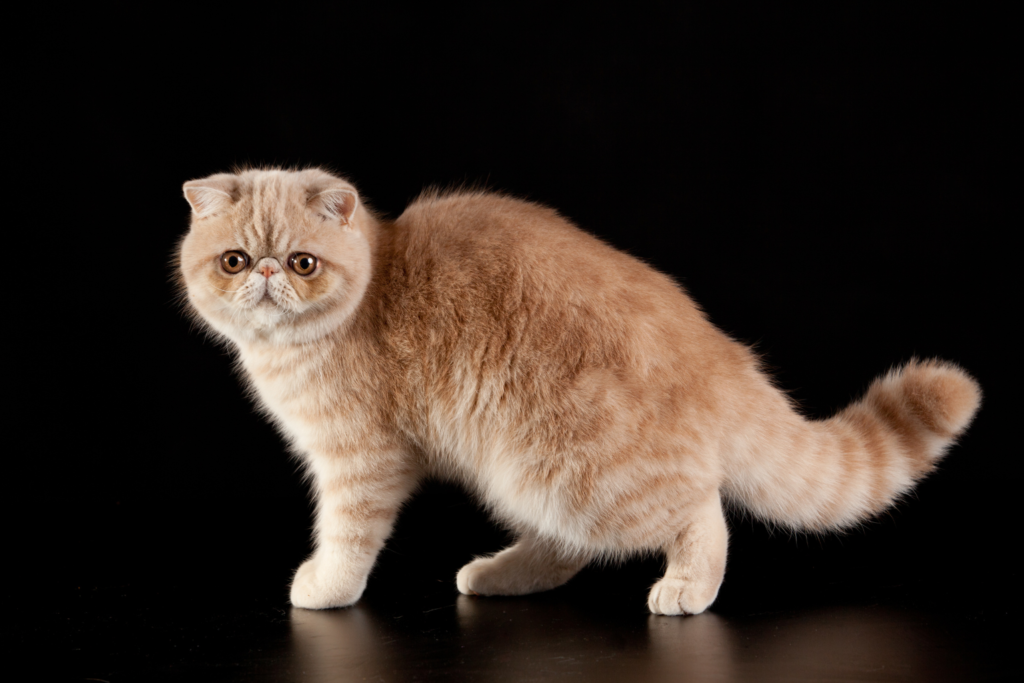
At first glance, an Exotic Shorthair can look like a Persian cat with a dramatically shorter haircut. The same round eyes, compact body, full cheeks, and short nose are present, but the long flowing coat has been replaced by dense plush fur that creates the breed’s teddy-bear appearance.
The personality is equally appealing. TICA and CFA describe Exotics as gentle, affectionate, quiet, adaptable cats that enjoy staying near their people. They may be somewhat more playful and inquisitive than Persians without reaching the constant activity level of a Bengal or Abyssinian.[1][2]
The shorter coat genuinely reduces grooming time. It does not turn the Exotic into a maintenance-free Persian. The dense undercoat still sheds, the prominent eyes may need routine attention, and the shortened face deserves careful evaluation rather than being treated as a purely decorative feature.
Health documentation matters, too. Because the breed was developed from Persian lines, responsible breeding discussions should include DNA results for polycystic kidney disease (PKD1) and Persian-derived progressive retinal atrophy (PRA-pd).[4][5]
Brachycephaly is the other central issue. Facial shape varies substantially between individuals, and not every Exotic has obstructive airway disease. Research nevertheless shows that more extreme craniofacial shortening can affect airway space, eye support, tear drainage, and tooth alignment.[6][7][8]
This guide explains the Exotic Shorthair’s history, personality, grooming, eye and dental care, feeding, activity, brachycephalic anatomy, genetic testing, lifespan, family compatibility, and breeder questions so you can decide whether this calm companion fits your home.
How we researched this Exotic Shorthair guide: This is a research-based breed guide, not a diagnosis or a guarantee of any cat’s temperament, health, size, or lifespan. We reviewed current TICA and CFA breed information, the CFA standard, university genetics resources, veterinary guidance, peer-reviewed research, feline environmental guidelines, and nutrition guidance. Modern Cat Society has not examined a breeder or hands-on tested the grooming product category mentioned. Medical decisions should be made with a veterinarian who knows the individual cat.
Quick Verdict: Is an Exotic Shorthair Right for You?
- Editorial verdict: An Exotic Shorthair can be an excellent companion for someone who wants a quiet, affectionate indoor cat and accepts weekly coat care, facial monitoring, dental care, and careful health screening. The coat is easier than a Persian’s; the shared facial and genetic considerations remain important.
- Best for: Calm or moderately active homes, apartment residents, respectful families, owners who enjoy close but usually undemanding companionship, and people willing to prioritize functional facial anatomy over an extremely flat look.
- Think twice if: You want a maintenance-free shorthaired cat, dislike shedding or eye-area cleaning, expect every individual to be a lap cat, or are unwilling to verify PKD1, PRA-pd, breathing, and family health information before choosing a breeder.
Exotic Shorthair at a Glance
| Characteristic | Exotic Shorthair profile |
|---|---|
| Official names | CFA uses Exotic; TICA uses Exotic Shorthair |
| Origin | United States; developed from Persian and shorthaired lines beginning in the 1950s |
| Size | Medium to large in CFA type; compact, muscular, and heavily boned; males tend to be larger |
| Lifespan information | TICA lists 8–11 years; this is a registry estimate, not an individual guarantee |
| Coat | Dense, plush, medium-short coat with a rich undercoat |
| Colors | The broad range of colors and patterns recognized in Persians |
| Typical personality | Gentle, affectionate, quiet, adaptable, and moderately playful |
| Activity level | Low to moderate, with daily interactive play still important |
| Grooming | Weekly combing often sufficient; more work may be needed during seasonal shedding |
| Facial care | Some individuals need routine eye-area cleaning and closer ocular monitoring |
| Major health discussions | Brachycephalic anatomy, PKD1, PRA-pd, eye and dental health |
| Best home | Indoor, calm, enriched, temperature-controlled, and attentive to subtle health changes |
Breed descriptions summarize tendencies rather than promises. Early socialization, facial anatomy, health, age, learning history, and the home environment can matter more than the pedigree label.[1][2]
Exotic or Exotic Shorthair: Which Name Is Correct?
Both names refer to the same closely related breed tradition, but registries use different terminology. CFA officially calls the breed Exotic and recognizes both longhair and shorthair Exotics. TICA uses Exotic Shorthair and places it within the Persian Breed Group.[1][2]
Historically, CFA used “Exotic Shorthair” but eventually dropped the second word. “Exotic Shorthair” remains the clearest term for general readers and searchers because it immediately distinguishes the familiar plush short coat from a Persian’s long coat.
If you are evaluating a pedigree, health report, or show record, use the terminology of the issuing registry rather than assuming a naming difference indicates a separate breed.
Exotic Shorthair History: The Short-Coated Persian Idea
The modern Exotic was developed in the United States. During the 1950s, breeders crossed Persians with American Shorthairs, initially pursuing traits such as silver color, green eyes, and Persian-like structure in shorthaired cats. The resulting kittens combined short coats with round heads, large eyes, and compact bodies.[1][2]
CFA established the cats as a separate breed in 1966. TICA granted championship recognition in 1979. Early programs also used limited shorthaired outcrosses, but later breeding moved consistently back toward Persians.[1][2]
That history explains why the modern standard is essentially Persian in structure except for coat description. It also explains why Persian-related health screening remains relevant even though coat maintenance is substantially different.
Appearance, Size, Colors, and Body Condition
Roundness defines the breed: a broad round head, large round eyes, full cheeks, small low-set ears, a short broad nose, a compact body, substantial legs, and a short proportional tail. CFA calls the body type cobby—broad, deep-chested, muscular, and low on the legs rather than long and slender.[2][3]
CFA describes the Exotic as medium to large, while TICA calls it medium-sized and notes that dense fur can make the cat look larger. Neither current profile provides a simple universal weight range, so a retailer or informal chart should not be treated as the breed standard.[1][2]
The combination of heavy bone, thick fur, and a rounded midsection can hide gradual weight gain. CFA’s standard explicitly requires good muscle tone with no evidence of obesity.[3] Ask a veterinary professional to assess body condition and muscle condition through the coat rather than judging health from silhouette alone.
Exotics occur in solids, tabbies, silver and golden, shaded and smoke, parti-color, calico and bicolor, pointed patterns, and other Persian-recognized divisions.[1][2] Color is visually interesting but should rank behind comfortable breathing, clear health documentation, temperament, and sound structure when choosing a cat.
The Plush Coat: Shedding and Grooming
The coat is shorter than a Persian’s but unusually dense. A rich undercoat makes the fur stand away from the body and produces the rounded teddy-bear effect.[2][3]
CFA says Exotics can be heavier seasonal shedders than Persians and recommends regular combing. Weekly combing is often sufficient for much of the year, while shedding periods may require more attention and, for some cats, an occasional bath to release accumulated undercoat.[2]
“Often sufficient” is not a rigid calendar. Coat density, climate, health, age, self-grooming ability, and tolerance all affect the routine. Check areas where friction occurs, including behind the front legs and around the collar area, even though mats are less common than in a longhaired Persian.
A Gentle Grooming Routine
- Let the cat investigate the comb before it touches the coat.
- Begin with a short session on an easy area such as the shoulders or back.
- Work in the direction of hair growth without dragging through resistance.
- Separate a small tangle with fingers before attempting to comb it.
- Stop before the cat becomes frustrated and reward cooperation.
- Check skin, claws, ears, eyes, and body condition during the same session.
Do not cut a tight mat with household scissors; feline skin can be pulled into the mat and injured. A painful or extensive tangle belongs with a veterinary or qualified grooming professional. Avoid human shampoo and heavily fragranced products.
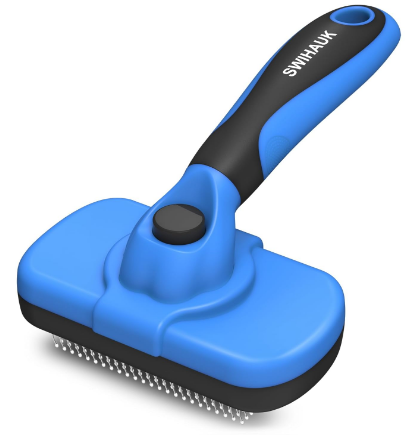
Optional Grooming Tool: Stainless-Steel Cat Comb
A basic stainless-steel comb can reach into a dense plush coat and collect loose undercoat without requiring a large grooming appliance. Look for smooth, rounded teeth, a comfortable handle, and spacing suitable for the individual coat. No comb is universally comfortable, and technique matters more than price.
Because the supplied Amazon link represents a product category rather than a model we have independently verified, compare the current size, tooth finish, seller, return terms, and listing before buying.
Exotic Shorthair Personality: Calm but Not Boring
The typical Exotic Shorthair personality resembles the Persian’s: quiet, gentle, affectionate, and easygoing. CFA describes Exotics as devoted without being intrusive, while TICA portrays cats that follow their people, sit nearby, and may climb into a lap when the household settles down.[1][2]
Shorthaired ancestry may contribute a little more curiosity and play. An Exotic may nap through much of an afternoon and then become intensely interested in a rolling paper ball, dripping faucet, or wand toy.
This balance appeals to owners who want companionship without constant high-speed activity. It should not be mistaken for emotional independence or a lack of enrichment needs.
Are Exotic Shorthairs Affectionate or Lap Cats?
Many enjoy close proximity, handling, and laps, but no breed guarantees a lap cat. One Exotic may sleep directly on you; another may follow you into every room and then choose the neighboring chair.
Let affection remain voluntary. Invite contact, support the full body when lifting is welcome, and stop before the cat struggles. A sweet breed reputation does not mean an individual should tolerate forced cuddling, dressing up, or rough handling.
Are Exotic Shorthairs Vocal?
They are generally described as quiet. CFA says meows may be rare, and TICA mentions soft voices and chirping sounds.[1][2] Individuals vary, and a sudden increase or decrease in vocalization can signal pain, stress, sensory change, cognitive decline, or illness.
Can an Exotic Shorthair Be Left Alone?
A healthy adult can spend ordinary working periods alone when food, water, litter, temperature, safety, and enrichment are covered. There is no universal number of safe hours: kittens, seniors, cats receiving medication, and those with respiratory or feeding concerns need more frequent attention.
The breed’s calm demeanor can make distress easy to overlook. Daily observation of appetite, litter output, breathing, movement, and social behavior matters even when the cat does not demand attention loudly.
Activity, Play, and Environmental Enrichment
An Exotic generally needs less intense exercise than a highly athletic breed, but low to moderate activity does not mean sedentary living is healthy. Short daily play sessions support movement, confidence, mental engagement, and weight management.
Useful options include wand toys, lightweight balls, treat searches, cardboard boxes, horizontal and vertical scratchers, a stable cat tree, and an accessible window view. Keep strings, feathers, and detachable toy parts stored after supervised play.
Feline environmental guidelines emphasize safe resting places, separated food, water, litter, scratching and sleeping resources, opportunities for predatory play, positive human interaction, and respect for the cat’s sense of smell.[10] A calm cat still needs choice and control.
Children, Dogs, and Other Cats
CFA and TICA describe many Exotics as compatible with respectful children and suitable pets.[1][2] Compatibility depends on the individuals and the introduction, not on a breed label.
Children should let the cat approach, use toys rather than hands for rough play, and respect sleep, food, litter, and hiding time. Introduce dogs behind barriers and prevent chasing. In multi-cat homes, duplicate essential resources so one animal cannot block another’s access.[10]
Apartment Living
The Exotic can thrive in an apartment with usable territory. A stable perch, window view, scratching surfaces, hiding places, quiet beds, and daily interactive play matter more than a large empty floor plan.
Secure windows and balconies, maintain a comfortable indoor temperature, and offer at least one low or easily reached resting option for kittens, seniors, or cats with reduced stamina.
Brachycephaly: Why Facial Structure Matters
The Exotic is brachycephalic, meaning the skull and muzzle are shortened. This conformation creates the round face and short nose shared with the Persian, but the degree varies substantially between cats.
The current CFA standard contains welfare-relevant language: the nose should be short and broad with open nostrils, the skull should not be unduly exaggerated, the muzzle should not be overly pronounced, and the chin should reflect a proper bite.[3] Those details show that functional anatomy is compatible with breed type.
Scientific evidence supports avoiding extremes. A 2021 CT study of 69 Persians found that increasing brachycephaly was associated with a larger portion of the eye globe outside bony support, reduced height at part of the nasal opening, and more upper premolar displacement. The study evaluated Persians rather than Exotics, so its numerical findings should not be presented as Exotic prevalence; it remains relevant because CFA describes the breeds as structurally identical apart from coat.[2][7]
A 2026 study evaluated breathing in brachycephalic cats with different clinical grades of upper-airway obstruction using non-invasive whole-body plethysmography. It documented measurable respiratory differences and reinforced that severity exists on a spectrum rather than being determined by appearance or sound alone.[6]
Not every flat-faced cat has clinically significant obstruction. The responsible conclusion is not that every Exotic is ill; it is that “the flatter, the better” is not a defensible welfare standard.
What Should Comfortable Breathing Look Like?
A healthy cat should breathe quietly and comfortably at rest, recover normally from gentle play, eat without repeated respiratory struggle, and sleep without persistent signs of distress. A soft occasional sound is not a diagnosis, but chronic snorting or noisy breathing should not automatically be normalized as “just the breed.”
Arrange veterinary evaluation for persistent respiratory noise, nasal obstruction, reduced exercise tolerance, repeated gagging, sleep disruption, or obvious effort. Open-mouth breathing, blue or gray gums, collapse, or sudden respiratory distress is an emergency.
When meeting a kitten and its parents, watch them move as well as pose. Look for visibly open nostrils, comfortable nasal breathing, normal recovery after play, and the ability to eat without prolonged struggle. A photograph cannot show respiratory function.
Keep the cat at a healthy body condition and avoid overheating. Tell the veterinary team about any snoring, respiratory effort, or exercise intolerance before sedation or anesthesia so it can plan individualized assessment and monitoring.
Eye Discharge and Daily Facial Care
Large prominent eyes contribute to the breed’s expression, while shortened facial anatomy can affect ocular exposure and tear drainage. Epiphora means tears overflowing from the eye; it is a sign, not a diagnosis. VCA lists damp fur, reddish-brown staining, odor, skin irritation, and secondary infection among possible consequences.[9]
For ordinary mild residue, use a clean, soft pad or cloth dampened with plain water or a veterinarian-recommended product. Use a fresh area for each eye, wipe gently away from the eye, and dry the skin without rubbing. Wash hands before and after care.
Do not use contact-lens solution, peroxide, essential oils, fragranced wipes, or human medicated drops unless a veterinarian specifically directs their use. Cleaning removes residue; it does not treat a blocked tear duct, corneal injury, infection, eyelid problem, or painful eye.
Prompt examination is appropriate for squinting, cloudiness, marked redness, swelling, repeated pawing, light sensitivity, thick or colored discharge, a suddenly closed eye, visible injury, or an abrupt change in tearing. Persistent dampness, odor, or inflamed skin beneath the eye also deserves evaluation.[9]
Dental Health Deserves Extra Attention
A shortened jaw may leave less room for normally aligned teeth. In a multicenter study of 50 Persian and Exotic cats, malocclusion, crowding, malpositioned teeth, periodontal disease, and tooth resorption were common findings. Because this was a specific study population, its percentages should not be treated as universal prevalence for every Exotic; the findings do support careful oral assessment.[8]
Ask a veterinarian to examine bite, tooth position, gingiva, resorptive lesions, and periodontal health. Begin home brushing gradually with toothpaste formulated for pets. Never use human toothpaste.
Bad breath, drooling, bleeding gums, dropping food, chewing on one side, pawing at the mouth, reduced appetite, or resistance to facial handling can indicate pain. A cat continuing to eat does not prove that its mouth is comfortable.
For a gradual routine, read How to Brush Your Cat’s Teeth: A Stress-Free Guide.
Feeding an Exotic Shorthair
The Exotic does not need a special luxury-breed diet. Choose food with a nutritional adequacy statement for the appropriate life stage. The FDA explains that “complete and balanced” food must meet an AAFCO nutrient profile or pass an AAFCO feeding trial for the stated life stage.[11]
Use package directions as a starting point rather than a prescription. Needs change with age, activity, neuter status, body and muscle condition, health, and calorie density. Include treats and food used for enrichment in the daily total.
Wet, dry, or combined feeding can work when the diet is nutritionally appropriate and the individual eats it comfortably. Unexplained weight change, reduced appetite, repeated vomiting, difficulty chewing, increased thirst, or persistent digestive signs warrants veterinary assessment.
Do Flat-Faced Cats Need Special Bowls or Fountains?
Not universally. Some Exotics may eat more comfortably from a broad, accessible dish, while others use a conventional bowl without difficulty. Observe posture, food pickup, mess, breathing, and willingness to eat instead of treating an expensive feeding station as mandatory medical equipment.
A fountain can provide another water option but does not treat brachycephaly or guarantee increased intake. Place water away from litter and, when possible, offer more than one station. For current options, see Best Cat Water Fountains for Indoor Cats.
Exotic Shorthair Health: Understanding PKD1
Polycystic kidney disease associated with PKD1 is an inherited condition in which multiple kidney cysts develop. UC Davis identifies Exotic Shorthairs among Persian-derived breeds appropriate for testing. Cysts are often present before 12 months of age, while kidney failure generally develops later.[4]
The tested variant is autosomal dominant:
| PKD1 result | Interpretation |
| N/N | No copies of this PKD1 variant; the cat will not develop or transmit this tested hereditary form |
| N/P | One copy; the cat is affected, although severity cannot be predicted, and is expected to transmit the variant to about half of offspring |
| P/P | Two copies; UC Davis considers this genotype suspected lethal and unlikely to survive |
A breeder saying that no cat has “ever had kidney problems” is not equivalent to documentation. Ask for identifiable PKD1 laboratory reports for both parents. A negative result for the tested variant is highly useful, but it does not guarantee that a cat will never develop any kidney disease from another cause.
For an affected or at-risk cat, monitoring should be individualized by a veterinarian. Increased thirst or urination, appetite loss, vomiting, weight loss, lethargy, or dehydration deserves evaluation, but these signs are not specific to PKD.
PRA-pd: A Different Test With Different Inheritance
Persian-derived progressive retinal atrophy, or PRA-pd, is not related to PKD1. It is an early-onset inherited retinal disease that leads to blindness. UC Davis lists the Exotic Shorthair as appropriate for the test and describes autosomal recessive inheritance.[5]
| PRA-pd result | Interpretation |
| N/N | No copies of the tested PRA-pd variant; the cat will not transmit it |
| N/PRA | One copy; the cat is expected to retain vision but is a carrier |
| PRA/PRA | Two copies; the cat is genetically affected and will lose vision |
Two carriers are expected, across many conceptions, to produce 25% affected kittens, 50% carriers, and 25% N/N kittens. Every conception is independent, so a small litter need not match those percentages.[5]
PRA-pd testing is therefore a breeder-level prevention tool. It does not replace an eye examination, and it does not rule out every other ocular condition. Ask for both parents’ reports and an explanation of how any carrier mating prevents affected kittens.
Other Preventive-Care Priorities
An Exotic still needs ordinary feline care: individualized vaccination, parasite prevention appropriate to lifestyle, identification, reproductive care, dental evaluation, claw care, nutrition review, and age-appropriate laboratory screening.
Keep a simple record of weight, appetite, water intake, breathing, activity, eye and skin changes, medications, dental findings, and genetic results. Trends can reveal developing problems before a calm cat makes them obvious.
Indoor living offers better control over traffic, predators, parasites, heat, and respiratory irritants. Safe outdoor access can include a secure catio or supervised harness time when temperature and air quality are appropriate.
How Long Do Exotic Shorthairs Live?
TICA currently lists an expected lifespan of 8–11 years.[1] Treat that as a registry estimate, not a prediction for one cat or proof that every Exotic has a short life.
Individual longevity reflects genetics, facial anatomy, breeding decisions, body condition, dental health, kidney and eye status, preventive care, indoor safety, and chance. No responsible breeder can guarantee an age.
The most useful approach is to act on what can be controlled: verify health records, select for function, keep the cat lean and active, protect dental health, attend routine veterinary visits, and investigate changes early.
How to Choose a Responsible Exotic Shorthair Breeder or Rescue
Adoption is worth considering. Breed rescues, general shelters, and retired-adult placements may offer cats whose personalities are already clearer than a kitten’s. Full genetic history may be unavailable, but current examination findings and a forward-looking veterinary plan remain valuable.
If buying from a breeder, TICA’s buyer guidance recommends verifying credibility, asking for parent and kitten records, reviewing a written contract, understanding health and return terms, avoiding pressured payment, and watching for scams.[12]
Ask for documents and observable function:
- PKD1 reports: Identifiable results for both sire and dam
- PRA-pd reports: Results for both parents and an explanation of any carrier pairing
- Breathing: History of noisy breathing, heat or exercise intolerance, airway evaluation, and surgery in parents or close relatives
- Eyes: Ocular history, chronic discharge, corneal disease, and any ophthalmic examination performed
- Dental health: Bite, missing or crowded teeth, periodontal problems, and family history
- Older relatives: Kidney disease, blindness, unexplained early death, or chronic respiratory problems
- Veterinary records: Vaccination, parasite, illness, treatment, and examination history for the kitten
- Socialization: Experience with gentle grooming, carriers, household sounds, people, and appropriate animals
- Contract and support: Health terms, return provision, placement age, current food and litter, and post-placement contact
Meet the parents when possible or request live video. Watch breathing at rest and after ordinary movement. Look for open nostrils, clear comfortable eyes, clean skin, normal movement, curiosity, and recovery after play.
Be cautious when a seller markets an extremely flat face as inherently superior, calls chronic snoring normal, promises a health guarantee without showing reports, says “DNA clear” without naming tests, refuses independent veterinary review, or pressures you to pay before reviewing a contract.[12]
Registration confirms registry status; it does not independently guarantee health or ethics. A trustworthy breeder can discuss limitations and uncertainty without becoming defensive.
Exotic Shorthair vs. Persian
The breeds are structurally very close. CFA states that the Exotic standard was developed to match the Persian except for coat description, and it recognizes both longhair and shorthair Exotics.[2]
| Feature | Exotic Shorthair | Persian |
| Coat | Dense, plush, medium-short coat with rich undercoat | Long, flowing coat with substantial daily maintenance needs |
| Routine grooming | Weekly combing often sufficient outside heavy shedding | Frequent, commonly daily, combing to prevent tangles and mats |
| Shedding | Can be heavy, especially seasonally | Sheds, but loose hair may remain caught within the long coat |
| Body and head type | Persian-like, compact, heavily boned, brachycephalic | Compact, heavily boned, brachycephalic |
| Personality | Quiet and affectionate; often described as slightly more playful | Quiet, affectionate, and generally calm |
| Facial care | Eye, airway, and dental considerations remain relevant | Similar eye, airway, and dental considerations |
| Genetic screening | PKD1 and PRA-pd documentation relevant | PKD1 and PRA-pd documentation relevant |
The Exotic is meaningfully easier in one area: coat management. It is not automatically easier in every aspect of ownership because shortening the hair does not lengthen the muzzle or remove Persian-derived genetic risks.
Is an Exotic Shorthair Good for a First-Time Owner?
It can be. The gentle personality and manageable coat are approachable for a motivated beginner. The owner must still learn weekly combing, facial observation, tooth and claw care, body-condition assessment, daily play, and respiratory warning signs.
Budget for routine and unexpected veterinary care. A first-time owner who wants the lowest-maintenance shorthaired cat may prefer an individual with less coat density and a less shortened face.
The deciding factor is not prior cat ownership. It is whether the person understands that “easier than a Persian” is a comparison, not a promise of effortless care.
Pros and Considerations of Living With an Exotic Shorthair
| Potential appeal | Important consideration |
| Often gentle, affectionate, and quiet | Individual cats express affection differently |
| Usually calmer than highly athletic breeds | Still needs daily play and environmental choice |
| Shorter coat than a Persian | Dense undercoat can shed heavily |
| Weekly combing often manageable | Eye-area and facial care may add daily work |
| Often suitable for apartments | Indoor space still needs perches, scratchers, and hiding places |
| Commonly compatible with respectful families | Introductions and supervision remain essential |
| Distinctive plush appearance | Extreme facial flattening can compromise function |
| PKD1 and PRA-pd have actionable DNA tests | Genetic testing does not replace veterinary care or functional selection |
| Can suit a first-time owner | Respiratory, eye, and dental issues may increase care costs |
| Closely resembles a Persian | Short hair does not remove Persian-related health considerations |
Frequently Asked Questions
Is an Exotic Shorthair the same as a Persian?
No, but the breeds are closely related. CFA describes their structural standards as essentially identical except for coat, while the Exotic generally has a much shorter, plush coat.[2]
Why is the breed sometimes called just “Exotic”?
CFA’s official name is Exotic, while TICA uses Exotic Shorthair.[1][2] Both names are widely understood; registry documents follow the terminology of the organization that issued them.
How big do Exotic Shorthair cats get?
They are compact, heavily boned, muscular cats. CFA calls the breed medium to large, while TICA describes it as medium-sized and notes that males are larger.[1][2] Current official profiles do not provide a simple universal weight range.
How long do Exotic Shorthairs live?
TICA lists 8–11 years.[1] This is a broad breed estimate, not an individual prediction. Genetics, facial anatomy, body condition, preventive care, environment, and chance all influence lifespan.
Are Exotic Shorthairs affectionate and good lap cats?
Many are affectionate and people-oriented, and some enjoy laps.[1][2] Others prefer resting beside a person. No breed can guarantee how one cat will express closeness.
Are Exotic Shorthairs quiet?
Usually. CFA describes meows as uncommon, and TICA mentions a soft voice and chirping sounds.[1][2] A sudden vocal change with other symptoms deserves attention.
How often should you groom an Exotic Shorthair?
CFA says weekly combing is sufficient for much of the year, with extra grooming and possibly a bath during heavy seasonal shedding.[2] Adjust the routine to coat condition, health, and veterinary or professional grooming advice.
Do Exotic Shorthairs shed?
Yes. Their shorter coat is easier to manage than a Persian’s, but CFA notes that seasonal shedding can be substantial.[2] Short hair does not mean a low-shedding home.
Do all Exotic Shorthairs have breathing problems?
No. Facial anatomy and clinical severity vary. However, research shows that more extreme brachycephaly can affect airway function, and chronic noisy breathing or exercise intolerance should not automatically be normalized.[6][7]
Why do Exotic Shorthairs get watery eyes?
Prominent eyes and altered tear drainage can contribute, but epiphora is a symptom with several possible causes.[7][9] Persistent or painful discharge, redness, squinting, cloudiness, or skin irritation needs veterinary evaluation.
What genetic tests should an Exotic Shorthair breeder provide?
Ask for both parents’ identifiable PKD1 and PRA-pd results.[4][5] Also evaluate breathing, eyes, bite, dental history, older relatives, and veterinary records because DNA tests do not assess every relevant condition.
Is an Exotic Shorthair easier to care for than a Persian?
Coat care is usually much easier, with weekly combing often sufficient outside shedding periods.[2] The Exotic still shares brachycephalic, eye, dental, PKD1, and PRA-pd considerations, so it is not a no-maintenance Persian.
Final Verdict: Is the Exotic Shorthair Right for You?
The Exotic Shorthair offers a compelling balance: Persian-like appearance and calm companionship with a coat that most owners can manage without daily detangling. For the right home, this is a gentle, quietly amusing cat that enjoys being nearby without always demanding center stage.
The teddy-bear appearance should not end the evaluation. Look beyond color and facial flatness. Comfortable breathing, open nostrils, healthy eyes, a functional bite, documented PKD1 and PRA-pd results, family history, and responsible socialization matter more than an exaggerated photograph.
Choose an Exotic if you want a calm indoor companion and are comfortable with weekly combing, seasonal shedding, facial observation, dental care, daily play, and potentially higher veterinary costs. Choose another individual or breed if you mainly want an effortless shorthaired cat or are drawn to the flattest possible face regardless of function.
A stainless-steel comb can help manage the coat, and a broad dish may help an individual eat comfortably. Neither product changes the fundamentals: attentive daily observation, ethical acquisition, preventive veterinary care, and respect for the cat’s choices.
The best Exotic is not the one whose face most resembles a toy. It is the cat able to breathe, see, eat, move, play, and rest comfortably while sharing the quiet affection that makes the breed so appealing.
Sources and References
- The International Cat Association — Exotic Shorthair. Official breed name, Persian Breed Group, history, size, lifespan listing, colors, personality, activity, and grooming. View source
- Cat Fanciers’ Association — Exotic. Official naming, breed history, personality, appearance, Persian relationship, coat care, shedding, and current standard text. View source
- Cat Fanciers’ Association — Exotic Breed Presentation. CFA conformation guidance, including open nostrils, balance, body condition, skull shape, and coat characteristics. View source
- UC Davis Veterinary Genetics Laboratory — Polycystic Kidney Disease (PKD1). Persian-derived breed relevance, clinical course, autosomal-dominant inheritance, and genotype interpretation. View source
- UC Davis Veterinary Genetics Laboratory — Progressive Retinal Atrophy (PRA-pd). Exotic Shorthair testing relevance, early retinal disease, autosomal-recessive inheritance, and genotype interpretation. View source
- Chen CR, et al. — Characterization of Brachycephalic Obstructive Airway Syndrome in Cats Using Barometric Whole-Body Plethysmography. 2026 evaluation of objective breathing measures and clinical obstruction grades in brachycephalic cats. View source
- Sieslack J, et al. — Correlation of Brachycephaly Grade With Exophthalmos, Reduced Airway Passages, and Dental Malalignment in Persian Cats. CT-based study of conformation severity and craniofacial effects. View source
- Mestrinho LA, et al. — Oral and Dental Anomalies in Purebred, Brachycephalic Persian and Exotic Cats. Multicenter findings on malocclusion, tooth position, periodontal disease, and tooth resorption. View source
- VCA Animal Hospitals — Eye Discharge (Epiphora) in Cats. Definition, signs, potential causes, facial consequences, diagnosis, and treatment principles. View source
- Ellis SLH, et al. — AAFP and ISFM Feline Environmental Needs Guidelines. Safe places, separated resources, play, positive interaction, and sensory considerations. View source
- U.S. Food and Drug Administration — “Complete and Balanced” Pet Food. Nutritional adequacy statements, AAFCO profiles, feeding trials, and life-stage labeling. View source
- The International Cat Association — Pet Buyer’s Guide. Breeder verification, health records, contracts, payment caution, and scam warning signs. View source
Sources and guidance reviewed August 29, 2026. Breed information, testing recommendations, retailer listings, and veterinary guidance may change. Verify critical details with the relevant registry, laboratory, breeder, manufacturer, or veterinarian.