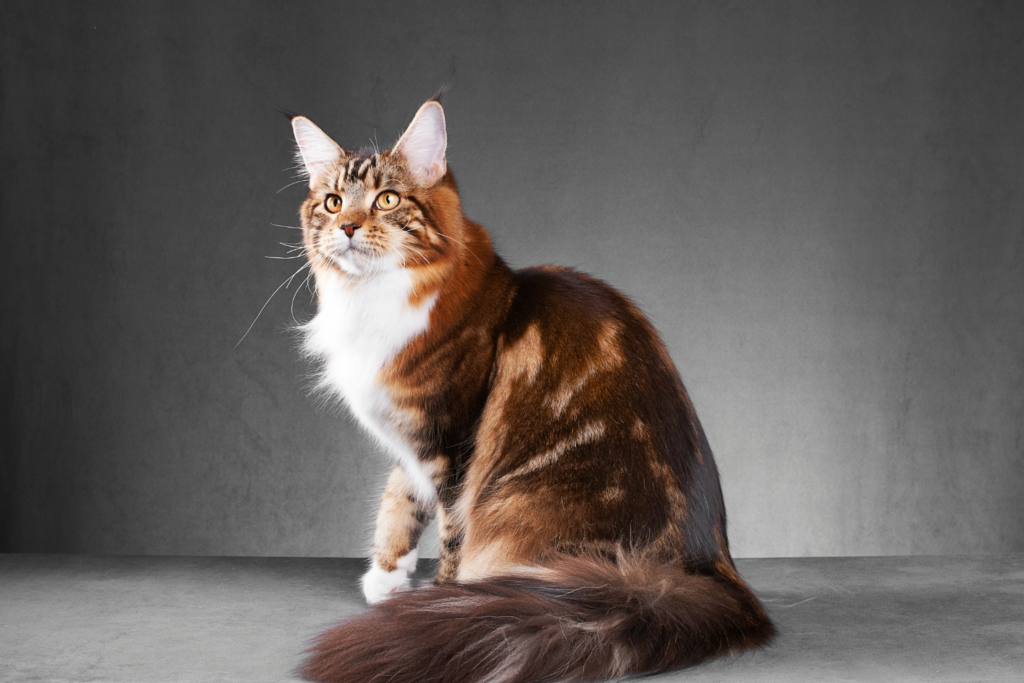
Abyssinian Cat: Complete Guide to Personality, Care, Health, Lifespan, and Ownership
By Demosthenes Staudinger | Updated August 27, 2026
Affiliate disclosure: This article contains affiliate links. As an Amazon Associate I earn from qualifying purchases. If you buy through one of these links, we may earn a commission at no additional cost to you. This does not affect our editorial recommendations.
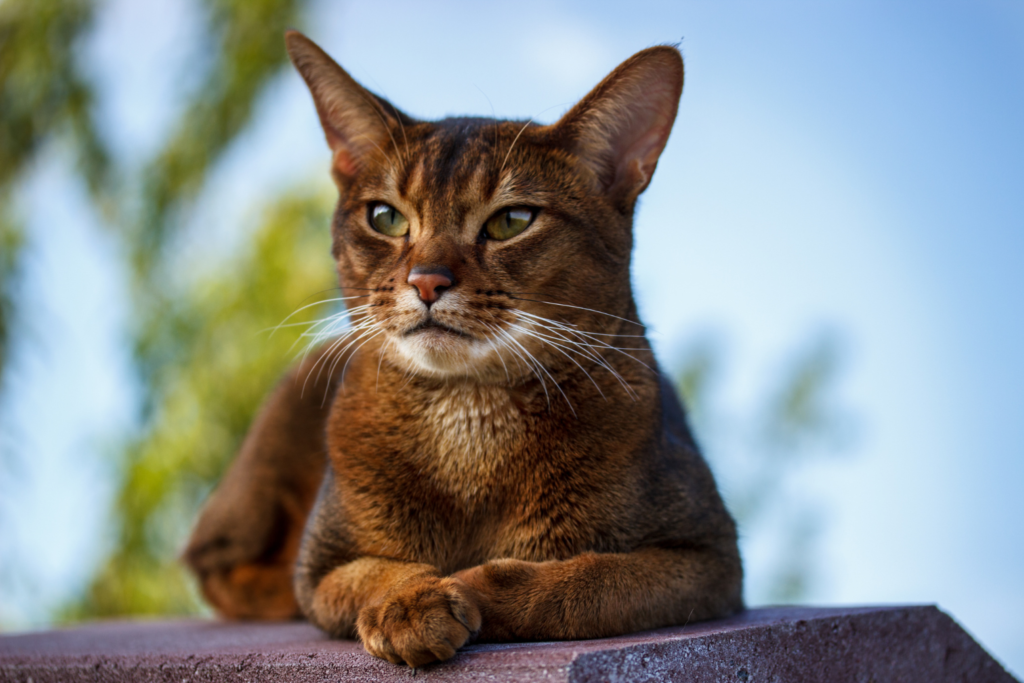
An Abyssinian cat can make an ordinary room feel like a three-dimensional playground. One moment, your cat is beside you at the desk. The next, an alert face is looking down from the top of a bookcase, waiting to see what you will do next.
Known affectionately as the Aby, this medium-sized breed combines a warm ticked coat, a lithe muscular body, large ears, expressive almond-shaped eyes, and an unusually active approach to household life. TICA and CFA both describe Abyssinians as athletic, curious, affectionate, and strongly interested in their surroundings.[1][2]
That intelligence and energy are central to the breed’s appeal, but they are also the main ownership challenge. Most need safe vertical territory, interactive play, problem-solving opportunities, predictable care, and regular social contact.
The breed is relatively easy to groom, fits comfortably into many apartments, and can live well with respectful children or compatible pets. Yet an Aby is not automatically right for every home. People seeking a consistently quiet, sedentary lap cat may find the breed’s curiosity and need for engagement demanding.
Health screening also matters. Pyruvate kinase deficiency and two forms of progressive retinal atrophy have available DNA tests, while renal amyloidosis remains a more difficult familial concern without a simple screening test that can guarantee a kitten will be unaffected.[1][3][4][5]
This guide explains Abyssinian personality, size, colors, activity, grooming, nutrition, health, lifespan, breeder questions, and everyday ownership so you can decide whether this elegant feline athlete belongs in your home.
How we researched this Abyssinian cat guide: This is a research-based breed guide, not a guarantee of any individual cat’s temperament, health, size, or lifespan. We reviewed current information from TICA and CFA, university veterinary genetics resources, feline veterinary guidance, and current manufacturer pages for the optional products mentioned. Modern Cat Society has not evaluated a breeder or performed hands-on tests of those products. Manufacturer specifications are identified as such.
Quick Verdict: Is an Abyssinian Cat Right for You?
- Editorial verdict: The Abyssinian can be an exceptional companion for a household that wants an intelligent, athletic, people-oriented cat and is prepared to provide daily interaction and meaningful environmental enrichment.
- Best for: Engaged owners, active families with respectful children, apartment dwellers who can build upward, and people who enjoy play, training, and an involved feline companion.
- Skip it if: You want a reliably sedentary lap cat, regularly leave a single cat without interaction for long stretches, cannot provide secure climbing opportunities, or prefer a pet that rarely investigates household activity.
Abyssinian Cat at a Glance
| Characteristic | Abyssinian cat profile |
|---|---|
| Size | Medium, lithe, and muscular |
| Adult female weight | TICA lists approximately 6–9 lb (2.7–4.1 kg) |
| Adult male weight | TICA lists approximately 7–12 lb (3.2–5.4 kg) |
| Listed life expectancy | Approximately 14–17+ years according to TICA; no individual lifespan is guaranteed |
| Coat | Short, close, resilient, and distinctly ticked |
| Common CFA colors | Ruddy, cinnamon, blue, and fawn |
| Activity level | Very high |
| Typical personality | Curious, affectionate, interactive, agile, and problem-oriented |
| Lap-cat tendency | Often affectionate but usually not stationary for long |
| Vocalization | CFA describes the breed as not particularly talkative; individuals vary |
| Grooming | Low coat-maintenance, plus routine nails and dental care |
| Best home | An enriched home with vertical space and regular companionship |
| Important health discussions | PK deficiency, PRA, patellar luxation, and renal amyloidosis |
These are breed-level tendencies, not specifications for every Abyssinian. Sex, genetics, early socialization, health, age, and individual personality can all produce a cat who falls outside the usual description.[1][2]
Abyssinian Origins: Ancient Appearance, Uncertain Ancestry
The Abyssinian looks as though it belongs in an ancient mural. Its large ears, almond-shaped eyes, elegant outline, and warm coat have inspired a persistent story that the breed descends directly from the cats of ancient Egypt.
The visual resemblance is real. The direct historical link is not established.
TICA notes that romantic accounts connect the breed either to ancient Egypt or to a cat named Zula reportedly brought to Britain from Abyssinia, now Ethiopia, after the 1868 Abyssinian War. However, no documentation connects Zula to today’s pedigrees. TICA points instead to genetic evidence suggesting potential forebears around the Bay of Bengal, while CFA describes ancestry in coastal Indian Ocean and Southeast Asian regions.[1][2]
The modern breed’s development in Britain is better documented. An Abyssinian appeared at London’s Crystal Palace cat show in 1871; the breed reached the United States in the early 1900s and became one of CFA’s original registered breeds in 1906.[1][2]
Abyssinian Appearance and Size
An Abyssinian is not built like a heavy, broad-chested cat. The breed standard favors a medium, balanced cat that is muscular without looking bulky. The arched neck, long legs, compact oval feet, and slightly elevated stance can create the impression that an Aby is ready to move even while standing still.[1][2]
TICA currently lists adult females at about 6–9 pounds and adult males at about 7–12 pounds. Those ranges are useful orientation, not a target weight for every cat. A healthy weight depends on the individual cat’s frame, muscle, age, and body condition rather than breed averages alone.[1]
The head has a softly rounded wedge shape rather than an extreme point. Large, forward-alert ears and almond-shaped eyes contribute to the breed’s constantly attentive expression. Eye colors may include gold, amber, or green, and darker facial markings can create a subtle eyeliner effect.[1]
The Ticked Coat
The coat is the breed’s defining visual feature. In an agouti ticked coat, individual hair shafts contain alternating bands of lighter and darker pigment. Instead of the obvious body striping seen in many tabbies, those bands create a warm, luminous effect across most of the Abyssinian’s body.[1][2]
The coat is short, close-lying, and resilient. It should emphasize the athletic outline rather than obscure it. The tail, facial markings, and some areas of the legs can show stronger contrast, but the overall impression is a finely textured field of color rather than bold conventional stripes.
Abyssinian Colors
CFA recognizes four colors on its public breed profile: ruddy, cinnamon, blue, and fawn. TICA uses broader traditional and silver divisions and lists additional color expressions, including chocolate, lilac, and silver versions.[1][2]
That difference does not mean one registry is necessarily wrong. Registries can use different standards and recognized color lists. If color affects your purchase or show plans, check the current rules of the specific registry instead of relying on a generic online list.
Abyssinian Cat Personality: Curious, Affectionate, and Involved
The simplest accurate description of an Abyssinian personality is actively engaged.
CFA calls the breed busy, active, agenda-driven, and affectionate. TICA emphasizes extreme activity, curiosity, loyalty, and people orientation.[1][2] In daily life, this can look like a cat who follows household movement, examines new objects, watches food preparation, joins work sessions, and treats open drawers as invitations to investigate.
This curiosity should not be confused with defiance. Cats repeat behavior that is rewarding, stimulating, or instinctive. An Aby who climbs a shelf is not trying to challenge the owner; the shelf provides height, information, and novelty. Successful ownership depends more on arranging appropriate choices than on repeatedly punishing normal feline behavior.
Are Abyssinians Lap Cats?
Some are, at least for short visits. The breed is generally affectionate, but many Abyssinians prefer interactive proximity over remaining still on a lap for an entire evening.
Your Aby may follow you from room to room, sit beside the keyboard, sleep near you, request play with a paw, perch on a shoulder, or settle briefly before moving to the next point of interest. CFA specifically notes that high activity makes the average Aby less likely to be a long-term lap snuggler, not less loving.[2]
If physical affection is your priority, meet the individual adult cat whenever possible. A breed label cannot promise cuddliness, and kitten behavior does not perfectly predict adult temperament.
Are Abyssinians Vocal?
CFA describes Abyssinians as not particularly talkative, but individual communication styles vary.[2] Many communicate through movement, eye contact, proximity, and persistent involvement rather than the sustained vocalization associated with some other breeds.
Sudden new vocalization is different from a naturally communicative personality. If a cat becomes unusually loud, restless, disoriented, hungry, or distressed, discuss the change with a veterinarian rather than assuming it is merely a breed trait.
Are Abyssinians Intelligent?
Breed organizations consistently describe the Abyssinian as highly intelligent and adept at problem solving.[1][2] Owners may see this in rapid learning, door or cabinet investigation, puzzle-solving, fetch-like games, clicker training, and an ability to recognize routines.
Intelligence does not require expensive electronics. Cardboard boxes, short training sessions, hidden kibble, rotated toys, safe shelves, and interactive wand play can all provide mental work.
Activity Level and Environmental Enrichment
This is the part of Abyssinian ownership that deserves the most honest consideration.
TICA describes the breed’s activity level as extremely high and notes its preference for the highest available ground.[1] The Feline Veterinary Medical Association also identifies vertical space, safe resting areas, play, simulated hunting and foraging, and clean essential resources as important for indoor feline welfare generally.[6]
For an Abyssinian, those resources should not be treated as decorative extras. A flat room with nowhere appropriate to climb leaves the cat to invent alternatives on refrigerators, curtain rods, cabinets, and shelving.
Build a Safe Vertical Route
A useful vertical environment can include:
- A stable cat tree with a broad base
- Window perches with secure mounting
- Wall shelves fixed into appropriate structural supports
- A tall scratching surface that allows a full-body stretch
- Resting platforms at more than one height
- A route down that does not require a dangerous leap
- More than one escape option in a multi-pet home
Place tall structures away from an unsecured window, hot stove, fragile display, or unstable furniture. Follow the product’s mounting directions and recheck fasteners as the structure ages. Athletic cats create dynamic loads when they launch and land; a weight limit alone does not guarantee stability on every floor.
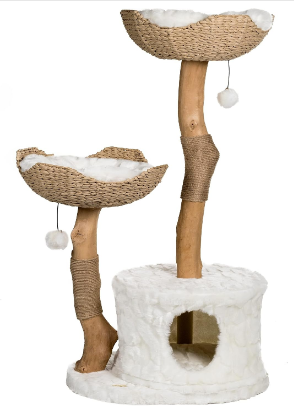
Optional Product: Mau Cento Modern Cat Tree
The Mau Cento is one premium, furniture-inspired option for owners who want vertical territory without a carpet-covered tower. Mau lists a 23-inch base, a height of 45.5 inches, suitability for cats up to 23 pounds, washable removable basket cushions, replaceable wear parts, a 45-day trial for qualifying direct purchases, and a one-year limited warranty. Those are manufacturer specifications, not findings from a Modern Cat Society hands-on test.[10]
It is more structure than a typical Abyssinian needs for weight capacity, and it will not suit every budget or room. A less expensive, securely anchored cat tree can meet the same behavioral need. Measure the footprint, assess the landing area, and confirm the current retailer’s return terms before buying.
Use Interactive Play, Not Constant Stimulation
Aim for repeatable play opportunities that imitate parts of a hunting sequence: watching, stalking, chasing, pouncing, and catching. A wand toy can be more engaging than a motorized object because the owner can vary speed, direction, hiding places, and pauses in response to the cat.
Let the cat catch the toy periodically. Put string, feathers, and detachable pieces away after supervised play. Laser pointers should never be aimed at eyes, and a session is more satisfying when it ends with a tangible toy or small food reward the cat can capture.
You do not need to entertain an Aby every waking minute. Offer appropriate independent choices plus dependable social play, and rotate toys to restore novelty.
Add Foraging and Puzzle Feeding Gradually
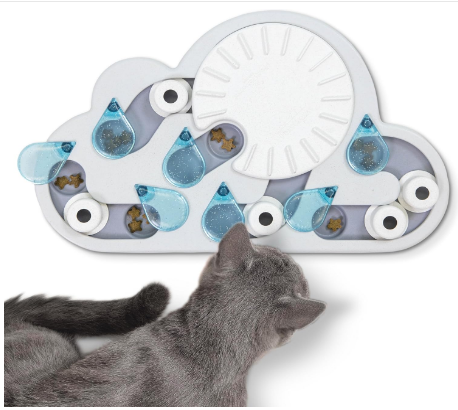
Food puzzles can turn part of a meal into a problem-solving activity, but difficulty should start low. A cat who cannot access food may walk away rather than become motivated. Demonstrate easy movements, leave compartments open at first, and continue providing enough accessible food while the cat learns.
The Nina Ottosson Rainy Day Puzzle & Play has 14 food compartments and adjustable challenge elements. The manufacturer states that it holds up to 1/4 cup of food and contains no removable play pieces.[11] It is best suited to dry food or compatible treats and should be cleaned regularly. Count food used in the puzzle as part of the cat’s daily intake rather than as unlimited bonus calories.
Can an Abyssinian Cat Be Left Alone?
An adult Abyssinian can spend ordinary periods alone, but this breed is generally a poor fit for a home where social contact and enrichment are consistently scarce. CFA says Abys do not like being left alone for long, while TICA describes them as happiest in company and strongly interested in their people.[1][2]
There is no universal hourly limit. A cat’s age, health, personality, feeding needs, home setup, and experience with solitude all matter. Kittens require more frequent supervision and care than healthy adults; a cat with a medical condition may also need a schedule designed with a veterinarian.
For a normal workday, provide elevated resting places, a secured window view, water, a clean litter box, scratching surfaces, and safe independent activities. Add focused interaction before leaving and after returning.
A second cat can be excellent company if the individuals are compatible, but it is not an automatic solution. Some highly social Abyssinians enjoy feline companionship; others dislike sharing space or attention. Multi-cat homes need separated food, water, litter, resting, scratching, and hiding resources so one cat cannot control access to everything.[6]
Living With Children, Dogs, and Other Cats
TICA and CFA describe well-socialized Abyssinians as potentially good companions for children and other pets.[1][2] Their energy can make interactive toy play especially appealing in a family, but compatibility depends on the individuals and the quality of introductions.
Children should learn to let the cat approach, use toys rather than hands for rough play, avoid chasing, and leave the cat alone while eating, sleeping, or using the litter box. Every cat needs an elevated or private place where interaction is optional.
Introduce dogs behind barriers and at a pace that keeps both animals below their stress threshold. A dog with intense predatory behavior may not be a safe match, regardless of the cat’s breed confidence. Cat-to-cat introductions should also be gradual; shared ancestry or matching energy levels does not guarantee friendship.
Can an Abyssinian Live in an Apartment?
Yes. An apartment can be an excellent Abyssinian home when it is designed around usable territory rather than square footage alone.
Vertical shelves, a stable tree, a secure window perch, scratching areas, daily play, and food puzzles can expand the cat’s functional environment without crowding the floor. The larger challenge is usually not apartment size but an empty, repetitive routine.
Secure window screens and balconies carefully. Ordinary insect screens are not designed to contain a determined cat. Check building rules before drilling into walls, and choose freestanding structures if permanent installation is not allowed.
Noise also deserves thought. The Abyssinian is not typically described as an extremely vocal breed, but running, jumping, and moving toys can affect downstairs neighbors. Rugs, padded landing areas, and play scheduled away from quiet hours can help.
Feeding an Abyssinian Cat
An athletic reputation does not justify unlimited food. Calorie needs differ with age, body condition, muscle, activity, neuter status, health, and the energy density of the diet.
Choose food with a nutritional adequacy statement showing that it is complete and balanced for the cat’s appropriate life stage. The FDA explains that this wording means the food is intended to provide the required nutrients as a sole diet by meeting an AAFCO nutrient profile or passing an AAFCO feeding trial.[7]
Use the package feeding guide as a starting point, not an unchangeable prescription. Monitor the cat’s weight and body condition and adjust with veterinary guidance. Treats, puzzle food, training rewards, and stolen bites all count toward daily intake.
Wet, dry, or a combination can work depending on the individual cat and veterinary advice. A prescription diet should not be replaced simply because another product appears more convenient. Sudden appetite loss, unexplained weight change, repeated vomiting, or difficulty eating warrants veterinary attention.
Optional Product: PETLIBRO Granary Wi-Fi Feeder
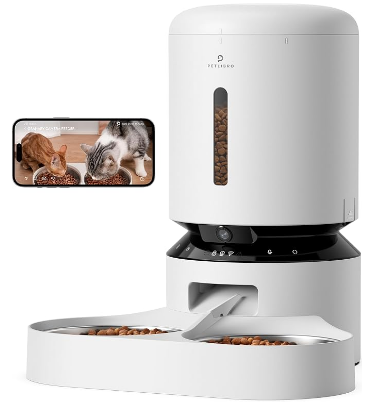
An automatic feeder is not necessary because a cat is an Abyssinian, but it can help divide dry food into scheduled meals. PETLIBRO lists the original Granary Wi-Fi Feeder, model PLAF103, as a 5-liter, dry-food-only device with 2.4 GHz and 5 GHz Wi-Fi and three D-cell batteries for emergency backup. Scheduled dispensing continues on battery power, but app functions are disabled.[12]
PETLIBRO’s feature and specification sections list up to 10 daily meals, while an FAQ on the same page still mentions six. Confirm the current Amazon model and scheduling limit before purchase; this recommendation does not refer to the newer Granary 2 series.[12]
The feeder dispenses by volume, so the actual calories and grams in a portion vary with kibble density and shape. Verify output with a kitchen scale before relying on a schedule, clean food-contact parts as directed, and have a human check the cat and feeder during travel. A machine cannot confirm that food was swallowed or replace observation of appetite and health.
Grooming and Routine Care
Coat care is one of the easier parts of Abyssinian ownership. CFA recommends combing or brushing a few times per month to control loose hair, while TICA characterizes the short coat as low maintenance.[1][2]
A gentle grooming session also gives you an opportunity to notice skin changes, parasites, lumps, pain, or a change in coat quality. Avoid assuming that low-maintenance means no maintenance. Shedding still occurs, and illness can alter normal grooming behavior.
Trim nails according to the individual’s growth and scratching habits. Introduce paw handling gradually, reward calm behavior, and clip only the translucent tip if you can clearly identify the quick. A groomer or veterinary professional can demonstrate the process.
Dental care matters for every breed. The AVMA identifies regular toothbrushing as the most effective home step, with daily brushing ideal and several times weekly still helpful.[8] Use toothpaste made for pets, not human toothpaste, and introduce the brush in brief, rewarded stages. Professional dental evaluation remains necessary even when home care is excellent.
For a practical introduction plan, read How to Brush Your Cat’s Teeth: A Stress-Free Guide.
Check ears visually during grooming, but do not pour products into healthy ears or insert cotton swabs into the canal without veterinary direction. Persistent odor, discharge, head shaking, redness, or pain needs professional assessment.
Abyssinian Cat Health Issues
Abyssinians can live long, healthy lives, but “generally healthy” should never be interpreted as “free of inherited risk.” The most useful approach is to understand which conditions have meaningful tests, which do not, and what documentation to request before obtaining a kitten.
Pyruvate Kinase Deficiency
Pyruvate kinase deficiency, often shortened to PK deficiency or PK-def, is an inherited disorder that can cause intermittent hemolytic anemia. UC Davis lists possible signs including lethargy, weakness, weight loss, jaundice, and abdominal enlargement, with variable age of onset and severity.[3]
The tested variant is inherited as an autosomal recessive trait. A cat with one copy is a clinically unaffected carrier; a cat with two copies is expected to be affected, although severity cannot be predicted from the result alone.[3]
Carrier status should be interpreted correctly. A carrier is not automatically an unhealthy pet, and responsible breeding decisions can use carrier animals without producing affected kittens when paired and tested appropriately. What matters to a buyer is documented results for the breeding pair and a mating that cannot produce affected offspring.
Progressive Retinal Atrophy
Progressive retinal atrophy (PRA) is a group of inherited retinal disorders that can lead to blindness. In Abyssinians, two named variants require separate attention.
The rdAc form, associated with the CEP290 gene, is autosomal recessive. UC Davis states that affected kittens have normal vision at birth, retinal degeneration can first be detected at about seven months, and most affected cats become blind around 3–5 years, although progression varies.[4]
The Rdy form, associated with the CRX gene, is different. It is a rare autosomal dominant condition in which one copy can cause disease, with blindness developing by about seven weeks in affected kittens.[4]
Ask which PRA variants were tested, request the actual reports for both parents, and make sure the breeder can explain the result rather than saying only “PRA clear.” A DNA panel also detects only the variants it includes; it is not a guarantee against every possible eye disorder.
Renal Amyloidosis
Renal amyloidosis occurs when abnormal amyloid deposits progressively displace functioning kidney tissue. Cornell lists signs that can overlap with other serious kidney disease, including increased drinking and urination, reduced appetite, weight loss, vomiting, and swelling caused by protein loss.[5]
TICA identifies renal amyloidosis as a concern in the Abyssinian and notes the absence of a simple DNA test for the breed.[1] This means a certificate for PK deficiency and PRA does not address amyloidosis risk.
Ask about kidney disease and unexplained early deaths in the breeder’s lines, but understand the limitation: family history can inform risk, not eliminate it. Routine veterinary care, weight monitoring, and prompt evaluation of thirst, urination, appetite, or weight changes remain important throughout life.
Patellar Luxation
Patellar luxation occurs when the kneecap slips out of its normal position. TICA includes it among conditions for which Abyssinians may have increased risk.[1]
An intermittent skip, unusual hind-leg movement, reluctance to jump, persistent limp, or pain should be evaluated by a veterinarian. Not every movement change is patellar luxation, and treatment depends on the individual diagnosis and severity.
What Health Tests Should an Abyssinian Breeder Provide?
At minimum, discuss documented testing relevant to:
- PK deficiency
- PRA rdAc / CEP290
- PRA Rdy / CRX
Also ask about renal amyloidosis in the pedigree, veterinary examinations, vaccination and parasite-care records, and any orthopedic problems in close relatives. Testing the parents reduces specific inherited risks; it does not guarantee lifelong health or replace routine preventive care.[1][3][4]
Abyssinian Cat Lifespan
TICA currently lists an Abyssinian life expectancy of approximately 14–17+ years and notes that some live longer.[1] Treat this as a registry-provided breed range, not a prediction for an individual cat.
Longevity is influenced by genetics, accidents, nutrition, body condition, dental health, preventive veterinary care, infectious disease exposure, and the timing of diagnosis and treatment. A pedigree cannot guarantee a number of years, and a mixed-breed cat is not automatically healthier or less healthy than a pedigreed one.
The most useful longevity strategy is ordinary, consistent care: maintain an appropriate body condition, schedule veterinary visits based on age and health, keep vaccinations and parasite prevention individualized to risk, notice behavioral changes early, and create a safe environment that still meets the cat’s need for activity.
Indoor Life, Catios, Harnesses, and Outdoor Safety
Keeping a cat indoors reduces exposure to hazards such as traffic, fights, predators, toxins, infectious disease, and becoming lost. Indoor safety alone, however, does not create good welfare. FelineVMA emphasizes that indoor cats still need safe territory, vertical space, play, foraging, resting places, and appropriate toileting resources.[6]
For an adventurous Abyssinian, a secure catio or positively introduced harness can add novelty while reducing the risks of unrestricted roaming. Do not force a frightened cat into outdoor exposure; some individuals prefer enrichment entirely inside.
Microchipping provides permanent identification but not live location. A cat GPS tracker can be an additional recovery tool, not a substitute for secure containment or a microchip. If a collar is used, choose a cat-appropriate breakaway design and check its fit and release function regularly.
Read the Modern Cat Society guide to the best GPS trackers for cats before deciding whether tracking technology fits your cat’s routine.
Is an Abyssinian Good for a First-Time Cat Owner?
It can be, provided the first-time owner understands that easy coat care does not equal a low-engagement personality.
An Abyssinian may suit a beginner who enjoys learning feline body language, schedules interactive play, protects vertical routes, maintains veterinary and dental care, and wants a cat involved in daily life. Their short coat and often people-oriented nature can make handling and routine care approachable when introduced positively.
The breed may frustrate someone who expects a cat to entertain itself indefinitely, dislikes climbing, or wants affection to mean long lap sessions. Experience matters less than realistic expectations and willingness to adapt the home.
How to Choose an Abyssinian Breeder or Rescue
Do not choose a breeder based on coat color, a polished website, or the phrase “health tested” alone. Ask for specific documentation and enough time to understand it.
A careful breeder conversation should cover:
- Registered names and pedigrees of both parents
- Original laboratory reports for PK deficiency and both relevant PRA variants
- How carrier results were used in the mating
- Renal amyloidosis and early kidney disease in related cats
- Veterinary examination and health records for the kitten
- Socialization, household exposure, and age at placement
- The written sales contract and return or rehoming expectations
- What support is available after the kitten goes home
Observe the environment in person or by a live video visit when feasible. Kittens and adults should appear appropriately housed and socialized, and the seller should be willing to answer detailed questions. Be cautious of pressure to pay immediately, vague test claims, multiple always-available litters, refusal to show records, or a seller who has no plan to take back a cat if the home fails.
Rescue is also a valid route. Breed-specific rescues and general shelters occasionally place Abyssinians or Aby-like cats. A cat with a ticked coat is not necessarily a pedigreed Abyssinian, but an adult rescue may offer the advantage of a more observable personality. Choose for compatibility rather than the label alone.
Pros and Cons of Living With an Abyssinian
| Potential advantages | Potential challenges |
| Highly interactive and interested in household life | Very high activity can overwhelm someone seeking a calm companion |
| Athletic and well suited to vertical enrichment | Needs secure climbing routes and may claim unsuitable high places |
| Affectionate without necessarily being constantly demanding | Often not a long-duration lap cat |
| Short coat requires relatively little brushing | Low coat care does not reduce dental, nail, or veterinary needs |
| Intelligent and responsive to training and puzzles | Bored individuals may invent inconvenient activities |
| Medium size works in many apartments | Small homes still require enrichment and usable vertical territory |
| Can do well with respectful children and compatible pets | Compatibility is individual and introductions require time |
| Often not described as extremely vocal | Activity and jumping can still create household noise |
| DNA tests exist for PK deficiency and two PRA variants | Renal amyloidosis risk cannot be eliminated by a simple current DNA certificate |
| Long TICA-listed lifespan range | No breeder or registry can guarantee lifespan or health |
Frequently Asked Questions
Are Abyssinian cats affectionate?
Generally, yes. TICA and CFA describe the breed as affectionate, loyal, and people-oriented.[1][2] Many Abys show affection by following, participating, sleeping nearby, asking for play, or making brief lap visits. The amount and form of affection vary by individual.
How big do Abyssinian cats get?
TICA lists adult females at approximately 6–9 pounds and adult males at 7–12 pounds.[1] Some healthy individuals fall outside those ranges. Evaluate body condition and growth with a veterinarian rather than trying to make a cat match a breed average.
How long do Abyssinian cats live?
TICA lists approximately 14–17+ years and notes that some individuals live longer.[1] Genetics, environment, preventive care, nutrition, body condition, and accidents all affect actual lifespan, so the range is not a promise.
Do Abyssinian cats shed?
Yes. They have a short coat and relatively modest grooming requirements, but they still release hair. CFA recommends brushing or combing a few times per month to help control loose hair.[2] Shedding can change with season, health, nutrition, and the individual cat.
Are Abyssinian cats hypoallergenic?
No. The American Academy of Allergy, Asthma & Immunology states that there are no truly hypoallergenic cat breeds; allergens come from sources such as dander, saliva, and urine rather than simply coat length.[9] Anyone with allergies should consult a healthcare professional and spend time around cats before committing.
Are Abyssinians good lap cats?
They can be affectionate lap visitors, but many do not stay still for long. CFA specifically connects the breed’s shorter lap sessions with its high activity level.[2] If lap time is essential, prioritize the demonstrated temperament of an adult cat over a breed generalization.
Are Abyssinians good with children?
They can be. Their playfulness may suit respectful children who use toys appropriately and allow the cat to retreat.[1][2] Supervision, gentle handling, and a private elevated safe area are more important than the breed label.
Do Abyssinians need another cat?
Not necessarily. Many enjoy compatible companionship, but another cat is not a guaranteed cure for loneliness and can create stress if the match is poor. A single Aby with an enriching home and reliable human interaction may thrive; a multi-cat home needs gradual introductions and separated resources.[6]
Can an Abyssinian live in a small apartment?
Yes. Add secure vertical territory, scratching options, window observation, hiding and resting areas, food puzzles, and daily interactive play. An enriched apartment can be more functional for a cat than a larger but empty home.[6]
What health tests should an Abyssinian breeder show?
Ask for original results for PK deficiency, PRA rdAc/CEP290, and PRA Rdy/CRX for the breeding cats.[3][4] Also ask about renal amyloidosis and kidney disease in the pedigree because a routine DNA certificate does not currently eliminate that concern.[1][5]
How much exercise does an Abyssinian need?
There is no evidence-based daily minute requirement that fits every cat. Most benefit from several opportunities for active play, climbing, foraging, and problem solving spread through the day. Adjust intensity for age, health, and interest, and ask a veterinarian about limitations after illness or injury.
Is an Abyssinian cat high maintenance?
The coat is low maintenance, but the lifestyle is not entirely hands-off. Abyssinians usually need more environmental planning and interaction than a sedentary cat. They are best described as low-grooming but high-engagement companions.
Final Verdict: Is the Abyssinian Cat Right for You?
The Abyssinian cat is a strong choice for someone who wants an alert, athletic, affectionate companion that participates in daily life. Its medium size, short coat, trainability, and ability to use vertical space can fit beautifully into a modern home, including an apartment.
The tradeoff is involvement. An Aby needs more than attractive furniture and occasional attention. Safe climbing routes, interactive play, changing problems to solve, predictable companionship, appropriate nutrition, dental care, and preventive veterinary care are central to successful ownership.
Prospective kitten buyers should also treat health documentation as essential. Ask for PK-deficiency and both relevant PRA test results, learn what those results mean, and discuss renal amyloidosis in the family line without accepting impossible guarantees.
If you want a quiet cat whose primary role is to decorate the sofa, the Abyssinian may feel like too much motion. If you want a responsive companion who explores the home, notices your routines, learns quickly, and invites you to participate, few breeds offer the same combination of elegance and energy.
An Abyssinian does not simply occupy a home. Given the right environment, it turns the entire home into a shared life.
Sources and References
- The International Cat Association — Abyssinian. Breed size, listed lifespan, colors, temperament, activity, history, grooming, and health considerations. View source
- The Cat Fanciers’ Association — Abyssinian. Breed history, personality, physical attributes, recognized colors, vocalization, and grooming guidance. View source
- UC Davis Veterinary Genetics Laboratory — Erythrocyte Pyruvate Kinase Deficiency. Clinical description, autosomal-recessive inheritance, and interpretation of PK-def test results. View source
- UC Davis Veterinary Genetics Laboratory — Progressive Retinal Atrophy in Abyssinians. Genetics and clinical course of the recessive rdAc/CEP290 and dominant Rdy/CRX forms. View rdAc source and view Rdy source
- Cornell Feline Health Center — Renal Amyloidosis. Kidney effects and possible clinical signs associated with renal amyloidosis in cats. View source
- Feline Veterinary Medical Association — 2024 Indoor/Outdoor Lifestyle Position Statement. Indoor environmental needs, vertical space, play, foraging, essential resources, and controlled outdoor access. View source
- U.S. Food and Drug Administration — “Complete and Balanced” Pet Food. Meaning of nutritional adequacy statements and AAFCO-based substantiation. View source
- American Veterinary Medical Association — Pet Dental Care. Role and recommended frequency of home toothbrushing. View source
- American Academy of Allergy, Asthma & Immunology — Pet Allergy. Cat allergens and the absence of truly hypoallergenic cat breeds. View source
- Mau — Cento Cat Tree. Manufacturer-listed dimensions, weight suitability, care, replacement parts, direct-purchase trial, and limited warranty. View source
- Outward Hound — Nina Ottosson Rainy Day Puzzle & Play. Manufacturer-listed capacity, compartments, adjustable difficulty, materials, and design. View source
- PETLIBRO — Granary Automatic Cat Feeder With Wi-Fi App Control. Manufacturer-listed capacity, scheduling, network compatibility, dry-food limitation, dimensions, and backup-power behavior. View source
Sources, product specifications, and manufacturer guidance reviewed August 27, 2026. Breed guidance, product features, retailer terms, warranties, and veterinary recommendations may change. Verify critical details with the relevant registry, veterinarian, manufacturer, breeder, or retailer before making a decision.