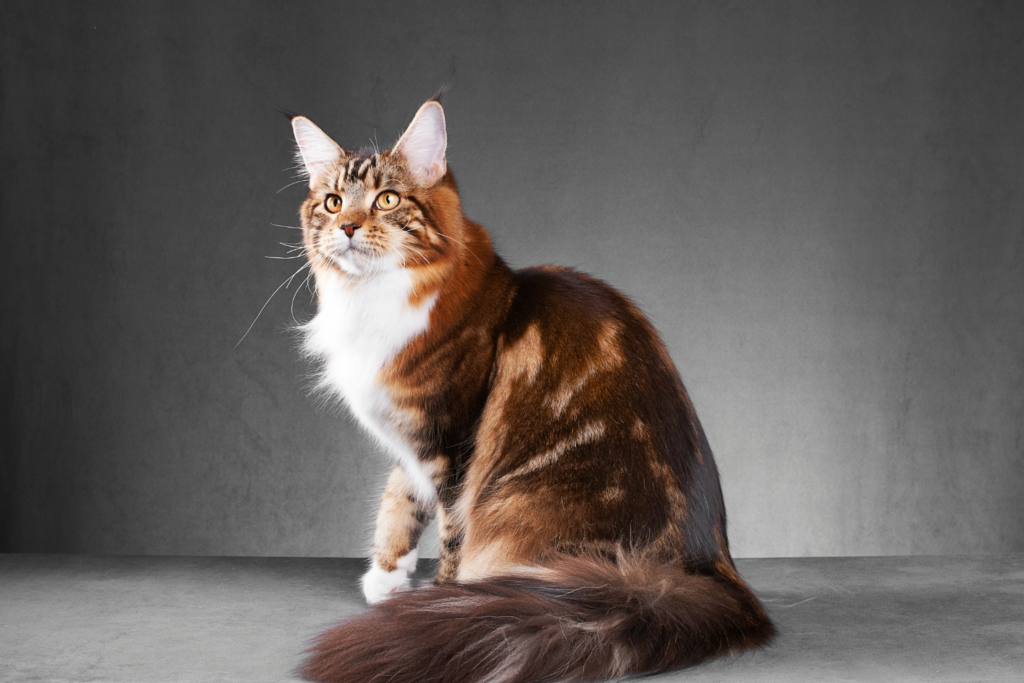
Bengal Cat: Complete Guide to Personality, Care, Health, Lifespan, and Ownership
By Demosthenes Staudinger | Updated August 29, 2026
Affiliate disclosure: This article contains affiliate links. As an Amazon Associate I earn from qualifying purchases. If you buy through one of these links, we may earn a commission at no additional cost to you. This does not affect our editorial recommendations.
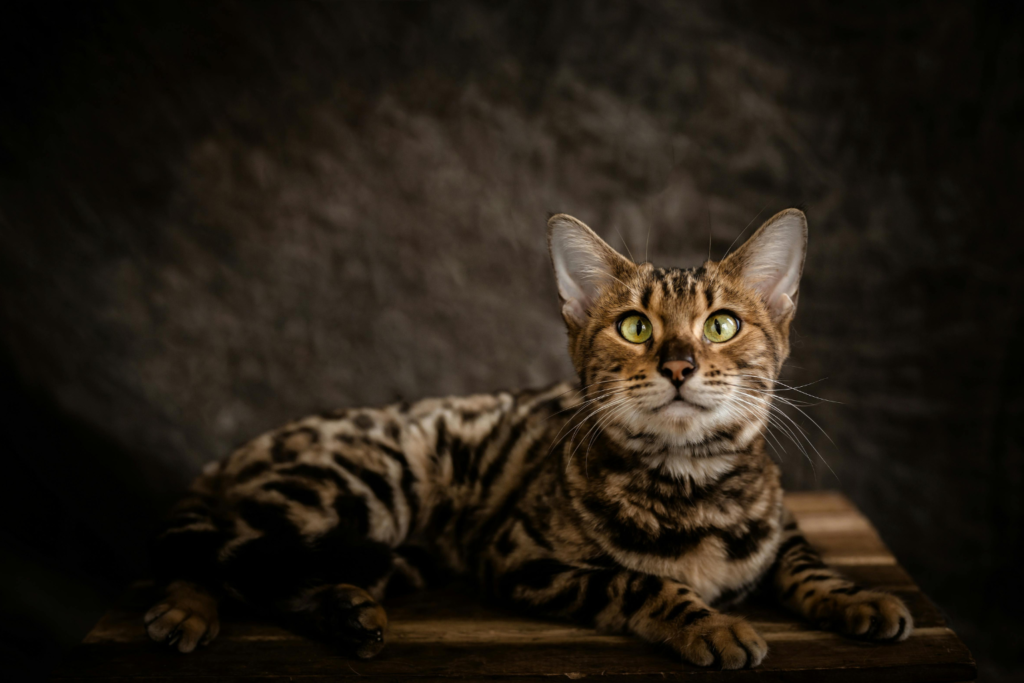
Few domestic cats look as dramatic as the Bengal cat. Its muscular outline, confident movement, and rosetted or marbled coat deliberately recall a small wild feline. That appearance is the attraction—and also the source of many unrealistic expectations.
A modern pedigree Bengal is a domestic cat, not a miniature leopard that needs exotic treatment. The breed does, however, tend to be athletic, curious, trainable, and unusually involved in household activity. That can be delightful in an interactive home and exhausting when someone chooses the coat without considering the cat behind it. Neither an exercise wheel nor a large house compensates for a life without play, climbing, choice, or companionship.
This guide explains Bengal cat personality, appearance, size, care, activity, health, lifespan, family compatibility, breeder screening, and realistic enrichment. It also evaluates three products that may suit particular Bengal households—without pretending that every Bengal needs them or will use them.
How we researched this Bengal cat guide: This is a research-based editorial guide, not a hands-on product test, veterinary diagnosis, or guarantee about an individual cat. We reviewed current breed information from TICA and CFA, the CFA Bengal standard, veterinary genetics guidance from UC Davis, feline cardiology information from Cornell, environmental guidance from the Feline Veterinary Medical Association, FDA pet-food labeling guidance, TICA’s buyer guidance, and current manufacturer specifications for the featured products. Modern Cat Society has not purchased or field-tested those products. Manufacturer claims are identified as such.
Quick Verdict
Editorial verdict: The Bengal can be an affectionate, fascinating companion for someone who genuinely enjoys daily play, training, climbing structures, and an alert cat that participates in household life. The breed should never be chosen for its spotted coat alone.
Best for: Engaged owners and families who want an athletic, intelligent indoor companion and can provide consistent interaction, vertical territory, mental challenges, preventive veterinary care, and documented health screening.
Skip it if: You want a sedentary, highly independent cat; dislike frequent interactive play; cannot tolerate climbing and investigation; or are unwilling to verify PRA-b, PK-deficiency, and cardiac screening before buying from a breeder.
Bengal Cat at a Glance
| Characteristic | Typical Bengal cat |
|---|---|
| Ancestry | Established domestic breed developed using domestic cats and the Asian leopard cat |
| Adult size | Medium to large; muscular and athletic |
| Typical weight | Females about 6–12 lb; males about 9–15 lb |
| Physical maturity | Usually around 2 years |
| Coat | Short, dense, soft; longhaired Bengals also exist |
| Patterns | Spotted/rosetted or marble |
| Personality | Curious, confident, intelligent, people-oriented; individuals vary |
| Activity | High compared with many companion breeds |
| Grooming | Low for the typical short coat |
| Life expectancy | TICA currently lists approximately 12–20 years |
| Important health screening | HCM evaluation, PRA-b DNA testing, PK-deficiency DNA testing |
| Best home | Secure, interactive indoor environment with climbing, scratching, play, rest, and choice |
| Main ownership challenge | Meeting a bright, active cat’s needs every day—not only when convenient |
The numbers are broad reference points, not a promise about a kitten. TICA states that Bengals generally reach full size at about two years, with females commonly weighing 6–12 pounds and males 9–15 pounds. It currently gives a life-expectancy range of 12–20 years, while emphasizing that genetics, environment, nutrition, and care affect the individual outcome.[1]
Bengal History: Wild Ancestry, Domestic Cat
The Bengal breed was developed from crosses involving domestic cats and the Asian leopard cat (Prionailurus bengalensis), a small wild feline native to Asia. Jean Mill produced an early cross in 1963, and the modern breeding program took shape later. TICA accepted the Bengal as a new breed in 1986 and granted championship status in 1991.[1]
CFA followed a different timeline. It accepted Bengals for registration in 2016 and advanced them to championship competition in 2018. CFA’s registration framework requires five generations of documented domestic ancestry, illustrating why a current show-eligible Bengal should not be discussed as though it were a recently captured wildcat.[2]
TICA says the modern breeding population is maintained through Bengal-to-Bengal pairings and treats early foundation generations separately.[1] This corrects the “half wild” cliché and makes pedigree documents more meaningful than appearance or sales language. Domestic status does not guarantee an easy personality: genetics, socialization, health, learning, and environment still shape the individual.
A practical note about ownership rules
Do not assume registry eligibility automatically answers the legal question where you live. Before paying a deposit, ask the relevant state wildlife agency and local animal-control office whether any rule applies to a Bengal with the specific documented ancestry you are considering. Requirements and definitions can change, and a breeder’s assurance is not a substitute for confirmation from the authority that enforces the rule.
What Does a Bengal Cat Look Like?
The Bengal is medium to large, sleek, muscular, and substantial without looking bulky. The current CFA standard describes a long, powerful body with sturdy bone, prominent musculature, and hindquarters that may sit slightly higher than the shoulders. The overall impression should be balanced athleticism.[3]
The relatively small head forms a modified wedge with rounded contours. A broad nose, pronounced whisker pads, strong chin, short rounded ears, large oval eyes, and a thick tail with a rounded tip complete the characteristic outline.[3] A spotted mixed-breed cat can look similar, so coat pattern alone cannot establish identity; pedigree documentation matters.
Rosettes, spots, and marble patterns
The spotted pattern can include single spots and rosettes—two-tone markings shaped like arrowheads, paw prints, doughnuts, or clusters. Marbled Bengals instead have broad, flowing bands and swirls with a horizontal impression. Pattern does not predict personality; choose health and temperament before contrast or fashionable markings.[3]
What is Bengal “glitter”?
Some hair shafts reflect light, producing the glitter effect. It is optional under the standards, not proof of quality, health, or pedigree.[1][3] Never let sparkle outweigh socialization, documented screening, or the conditions in which the cats are raised.
Coat colors and length
Registries recognize brown, silver, several snow-associated seal colors, and other variations. Most Bengals have a short, dense, close-lying coat, although longhaired Bengals—sometimes called Cashmeres—exist. Coat length changes grooming frequency, not the need for activity or health screening.[1][3]
Bengal Cat Size and Growth
Bengals often look larger than the scale suggests because they are long, muscular, and confident in movement. TICA’s current ranges—approximately 6–12 pounds for females and 9–15 pounds for males—include substantial overlap.[1] Sex cannot predict an individual adult weight precisely, and unusually large marketing claims deserve skepticism.
Kittens may not reach their final frame and musculature until around age two. Feed for the correct life stage and monitor ribs, waist, abdominal contour, and weight trend with your veterinarian. Deliberately encouraging excess weight does not produce a more authentic Bengal.
Bengal Cat Personality
TICA describes Bengals as confident, curious, devoted, and highly trainable, while also acknowledging meaningful individual variation. CFA similarly emphasizes athleticism, intelligence, affection, and interest in family activity.[1][2]
In daily life, this often means a cat that notices routines, learns cues, retrieves toys, and experiments with doors or levers. Intelligence is not obedience; Bengals also learn behaviors you never intended to teach. Reward desirable actions, provide legal climbing and scratching, and secure fragile objects or cabinets where necessary.
Are Bengals affectionate?
Many are people-oriented, but affection may mean following, sleeping nearby, greeting, or initiating play rather than prolonged lap time. Let the cat control touch and pause before overstimulation. Sudden irritability, hiding, or reduced tolerance can indicate pain or illness.
Are Bengals vocal?
Some Bengals meow, chirp, and trill frequently; others are comparatively quiet. TICA treats vocal style as variable.[1] Learn the individual baseline because a new howl, persistent nighttime crying, or vocalization near the litter box can be clinically important.
Do Bengals like water?
Water interest is a commonly reported tendency, and both major registries mention it.[1][2] One Bengal may bat at a faucet or watch the shower; another may simply drink and walk away. Curiosity about water does not mean a cat should be placed in a bath or expected to swim.
Keep clean water available regardless of enthusiasm. Some cats prefer a bowl; others use a fountain. Our guide to the best cat water fountains for indoor cats compares practical options. Every fountain still needs washing, maintenance, and refilling.
Bengal Activity and Enrichment Needs
This is the part of Bengal ownership that deserves the most honest attention. TICA describes the breed as high-energy and interested in climbing, exploring, chasing, puzzles, training, and interaction.[1] Not every individual is relentless, but choosing a Bengal while hoping for a sedentary exception is poor planning.
Good enrichment is not a frantic effort to exhaust the cat. It is a balanced environment in which normal behaviors have safe outlets. The Feline Veterinary Medical Association emphasizes access to secure resting places, play and predatory behavior, food and water, clean toileting areas, and vertical territory for cats living indoors.[7]
A Bengal-friendly home therefore needs more than a pile of battery toys. Build several complementary zones:
- Vertical territory: a stable tree, shelves, window perch, or secure routes above floor level.
- Scratching: tall, stable vertical surfaces plus a horizontal option if the cat prefers it.
- Interactive hunting play: wand toys moved like prey, with opportunities to stalk, chase, catch, and pause.
- Mental work: clicker training, food puzzles, scent exploration, and simple search games.
- Observation: protected windows, household vantage points, and predictable access to family activity.
- Rest and withdrawal: quiet places where the cat can sleep without being handled or cornered.
Rotate selected toys to restore novelty while keeping core rest and scratching resources predictable. End hunting play with a capture and allow recovery; more intensity is not always better.
Training as enrichment
Bengals often respond well to reward-based training; TICA specifically mentions tricks and harness walking.[1] Begin with short sessions and practical goals such as touching a target, entering a carrier, stepping onto a mat, or accepting nail handling. Use small rewards from the daily allowance and never punish confusion.
Vertical space and safe construction
Consider base dimensions, anchoring, platform size, grip, and weight guidance—not only appearance. Fasten wall furniture to suitable structural support with appropriate hardware, or use a stable floor structure. Keep climbing routes away from unprotected windows, hot appliances, and breakables.
How much play does a Bengal need?
There is no universal minute count. Age, health, personality, and environment change the answer; several focused sessions are usually more realistic than one marathon. Activity should leave the cat able to settle—not panting, limping, frantic, or frustrated. A sudden change in activity deserves veterinary attention.
Can a Bengal Live in an Apartment?
Yes. Usable territory matters more than square footage. A compact apartment can provide vertical routes, observation, scratching, puzzles, hiding, and interaction. Plan for jumping noise, secure windows and balconies, and spread resources rather than crowding everything into one corner. Confirm building rules and whether the home can safely accommodate active play.
Can a Bengal Be Left Alone?
An adult Bengal can spend ordinary work periods alone, but “can be alone” is not the same as “thrives without engagement.” TICA emphasizes social interaction and notes that a single Bengal may look primarily to its humans for companionship and activity.[1]
Offer activity before and after work, and leave safe rest, observation, scratching, and foraging options. A second cat is not an automatic solution: relationships take time and each animal still needs separate access to essential resources. If your schedule leaves little room for interaction, choose an adult whose observed needs fit it.
Bengals With Children, Cats, and Dogs
Bengals can be excellent family companions when handling is respectful and introductions are gradual. TICA and CFA both describe them as capable of living with children and compatible animals.[1][2] Energy may make play appealing, but high energy does not mean unlimited tolerance.
Teach children to invite rather than restrain, use toys instead of hands, and let the cat leave. Introduce pets through separation, scent exchange, controlled visual access, and short meetings; distribute litter, food, water, scratching, and rest resources. Keep birds, rodents, reptiles, and fish securely separated because sociability does not remove predatory behavior.
Grooming and Routine Bengal Care
The typical shorthaired Bengal is comparatively easy to groom. TICA describes low maintenance for short coats, and CFA notes the coat’s close, soft texture.[1][2] Weekly brushing with a soft tool is a reasonable starting point, but individual shedding and preference vary. Longhaired Bengals may need more frequent combing.
Use grooming to check skin, tenderness, parasites, and body condition. Routine care also includes nail trimming, cat-safe dental care, ear checks, parasite prevention, vaccination, preventive examinations, and clean litter boxes. Water interest does not create a need for frequent baths; bathe only for a practical reason with cat-appropriate products and low-stress handling.
Feeding a Bengal Cat
A Bengal does not need an exotic, raw, grain-free, or breed-branded diet merely because of its ancestry. Choose food labeled complete and balanced for the correct life stage and individual medical needs. The FDA explains that such a label should reflect an appropriate AAFCO nutrient profile or a qualifying feeding trial, and that growth/reproduction and adult maintenance have different nutritional requirements.[8]
Portion according to calories, age, neuter status, body condition, activity, and veterinary guidance. Count training treats and puzzle food; athletic cats can still gain excess weight. Wet food contributes water, but clean drinking water must remain available. Changes in thirst, urination, hunger, weight, vomiting, or appetite warrant veterinary advice. Clean food puzzles and ensure the cat can still obtain its full measured ration.
Indoor Safety, Harness Training, and Tracking
An enriched indoor lifestyle offers the most controllable protection from traffic, conflict, toxins, infectious exposure, and wildlife predation. The Feline Veterinary Medical Association’s position supports meeting behavioral needs indoors and using controlled outdoor access where appropriate.[7]
Many Bengals can learn to wear a harness. Start inside with brief exposure, reward voluntary contact, and progress only while the cat remains comfortable. No harness is literally escape-proof; fit, body shape, handling, and movement all matter. Outdoor sessions require direct supervision.
A tracker is a recovery layer, not permission to roam. Use an appropriate breakaway system, confirm suitable size and weight, and maintain a registered microchip. Our guide to GPS trackers for cats explains cellular GPS versus network-dependent finders.
Bengal Cat Health
Bengals can develop any condition seen in domestic cats. Three screening topics deserve particular attention in a breeding program: hypertrophic cardiomyopathy (HCM), Bengal progressive retinal atrophy (PRA-b), and pyruvate kinase deficiency (PK deficiency). TICA specifically advises prospective owners to discuss all three.[1]
Screening reduces defined risks; it does not guarantee a disease-free cat. A DNA result addresses the variant tested, not every possible cause of heart disease, blindness, anemia, or poor health. Preventive examinations, observation at home, and appropriate diagnostics remain essential.
Hypertrophic cardiomyopathy
HCM is characterized by abnormal thickening of the heart muscle. Cornell explains that many affected cats initially show no obvious signs and that echocardiography is the principal diagnostic tool. Advanced disease can lead to congestive heart failure or arterial thromboembolism, a clot complication that may cause sudden severe pain and weakness or paralysis of the hind limbs.[6]
There is no established Bengal-specific DNA test that can declare a breeding cat free of every HCM risk. Ask the breeder how the adult breeding cats are screened, who performs the echocardiograms, how often screening is repeated, and what is known about older relatives. A generic “DNA clear” statement does not answer those questions.
Open-mouth breathing, marked respiratory effort, collapse, or sudden painful hind-limb weakness is an emergency. Contact an emergency veterinarian rather than waiting to see whether the cat improves.
Bengal progressive retinal atrophy
PRA-b is an inherited retinal disorder associated with progressive photoreceptor loss. UC Davis states that degeneration can begin at about seven weeks and vision may be severely compromised by around two years in affected cats, although expression can vary.[4]
The condition is autosomal recessive:
| Test result | General interpretation |
| N/N | No copies of the tested PRA-b variant detected |
| N/PRA | One copy; carrier, not expected to be affected by this recessive condition |
| PRA/PRA | Two copies; genetically affected/at risk of developing the condition |
A carrier is not a sick cat and does not need to be stigmatized. The breeding decision is what matters: genetic results allow breeders to avoid producing kittens with two copies. Ask for the laboratory reports for both parents and an explanation of the pairing.[4]
Pyruvate kinase deficiency
Pyruvate kinase deficiency affects red blood-cell metabolism and can cause intermittent hemolytic anemia. UC Davis notes that age of onset and clinical severity vary; possible signs include weakness, lethargy, reduced appetite, weight loss, pale or yellow-tinged tissues, and an enlarged abdomen.[5]
This condition is also autosomal recessive. N/N, carrier, and two-copy affected results should be interpreted in the context of the specific laboratory’s report. As with PRA-b, responsible pairing can prevent affected kittens while preserving genetic diversity.[5]
Do not wait for anemia signs to ask about screening. The appropriate moment is before a breeding decision—and, for a buyer, before a deposit.
Lifespan and preventive care
TICA currently lists approximately 12–20 years for the Bengal.[1] That unusually broad range is not a guarantee, a minimum, or an expiration date. Genetic risk, cardiac health, body condition, dental disease, nutrition, accidents, infection, and access to veterinary care all influence longevity.
Arrange regular examinations based on your veterinarian’s advice and the cat’s age and health. Maintain a healthy weight, provide dental care, keep the environment secure, and investigate changes in appetite, breathing, thirst, urination, stool, movement, vision, or social behavior. An expensive enrichment setup cannot substitute for medical care.
How to Find a Responsible Bengal Breeder or Rescue
TICA’s buyer guide advises verifying the breeder, seeing how cats are housed, asking for health and genetic records for the parents, reviewing registration documents, and resisting payment pressure or unusual payment methods.[9] A directory listing can provide a starting point, but it is not a substitute for due diligence.
Ask a Bengal breeder for:
- Laboratory PRA-b and PK-deficiency results for both parents
- Dates and reports for HCM screening of breeding adults
- Family health and longevity information
- Registration, pedigree, and age-appropriate veterinary records
- Details about early socialization and the age kittens may leave
- A written contract, health terms, support, and return-to-breeder policy
Ask to see the kitten moving, eating, and interacting—not only posed photos. Be cautious if a seller will not identify the parents or show records, treats “rare” color as a substitute for health, or pressures you into irreversible payment.
Rescue can also be an excellent route. Breed-specific rescues and general shelters sometimes receive Bengals and spotted cats labeled as Bengals. With an adult, observed personality may give you more useful compatibility information than a kitten’s appearance. Unless pedigree documents exist, treat a visual breed label as an estimate.
Three Optional Products for a Bengal-Friendly Home
None is required. Safe secondhand furniture, boxes, food searches, and a wand toy can provide excellent enrichment. Buy only when dimensions, maintenance, price, and adoption risk suit your cat and home.
| Product | Best use | Key limitation |
| Mau Cento | Furniture-style vertical rest and scratching | Large footprint, premium price, natural-branch variation |
| Nina Ottosson Rainy Day | Supervised food-puzzle enrichment | Retailer and manufacturer compartment counts may differ |
| One Fast Cat Gen 7 | Optional indoor running outlet | Takes substantial space and some cats never adopt a wheel |
Mau Cento: design-conscious vertical territory
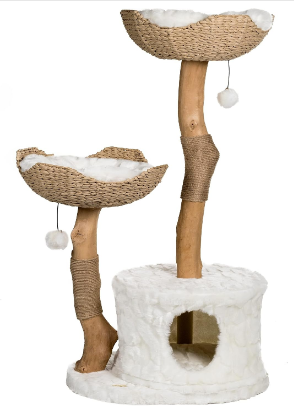
Mau currently lists the Cento at approximately 45.5 inches high with a 23-inch base and describes it as suitable for cats up to 23 pounds each. It includes two woven baskets, a cave, jute-wrapped scratching areas, washable cushions, and replaceable wear components. Natural branches mean appearance and exact shape can vary.[10]
It can fit many adult Bengals, but static capacity does not guarantee stability during a running jump. Measure first, follow assembly instructions, use a level surface, and inspect fasteners and wear. Direct manufacturer terms may not apply to Amazon purchases; check the listing.
Best for: An owner who wants broad elevated resting areas and a furniture-style alternative to a carpeted tower.
Skip it if: You need a narrow footprint, dislike variation in natural wood, or your cat already has safe vertical territory it consistently uses.
Nina Ottosson Rainy Day: compact mental enrichment
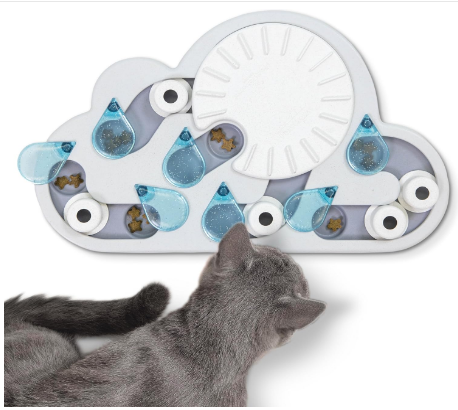
Outward Hound’s current manufacturer page describes the Rainy Day Puzzle & Play as an advanced cat puzzle with 14 hidden treat compartments, adjustable difficulty, capacity for up to one-quarter cup of food, and no removable parts. It also instructs owners to supervise use, teach the cat how the puzzle works, and remove the toy if it becomes damaged.[11]
Some retailer title language has described 19 hidden treat cups. Because that does not match the current manufacturer’s count, verify the exact model and listing images before buying. Do not use a puzzle to make the cat struggle for its entire nutritional intake. Start easy, use small portions from the daily ration, and clean food-contact surfaces.
Best for: A food-motivated Bengal that enjoys manipulating objects and needs a quiet indoor foraging activity.
Skip it if: Your cat becomes frustrated around food, chews hard plastic, needs an accessible feeding method, or will be left unsupervised with the puzzle.
One Fast Cat Gen 7: an optional exercise wheel
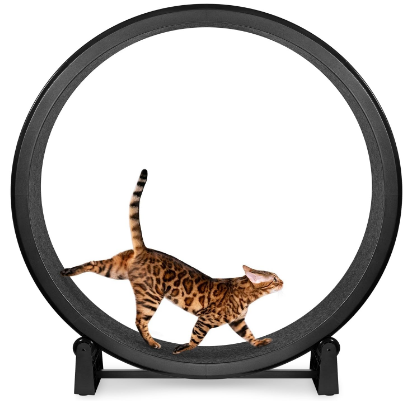
The current One Fast Cat Gen 7 has a 48-inch outer diameter, 43-inch inner diameter, 11-inch-wide running surface, and manufacturer-listed capacity up to 25 pounds. The assembled unit is approximately 48 inches long, 13 inches deep, and 50 inches high, so it is visually and physically substantial.[12]
The manufacturer acknowledges that acceptance varies and recommends gradual reward-based introduction.[12] Some Bengals enjoy wheels; others ignore them. Never hold a cat on a moving wheel. Maintain stability and the running surface, and preserve ordinary interactive play.
Best for: A healthy, running-oriented indoor cat with enough floor and wall clearance for a 48-inch wheel.
Skip it if: Space is tight, noise transmission is a concern, your cat has a mobility or cardiac limitation without veterinary guidance, or you expect guaranteed adoption.
A Realistic Bengal Care Routine
Every day
- Refresh drinking water and wash food-contact surfaces.
- Scoop litter boxes and note changes in urine or stool.
- Offer focused interactive play, training, or a supervised food search.
- Check appetite, breathing, movement, social behavior, and energy against the cat’s baseline.
- Provide affectionate contact on the cat’s terms and uninterrupted rest.
Every week
- Brush the short coat and inspect skin and body condition.
- Examine nails, ears, mouth, and paw pads without forcing handling.
- Rotate selected toys while keeping core resources predictable.
- Clean puzzle feeders, bedding, trees, and frequently touched surfaces as needed.
- Inspect climbing equipment, wheel parts, scratching materials, cords, screens, and fasteners.
Periodically
- Weigh the cat and reassess portions and body condition.
- Trim nails according to individual growth and wear.
- Review microchip registration and visible identification.
- Schedule preventive veterinary and dental care.
- Reassess the environment as the cat matures, ages, or develops a health limitation.
A consistent routine makes care more efficient and makes subtle change easier to notice. The goal is not perfection or nonstop entertainment. It is a safe, responsive home that gives the cat appropriate choices every day.
Pros and Cons of Bengal Cat Ownership
| Pros | Considerations |
| Intelligent and often highly trainable | Needs meaningful interaction and mental work |
| Athletic and playful | Climbing and investigation can challenge an unprepared home |
| Often affectionate and involved with family | May not suit someone seeking a very independent companion |
| Distinctive rosetted or marbled coat | Appearance encourages impulsive or poorly researched purchases |
| Typical short coat is easy to maintain | Easy grooming does not mean low overall care |
| Can enjoy harness training and controlled exploration | Outdoor access requires security, training, and supervision |
| Can adapt well to apartments with thoughtful design | Usable vertical territory matters more than empty floor area |
| Often compatible with respectful children and pets | Introductions and separate resources remain essential |
| Long potential lifespan | HCM, PRA-b, and PK-deficiency screening must be taken seriously |
Who Should Choose a Bengal Cat?
A Bengal is a strong match for someone who hears “active and intelligent” and sees a relationship to cultivate—not a problem a gadget should solve. You should enjoy play, reward-based training, environmental design, and a cat that may notice every change in the household.
The breed can fit a committed first-time owner, an active family, or an apartment resident. Experience matters less than realistic preparation and consistency. Conversely, prior cat ownership does not make the Bengal suitable if daily engagement feels burdensome.
Choose another individual or breed if your ideal cat is predictably quiet, sedentary, and content with minimal interaction. An adult rescue with a known temperament may be a better match than trying to reshape an energetic Bengal kitten into that role.
Most importantly, choose the whole cat. Rosettes should not outrank health, temperament, documented ancestry, socialization, or fit with your actual life.
Frequently Asked Questions
1. Are Bengal cats part wild?
The breed was originally developed using domestic cats and the Asian leopard cat, but modern pedigree Bengals are established domestic cats bred through Bengal lines. CFA requires five generations of documented domestic ancestry for registration, while TICA treats foundation generations separately.[1][2] Ask for pedigree documents rather than estimating ancestry from appearance.
2. Are Bengal cats aggressive?
Aggression should not define the modern Bengal. TICA and CFA describe the breed as confident, curious, affectionate, and family-oriented.[1][2] Individual temperament still depends on genetics, early socialization, health, learning, and environment. Sudden aggression requires attention to pain, fear, resource conflict, and other possible causes.
3. How big do Bengal cats get?
TICA currently lists females at about 6–12 pounds and males at about 9–15 pounds, with full size typically reached around age two.[1] Individual cats can fall outside those ranges. Body condition and health are more important than pursuing an unusually high weight.
4. How long do Bengal cats live?
TICA gives a broad estimate of approximately 12–20 years.[1] It cannot predict an individual lifespan. Genetics, heart health, body condition, dental care, indoor safety, preventive medicine, and prompt treatment all influence longevity.
5. How much exercise does a Bengal need?
There is no single correct minute count. Most benefit from several daily opportunities for interactive play, climbing, scratching, foraging, and training. Adjust intensity for age and health, and watch whether the cat can settle comfortably afterward. Sudden hyperactivity or reduced activity can warrant veterinary evaluation.
6. Can a Bengal cat live in an apartment?
Yes, if the apartment offers secure windows, vertical territory, scratching, clean litter areas, observation, rest, and daily engagement.[7] A smaller but thoughtfully arranged home can work better than a large under-enriched one. Consider neighbor noise and building rules before adding a large wheel or choosing the breed.
7. Can Bengal cats be left alone during the workday?
Many healthy adults can manage an ordinary work period when their environment is safe and enriching, but Bengals often depend heavily on interaction.[1] Provide activity before and after work and assess the individual. A kitten, a cat with illness, or one showing distress may need a different schedule or support.
8. Do Bengals really like water?
Many show unusual interest in faucets, sinks, or moving water, and both TICA and CFA mention the tendency.[1][2] It is not guaranteed. Never force a cat into water, and do not assume that owning a fountain removes the need for cleaning or monitoring hydration.
9. How often should a Bengal be groomed?
Weekly brushing is a practical starting point for the typical short coat, which registries describe as relatively low maintenance.[1][2] Increase frequency for a longhaired Bengal or during heavier shedding. Nail, dental, skin, and veterinary care remain necessary even when the coat is easy.
10. Do Bengal cats require special food?
No breed-specific or exotic diet is automatically required. Choose complete and balanced food for the correct life stage and any diagnosed medical needs.[8] Adjust calories to the individual and include treats and puzzle food in the daily total. Discuss homemade or raw diets with a qualified veterinary nutrition professional.
11. What health tests should a Bengal breeder provide?
Ask for documented PRA-b and PK-deficiency DNA results for both parents, plus the breeder’s current HCM screening protocol and echocardiogram records for breeding adults.[1][4][5][6] A generic DNA panel cannot rule out all heart disease, and verbal claims are not a substitute for reports.
12. Is a Bengal a good first cat?
It can be for a well-prepared owner who enjoys daily interaction, training, climbing structures, and an involved companion. It is a poor choice for someone selecting primarily for coat pattern or hoping the cat will be sedentary. Meeting adult Bengals through a breeder or rescue can make the lifestyle easier to understand.
Final Verdict: Is a Bengal Cat Right for You?
The Bengal is more than a spectacular coat. It is typically an alert, athletic domestic cat that wants opportunities to climb, learn, investigate, play, rest securely, and participate in family life.
That does not require a cluttered theme park. Stable vertical territory, scratchers, short training, interactive play, food searches, observation, and predictable social contact can create a rich environment. Premium products may add convenience, but none replaces the owner’s time and judgment.
The health side deserves equal weight. Ask for PRA-b and PK-deficiency laboratory results. Ask precise questions about echocardiographic HCM screening. Confirm pedigree documentation and any applicable ownership rule before sending money. Choose function, socialization, and transparency before color, contrast, glitter, or promises of exceptional size.
For someone who wants a quiet cat that simply occupies the sofa, the Bengal may feel like too much. For someone who wants a confident, trainable companion and genuinely enjoys building a shared routine, the Bengal can be extraordinary.
It may resemble a miniature leopard from across the room. The animal you will actually love and care for, however, is the intelligent domestic cat beneath the spots.
Sources and References
- The International Cat Association — Bengal. Current breed history, domestic breeding status, size, lifespan, personality, activity, grooming, family suitability, water interest, and health-screening guidance. View source
- Cat Fanciers’ Association — Bengal. Breed history, CFA registration timeline, five-generation domestic-ancestry requirement, temperament, family compatibility, coat, and grooming. View source
- Cat Fanciers’ Association — Bengal Show Standard. Current structural and coat language covering body, head, tail, rosetted and marbled patterns, glitter, balance, and temperament. View standard
- UC Davis Veterinary Genetics Laboratory — Progressive Retinal Atrophy, Bengal. PRA-b presentation, approximate progression, autosomal-recessive inheritance, result interpretation, and genetic testing. View source
- UC Davis Veterinary Genetics Laboratory — Pyruvate Kinase Deficiency. Inherited hemolytic anemia, variable signs, autosomal-recessive inheritance, and breed-appropriate genetic testing. View source
- Cornell Feline Health Center — Hypertrophic Cardiomyopathy. Clinical overview, potentially silent disease, echocardiographic diagnosis, congestive heart failure, and clot complications. View source
- Feline Veterinary Medical Association — 2024 Indoor/Outdoor Lifestyle Position Statement. Environmental requirements for indoor cats, controlled outdoor access, safe rest, play, foraging, vertical territory, and toileting. View source
- U.S. Food and Drug Administration — “Complete and Balanced” Pet Food. Meaning of nutritional-adequacy claims, AAFCO profiles or feeding trials, and life-stage distinctions. View source
- The International Cat Association — Pet Buyer’s Guide. Breeder verification, parental records, housing conditions, registration documents, contracts, payment safety, and scam avoidance. View source
- Mau — Cento Cat Tree. Current manufacturer dimensions, weight guidance, materials, baskets, cave, washable cushions, replaceable parts, and natural-branch variation. View source
- Outward Hound — Rainy Day Puzzle & Play Cat Game. Current manufacturer compartment count, food capacity, adjustable difficulty, construction claims, supervision, introduction, and damage guidance. View source
- One Fast Cat — Gen 7 Cat Wheel. Current manufacturer dimensions, weight guidance, construction, running-surface options, maintenance, and gradual introduction guidance. View source
Sources, product specifications, registry information, and veterinary guidance reviewed August 29, 2026. Manufacturer features, retailer terms, availability, and recommendations can change. Verify critical specifications and purchase terms before ordering, and consult your veterinarian for advice about an individual cat.