Why Does My Cat Bite Me? 8 Common Reasons and What to Do About It
Few things are more confusing for cat owners than receiving a bite from a beloved feline companion. One moment your cat is purring and enjoying attention, and the next they suddenly bite your hand.
If you’ve ever wondered, “Why does my cat bite me?”, you’re not alone.
The truth is that cats bite for many different reasons, and understanding the motivation behind the behavior is the first step toward preventing unwanted bites and strengthening your relationship with your pet.
Let’s explore the most common reasons cats bite and what you can do about it.
1. Overstimulation During Petting
One of the most common causes of biting is petting-induced overstimulation.
Your cat may initially enjoy being petted, but after a certain point, the sensation becomes overwhelming.
Signs that your cat is becoming overstimulated include:
- Tail twitching
- Flattened ears
- Rippling skin on the back
- Dilated pupils
- Sudden body tension
If you notice these signals, stop petting before a bite occurs.
2. Play Aggression
Kittens and young cats often use their mouths during play.
If your cat bites your hands or feet during playtime, they may simply be expressing natural hunting instincts.
Common signs include:
- Pouncing
- Chasing
- Ambushing feet
- Grabbing with front paws
What to Do
Avoid using your hands as toys.
Instead, provide:
- Wand toys
- Interactive toys
- Balls
- Puzzle feeders
This helps redirect hunting behavior appropriately.
3. Seeking Attention
Sometimes cats learn that biting gets a reaction.
If your cat gently nips you and you immediately respond, they may discover that biting is an effective way to gain attention.
This behavior often occurs when:
- You’re working
- Using your phone
- Watching television
What to Do
Reward calm behavior with attention and avoid reinforcing unwanted biting.
4. Fear or Anxiety
A frightened cat may bite as a form of self-defense.
Common triggers include:
- Loud noises
- Unfamiliar people
- Sudden movements
- Veterinary visits
In these situations, biting is often accompanied by other signs of stress.
What to Do
Provide safe hiding spots and allow your cat space when they appear anxious.
5. Pain or Discomfort
Cats experiencing pain may become more defensive and reactive.
Potential causes include:
- Dental disease
- Arthritis
- Injury
- Illness
If your cat suddenly begins biting without an obvious reason, a veterinary examination is recommended.
6. Territorial Behavior
Cats are naturally territorial animals.
Some cats may bite when they feel their territory is threatened.
Triggers can include:
- New pets
- New people
- Changes in the household
Providing separate resources and gradual introductions can help reduce territorial stress.
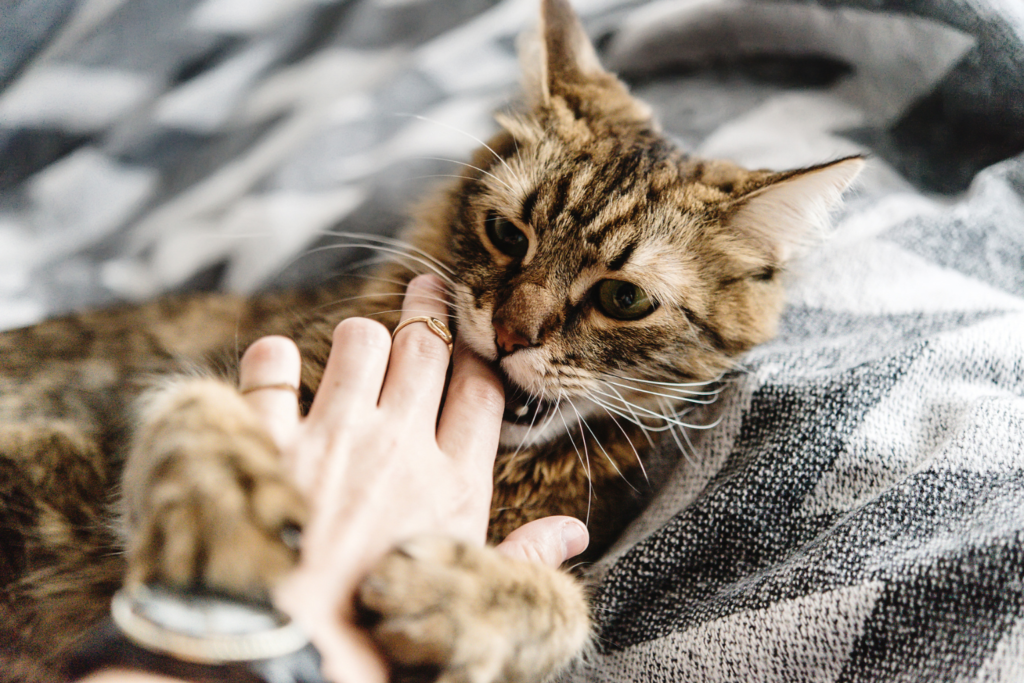
7. Love Bites
Believe it or not, some cats gently bite as a sign of affection.
These “love bites” are usually:
- Gentle
- Brief
- Not painful
- Accompanied by purring
This behavior may resemble grooming interactions between cats.
While generally harmless, it’s important to distinguish love bites from aggressive biting.
8. Boredom and Lack of Stimulation
Cats need both physical and mental enrichment.
Without enough stimulation, they may develop unwanted behaviors, including biting.
Signs of boredom include:
- Excessive meowing
- Destructive scratching
- Hyperactivity
- Attention-seeking behavior
Solutions
Increase enrichment with:
- Cat trees
- Interactive toys
- Puzzle feeders
- Window perches
- Daily play sessions
How to Stop a Cat From Biting
The best approach depends on the cause of the behavior.
Do:
✔ Learn your cat’s body language
✔ Provide daily play sessions
✔ Use interactive toys
✔ Reward calm behavior
✔ Give your cat personal space
Don’t:
✘ Punish your cat
✘ Yell or hit
✘ Force physical interaction
✘ Encourage rough play with your hands
Punishment can increase fear and worsen biting behavior.
When Should You Be Concerned?
Occasional playful or affectionate nipping is usually normal.
However, consult a veterinarian if:
- Biting suddenly increases
- The behavior appears linked to pain
- Your cat becomes unusually aggressive
- Other behavioral changes occur
A medical issue may be contributing to the problem.
Frequently Asked Questions
Why does my cat bite me when I pet them?
This is often caused by overstimulation. Many cats enjoy petting only for a limited period before becoming sensitive to touch.
Why does my cat bite me gently?
Gentle bites can be a form of affection, communication, or attention-seeking behavior.
Why does my cat attack my feet?
This is typically related to play aggression and hunting instincts.
Can cats be trained not to bite?
Yes. Consistent training, enrichment, and proper play techniques can significantly reduce unwanted biting.
Final Thoughts
Cat bites can seem confusing, but they are usually a form of communication rather than random aggression.
Whether your cat is overstimulated, bored, playful, anxious, or simply seeking attention, understanding the reason behind the behavior allows you to respond appropriately.
By learning your cat’s body language, providing enrichment, and respecting their boundaries, you can build a stronger and more trusting relationship while reducing unwanted biting behavior.