Apple AirTag for Cats Review (2026): Is It a Good Cat Tracker?
By Demosthenes Staudinger | Updated August 20, 2026
A door stays open for a few seconds too long.
Your indoor cat slips outside without anyone noticing.
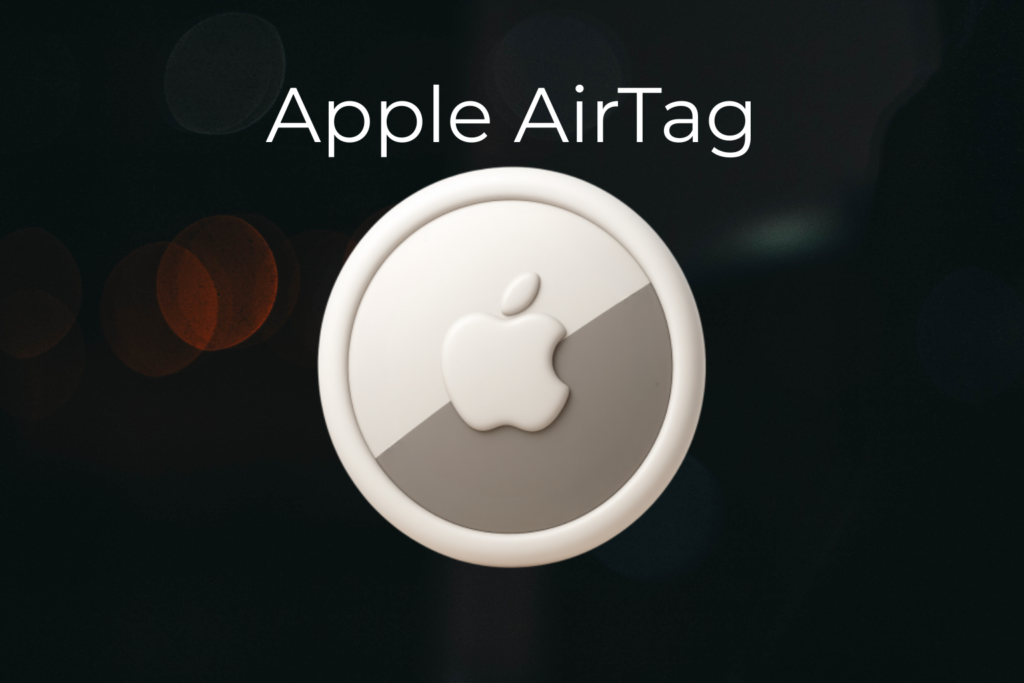
Suddenly, the small silver-and-white disc you normally associate with keys and luggage starts to look like an inexpensive way to answer a frightening question: Where did my cat go?
That idea became more appealing in January 2026, when Apple introduced the second-generation AirTag. The new model keeps the original form factor but adds a second-generation Ultra Wideband chip, expanded Bluetooth connectivity, a louder speaker, and Precision Finding from farther away than before.[1]
Those upgrades make AirTag a better item finder. They do not turn it into a GPS pet tracker. Apple is clear that AirTag is designed for objects, not people or pets.[1] It has no cellular modem, independent GPS positioning, pet-specific escape alert, or live route for a moving cat.
For an Apple user with a primarily indoor cat, however, it can be a lightweight, subscription-free supplemental recovery tool. It may help locate a cat hiding nearby or generate a remote Find My location when another Apple device detects the tag.
This AirTag for cats review examines the current second-generation model, explains how Find My actually works, evaluates collar safety and total ownership cost, and compares AirTag with two purpose-built alternatives: Tractive GPS and Tabcat radio-frequency tracking.
How we reviewed the second-generation AirTag: This is a research-based editorial review, not a hands-on product test. Modern Cat Society evaluated current Apple specifications, Apple support and policy documents, cat-collar safety guidance, veterinary identification recommendations, and official competitor documentation. Manufacturer claims are identified as such, and limitations or documentation inconsistencies are disclosed.
Affiliate disclosure: This article contains affiliate links. As an Amazon Associate, Modern Cat Society may earn from qualifying purchases, at no additional cost to you. Affiliate relationships do not affect our editorial verdict. Product prices, availability, software requirements, and specifications can change.
Quick Verdict: Is an AirTag Good for Cats?
Editorial verdict: The second-generation AirTag is a sensible backup locator for some primarily indoor cats, especially in Apple households and populated areas. It is not our preferred primary tracker for a cat that regularly roams outdoors.
Best for: iPhone users who want a small, low-maintenance, subscription-free recovery layer for an indoor or mostly indoor adult cat.
Skip it if: You need live movement updates, an alert when your cat leaves home, dependable remote tracking in sparsely populated areas, Android-first ownership, or a device designed specifically for pets.
Bottom line: AirTag is strongest once a cat is nearby or when the Find My network happens to detect it. A cellular GPS tracker is stronger when you need to follow a moving outdoor cat remotely.
| Feature | Apple AirTag (2nd Generation) |
|---|---|
| Primary technology | Bluetooth, Ultra Wideband, NFC, and the Find My network |
| True GPS in the AirTag | No |
| Cellular connection | No |
| Live pet tracking | No |
| Pet escape alerts or virtual fences | No |
| Precision Finding | Yes, with compatible Apple hardware and regional availability |
| AirTag weight | 11.8 g / 0.42 oz |
| Dimensions | 31.9 mm diameter × 8.0 mm thick |
| Battery | User-replaceable CR2032 coin cell |
| Apple-stated battery life | More than one year under its typical-use assumptions |
| Water and dust resistance | IP67 under controlled laboratory conditions |
| AirTag-specific subscription | None |
| U.S. Apple launch price | $29 single / $99 four-pack |
| Collar or holder included | No |
| Best role for cats | Supplemental locating and recovery tool |
What Is the Second-Generation AirTag?
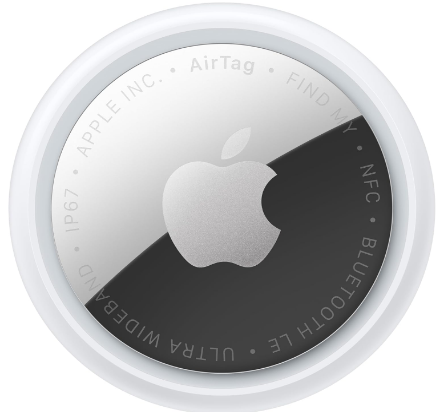
AirTag is Apple’s Bluetooth item finder. You pair it with an Apple Account, assign it in Find My, and use nearby Apple devices or the broader Find My network to locate it.
Apple launched the original AirTag in 2021. The second generation arrived on January 26, 2026, at the same official U.S. launch price: $29 for one or $99 for a four-pack.[1]
The new version is still an item tracker, not a pet wearable. Apple includes no collar, holder, breakaway mechanism, or cat-specific safety guidance. The complete wearable is:
AirTag + holder + cat collar
That distinction matters because the AirTag’s published weight and dimensions describe only the electronic tag—not the equipment your cat will actually wear.
What Changed in 2026?
Apple’s second-generation model introduces four meaningful updates:[1][2]
- Expanded Precision Finding: Apple says the new Ultra Wideband system can guide users from up to 50% farther away than the previous AirTag.
- Longer Bluetooth connectivity: An upgraded Bluetooth chip expands the distance at which the tag can be located, although Apple does not publish one universal range in feet.
- A louder speaker: Apple says the speaker is 50% louder and can be heard from up to twice as far away under its test conditions.
- Apple Watch Precision Finding: Compatible recent Apple Watch models can now provide distance and directional guidance toward the new AirTag.
These upgrades can help with a cat hiding nearby, but they do not change the remote-tracking model. Beyond your range, AirTag still depends on Bluetooth detections from Apple devices.
What Stayed the Same?
The new AirTag retains the previous generation’s shape and accessory compatibility. It is a 31.9 mm disc, 8.0 mm thick, weighing 11.8 grams.[2][3]
It still uses:
- A replaceable CR2032 battery
- Bluetooth for proximity finding
- Ultra Wideband for compatible Precision Finding
- NFC for Lost Mode information
- Apple’s crowdsourced Find My network for remote detections
- A built-in speaker for audible locating
Existing holders should remain physically compatible, but compatibility does not make an accessory safe or comfortable for a cat.
How Does an AirTag Track a Cat?
To decide whether AirTag fits your needs, separate three different locating experiences that are often blended together in product descriptions.
1. Nearby Bluetooth Detection
AirTag broadcasts a secure Bluetooth signal. When your paired Apple device is close enough, Find My may let you play a sound or begin nearby finding.
Apple does not promise a fixed Bluetooth radius. Walls, floors, vehicles, foliage, interference, device orientation, and other objects can affect the connection.[4] Any listing that promises one guaranteed detection distance in every environment is oversimplifying radio performance.
Nearby Bluetooth matters when you believe the cat is inside the home, yard, garage, or immediate neighborhood.
2. Precision Finding With Ultra Wideband
Once you are within a suitable nearby range, compatible Apple hardware can use Ultra Wideband to display the distance and direction toward the AirTag. Your phone can also provide visual, haptic, and audio feedback as you approach.[1][4]
This can be more useful than a map pin when a silent cat is concealed in a small area. A map may identify a house; Precision Finding may help narrow the search to the driveway, porch, garage, or yard.
Precision Finding is not satellite tracking, and it cannot guide you to a tag that is outside the feature’s nearby connection range. Environmental obstructions can affect performance.[4]
3. Remote Find My Network Detection
When the AirTag is away from you, it can be detected by another compatible Apple device participating in the Find My network. That device anonymously and securely relays the AirTag’s approximate location, allowing you to see an updated map position.[1][5]
Apple describes Find My as a crowdsourced network of more than a billion devices.[5] That scale is AirTag’s greatest remote advantage, but it is not continuous coverage.
The AirTag itself cannot send a location through a cellular network. A new remote position depends on another Find My device coming within detection range. If that encounter does not happen, the map may continue showing an older location and timestamp or may report that no current location is available.
Remote updates may therefore be frequent, delayed, intermittent, or unavailable. No setting converts those opportunistic detections into guaranteed live pet tracking.
AirTag Is Not GPS: Why That Difference Matters
The phrase “AirTag GPS tracker” is common in search results, but it describes the product inaccurately.
A cellular pet tracker such as the Tractive CAT 6 Mini combines satellite positioning with mobile connectivity and can transmit its position to the owner’s app. Tractive’s LIVE mode can update approximately every two to three seconds when conditions allow.[13][14]
AirTag does not do that.
When your cat is far away, AirTag waits for a Find My network detection. A useful map point may appear miles away, but it represents a network encounter—not a continuous route.
AirTag therefore has two different search phases:
- Remote search: dependent on Find My network encounters.
- Nearby search: potentially strong, especially with compatible Precision Finding.
The remote phase is unpredictable; the nearby phase is where AirTag is strongest.
Does AirTag Work Better in Cities?
More participating Apple devices should create more detection opportunities. That follows from the network design but is an editorial inference, not an Apple coverage guarantee.
A populated apartment complex or dense suburb may create many opportunities for detection. A field, forest, rural road, or large undeveloped property may create far fewer.
Even in a city, buildings, timing, device settings, and radio conditions matter. “Urban” does not mean “continuous.”
How Useful Is AirTag for an Indoor Cat?
For a primarily indoor cat, AirTag’s limitations may be more acceptable because the most likely search area is often relatively small.
Cats do not always run miles when frightened. Some remain silent and hide surprisingly close to home:
- Under a bed or inside a closet
- Behind appliances or stored boxes
- In a basement, attic, or garage
- Beneath a porch or deck
- Inside thick shrubs
- In a neighbor’s open shed
The Find My map may provide a recent location, the speaker can chime, and Precision Finding may guide you once nearby. This makes AirTag appealing as a backup for an accidental indoor-cat escape.
Still, AirTag cannot promise that a cat outside the home will be detected. If the collar falls off, the map follows the collar. If no Find My device encounters the AirTag, no new remote position appears. If the battery is depleted, the electronics cannot help.
For a regularly roaming cat, long-distance movement and gaps between detections make those limitations more consequential.
Precision Finding, Sound, and Lost Mode
AirTag offers several useful recovery tools, but each solves a different part of the search.
Precision Finding Compatibility
Apple’s current second-generation technical notes say expanded Precision Finding works with iPhone Air or iPhone 15 and later, excluding iPhone 16e and iPhone 17e, with regional availability limitations.[3]
Apple Watch Precision Finding requires Apple Watch Series 9 or later, or Apple Watch Ultra 2 or later, with watchOS 26.2.1. Apple Watch SE models are excluded.[3]
There is also an official software-version inconsistency worth noting. Apple’s product and technical-specification pages list iOS or iPadOS 26.0 as the basic AirTag requirement, while Apple’s more recently updated setup and Precision Finding support pages say the second-generation AirTag requires version 26.2.1 or later.[3][4] Our conservative recommendation is to update compatible devices to the latest available operating system before pairing or troubleshooting.
Older hardware should not be assumed to provide the expanded Precision Finding experience.
Play Sound
The new AirTag’s speaker is 50% louder than the first generation, and Apple says it can be heard from up to twice as far away under suitable conditions.[1]
Sound may be obstructed by doors, flooring, furniture, soil, vegetation, and outdoor noise. It may also startle a sensitive cat, so treat the chime as one clue.
Do not modify the AirTag to disable its speaker. The speaker is part of Apple’s locating and unwanted-tracking safety design.
Lost Mode and NFC Contact Information
You can mark an AirTag as lost and add contact information. If someone finds the AirTag, an NFC-capable smartphone can read the tag and display the information you chose to provide.[5][7]
For a cat, this creates another possible recovery route: a person who finds the animal may tap the AirTag and contact you.
The finder must recognize and scan the AirTag while the collar remains attached. Lost Mode should complement visible identification and a registered microchip.
Sharing With the Household
Apple allows an AirTag to be shared with up to five other people.[2] Sharing can let trusted household members view the item in Find My and use compatible nearby-finding tools. It can also prevent those invited people from receiving unwanted-tracking notifications for the shared AirTag.[4]
Set sharing up before an emergency.
Battery Life and Ongoing Cost
Battery life is one of AirTag’s clearest advantages over cellular GPS.
Apple says the second-generation AirTag works for more than one year on a standard battery under its typical-use assumptions. Apple’s test basis includes everyday average use of sound and Precision Finding, and the company notes that actual life varies with usage, environmental conditions, and battery manufacturer.[2][3]
The CR2032 3V lithium coin cell is user-replaceable. Your iPhone can display a low-battery alert, and the replacement process does not require charging equipment or a service appointment.[6]
Not every CR2032 behaves identically. Apple notes that some bitterant-coated batteries may not work unless the packaging indicates AirTag compatibility.[6]
No AirTag Subscription
There is no AirTag-specific monthly service fee. The tag uses the Find My ecosystem rather than paying for a cellular connection inside the tracker.
Long-term ownership is inexpensive compared with cellular GPS, but the complete cost includes:
- The AirTag
- A secure low-profile holder
- A properly fitted cat-specific breakaway collar
- Replacement batteries over time
- A compatible Apple device you already own or would need to buy
At launch, Apple priced the second-generation AirTag at $29 for one and $99 for four in the United States.[1] Retailer prices and promotions can change, so the current product page should control any buying decision.
Warranty and Returns
Apple’s U.S. standard return policy allows eligible items purchased directly from Apple to be returned within 14 calendar days of receipt. Products bought through another retailer follow that retailer’s policy.[8]
Apple-branded accessories are covered by Apple’s one-year limited hardware warranty against defects in materials and workmanship when used according to the applicable instructions. Consumer-law rights and exclusions vary by jurisdiction.[9]
A warranty does not protect against every collar scenario. Loss, chewing, impact, accidental damage, and liquid exposure may not be treated as manufacturing defects.
Size, Weight, and Collar Safety
The AirTag alone weighs 11.8 grams and measures 31.9 mm across.[2][3] That is lighter than many cellular GPS cat trackers, but heavier and wider than the tiny tag used by some radio-frequency systems.
More importantly, 11.8 grams is not the total wearable weight. Add the holder and collar before assessing comfort.
Apple provides no minimum cat weight because AirTag is not designed or certified as a pet tracker. A comfortable setup for a large adult cat may feel bulky on a small adult, adolescent, or kitten.
One controlled study of collar-mounted research devices concluded that instrumented cat collars should remain at or below about 2% of body mass.[11] This is useful context, not a universal veterinary rule. Shape, stiffness, swinging, fit, skin contact, and snag risk also matter.
Use a Cat-Specific Breakaway Collar
Cats Protection recommends a quick-release or snap-opening collar rather than an elasticated design. A release mechanism gives the collar a better chance of opening if it becomes caught while the cat climbs or explores.[10]
This creates a tradeoff:
- A breakaway collar can separate from the cat, leaving you to locate the collar rather than the animal.
- A non-releasing collar can remain attached but may create a more serious entanglement hazard.
Cat safety should take priority over tracker retention.
Cats Protection advises a two-finger fit and rechecking after the cat moves around.[10] Replace damaged collars promptly.
Choose a Low-Profile Holder
AirTag has no built-in attachment hole, so a holder is mandatory. For a cat, we would prioritize:
- A holder integrated into or sitting flat against the collar
- Secure retention around the AirTag
- Minimal dangling or swinging
- No sharp edges or loose decorative parts
- Access to the battery cover only when intentionally removed
- Compatibility with a cat-specific quick-release collar
A key ring dangling below the neck adds movement and creates more opportunities to catch on objects. A flush holder generally produces a cleaner wearable profile.
The holder should retain the AirTag, avoid blocking its speaker completely, and protect it without implying that the assembled collar is waterproof.
Introduce the Collar Gradually
Before relying on the setup outdoors, let your cat wear it indoors under supervision for short periods. Watch whether the cat can:
- Walk, run, jump, eat, drink, sleep, and groom normally
- Move the head and neck without restriction
- Avoid getting a paw or jaw under the collar
- Tolerate the holder without persistent scratching or distress
Check for rubbing, hair loss, redness, or moisture. If the cat is uncomfortable, stop and reassess the setup with your veterinarian.
Water Resistance and Daily Durability
The second-generation AirTag carries an IP67 rating under IEC 60529. Apple’s controlled test specifies a maximum depth of one meter for up to 30 minutes.[2][3]
That provides useful protection against ordinary splashes, rain, wet grass, and brief accidental exposure. It does not mean the tag is permanently waterproof.
Apple says splash, water, and dust resistance can decrease with normal wear.[3] Damage to the seal, an incorrectly closed battery cover, impact, age, and third-party holder design can all change real-world protection.
After moisture or dirt exposure, inspect the AirTag, holder, collar, and buckle. The bare AirTag’s IP rating does not cover the entire wearable.
Privacy and Anti-Stalking Features
AirTag was created for belongings, and Apple built it to discourage covert tracking of people.
If an AirTag separated from its owner is detected moving with someone else over time, iPhone and Android devices can issue unwanted-tracking alerts. An AirTag separated from its owner for a period can also emit a sound when moved.[2][7]
Someone who encounters or transports the cat may receive an alert and could disable the AirTag by removing its battery. The owner does not control that outcome.
Apple states that location data and history are not stored on the AirTag and that relaying devices remain anonymous. Find My location data is encrypted.[2]
Use AirTag only for your property and within applicable law. Do not defeat its anti-stalking protections.
AirTag vs. Tractive CAT 6 Mini
AirTag and Tractive may both appear in searches for cat trackers, but they solve different problems.
| Feature | AirTag (2nd Generation) | Tractive CAT 6 Mini |
| Designed for pets | No | Yes |
| True GPS | No | Yes |
| Cellular connection | No | Yes |
| Remote live movement | No | Approximately 2–3 second updates in LIVE mode when conditions allow |
| Remote update dependency | Nearby Find My network devices | GPS plus supported cellular coverage |
| Virtual fence / escape alerts | No pet-specific feature | Yes |
| Nearby directional help | Precision Finding with compatible Apple hardware | Bluetooth-based nearby tools, light, and sound |
| Device/wearable weight | 11.8 g before holder and collar | About 32 g including integrated collar |
| Battery | More than one year under Apple’s typical-use assumptions | Up to 7 days with a Power Saving Zone; up to 4 without |
| Subscription | No AirTag-specific subscription | Required |
| Health or activity trends | No | Yes |
| Best fit | Indoor-cat backup and nearby finding | Regular outdoor access and remote tracking |
Tractive is the stronger choice when the main goal is locating a moving cat remotely. It can show a route, send Virtual Fence notifications, and use live updates when both GPS and cellular service are available.[13][14]
AirTag is smaller, simpler, and subscription-free partly because it does not perform continuous GPS positioning and cellular transmission.
Read our full Tractive GPS Cat Tracker Review if your cat regularly explores outdoors or you want escape alerts.
AirTag vs. Tabcat Tracker
Tabcat is another subscription-free alternative, but it uses radio-frequency direction finding rather than Apple’s crowdsourced network.
| Feature | AirTag (2nd Generation) | Tabcat Tracker V2 |
| Technology | Bluetooth, UWB, and Find My network | Direct radio-frequency homing |
| Remote map location | Possible when Find My devices detect it | No |
| Directional nearby search | Yes, with compatible Precision Finding | Yes, through dedicated handset |
| Manufacturer-stated range | No single guaranteed Bluetooth distance | Up to about 500 ft in favorable conditions |
| Cat-worn tag weight | 11.8 g before holder/collar | About 6 g before protective case/collar |
| Smartphone required | Compatible Apple ecosystem | No |
| Subscription | No | No |
| Battery life | More than one year under Apple’s typical-use assumptions | Roughly 3–12 months depending on use |
| Best fit | Apple households wanting network-assisted recovery | Nearby hiding cats and direct RF searching |
Tabcat cannot show a cat miles away on a map. You must bring its handset within radio range and physically search. Its advantage is a direct directional signal that does not depend on GPS, cellular coverage, nearby phones, or an Apple Account.[15]
AirTag has the stronger remote possibility through Find My. Tabcat has the smaller tag and a more purpose-specific nearby search.
Read our full Tabcat Tracker Review for the detailed RF-versus-GPS comparison.
You can also compare the broader category in our guide to the Best GPS Trackers for Cats in 2026.
AirTag Does Not Replace a Microchip
An AirTag and a microchip perform completely different jobs.
| Tool | Primary purpose | Provides live location? | Can separate from the cat? |
| AirTag | Helps locate the attached collar through Find My and nearby finding | No continuous live GPS | Yes |
| Pet microchip | Permanent identification after a shelter or veterinary clinic scans it | No | Not like an external collar tag |
The American Veterinary Medical Association states that a pet microchip is not GPS and cannot track an animal. It stores an identification number connected to registration information.[12]
The microchip’s strength is permanence. Its limitation is that someone must find the cat and scan it against current registration details.
A resilient recovery plan is therefore layered:
registered microchip + current contact information + safe visible identification + one appropriate electronic tracker
Check your microchip registration after moving or changing phone numbers. An unregistered chip or outdated contact record can prevent a successful reunion.
Pros and Cons
| Pros | Cons |
| No AirTag-specific subscription | Not GPS and not a live pet tracker |
| More than one year of Apple-stated battery life | Remote updates depend on Find My detections |
| User-replaceable CR2032 battery | No pet-specific escape alerts or geofence |
| Improved 2026 Precision Finding | Apple says it is for objects, not pets |
| Louder speaker than first generation | Requires a separate holder and collar |
| Compact 11.8 g tag | Total wearable may be bulky for a small cat |
| More than a billion devices in the Find My network | Performance can be weak where network encounters are sparse |
| No routine charging | Best experience requires compatible Apple hardware |
| IP67 resistance under laboratory conditions | Water resistance is not permanent |
| Existing AirTag accessories remain physically compatible | A lost breakaway collar means you track the collar, not the cat |
Who Should Buy an AirTag for a Cat?
The second-generation AirTag is most defensible when all or most of the following are true:
- Your cat is primarily indoors.
- You already use a compatible iPhone and Find My.
- You live in a populated area with many potential Find My network encounters.
- You want a supplemental backup rather than guaranteed live tracking.
- You prefer a replaceable battery and no monthly tracker fee.
- Your cat comfortably tolerates a low-profile breakaway collar setup.
- You understand that Apple does not design or recommend AirTag as a pet tracker.
It is less appropriate when:
- Your cat roams outdoors regularly or covers large distances.
- You need immediate notice when the cat crosses a boundary.
- You live near large rural, wooded, or sparsely populated areas.
- You need an Android-first tracking system.
- You need predictable remote updates while the cat is moving.
- Your cat is too small or uncomfortable with the complete collar setup.
- You want the product manufacturer to provide pet-specific fit and safety guidance.
How to Use an AirTag More Effectively and Safely
If you decide the limitations are acceptable, preparation matters more than clever searching after an escape.
- Update your Apple devices. Use the latest available iOS, iPadOS, or watchOS version compatible with your hardware.
- Pair and name the AirTag before attaching it. Confirm it appears correctly in Find My and that Play Sound works.
- Share it with trusted caregivers. Invite household members who may need to search and who should not receive unwanted-tracking alerts.
- Add usable Lost Mode contact information. Keep the phone number or other details current.
- Use a cat-specific quick-release collar. Avoid elasticated or improvised non-releasing collars.
- Choose a low-profile, secure holder. Minimize dangling and confirm that the AirTag cannot fall out during normal movement.
- Check the fit with the two-finger guideline. Recheck after the cat walks, crouches, grooms, and relaxes.
- Acclimate indoors under supervision. Do not make an emergency the cat’s first experience wearing the assembled tracker.
- Inspect the setup regularly. Look for wear, rubbing, looseness, dirt, moisture, and damage to the buckle or holder.
- Respond to low-battery notifications promptly. Test the replacement battery and verify that the AirTag reconnects.
- Practice the search process. Learn where Find Nearby, Play Sound, Notify When Found, and Lost Mode are located before you need them.
- Maintain permanent identification. Keep the cat’s microchip registered and contact information current.
No wearable guarantees recovery. Secure doors, supervised outdoor access, current photos, visible identification, and a registered microchip still matter.
Frequently Asked Questions
Is an Apple AirTag a GPS tracker?
No. AirTag uses Bluetooth, Ultra Wideband for compatible nearby Precision Finding, NFC, and Apple’s Find My network. It does not contain the independent GPS-and-cellular system used by dedicated live pet trackers.
Did Apple release a new AirTag in 2026?
Yes. Apple introduced it on January 26, 2026, with expanded Bluetooth connectivity, improved Precision Finding, a 50% louder speaker, and compatible Apple Watch guidance.[1]
Does Apple recommend AirTag for cats?
No. Apple states that AirTag is for objects. Apple provides no cat-specific fit, minimum-weight, collar, or safety recommendations.
How far can an AirTag track a cat?
Apple publishes no guaranteed distance. Nearby performance depends on hardware, obstacles, and conditions. Remote positions depend on Find My network detections.
Can AirTag locate a cat miles away?
It can report a location miles away from you if a Find My network device encounters the tag. That is not the same as continuous live tracking. The position can be delayed, intermittent, or unavailable until another detection occurs.
Will AirTag alert me when my cat leaves home?
AirTag does not provide a pet-specific virtual fence or dependable escape alert. Find My separation notifications are designed around items left behind and should not be treated as a dedicated cat containment boundary. Choose a purpose-built GPS pet tracker if boundary alerts are essential.
Can Android users track an AirTag?
An Android phone can receive supported unwanted-tracker alerts and can read a found AirTag by NFC, but AirTag setup and owner tracking rely on Apple’s Find My ecosystem. It is not a practical primary choice for an Android-only owner.
Does AirTag require a subscription?
No AirTag-specific subscription is required. You still need compatible Apple hardware, a collar, a holder, and replacement batteries.
How long does the second-generation AirTag battery last?
Apple says more than one year under typical-use assumptions. Actual life varies, and your iPhone can warn you when the battery is low.
Is AirTag waterproof?
It is rated IP67 under laboratory conditions—up to one meter for 30 minutes. Apple says resistance is not permanent.
Should an AirTag be on a breakaway cat collar?
A cat-specific quick-release collar is the safer general approach. Fit it correctly, use a low-profile holder, and supervise initial wear.
Is AirTag better than Tractive or Tabcat for cats?
It depends on the search problem. Tractive is stronger for live remote GPS tracking and escape alerts. Tabcat is stronger for direct, subscription-free RF searching within a limited area and has a lighter tag. AirTag is strongest as a low-maintenance Apple-network backup with good compatible nearby finding.
Final Verdict: Is AirTag Worth Using for a Cat in 2026?
The second-generation AirTag is a better finder than the original. Its expanded Precision Finding, stronger Bluetooth connectivity, louder speaker, long replaceable-battery life, and enormous Find My network make it a compelling piece of recovery technology.[1][2]
For a primarily indoor cat in an Apple household, we think those strengths can justify using AirTag as a supplemental safety layer—provided the cat comfortably wears a properly fitted quick-release collar with a secure low-profile holder.
Our recommendation changes for a cat that regularly roams outdoors.
AirTag cannot provide continuous GPS positions, rapid live movement, a pet-specific virtual fence, or predictable remote updates. A map location may be valuable, but it is only as current as the latest Find My detection. In sparsely populated areas, the gap between detections may be the difference that matters most.
Choose AirTag if you value simplicity, minimal maintenance, and nearby finding and can accept uncertain remote coverage.
Choose Tractive if your priority is following an outdoor cat across a map and receiving escape alerts.
Choose Tabcat if your priority is finding a nearby hiding cat with an exceptionally small tag and no smartphone or subscription.
Whichever electronic option you select, keep your cat’s microchip registration current. AirTag is useful precisely when treated as one layer—not as a substitute for permanent identification or responsible cat safety.
Sources and References
- Apple Newsroom — Apple Introduces the New AirTag (2026) — Official announcement, launch date and pricing, intended use, second-generation Ultra Wideband, improved range, louder speaker, Apple Watch support, accessory compatibility, and Find My overview.
- Apple — AirTag Product Page — Current dimensions, weight, battery claim, IP67 rating, Find My network explanation, Lost Mode, sharing, privacy, speaker, and connectivity specifications.
- Apple Support — AirTag (2nd Generation) Technical Specifications — Technical specifications, system requirements, expanded Precision Finding compatibility, battery-testing notes, IP67 conditions, and regional limitations.
- Apple Support — Use AirTag and Find My to Keep Track of Personal Items — Precision Finding operation, environmental limitations, current software guidance, sound, and shared-item behavior.
- Apple Support — Use Find My to Locate a Lost Apple Device or AirTag — Find My network size and operation, Lost Mode contact information, last known locations, and supported locating surfaces.
- Apple Support — How to Replace the Battery in Your AirTag — CR2032 replacement procedure, low-battery notifications, and battery compatibility cautions.
- Apple Support — Unwanted Tracking Alerts — Separation sounds, iPhone and Android unwanted-tracking alerts, NFC information, and disabling behavior.
- Apple — U.S. Returns and Refunds — Apple’s current U.S. direct-purchase return window and third-party retailer distinction.
- Apple — One-Year Limited Warranty for Accessories — Manufacturer warranty term, covered defects, consumer-law context, and exclusions.
- Cats Protection — Choosing a Cat Collar — Quick-release collar recommendation, two-finger fit guidance, accessory hazards, and inspection advice.
- Coughlin and van Heezik — Weighed Down by Science — Peer-reviewed research on collar-mounted device weight and domestic cat behavior and movement.
- American Veterinary Medical Association — Microchipping FAQs — Veterinary explanation of microchips as identification rather than GPS tracking.
- Tractive — CAT 6 Mini Product Page — Current pet-size guidance, integrated-collar weight, battery estimates, connectivity, subscription requirement, and product features.
- Tractive Support — Tracker Features — GPS and cellular requirements, LIVE update frequency, Virtual Fences, location history, and health features.
- Tabcat — Tabcat Tracker V2 — Current tag weight, RF range claim, battery estimate, handset operation, included components, and subscription-free design.
Sources reviewed and article updated August 20, 2026. Apple hardware, operating-system requirements, Find My functionality, prices, retailer policies, and competing tracker specifications may change. Recheck official documentation before publication updates or purchase decisions.